



The Digital Nervous System: Why the Modern Warehouse Collapses Without a Network
Table of Contents
- The digital backbone: Why modern warehouse logistics must be online
- High-performance Wi-Fi (Wi-Fi 6/6E): The overloaded standard?
- The nightmare: What happens if the network fails?
- The alternative: 5G campus networks as a game-changer?
- Starlink & Satellite: The Ultimate Redundancy?
- Contingency planning: What to do if the grid really fails?
- Practical example: The "fail-safe warehouse" of Müller Logistik GmbH
- The foundation: Don't forget electricity and cyber security!
- Global check: Why Germany is lagging behind digitally (and is better elsewhere)
- Dreams of the future or reality? AI, IoT and the network of tomorrow
- Conclusion: The bearing stands and falls with the management
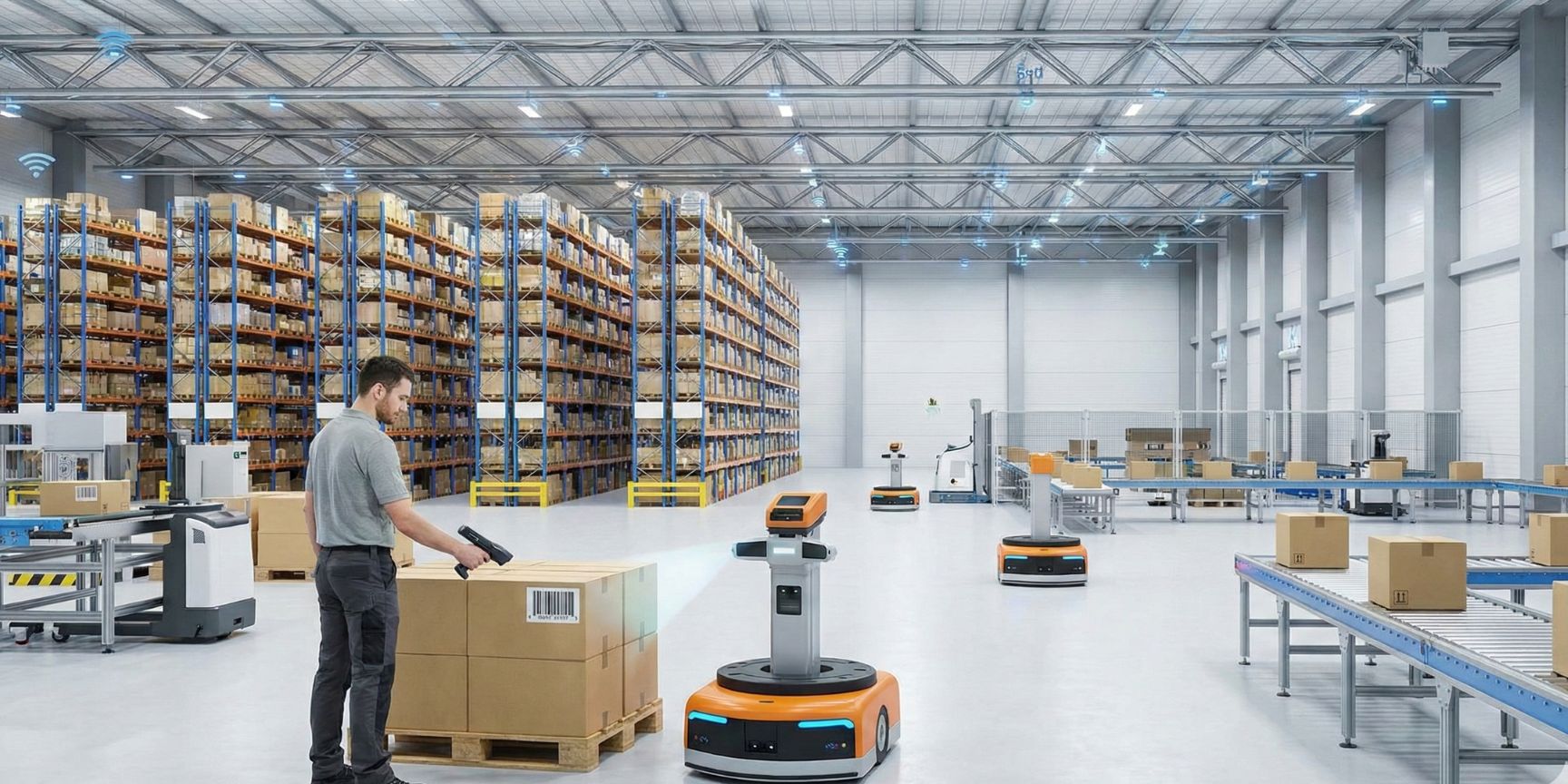
Imagine a Monday morning in a high-bay warehouse. 1,000 orders are pending picking, but the handheld scanners (MDE devices) do not synchronize. The autonomous mobile robots (AMRs) are at a standstill. The Warehouse Management System (WMS) reports "No connection". Death stop.
What sounds like a nightmare is the real danger of digital dependency. A 2024 study by SOTI (published on Dispo.cc) revealed that transport and logistics workers in Germany lose an average of three hours per week due to technical issues with mobile devices – often due to poor connectivity.
Modern warehouse logistics is an IT company. Every process, from storage via Scantower to pick-by-voice picking and goods issue, is a data package. If the network fails, the warehouse fails.
But how robust is this digital backbone really? Is the often overloaded Wi-Fi still sufficient? And what alternatives such as 5G campus networks or even satellite internet via Starlink are there to ensure resilience? This article dives deep into the network infrastructure of modern warehouses, analyzes the risks and shows concrete hedging strategies.
The digital backbone: Why modern warehouse logistics must be online
Gone are the days of paper-based picking lists. Today's logistics centers are data-driven ecosystems:
- WMS & ERP: The Warehouse Management System (WMS) is the brain and communicates with Enterprise Resource Planning (ERP) in real time. Orders are dynamically prioritized and pushed to the employees' MDE devices.
- MDE & Scanning: Mobile Data Capture Devices (MDEs) scan every item, storage location and loading container. This data must be validated immediately to prevent stock-outs or incorrect deliveries.
- Automation (AMRs/AGVs): Automated guided vehicles (AGVs) and autonomous mobile robots (AMRs) navigate via LiDAR and camera, but receive their driving orders via the central network. A disconnection leads to an immediate stop.
- Internet of Things (IoT): Sensors on gates, conveyor belts or cold chains monitor the condition of goods and systems. This data flows into predictive maintenance systems.
All these systems require stable, low-latency and comprehensive connectivity. If it fails, the processes are not only slowed down – they stop.
High-performance Wi-Fi (Wi-Fi 6/6E): The overloaded standard?
The basis of almost every camp is the WLAN. Modern standards such as Wi-Fi 6 (802.11ax) and Wi-Fi 6E (which also uses the 6 GHz band) theoretically offer massive advantages over older standards. Technologies such as OFDMA (Orthogonal Frequency-Division Multiple Access) allow channels to be split more efficiently among many devices (e.g. hundreds of scanners), and TWT (Target Wake Time) improves the battery life of MDEs.
But the practice in the camp is brutal:
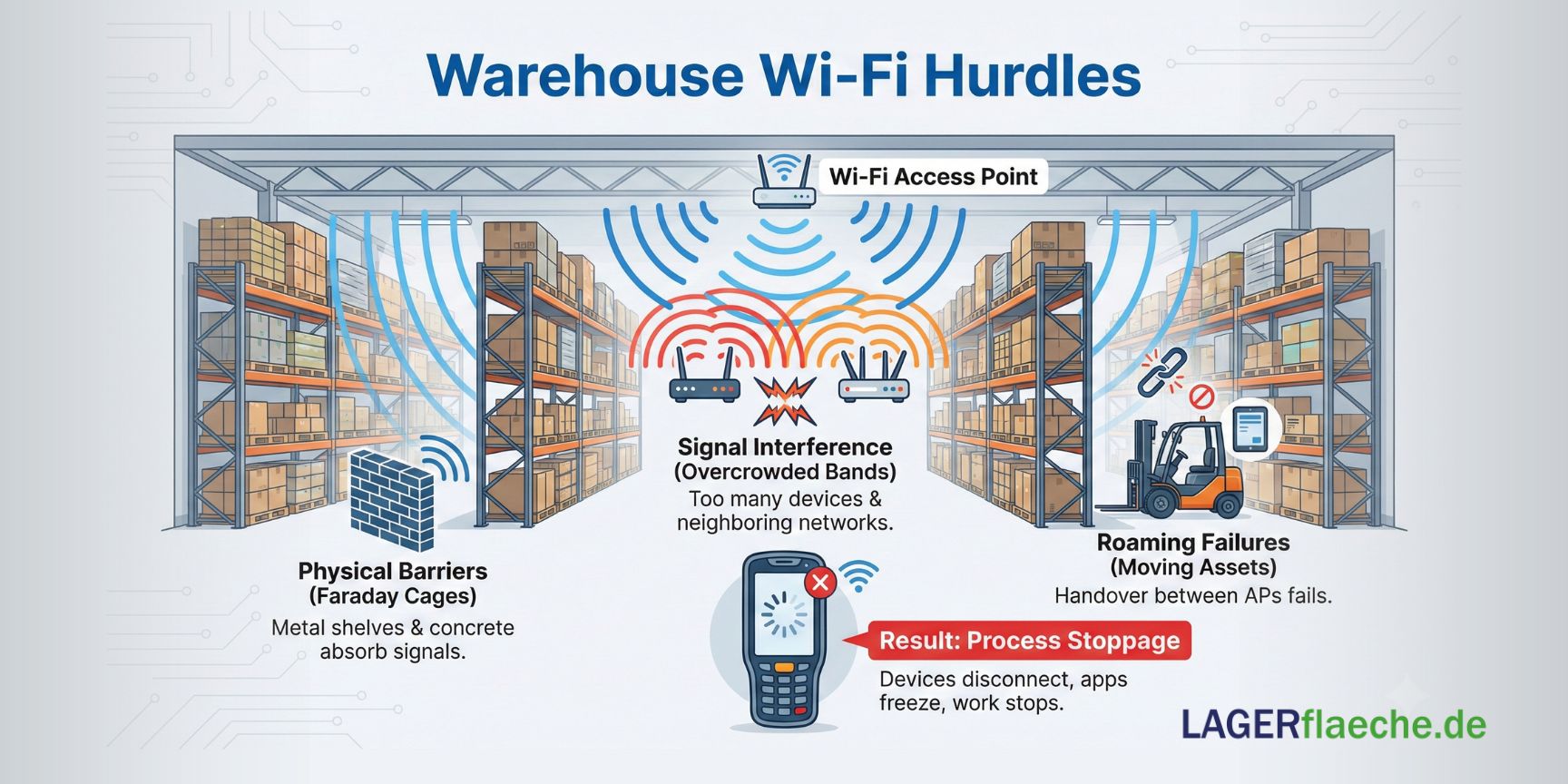
- Physical barriers: Camps are often huge "Faraday cages". Tall metal shelves, reinforced concrete walls and moving goods (especially water-containing ones, such as beverages) attenuate and reflect radio signals extremely.
- Interference: The 2.4 GHz and 5 GHz bands are used by many devices (including neighboring companies), which leads to congestion.
- Roaming issues: When an order picker (or a forklift) moves through the warehouse, their MDE device needs to move seamlessly from one access point (AP) to the next (roaming). If this handover fails, the application freezes.
- Device density: The sheer number of scanners, robots, printers, and IoT sensors pushes even well-planned Wi-Fi 6 networks to their limits.
As early as 2015, a study by Forrester on behalf of Zebra Technologies warned that the WLAN infrastructure at the time was not up to the requirements of digitization. Today, with AMRs and real-time tracking, this problem has multiplied.
The nightmare: What happens if the network fails?
A network outage is no small nuisance; it is a financial emergency. The costs are immense and complex:
- Loss of productivity: Every employee who cannot pick costs wages without creating value. (The already mentioned 3 hours/week (SOTI) are a creeping cost factor).
- Direct downtime costs: IT service providers such as Gröpper IT estimate the damage of an IT failure (which includes network failure) for an SME with 25 employees at around €1,000 per hour. For larger logistics centers, the costs quickly increase to €25,000 to €40,000 per hour.
- Follow-up costs: Orders are not shipped, delivery windows (slots) at the customer's site are missed. This leads to contractual penalties, reputational damage and, in the worst case, the loss of the customer.
- Data integrity: If MDEs try to buffer data and synchronization fails, inventory errors can occur that can take days to clean.
The central question for every logistics manager must therefore be: How high is my dependency, and what is my plan B?
The alternative: 5G campus networks as a game-changer?
When Wi-Fi reaches its limits, 5G comes into focus. We are not talking about the public 5G network for smartphones here, but about private 5G campus networks. Companies can apply to the Federal Network Agency for their own local frequencies (typically in the 3.7–3.8 GHz range) and set up their own completely separate mobile network from the public network on their premises.
The advantages over Wi-Fi are fundamental:
- Guaranteed quality of service (QoS): In contrast to the "best-effort" principle of Wi-Fi, 5G can assign guaranteed bandwidth and latency to certain applications (e.g. controlling AMRs) ("network slicing").
- Extreme reliability: 5G is designed for Ultra-Reliable Low-Latency Communication (URLLC). A BMWK guideline on 5G campus networks speaks of an achievable availability of 99.99% to 99.9999%.
- Ultra-low latency: While Wi-Fi often has latencies of 20-50 ms, 5G achieves values of less than 1 millisecond (Axians). This is crucial for real-time robotics or augmented reality applications (e.g. smart glasses).
- High device density: 5G can manage up to one million devices per square kilometer without interference – ideal for the massive IoT.
- Security: Since the network is private, all data remains on campus. SIM card-based authentication is superior to Wi-Fi password security.
In the warehouse, this means that the critical infrastructure (robots, driverless forklifts) runs via the stable 5G campus network, while the less critical applications (guest WLAN, office PCs) remain in the normal WLAN.
Starlink & Satellite: The Ultimate Redundancy?
But what if it's not the internal Wi-Fi that is the problem, but the Internet connection of the entire site? Many logistics centers are located in commercial areas that are poorly developed digitally ("white spots"). If the only fiber optic or VDSL line fails (e.g. due to construction work), everything also comes to a standstill.
This is where satellite internet such as Starlink Business (SpaceX) comes into play. By deploying thousands of low-Earth orbit (LEO) satellites, Starlink offers high bandwidth (up to 200+ Mbps) and relatively low latencies (25-50 ms) that are sufficient for most cloud WMS systems.
Starlink is less of a primary connection in logistics and more of a strategic backup solution (business continuity), as industry reports (e.g. openPR) point out. When the fiber optic excavator cuts the main port, a smart router (SD-WAN gateway) can automatically route all traffic through the Starlink dish. The quick setup (hours instead of months) makes it the ideal solution for geographically isolated locations or as an "emergency kit" for total failure.
Contingency planning: What to do if the grid really fails?
No technology is 100% secure. The warehouse logistician must therefore have an emergency plan that combines technical and operational measures.
Technical validation (redundancy):
- Multi-path internet: The site must have at least two physically separate internet lines. A mix of different technologies is ideal:
- Primary: Fiber (Provider A)
- Secondary: 5G/LTE business tariff (provider B)
- Tertiary (optional): Starlink Business An SD-WAN router (Software-Defined Wide Area Network) manages these lines and automatically switches over (failover) in the event of a failure.
- Internal redundancy: Critical network switches and servers must be redundantly designed (clustered) and connected via separate paths.
- Regular testing: A backup that has never been tested does not exist. The cutting of the main line must be practiced regularly (e.g. quarterly at night) in order to validate the failover.
Operational protection (backup processes):
What happens if everything fails anyway?
- Offline capability: Can the MDE devices buffer the most important processes (e.g. a picking order) locally and synchronize them later? The software must support this.
- Defined "paper processes": There must be a clearly defined emergency process. The WMS must be able to export the most urgent orders as PDF lists (before the network fails or via an emergency PC) so that work can continue at least manually.
- Prioritization: Which orders have to go out (e.g. express, medical)? The team must be trained to identify these in emergency operation.
Practical example: The "fail-safe warehouse" of Müller Logistik GmbH
Let's take a fictitious case study: "Müller Logistik GmbH" operates a 30,000 m² warehouse in a rural industrial park in Brandenburg.
- Problem: The site has only one VDSL line (FTTC), which is often overloaded. The internal Wi-Fi (Wi-Fi 5) is unreliable; AMRs often stall, resulting in process backlogs. An excavator bite paralyzed operations for eight hours in 2024 (costs: approx. €80,000).
- The solution (investing in resilience):
- Internal: The Wi-Fi has been upgraded to a Wi-Fi 6 mesh system. In parallel, a private 5G campus network (based on 3.7 GHz) was installed exclusively for the 50 AMRs and the critical production scanners.
- External (Internet): The VDSL connection was replaced by a (expensively won) dedicated fiber optic line (1 Gbit/s) as the primary connection.
- Backup: An SD-WAN router has been installed. A 5G business tariff (via external antenna) serves as backup 1. As backup 2 (in case of a disaster), a Starlink business antenna was mounted on the roof.
- The result: The internal process interruptions due to roaming errors of the AMRs fell to almost zero. Productivity increased. A short fiber optic outage in the summer of 2025 was automatically intercepted by the SD-WAN router via the 5G backup; operations continued without interruption.
The foundation: Don't forget electricity and cyber security!
The best network infrastructure is useless if two other pillars are missing: power and security.
- Security of the power supply: A grid failure is just as fatal as a network failure. The protection is mandatory:
- UPS (Uninterruptible Power Supply): All servers, switches, routers, and access points must be connected to a UPS. This bridges short fluctuations and gives time for a controlled shutdown or start-up of the generator.
- NEA (emergency power system): A diesel or gas generator that can supply the entire warehouse (or at least the critical IT and logistics systems) in the event of a prolonged power outage is essential for systemically important logistics centers.
- Cybersecurity: A networked warehouse is a goal. According to reports (e.g. by CISA, quoted by Global Market Insights), cyber incidents in the transport and logistics sector increased by 50% between 2020 and 2023. The industry association BVL ranks cybersecurity among the top 3 trends (and concerns) among logistics companies in 2023/2024.
- Measures:
- Segmentation: The warehouse network (OT) must be strictly separated from the office network (IT) and the guest Wi-Fi network (VLANs).
- Secure standards: WPA3 Enterprise in WLAN (instead of only WPA2 personnel with a shared password).
- Zero Trust: No device (even internal) is trusted. Every MDE, every robot has to authenticate itself.
- Firewalls & Updates: A robust firewall and strict patch management for all network components (including APs and switches) are mandatory.
Global check: Why Germany is lagging behind digitally (and is better elsewhere)
One would think that Germany, as the "logistics world champion" (number 1 in the World Bank's Logistics Performance Index), would also be a leader in digital infrastructure. The reality is sobering.
The German paradox: In the EU's Digital Economy and Society Index (DESI), Germany was only in the middle of the field (e.g. 14th place) in 2024/2025. While the digitization of companies (8th place) is progressing well, connectivity (infrastructure) is a problem.
Why is that? Germany (in contrast to many other countries) has long relied on upgrading old copper telephone lines (FTTC/vectoring) instead of the consistent expansion of fiber optics into the building (FTTH/FTTB).
The international comparison:
- South Korea & Japan: These countries are world leaders. South Korea already achieved FTTH coverage of around 84% in 2021 (WiWo blog). There, gigabit Internet is a matter of course in the industrial park, while in Germany it is often an expensive luxury.
- Scandinavia (e.g. Denmark, Sweden): These countries invested heavily in fiber optics at an early stage, including in rural areas. According to a report by IT-Wegweiser (based on older EU data), 73% of rural businesses in Denmark had access to high-speed broadband, compared to only 42% in Germany.
- Eastern Europe (e.g. Poland, Romania): Some of these countries were able to leapfrog old infrastructures and invest directly in new fibre-optic networks, which means that they partly overtake Germany in FTTH availability.
What does this mean for the German logistics company? He often cannot rely on the public infrastructure. While a logistics company in South Korea simply books an FTTH connection, the German logistics company has to take action itself in a poorly connected industrial park and plan for expensive solutions such as 5G campus networks or Starlink backups in order to remain internationally competitive.
Dreams of the future or reality? AI, IoT and the network of tomorrow
Development does not stand still. The next wave of digitization is already rolling in:
- Massive IoT: Thousands of sensors per warehouse (wearables, tracking of individual parts) will increase data density.
- Artificial intelligence: AI-driven image recognition (e.g. for damage control) or AI to optimize robot fleets require enormous amounts of data and edge computing, which in turn requires extremely low latencies.
- Wi-Fi 7: The next Wi-Fi standard is ready and promises multi-link operation (MLO), which could greatly reduce roaming problems.
The network of the future must be even faster, even denser and, above all, even more reliable. Today's investments determine whether a warehouse will still be able to keep up tomorrow.
Conclusion: The bearing stands and falls with the management
The digital transformation has irreversibly changed logistics. The efficiency gains from WMS, AMRs and real-time data are gigantic – but they create a total dependency on the network infrastructure.
A "little WLAN" is no longer enough. The modern warehouse logistics company must also be an IT infrastructure manager. They must understand the limitations of Wi-Fi, evaluate the potential of 5G campus networks as a robust internal network, and secure the external connection through multi-path redundancy (fiber, 5G, Starlink).
The cost of resilience – whether through redundant lines, a UPS or a 5G campus network – is not an expense, but an insurance. An insurance against digital downtime, which in modern logistics quickly becomes more expensive than the most robust cable.
Latest Blog Posts
Stay up to date with the newest trends, insights, and tips in warehouse and logistics. Our latest articles help you navigate the industry with confidence.
Data Centres vs. Logistics Facilities: The Race for Power and Land
Across Europe, logistics operators are competing for more than land and transport access. They increasingly need something much harder to secure: grid capacity. Data centres are intensifying that competition — and changing how logistics locations are evaluated....

Chinese companies discover Europe's logistics real estate
Chinese companies are becoming an increasingly visible user group in Europe's logistics real estate market. What does this mean for warehouse space, 3PL structures and the requirements for European logistics locations?...
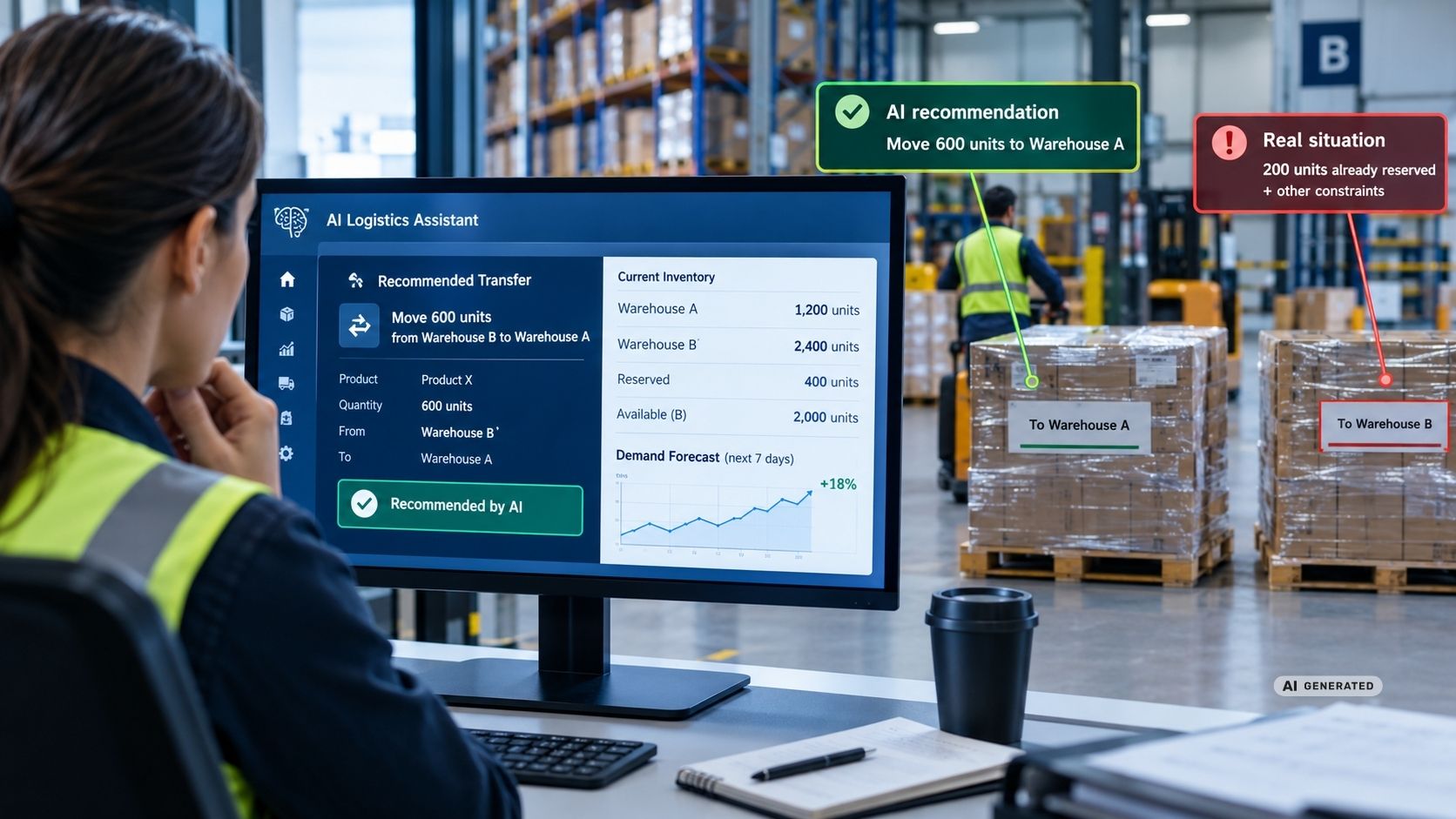
AI Hallucinations in Logistics: When AI Plans the Wrong Delivery
AI can analyze enormous amounts of logistics data — but it can also produce a convincing answer that is simply wrong. The critical question is not whether AI makes mistakes, but what happens when a wrong recommendation becomes an operational decision....
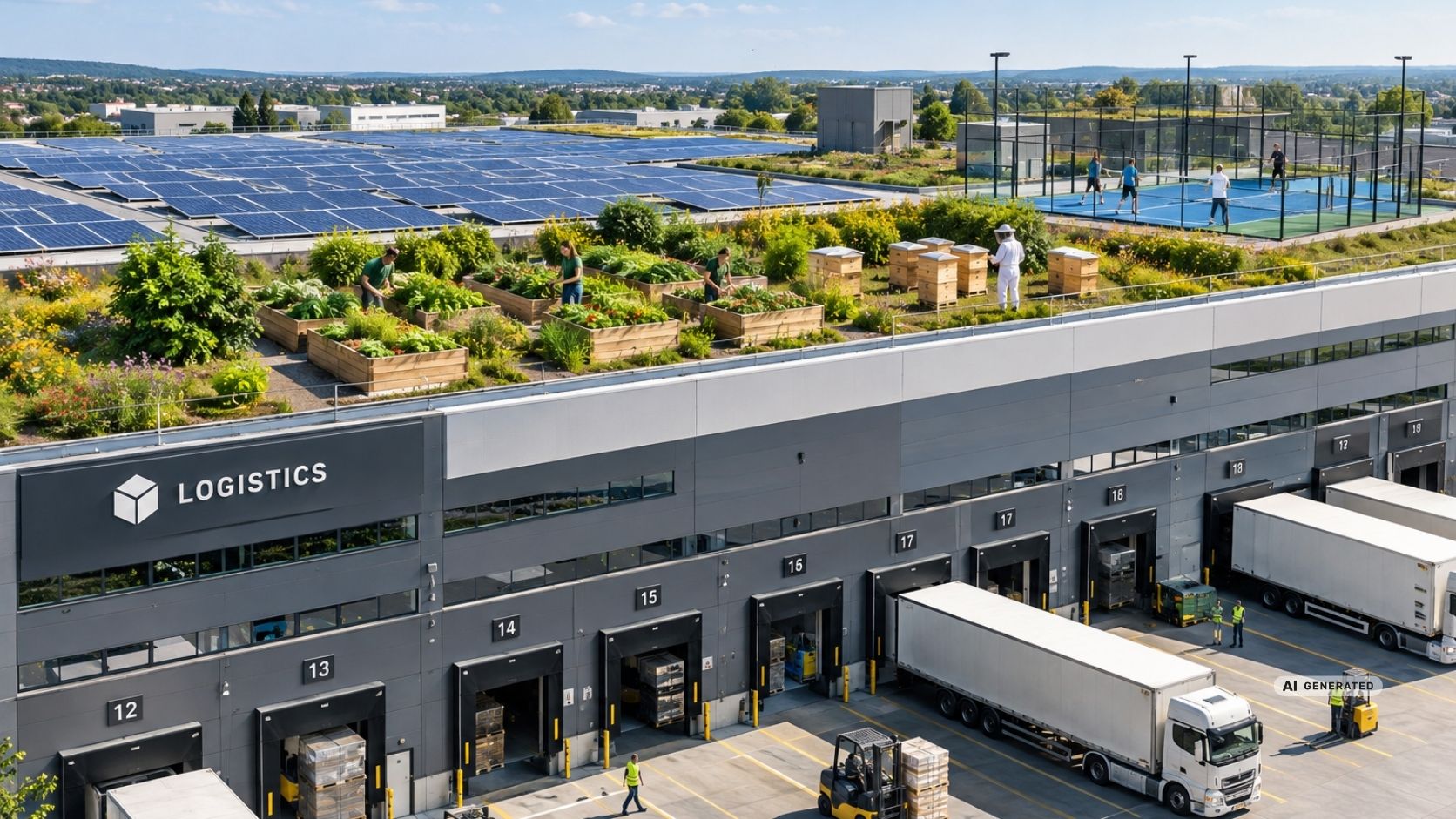
The Green Revolution on the Hall Roof: From Concrete Block to Ecological Power Plant?
Logistics roofs can do more than PV: greening, bees, urban farming and even sports areas turn unused roof space into multifunctional rooms....