



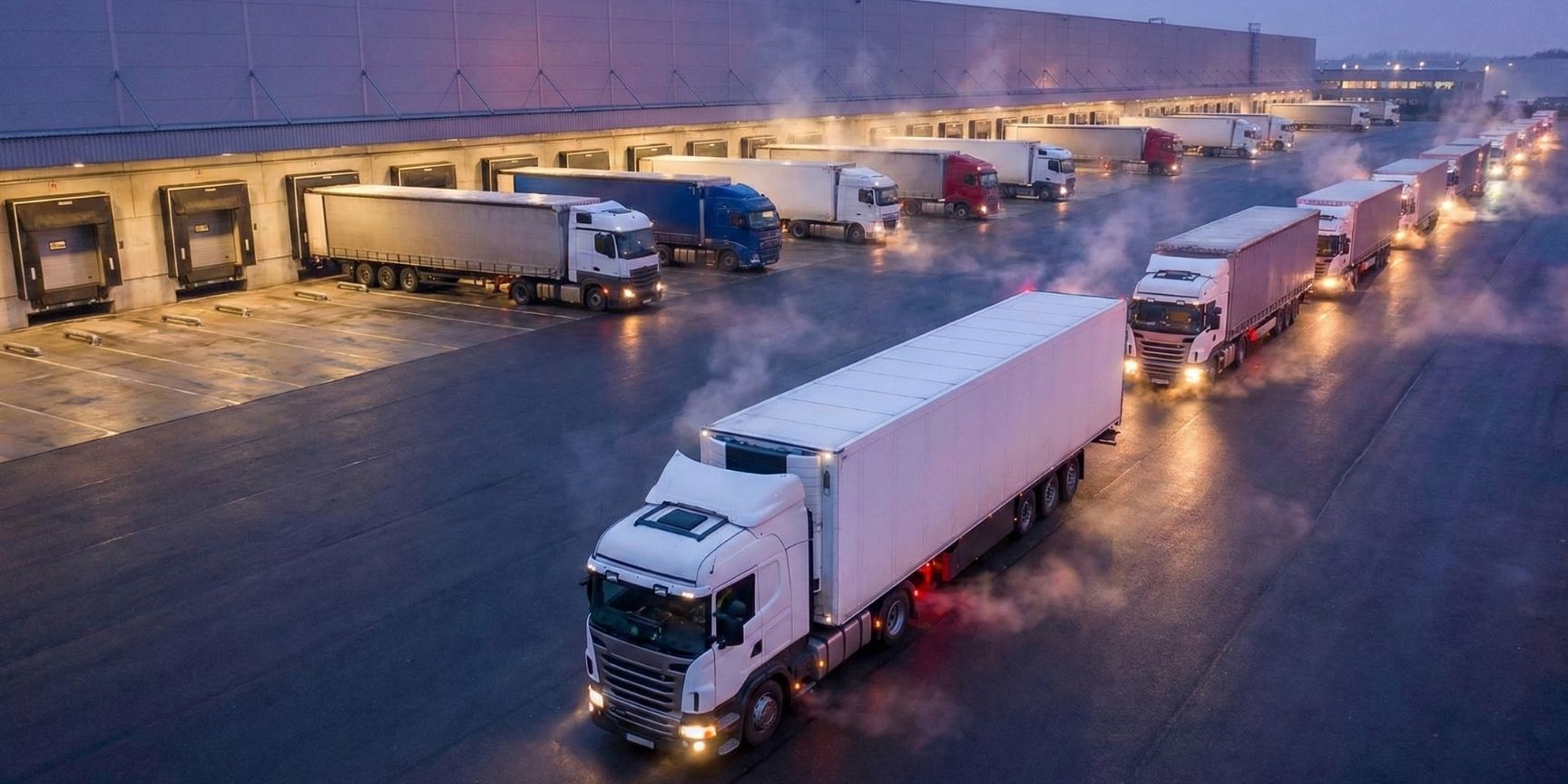
The Billion-Dollar Grave: Why Waiting Is the Biggest Unsolved Problem in Logistics
Table of Contents
- What is "Waiting"? The Anatomy of a Cost Guzzler
- The Bare Numbers: What does Waiting at the Ramp really Cost us?
- Why Waiting is not Fate, but a Symptom of Deeper Problems
- The International Comparison: Is Everyone Waiting as (im)patiently as Germany?
- Practical Example: How the Knauf Group Declared War on Standstill
- Will AI and Tools Solve the Problem? A Question of Structure
- Conclusion: From the Waiting Room to the Fast Lane – Standing Still is a Decision
In logistics, movement is everything. Every second that a pallet, container or truck moves is created value. Our industry is defined by speed, precision and efficiency – just-in-time, same-day delivery, optimized routes. But beneath this glossy surface of constant movement hides a gigantic, often ignored cost-eater: standstill.
We're not talking about the driver's scheduled break. We are talking about forced waiting. Of waiting for approvals, for documents, for decisions. Of waiting at crowded ramps. Of waiting in traffic jams, which could have been avoided with better planning.
During this time, not only the vehicle is at a standstill. The driver stands still. The goods are at a standstill. The entire value creation process holds its breath. But the costs – leasing rates, salaries, opportunity costs – continue to run relentlessly. Downtime is the biggest efficiency killer in our industry. And the worst thing about it: It is not natural. It is almost always an organizational result.
What is "Waiting"? The Anatomy of a Cost Guzzler
When we talk about waiting, we don't just mean the obvious hour at the ramp. Standing still is a multi-layered problem. Let's ask ourselves: Where exactly does waiting occur in the supply chain?
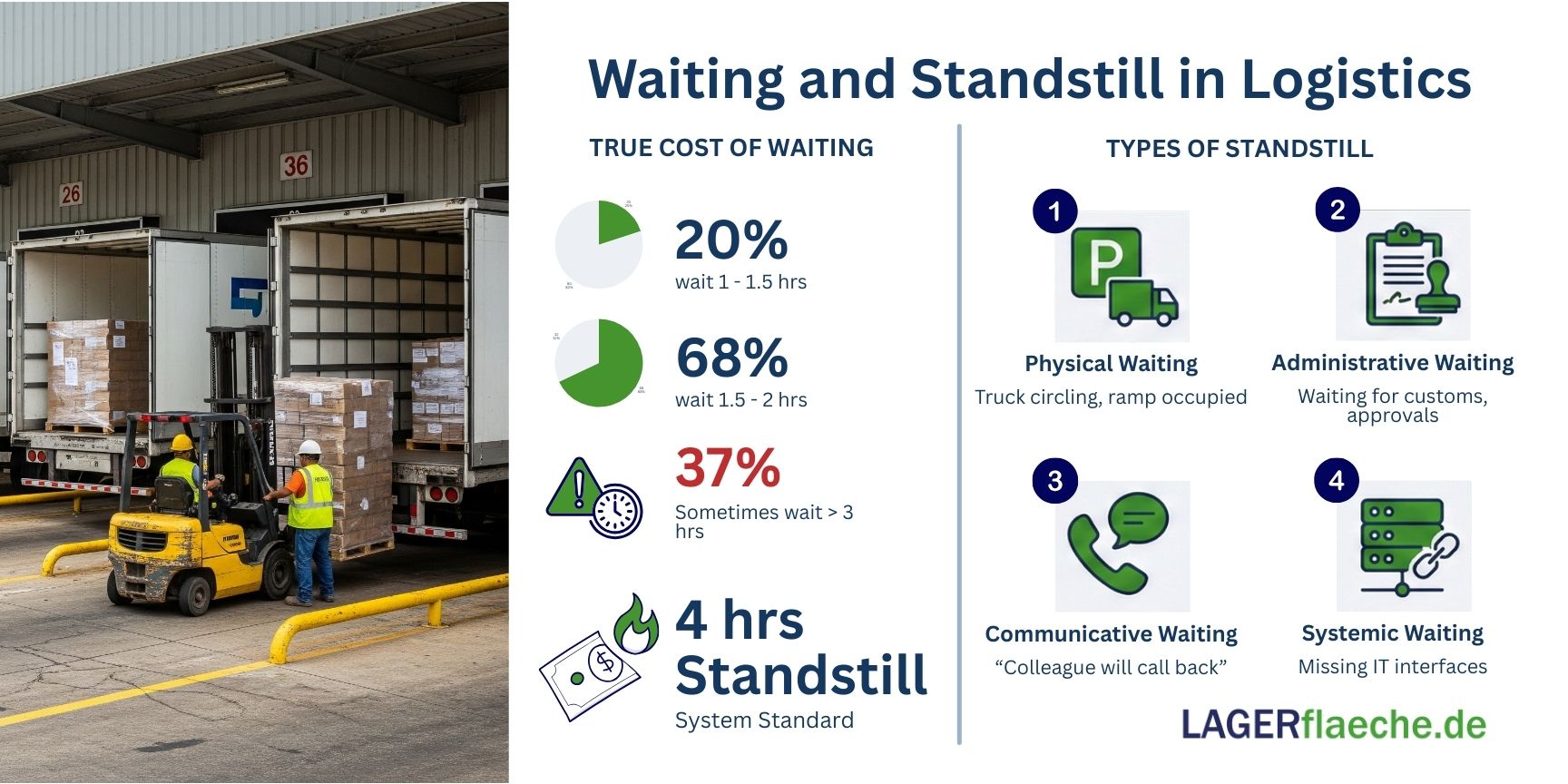
- The physical waiting: The truck driver who makes parking laps in the industrial area because his time window is unclear or the ramp is still blocked.
- The administrative waiting: The dispatcher waiting for a customs clearance. The warehouse management, which is waiting for a final order confirmation from sales.
- The communicative waiting: The project manager who waits for "the colleague who will call back right away" to clarify a deviation.
- Systemic waiting: The process that stalls because two IT systems (e.g. WMS and TMS) do not communicate cleanly with each other and data has to be transferred manually.
Each of these waiting categories is a crack in the foundation of an efficient process. They add up to massive economic damage.
The Bare Numbers: What does Waiting at the Ramp really Cost us?
Let's not beat around the bush. How much does this standstill cost? Exact numbers are difficult to grasp because many companies don't look at these costs in isolation, but studies paint a bleak picture.
A 2023 analysis by Trust Trans revealed that although the situation has improved slightly, 68% of truck drivers still wait between 1.5 and 2 hours at retailers' ramps. Another 20% wait 1 to 1.5 hours. Almost no one waits less than 15 minutes.
(Source: Based on data from the Trust Trans study, 2023)
The results of a 2021 study by the "Truckers Life" Foundation are even more alarming: Here, 37% of drivers said they sometimes had to wait even more than three hours.
Why? The reasons are homemade. According to the Trust Trans study, the main causes are:
- Lack of staff during loading and unloading (cited by 59% of respondents).
- Too strict time windows and lack of flexibility in planning (mentioned by about 60%).
- Poorly planned ramp occupancy (33%).
However, the problem is more deeply rooted than just daily planning. In Germany, waiting has become culturally normalized. The General German Freight Forwarders' Terms and Conditions (ADSp) and the Contract Conditions for Road Haulage (VBGL) often provide for a "usual" loading and unloading time of up to two hours each for a 40-ton truck. Only then does an entitlement to demurrage arise at all. In effect, this means that four hours of downtime per order are systemically accepted in Germany.
Why Waiting is not Fate, but a Symptom of Deeper Problems
Standstill is a symptom. It is the visible expression of deeper organizational deficiencies. If a truck is waiting, it's rarely the fault of the driver or the ramp employee. It is the result of a faulty system.
The core problems are:
- Lack of transparency and communication: A study by "TruckHero" (2021) revealed alarming communication gaps. 65% of the drivers surveyed did not always know whether they were responsible for unloading themselves. 32% of the ramp staff did not know it either. 62% of the ramp staff could not provide drivers with binding information about the waiting time. You work blindly.
- Silo thinking instead of process thinking: The warehouse optimizes its personnel planning. Sales is optimising its order acceptance. Purchasing optimizes its delivery file. But no one optimizes the overall process. If the warehouse closes the ramp for the lunch break from 12 to 1 p.m., but the purchasing department schedules deliveries at exactly that time, there is inevitably a standstill.
- Processes based on hope: "The truck will come sometime between 10 a.m. and 2 p.m." This is not a process, this is hope. In a fast-paced economy, hope is the most expensive planning factor.
- Circling responsibility: The driver complains to the dispatcher. The dispatcher at the carrier. The carrier at the shipper. The shipper with the warehouse manager. The camp manager... blames it on the lack of staff. Responsibility runs in circles, a solution is not found.
The International Comparison: Is Everyone Waiting as (im)patiently as Germany?
Is this state of affairs a global phenomenon? Yes and no. Each country has its specific challenges, but how to deal with them differs drastically.
Germany: The bureaucracy world champion
Paradoxically, Germany regularly occupies top positions in the World Bank's Logistics Performance Index (LPI) (a global perception survey of logistics professionals) (e.g. 1st place in the LPI in 2016 and 2018, 3rd place in 2023). We have an excellent infrastructure and a high level of expertise. Our biggest problem, however, is bureaucracy. A study by ZEW Mannheim (2024) for the Foundation for Family Businesses attests that Germany has immense bureaucratic costs and a deteriorating infrastructure quality compared to other countries. A DIHK survey (2023) confirms this: Companies rated the "efficiency of the authorities" with a school grade of 5.0 (inadequate). This "administrative waiting" for permits, customs declarations (despite the EU) or clearances paralyzes physical movement.
Netherlands: The digitization pragmatist
Our neighbor (LPI 2023: 6th place) shows how things can be done differently. The Netherlands, and in particular the port of Rotterdam, has made not only the physical infrastructure a priority, but above all the digital infrastructure . The Port Community System (Portbase) in Rotterdam is a central data node through which all stakeholders – customs, shipowners, freight forwarders, terminals – communicate. Information flows before the goods. Physical downtime is avoided because the administrative standstill has been digitally resolved before the truck even reaches the terminal.
Spain: The stimulus setter
Spain (LPI 2023: 13th place) has recognized a problem and acted legally. As "TruckHero" reports, a law has been passed there that creates financial incentives against waiting. If a truck driver has to wait at the ramp for more than an hour, the carrier is entitled to compensation in the amount of approx. €38.60 per additional hour. This clear financial lever forces shippers and warehouse keepers to optimize their processes. In Germany? Here, demurrage is often only discussed after two hours (per process!).
China: Der Leapfrogger
In Asia, especially in China (LPI 2023: 19th place), the picture is mixed. On the one hand, logistics costs are historically high in relation to GDP (approx. 14.9% according to a 2018 PwC study, compared to 8-10% in Europe). This was often due to a lack of standards (e.g. pallet sizes or truck trailers) and high tolls. On the other hand, we are experiencing digital "leapfrogging" there. Giants such as Alibaba or JD.com have skipped traditional logistics and built their own, highly efficient, data-driven ecosystems. They control the entire chain from production to the front door and eliminate waiting times through total integration – an approach from which federal, siloed Germany is far away.
Practical Example: How the Knauf Group Declared War on Standstill
The fact that it also works in Germany is proven by companies that are actively tackling the problem. An excellent case study is the Knauf Group, a global manufacturer of building materials.
- The problem: Knauf was confronted with the classic symptoms: high traffic volumes at peak times, long truck queues, dissatisfaction among drivers and haulage companies as well as rising costs due to demurrage fees.
- The solution: The company decided against the "principle of hope" and in favor of active management. They implemented a digital time slot management system (in this case from Transporeon).
- The mechanism: Instead of simply waiting for trucks to arrive, freight forwarders now book binding time slots for loading or unloading online. The system compares the transport demand with the real capacities of the loading points (ramps, personnel, forklifts).
- The result: According to the published case study, the results were drastic. Knauf achieved a significant reduction in peak times and stand fees. Waiting times for trucks fell rapidly. At the same time, the satisfaction of the drivers and the company's own warehouse staff increased, as the day could be planned and the stress level was reduced.
MTU Aero Engines achieved a similar result by introducing combined time slot and yard management to smooth out delivery peaks and reduce factory traffic.
Will AI and Tools Solve the Problem? A Question of Structure
The case studies show that digital tools such as time slot management or yard management are powerful weapons against standstill. And the future promises even more: AI systems that accurately predict arrival times (ETA) using real-time traffic data. AI that optimizes ramp occupancy fully automatically and dynamically.
But there is a danger here. Many companies hope that a new software tool will solve their fundamental problems. That will not happen.
The future of logistics will not be decided by another software tool. It is decided by structure, clarity and leadership.
An AI can create the best plan in the world. But if the responsibilities at the ramp are unclear (as in the TruckHero study), if the staff is on the uncoordinated lunch break or if the management is not willing to tear down silo boundaries, the AI will fail.
Tools and AI are fantastic supporters. You can make a good process excellent. But they can't fix a broken, unclear, or hope-based process.
Conclusion: From the Waiting Room to the Fast Lane – Standing Still is a Decision
Waiting and standing still are not immutable natural laws of logistics. They are the result of decisions – or lack thereof. They are the result of unclear processes, a lack of communication and a culture that accepts inefficiency as "normal" (see the 2-hour rule).
The solutions have long been known, as the examples from the Netherlands, Spain or companies such as Knauf show. Efficiency is achieved where:
- Responsibilities are crystal clear.
- Decisions are made in a data-based and timely manner.
- Processes are based on binding data (such as time windows) instead of hope.
- Responsibility for the overall process is taken instead of being pushed in circles.
Every logistics manager should ask themselves a simple question: How many hours did vehicles and drivers wait at my ramps or because of my administration today? And multiply that number by the cost.
Downtime is the most expensive product we "produce" in logistics. It's time to stop production.
Latest Blog Posts
Stay up to date with the newest trends, insights, and tips in warehouse and logistics. Our latest articles help you navigate the industry with confidence.
Data Centres vs. Logistics Facilities: The Race for Power and Land
Across Europe, logistics operators are competing for more than land and transport access. They increasingly need something much harder to secure: grid capacity. Data centres are intensifying that competition — and changing how logistics locations are evaluated....
Chinese companies discover Europe's logistics real estate
Chinese companies are becoming an increasingly visible user group in Europe's logistics real estate market. What does this mean for warehouse space, 3PL structures and the requirements for European logistics locations?...
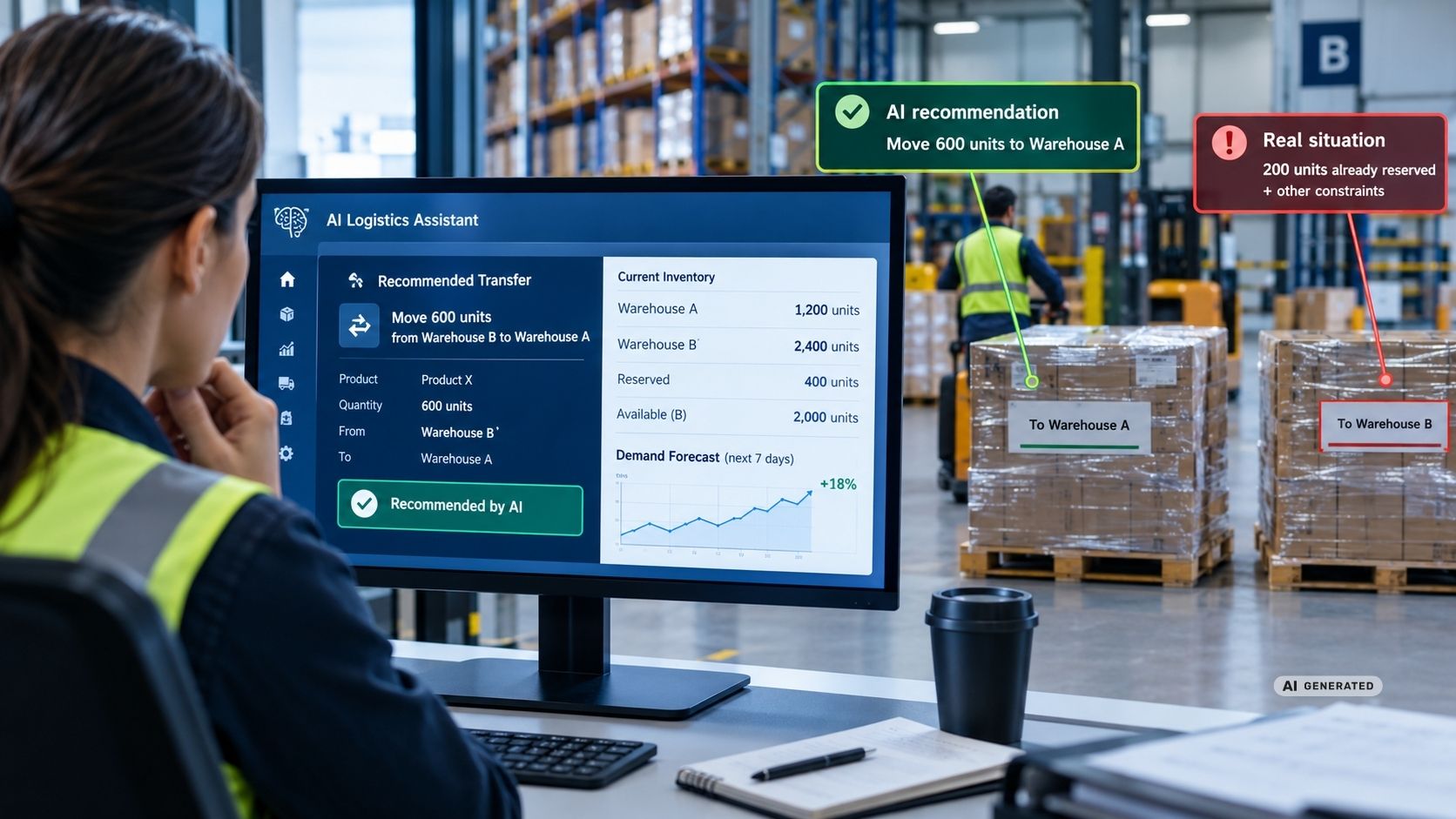
AI Hallucinations in Logistics: When AI Plans the Wrong Delivery
AI can analyze enormous amounts of logistics data — but it can also produce a convincing answer that is simply wrong. The critical question is not whether AI makes mistakes, but what happens when a wrong recommendation becomes an operational decision....
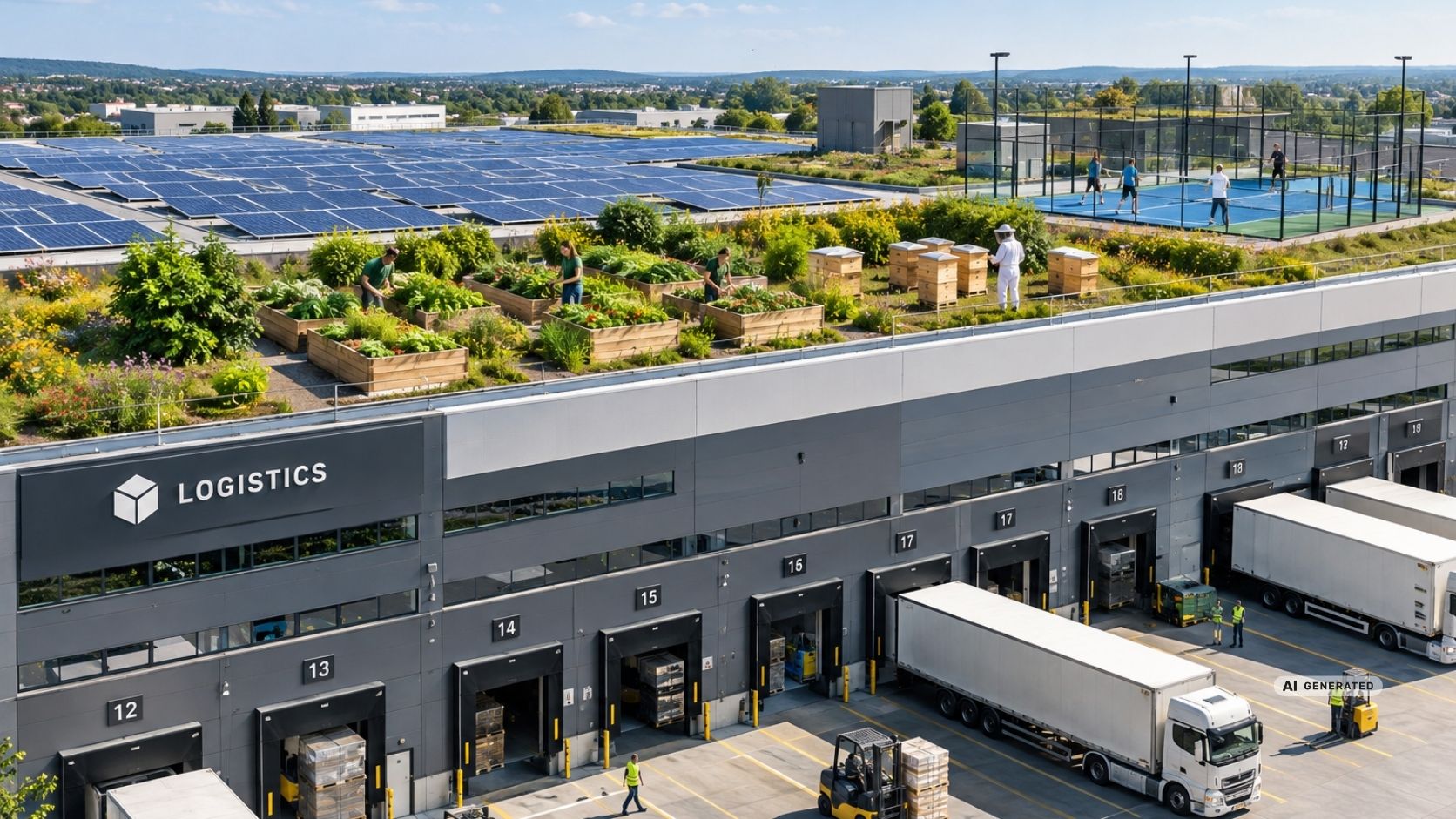
The Green Revolution on the Hall Roof: From Concrete Block to Ecological Power Plant?
Logistics roofs can do more than PV: greening, bees, urban farming and even sports areas turn unused roof space into multifunctional rooms....