
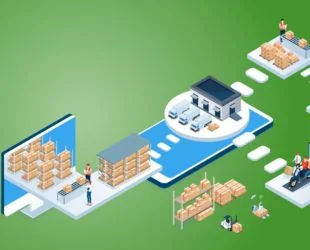



How AI is Transforming Warehouse Logistics and the Supply Chain
The last few years have been marked by a profound digital transformation that has not spared the logistics sector. Artificial intelligence (AI) in particular has proven to be a key driver of this development. AI-powered intelligent algorithms analyze huge amounts of data and are revolutionizing supply chains by significantly improving the operational performance of logistics companies.
The key benefits of AI in logistics
Why does it make sense to rely on AI in logistics? A key advantage is increased productivity. Artificial intelligence can, for example, predict traffic trends, unfavorable weather conditions, and consumer demand to ensure efficient and fast product delivery, thereby reducing costs. It also enables predictive maintenance of equipment, minimizing downtime. In warehouses in particular, robots can take over everyday and repetitive tasks such as moving goods. This allows employees to focus on more challenging and value-adding tasks.
Optimized decision-making through AI
Another fundamental aspect of artificial intelligence in logistics is its ability to significantly improve decision-making processes. Unlike human decision-making, AI can analyze huge and complex data sets in a very short time to identify precise patterns and trends, for example in relation to sales figures or demand. This enables logistics companies to anticipate potential challenges at an early stage and make the necessary strategic decisions in almost every area of business, from pricing and concessions to investments.

AI as a competitive advantage in logistics
The integration of artificial intelligence in logistics is not only a driver of efficiency, but also a decisive competitive tool. This includes the optimization of delivery routes, predictive maintenance of transport vehicles, and, in particular, the use of robotics in warehouses to free up human labor for more complex tasks. Furthermore, the analysis of sales data by AI enables precise inventory determination in order to always maintain the optimal stock level.
Artificial intelligence in warehouses: concrete applications and transformative effects
Artificial intelligence has long been a reality in modern warehouses and is no longer just a vision for the future. Although its use is still in its infancy, the combination of AI and robotics in warehouse logistics offers a wide range of advantages. These range from simple efficiency gains to profound structural changes and go far beyond mere automation. The use of equipment such as storage and retrieval machines or shuttles reduces repetitive tasks, increases mobility, and relieves warehouse employees of physical strain. A robot-assisted warehouse, also known as a “smart warehouse,” combines robotic and automated components to replace and optimize labor-intensive processes. Current figures underscore its growing importance: According to the annual report of the Material Handling Industry (MHI), 74% of supply chain executives are increasing their technology investments, and 90% plan to spend over $1 million on related technologies in the coming year.
Various areas of logistics are increasingly benefiting from the possibilities offered by artificial intelligence:
Warehouse automation
In warehouse automation, artificial intelligence is used to systematize and optimize logistics processes through intelligent devices. A striking example are picking robots, which use machine vision to recognize even unknown objects and sort them efficiently for order processing.
Autonomous driving and navigation in warehouses
Thanks to artificial intelligence and machine learning, autonomous mobile robots (AMRs) can move loads in warehouses and make independent decisions about their routes without having to have their routes predetermined.
Precise planning and forecasting
In the area of planning, AI enables more accurate predictions when determining demand, which helps to avoid bottlenecks and reduce costs. It also supports the preparation of further processes in the supply chain.
Optimization of back-office activities
Back-office areas such as IT, human resources, and accounting also benefit from artificial intelligence. Cognitive automation can be used here, for example, in invoicing processes.
Increased safety in the workplace
AI contributes significantly to improving employee safety and well-being. This is achieved on the one hand by taking over repetitive, potentially dangerous tasks and on the other hand by supporting logistics managers in optimizing plant safety. Risks in processes such as picking, sorting, and packaging can thus be avoided.
A wide range of benefits and a forward-looking perspective for warehouse logistics
Although the implementation of AI requires an initial investment, the use of artificial intelligence in logistics offers numerous other decisive advantages:
Continuous operational readiness
AI-based systems work without interruption and ensure constant availability around the clock.
Increased productivity
Picking robots and other AI-controlled machines increase productivity by working effectively with human employees or performing tasks autonomously.
High precision
The level of detail achieved by AI leads to virtually error-free execution of tasks.
Improved customer satisfaction
AI-powered chatbots speed up the processing of customer inquiries and shipment tracking. In addition, the shopping experience is optimized through personalized messages and recommendations.
Accelerated data processing
AI systems analyze large amounts of data in a very short time and derive valuable insights and optimization opportunities from it.
Predictive maintenance
The use of artificial intelligence allows potential malfunctions to be detected at an early stage, enabling preventive maintenance measures to be initiated and the company's performance to be ensured.
Transportation optimization
AI is extremely useful for route management, as it takes into account factors such as total capacity, weather conditions, traffic data, and geolocation. This leads to reduced travel costs and times as well as faster customer service.
Sustainability:
AI-supported route planning also contributes to reducing greenhouse gas emissions and minimizing the environmental impact of logistics operations.
Looking ahead: The future of warehouse logistics with AI
Experts believe that we are on the cusp of a new era in logistics. Supply chains will evolve thanks to AI technologies, as repetitive and physically demanding tasks are increasingly taken over by robots. This will allow warehouse employees to can focus on more value-adding tasks, which not only shortens response times to customer inquiries, but also increases process transparency and overall satisfaction.
Obstacles and potential disadvantages of introducing artificial intelligence in logistics
However, it is important to recognize that every technology also brings challenges. The quality of the input data plays a central role in the performance of artificial intelligence. A poor data set leads to unreliable algorithms and suboptimal results. Companies must therefore invest specifically in improving data quality in order to exploit the full potential of AI in logistics.
One frequently discussed aspect is the potential job losses due to AI-based automation, especially in areas with repetitive tasks. However, the increased use of AI also creates new employment opportunities that require retraining of the workforce to manage and monitor the new AI systems. The introduction of artificial intelligence also entails also involves high investment costs – both for modern technologies and for appropriately trained specialist personnel. Often, the challenges of integrating AI into existing IT infrastructures and operational processes also present a hurdle.
Practical steps for implementing AI in warehouse logistics
Before integrating artificial intelligence in warehouses, it is advisable to conduct a detailed analysis of the company's capabilities and needs and to draw up a structured plan.
Strategy development
First, a clear strategy must be developed. Those responsible for the supply chain must define the goals they want to achieve with AI implementation and how this technology can be integrated into existing processes.
Selecting the appropriate AI solution:
It is important to identify the type of artificial intelligence that best meets the company's requirements and promises the greatest benefit with minimal use of resources. One example of this is Edge AI, the implementation of AI in an edge computing environment, which enables devices to make lightning-fast decisions within milliseconds.
Integration and training:
The integration of AI systems should be carefully planned and ideally implemented step by step, for example through pilot projects or smaller tasks. At the same time, comprehensive training of employees in the use of new technologies is essential.
Measuring success and continuous optimization:
Regular performance evaluation is crucial to achieve the best possible results and make continuous optimizations.
The warehouse management system (WMS) is often the heart of an intelligent warehouse. It supports the optimization and perfection of processes such as order picking and shipping, both in automatic and manual systems.
Conclusion: AI – The key to future-proof warehouse logistics
The integration of artificial intelligence is no longer an option for the logistics industry, but a strategic necessity. It is driving a profound digital transformation and promises significant advances in efficiency, decision-making quality, and customer satisfaction. The potential of artificial intelligence is particularly evident in warehouse logistics: it automates processes, improves inventory management, increases work safety, and reduces the workload on staff, allowing them to concentrate on more demanding tasks.
Despite challenges such as data quality and the necessary investments, the potential of AI is immense. Industry experts are convinced that AI can make a decisive contribution to overcoming challenges and promoting future growth in the logistics industry. If the conditions are right and the potential of artificial intelligence is fully exploited, it can become a decisive factor for flexible, high-performance, and future-oriented warehouse logistics. The future of logistics will inevitably be linked to the use of AI, from which companies that adapt this technology will benefit greatly.
Latest Blog Posts
Stay up to date with the newest trends, insights, and tips in warehouse and logistics. Our latest articles help you navigate the industry with confidence.
Hidden Vacancy: How Unused Industrial and Logistics Space Comes Back to the Market
Logistics space is scarce – yet some buildings stand half empty without ever being listed. We explain what lies behind hidden vacancy, how space holders can measure it and reactivate it on a sound legal footing, and what this means for companies looking for space....
Switching contract logistics provider: why the exit from vendor lock-in starts in the contract
When your contract logistics provider stops delivering, switching often looks impossible. We show why the exit starts in the contract: with an escalation ladder, a switching-cost model, German employment law and a fictional but realistic example....
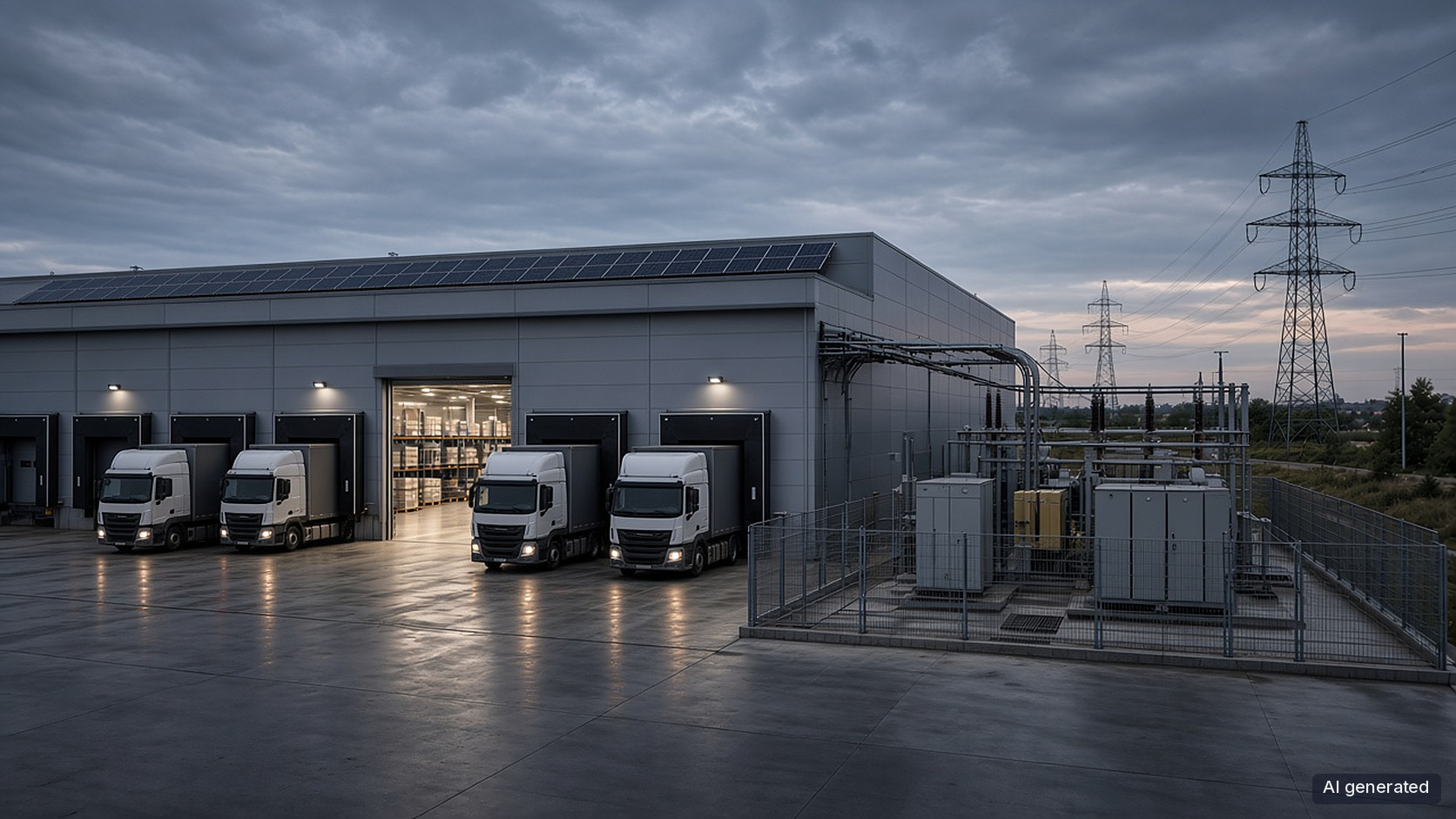
Logistics Real Estate 2027: It's Not the Rent That Holds You Back, It's the Building
In 2027, the search for warehouse space will rarely fail on rent. It will fail on the building itself: not enough power, a floor that can't carry the automation, a network full of dead spots. Why power, floor and network are becoming deal-breakers, and what occupiers, owners and developers should check now....
Poland, Czechia, Slovakia or Hungary: Which Location Best Fits Your Automotive Supply Chain?
Poland, Czechia, Slovakia and Hungary play different roles in Europe's automotive industry. This comparison explores which locations companies should consider for component sourcing, manufacturing, electric mobility and cross-border logistics....