



Valuable Goods Warehouse in Logistics
Table of contents
- Valuables warehouse: The high-security fortress of modern logistics
- What is a valuables warehouse? Definition and delimitation
- Requirements for the logistics property: More than just concrete
- Security Technology: The Invisible Net
- The Role of Contract Logistics: Processes and Personnel
- TAPA Standards: The Currency of Security
- Cost-effectiveness: Why the investment is worthwhile
- FAQ – Expert knowledge about the valuables warehouse
- Conclusion for practice
Valuables warehouse: The high-security fortress of modern logistics
In the world of logistics, a warehouse is much more than a mere storage area with a better lock. It is a highly complex ecosystem of structural substance, state-of-the-art monitoring technology and strict process specifications. In times of rising commodity values – from semiconductors to pharmaceuticals to luxury goods – the quality of a valuables warehouse often determines the insurability and integrity of entire supply chains.
What is a valuable goods warehouse? Definition and delimitation
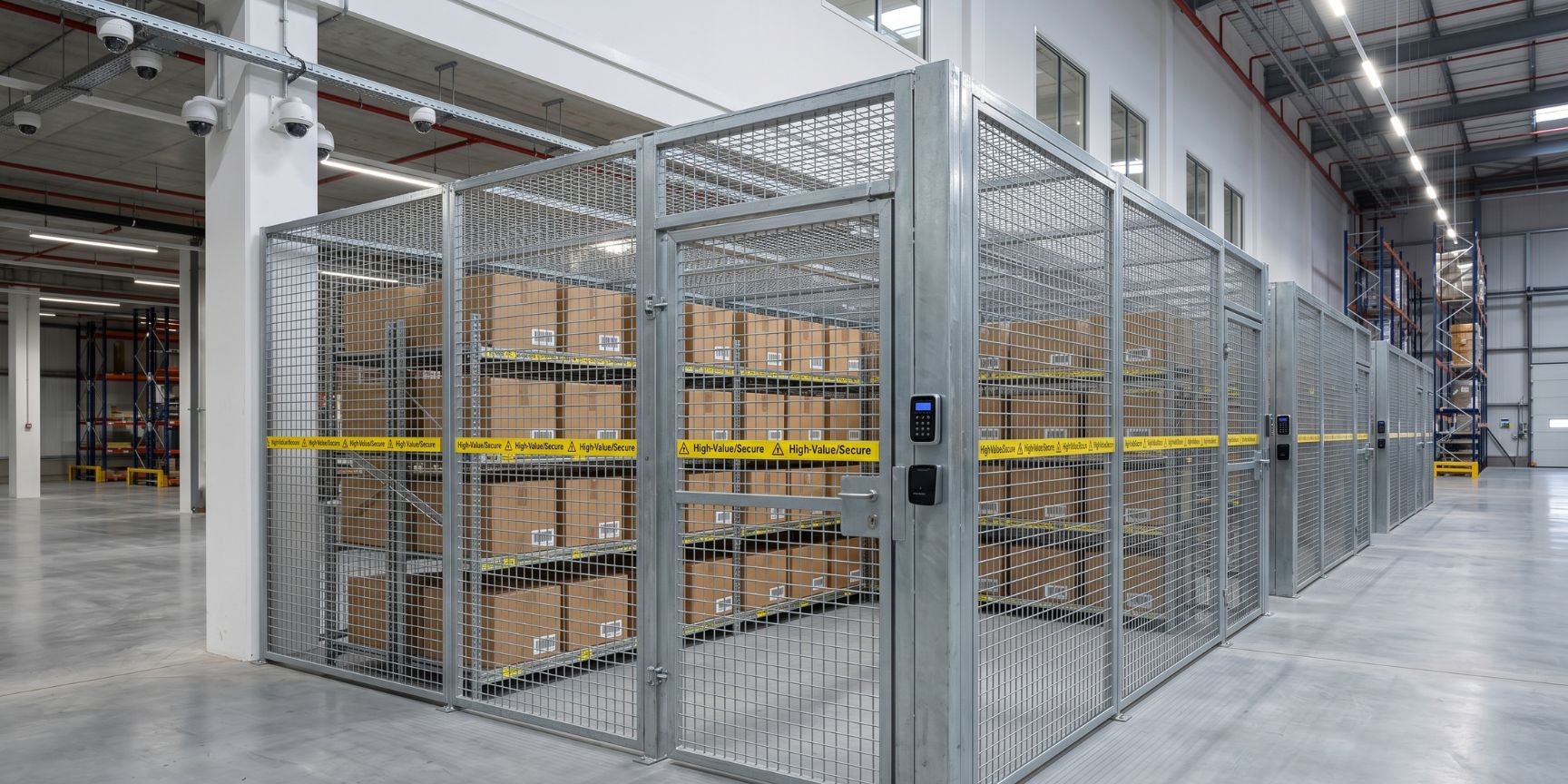
At its core, a valuable goods warehouse (often referred to as a high-value cargo warehouse) is a specialized logistics facility for storing goods with a high risk of theft or extremely high value of goods per unit volume.
While standard halls are optimized for handling speed and space efficiency, the focus here is on risk minimization. The distinction from normal storage is usually made by TAPA certification (Transported Asset Protection Association) or specific VdS classes. A high-value cargo warehouse can be a separate area within a larger hall (cage solution) or a stand-alone, dedicated property.
Requirements for the logistics property: More than just concrete
The structural requirements for a property that is to function as a high-value cargo warehouse are immense. A standard logistics hall usually has sandwich panels as an outer wall – this is often insufficient for a valuable goods warehouse.
- Structural shell: High-quality bearings often use reinforced concrete walls or reinforced masonry. Break-ins through the wall ("wall-busting") must be made physically more difficult.
- Roof protection: Since roofs are often the weak point, reinforced lattice structures or sensor fleeces are used here to immediately report a breakthrough.
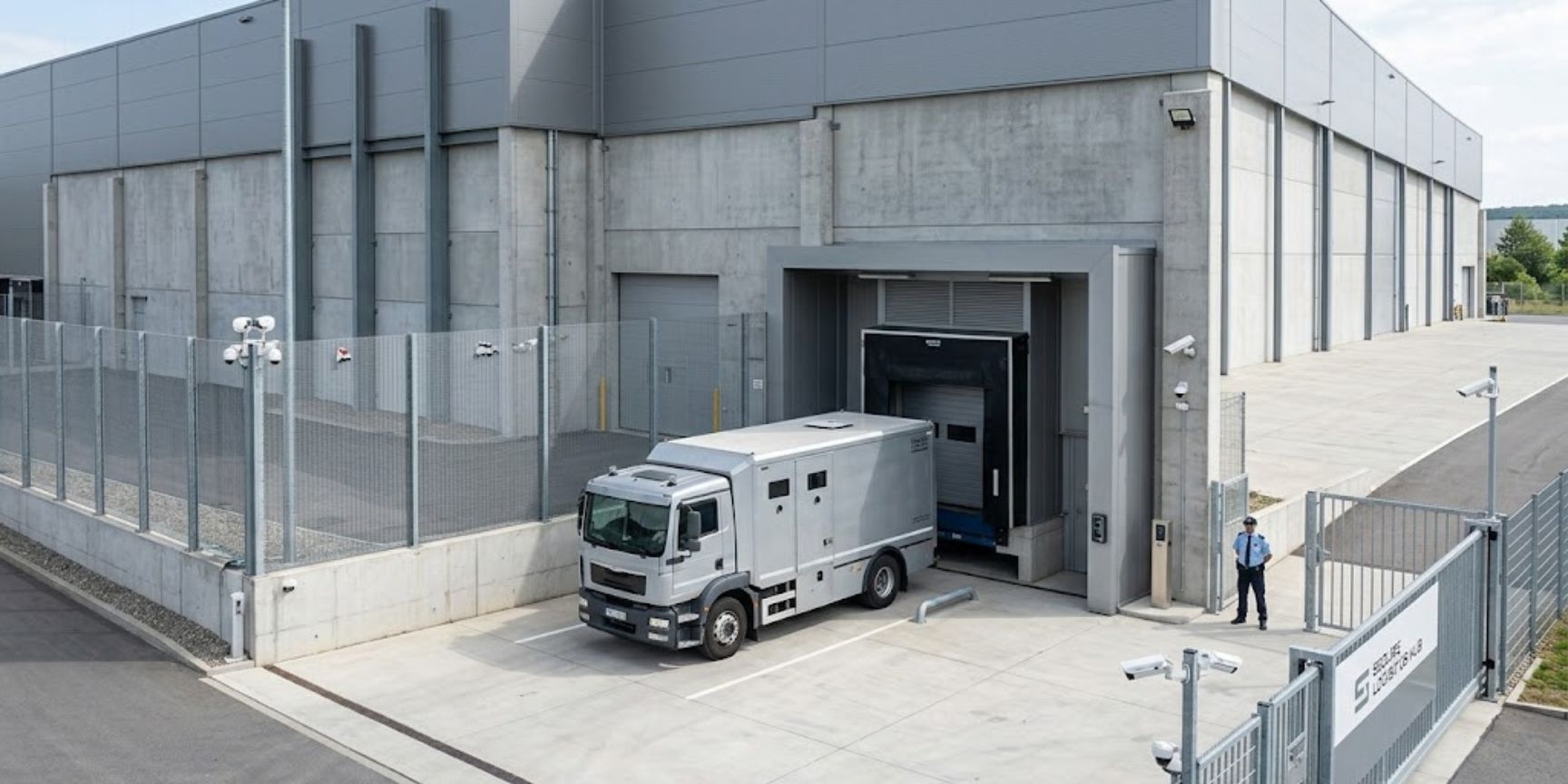
- Sectional doors and loading docks: these are the most sensitive points. Lock systems ensure that a truck first enters the secured yard before the hall door opens.
Security Technology: The Invisible Net
In the modern logistics property, building and technology merge. A professional warehouse relies on a multi-level security architecture:
- Intrusion alarm system (EMA): Comprehensive monitoring by magnetic contacts, glass break detectors and infrared sensors.
- Video surveillance (CCTV): High-resolution cameras with AI-powered analytics that detect atypical movements, as well as continuous recording (often up to 90 days).
- Access control: Biometric scanners or RFID solutions document every movement. The "four-eyes principle" is standard in high-security zones.
- Perimeter protection: A warehouse of valuable goods starts at the fence. Detection fences and light barriers prevent unauthorized access to the site.
The Role of Contract Logistics: Processes and Personnel
A warehouse of high-value goods is worthless without the appropriate processes in contract logistics. This is where specialized service providers intervene who offer "Value Added Services" (VAS) under security conditions.
The staff is subject to strict compliance checks (e.g. police clearance certificate, background check according to LuftSiG). In contract logistics, liability limits are also used. While the standard liability under ADSp is often limited, valuable goods require special coverage concepts. Logistics service providers must guarantee exact inventory processes and seamless scans (track & trace) in order not to jeopardize insurance coverage.
TAPA Standards: The Currency of Security
Anyone who operates in the field of high-value storage cannot avoid the TAPA (Transported Asset Protection Association). The FSR certification (Facility Security Requirements) is divided into three levels:
- Level A: Highest security level (for high-risk goods such as electronics or high-end fashion).
- Level B: Medium security requirements.
- Level C: Basic protection.
For many shippers, these certificates are a prerequisite for signing a logistics contract at all. They provide clear key figures, such as the illuminance in the outdoor area (at least 20 lux) or the response time of the security service.
Cost-effectiveness: Why the investment is worthwhile
The costs for a valuable goods warehouse per square metre are significantly higher than those of a standard hall – often 20 % to 50% higher, depending on the technology. Nevertheless, the investment pays off:
- Premium reduction: Insurance companies grant significant discounts for TAPA-A certification.
- Image gain: For brand manufacturers, theft is not only a financial loss, but also damage to their reputation (black market danger).
- Lower shrinkage rates: In professional high-value warehouses, the difference rate tends to be zero.
FAQ – Expert knowledge about the valuable goods warehouse
Question: From what value of goods does a special valuable goods warehouse make sense?
Answer: It's difficult to say in general, but the insurers' rule of thumb is often a value of over 50,000 euros per pallet or for goods that are easily "liquefiable" (quickly resellable), such as smartphones or brand-name medicines.
Question: Can every logistics hall be retrofitted into a valuable goods warehouse?
Answer: In principle, yes, but the effort varies. While IT systems are quickly installed, structural measures on the roof or floor slabs (vibration sensors) in existing properties are extremely expensive.
Question: What role does fire protection technology play in the high-value cargo warehouse?
Answer: A decisive one. Since extinguishing water often completely destroys the value of goods (e.g. in the case of electronics), gas extinguishing systems or oxygen reduction systems are often used in high-end warehouses to suppress fires without water damage.
Question: What is a "cage" in the high-value cargo warehouse?
Answer: A cage is a separately fenced area within a larger hall (usually steel wire mesh up to the ceiling), which has its own access control. It is the cost-efficient "room-within-a-room" solution for smaller quantities of valuable goods.
Conclusion for practice
The valuable goods warehouse is the backbone for premium brands and technological innovations. For logistics planners and real estate developers, this means that security must be "built-in" from the very beginning. Only the combination of a physical barrier, intelligent sensor technology and certified processes creates the trust necessary to keep the treasures of the global economy safe. In a market where crime is becoming increasingly professional, the high-value cargo warehouse is the logistics industry's necessary answer.
Your Ideal Logistics Warehouse
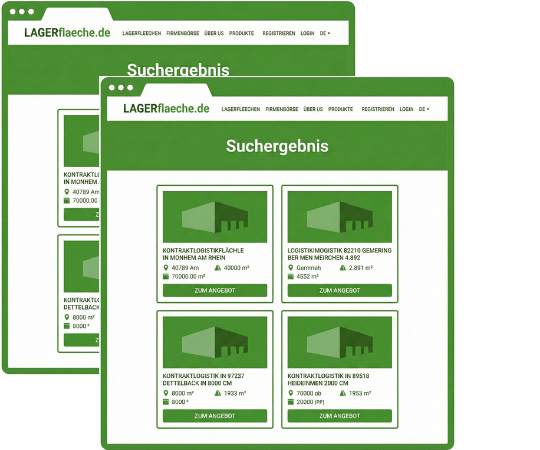
Browse listings for warehouse space, logistics real estate, industrial land, and contract logistics solutions.
Browse Exposés
Maximize Exposure for Your Warehouse Space
Showcase your logistics properties and attract qualified inquiries.
Discover Products