




Smart Warehousing in Logistics
Table of contents
- What is smart warehousing in warehouse logistics?
- The logistics property: Structural DNA for the smart hall
- The technological nervous system: WMS, WCS and AI
- Contract Logistics: Securing Strategic Competitive Advantages
- Facts, figures, data: The measurable ROI in the smart warehouset
- Sustainability and ESG: The Green Smart Warehouse
- Future Outlook: Automation and "Dark Warehouses"
- Frequently Asked Questions (FAQ) about Smart Warehousing
What is smart warehousing in warehouse logistics?
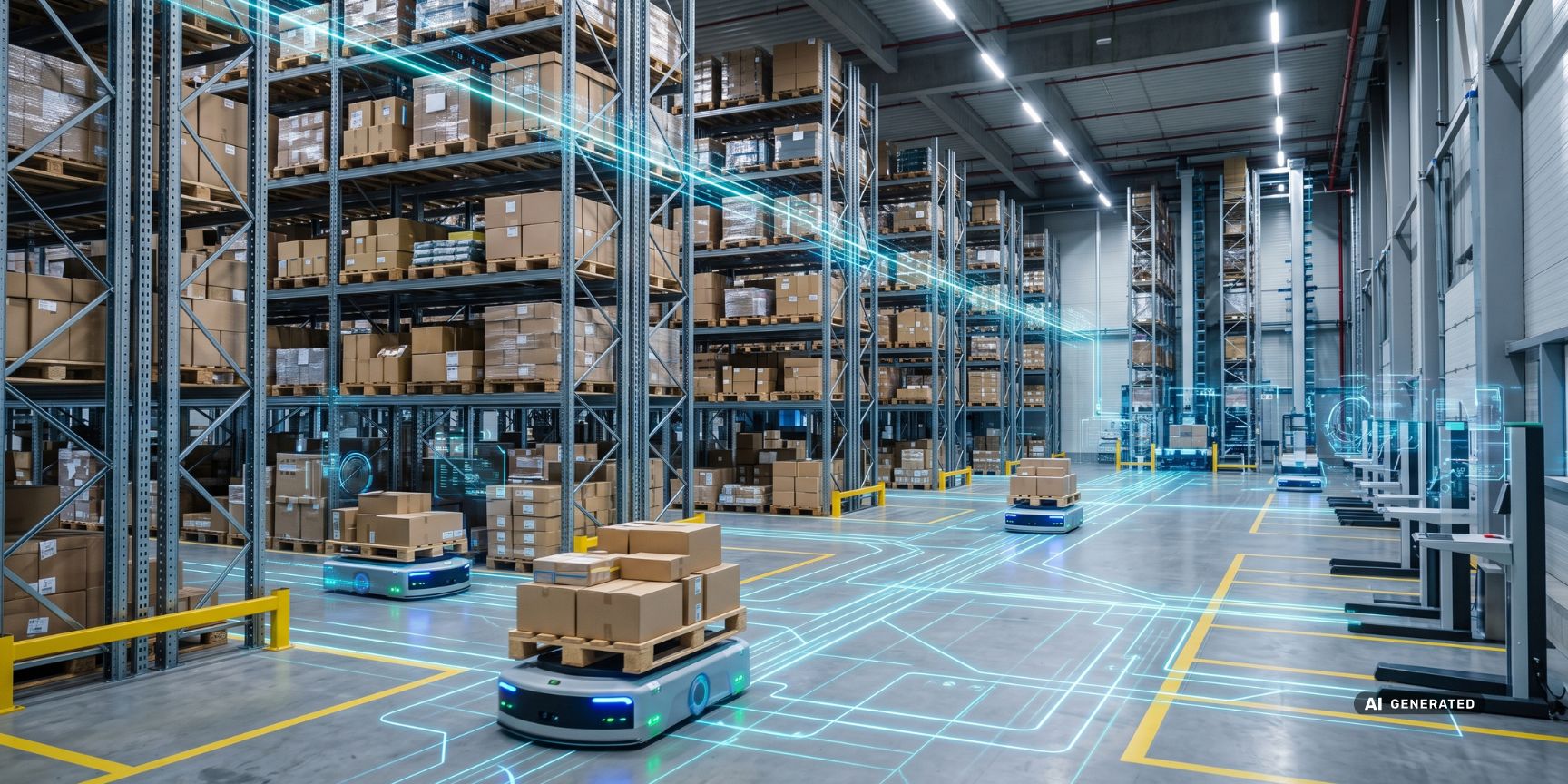
Smart warehousing refers to the comprehensive digitization and automation of warehouse processes through the use of state-of-the-art technologies. While classic warehouses are often based on manual or paper-based processes, a smart warehouse forms a highly networked ecosystem. In such an environment, conveyor belts, industrial trucks, autonomous mobile robots (AMR) and the goods themselves communicate with each other in real time. The primary goal of this automation is to significantly minimize throughput times, reduce error rates to below 0.1% through intelligent scanning and create maximum transparency in the supply chain.
The logistics property: Structural DNA for the smart hall
The most advanced intralogistics software is of little use if the physical shell – the logistics property – limits its possibilities. A real smart warehouse places extreme infrastructural and architectural demands on the hall. For high-density storage solutions and the safe use of narrow-aisle forklifts or autonomous robots, industrial floors with payloads of at least 50 kN/m² (about 5 tons per square meter) are absolutely mandatory. In addition, the strictest flatness tolerances, for example according to DIN 18202 or DIN 15185, must be adhered to so that the sensitive sensors of the automated guided vehicles (AGVs) can work without errors.
A clear height (lower edge of truss) of 10 to 12 meters is considered standard to ensure profitable vertical use of space through high racks. Seamless connectivity is just as essential: a fail-safe Wi-Fi or a private 5G campus network must cover the entire hall, as thick concrete walls or shelving systems could cause dead spots and thus interrupt mobile processes.
The technological nervous system: WMS, WCS and AI
For a hall to be truly "smart", hardware and software must be perfectly orchestrated. The Warehouse Management System (WMS) acts as the brain that monitors inventories, plans orders and manages customer data. The Warehouse Control System (WCS), on the other hand, acts as the nervous system of the logistics property: it controls all machines every millisecond, from sorters to storage and retrieval machines to the robot fleet.
The next evolutionary stage is the integration of artificial intelligence (AI). With the help of predictive maintenance, sensors permanently monitor the hardware, which can reduce unexpected downtimes of the hall technology by up to 40%. "Digital twins" can even be used to simulate the hall virtually on the computer in order to detect bottlenecks in advance and optimize the material flow during operation.
Contract Logistics: Securing Strategic Competitive Advantages
For service providers in contract logistics who take on highly complex tasks for various customers from industry and trade in large multi-user warehouses, smart warehousing is the ultimate lever for margins and customer satisfaction. Intelligent, networked processes enable the deep integration of value-added services (VAS), such as automated quality controls, packaging or returns management.
Since the system detects bottlenecks in real time and dynamically adjusts routes, contract logistics companies can guarantee tight service level agreements (SLAs). Today, those service providers who can offer their customers seamless data transparency and error-free, AI-supported processes prevail in tenders.
Facts, figures, data: The measurable ROI in the smart warehouse
The implementation of smart warehousing technologies initially requires high capital expenditure (CAPEX), but leads to rapid and measurable savings during ongoing operations (OPEX).
- Reduction of travel times: In a classic manual warehouse, up to 50 to 60% of the working time is spent on pure walking and driving. Mobile spare parts management and dynamic route guidance reduce this figure by up to 35%.
- Increased throughput: An intelligent material flow system (WCS) avoids congestion on conveyor lines and often increases goods throughput by 20 to 30% compared to systems without dynamic control.
- Space optimization: Chaotic warehousing through intelligent systems can increase the utilization of existing warehouse space by 15 to 20%.
Sustainability and ESG: The Green Smart Warehouse
Today, smart warehousing and green logistics are inextricably linked. Driven by the EU's Corporate Sustainability Reporting Directive (CSRD), companies must provide detailed evidence of their Scope 3 emissions. The logistics property plays a central role in this. Smart halls solve this problem through IoT-based smart metering, which records electricity, water and gas consumption precisely in real time. Coupled with full-surface photovoltaic systems on the hall roofs, modern heat pumps and AI-controlled LED lighting (which only lights up where there is movement), a commercial property can be operated in an almost climate-neutral manner and meets the strictest certifications such as DGNB or BREEAM.
Future Outlook: Automation and "Dark Warehouses"
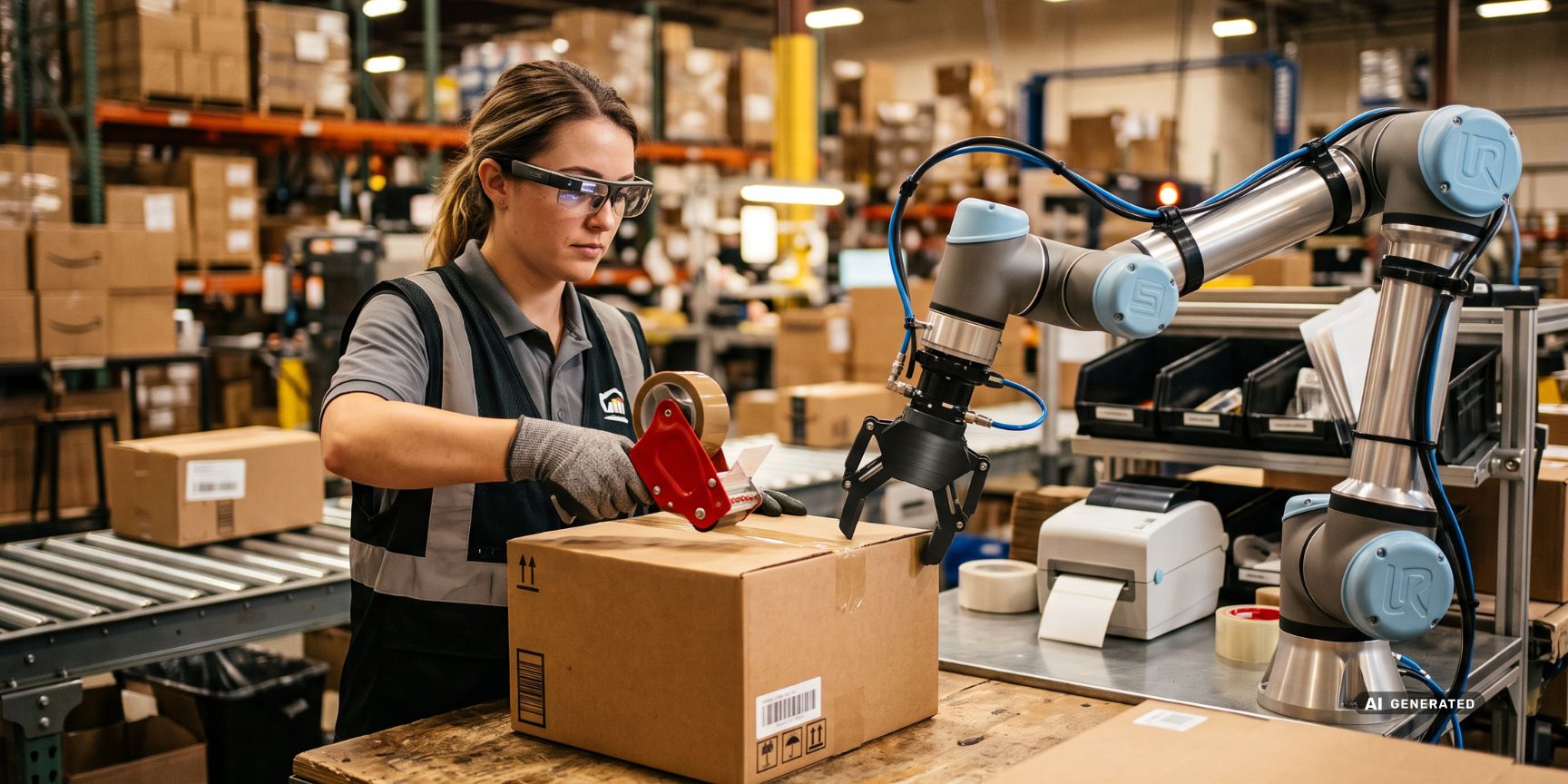
The massive shortage of skilled workers and the desire for 24/7 operation are driving the evolution of warehouse logistics towards the so-called "dark warehouse". In these halls, autonomous mobile robots (AMR) and automated guided vehicles (AGVs) pick the goods completely in the dark. People only enter the facility for occasional maintenance, which drastically reduces many legal and energy requirements (such as lighting and heating).
Frequently Asked Questions (FAQ) about Smart Warehousing
Question: Is smart warehousing also worthwhile for smaller storage areas?
Answer: Yes. Smart solutions also pay for themselves quickly in small to medium-sized halls. Switching from paper-based lists to cloud-based WMS solutions in conjunction with commercially available industrial tablets or scanners significantly reduces walking distances and booking errors.
Question: Can an existing property (brownfield) be converted into a smart warehouse?
Answer: In principle, retrofitting is possible, but often requires significant adjustments. The biggest hurdles in older halls are thick concrete walls that block the Wi-Fi signal ("dead zones"), as well as outdated industrial floors that do not meet the extreme flatness tolerances for driverless transport systems.
Question: How is smart warehousing changing contract models in contract logistics?
Answer: Data transparency is increasing massively. Thanks to high-precision digital recording, logistics service providers can now offer their customers flexible billing models such as "pay-per-pick" or "pay-per-pallet" that are based on exact, real-time validated performance data instead of charging rigid fixed rents.
Your Ideal Logistics Warehouse
Browse listings for warehouse space, logistics real estate, industrial land, and contract logistics solutions.
Browse Exposés
Maximize Exposure for Your Warehouse Space
Showcase your logistics properties and attract qualified inquiries.
Discover Products