




Multi-temperature zones in warehouse logistics
Table of contents
- Multi-Temperature Zones in Logistics: A Comprehensive Guide
- What is meant by multi-temperature zones? (Definition)
- The four decisive temperature classes of warehouse logistics
- Structural requirements for the logistics property
- Contract logistics: Maximum flexibility as a business model
- Energy efficiency and ESG in refrigerated logistics
- Frequently Asked Questions (FAQ) on Warehouse Practice
- Conclusion: The logistics machine of the future breathes with you
Multi-Temperature Zones in Logistics: A Comprehensive Guide
The demands on modern supply chains are growing rapidly, especially due to the boom in the e-food sector and the strict regulations in the pharmaceutical industry. The answer of modern warehouse logistics to this complexity is the division of halls into so-called multi-temperature zones. But what exactly is behind this concept, how is it implemented structurally and why is it a decisive competitive advantage for contract logistics companies today?
What is meant by multi-temperature zones? (Definition)
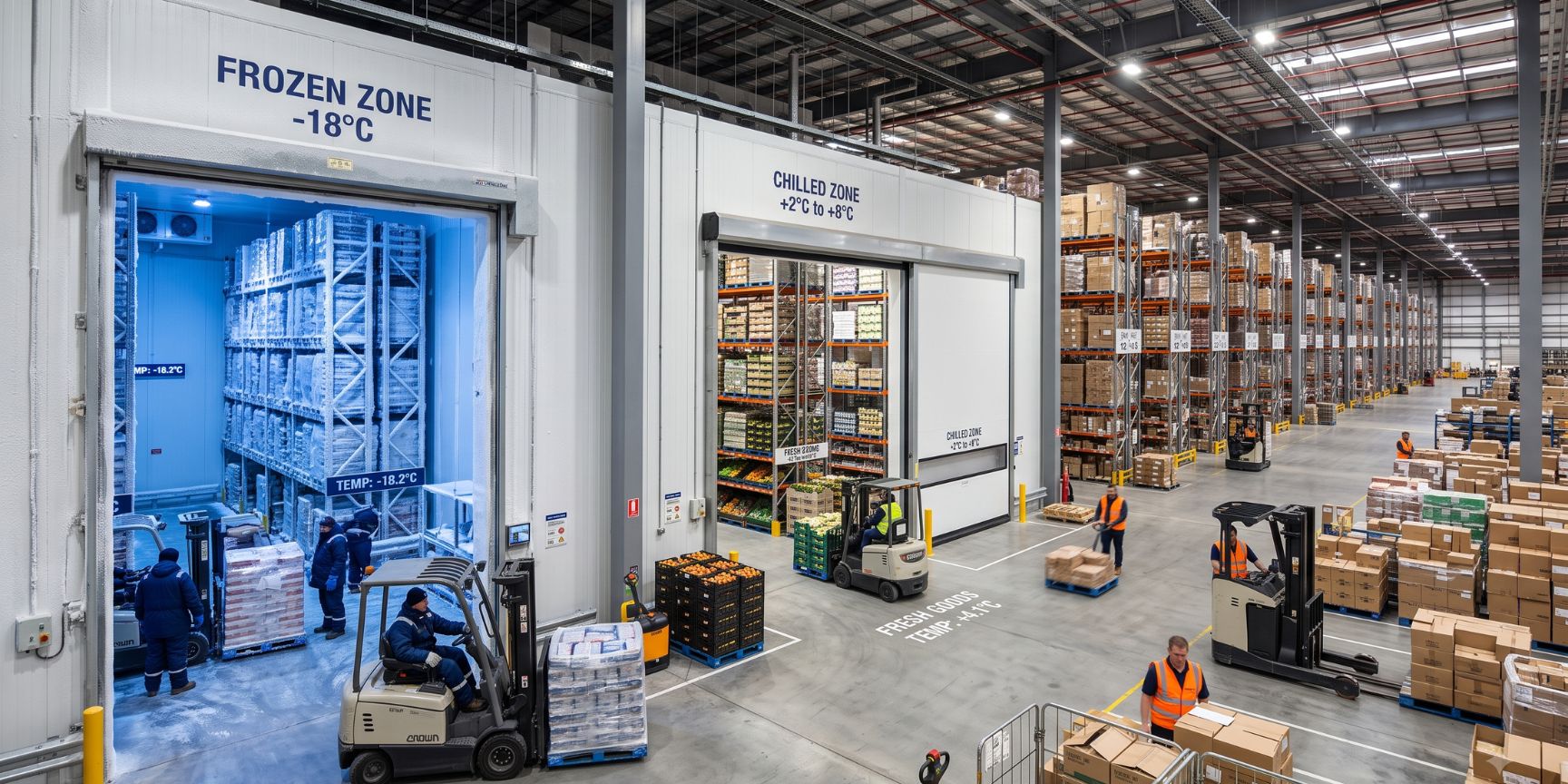
A logistics property with multi-temperature zones (often also called multi-temp warehouses) is a hall that is divided into several self-sufficient areas that are climatically separated from each other. In contrast to a pure dry warehouse or a pure deep-freeze warehouse, goods with completely different temperature requirements can be stored, picked and prepared for transport under a single roof.
The four decisive temperature classes of warehouse logistics
In order to understand the relevance of these halls, it is necessary to know the specific temperature ranges that are served by intralogistics in practice:
- Frozen (Frozen): -18 °C to -25 °C. This is where ice cream, frozen baked goods or convenience products are stored. The working conditions require special protective clothing and industrial trucks designed for the cold.
- Chilled: +2 °C to +8 °C. The classic area for dairy products, meat, fish and delicatessen. The cold chain must not be interrupted under any circumstances.
- Cool: +12 °C to +18 °C. Ideal for chocolate, wine, cosmetics and large parts of pharmaceutical logistics. Here, it is often less about pure cooling and more about avoiding temperature fluctuations.
- Dry storage (ambient): +15 °C to +25 °C. For canned food, textiles or electronics. In this case, standard heating and ventilation is usually sufficient.
Structural requirements for the logistics property
A multi-temperature hall is architecturally highly complex and requires a high initial investment (CAPEX). The key to success lies in perfect insulation. So-called sandwich panels with special insulation cores separate the zones from each other. Thermal bridges must be avoided during construction, otherwise there is a risk of condensation or even ice formation.
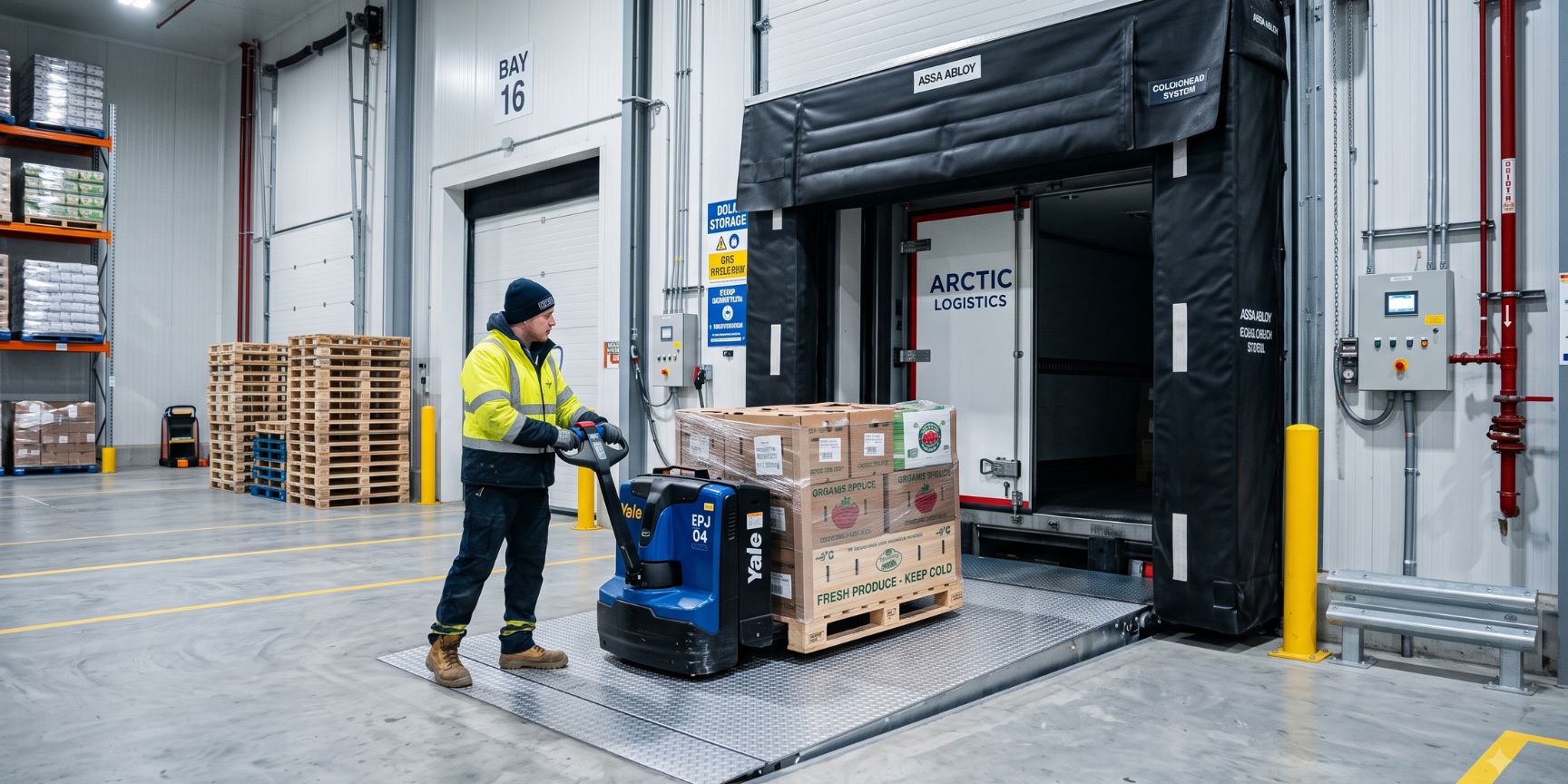
Another critical point is the loading gates (docks). To prevent temperature exchange during loading and unloading of trucks, inflatable dock seals and integrated cooling locks (often as a "box-in-box" system) are used in these logistics properties.
Contract logistics: Maximum flexibility as a business model
For contract logistics companies, multi-temperature zones are a strategic cash cow. Instead of renting a separate special hall (solitary location) for each customer, service providers bundle the volumes of various industries in multi-user centers. A logistics service provider can work in the frozen food sector for a food retailer, while Value Added Services (VAS) for a pharmaceutical company are handled in the temperature-controlled zone. If a customer's volume fluctuates seasonally, staff can be flexibly moved between zones. This minimizes vacancies and maximizes the profitability of the hall.
Energy efficiency and ESG in refrigerated logistics
Cooling large volumes of rooms is extremely energy-intensive. Multi-temperature halls are therefore the special focus of sustainability strategies (ESG). In order to obtain certifications such as DGNB or LEED, developers today rely on smart systems:
- Photovoltaics (PV): The huge hall roofs are almost completely equipped with solar systems. Since the highest cooling requirement occurs in summer when there is strong sunlight, the electricity generated can be used directly and optimally.
- Heat recovery: The waste heat from the massive chillers is used intelligently to heat the adjacent office building or the ambient zone in winter, for example.
Frequently Asked Questions (FAQ) on Warehouse Practice
Question: What role does the WMS (Warehouse Management System) play in multi-temp halls?
Answer: The WMS is the brain of the system. It strictly assigns incoming pallets to the released zones and monitors the temperature in real time via IoT sensors. If there are deviations (e.g. temperature drop in zone B), the system immediately sounds the alarm.
Question: What legal requirements must be complied with in these halls?
Answer: If food is stored, the HACCP concept (Hazard Analysis and Critical Control Points) is mandatory. If medicines are involved, the hall must be strictly certified according to GDP guidelines (Good Distribution Practice).
Question: Are multi-temperature zones suitable for third-party use?
Answer: Yes, to a certain extent. The third-party usability (the usability for subsequent tenants) is higher with multi-temp systems than with pure deep-freeze warehouses. Modern logistics properties today often rely on modular insulating walls that can be moved or removed as needed to adapt zone sizes to new tenants.
Conclusion: The logistics machine of the future breathes with you
Multi-temperature zones are much more than just a technical feature of a hall – they are the logistical basis for the global trade in sensitive goods. If you are a retailer, producer or e-commerce company looking for storage space, you will find guaranteed security for your cold chains here. For logistics service providers, they offer the agility they need to remain profitable in volatile markets.
💡 Are you currently looking for a suitable logistics property with flexible temperature zones or do you need an experienced contract logistics specialist for your sensitive products? On LAGERflaeche.de you will find state-of-the-art space throughout Germany and the perfect partners for your supply chain!
Your Ideal Logistics Warehouse
Browse listings for warehouse space, logistics real estate, industrial land, and contract logistics solutions.
Browse Exposés
Maximize Exposure for Your Warehouse Space
Showcase your logistics properties and attract qualified inquiries.
Discover Products