




Modular grid systems in logistics
Table of contents
- What are modular grid systems? (Definition)
- The logistics property: structural requirements for the grid
- The strategic game changer in contract logistics
- Automation and robotics: When the grid comes alive
- Facts, figures and figures: Profitability in check
- Planning and implementation: The digital twin
- Future Outlook: The Breathing Camp
- FAQ: Frequently asked questions about modular grid systems in logistics
The modern supply chain no longer forgives rigid structures. In times of rapidly growing e-commerce, volatile markets and ever shorter product life cycles, logistics real estate must be able to adapt dynamically. The industry's answer to this challenge is modular grid systems.
But what is behind this architectural and process concept, how does it influence contract logistics, and what requirements does it place on the classic warehouse? This guide examines the concept in depth.
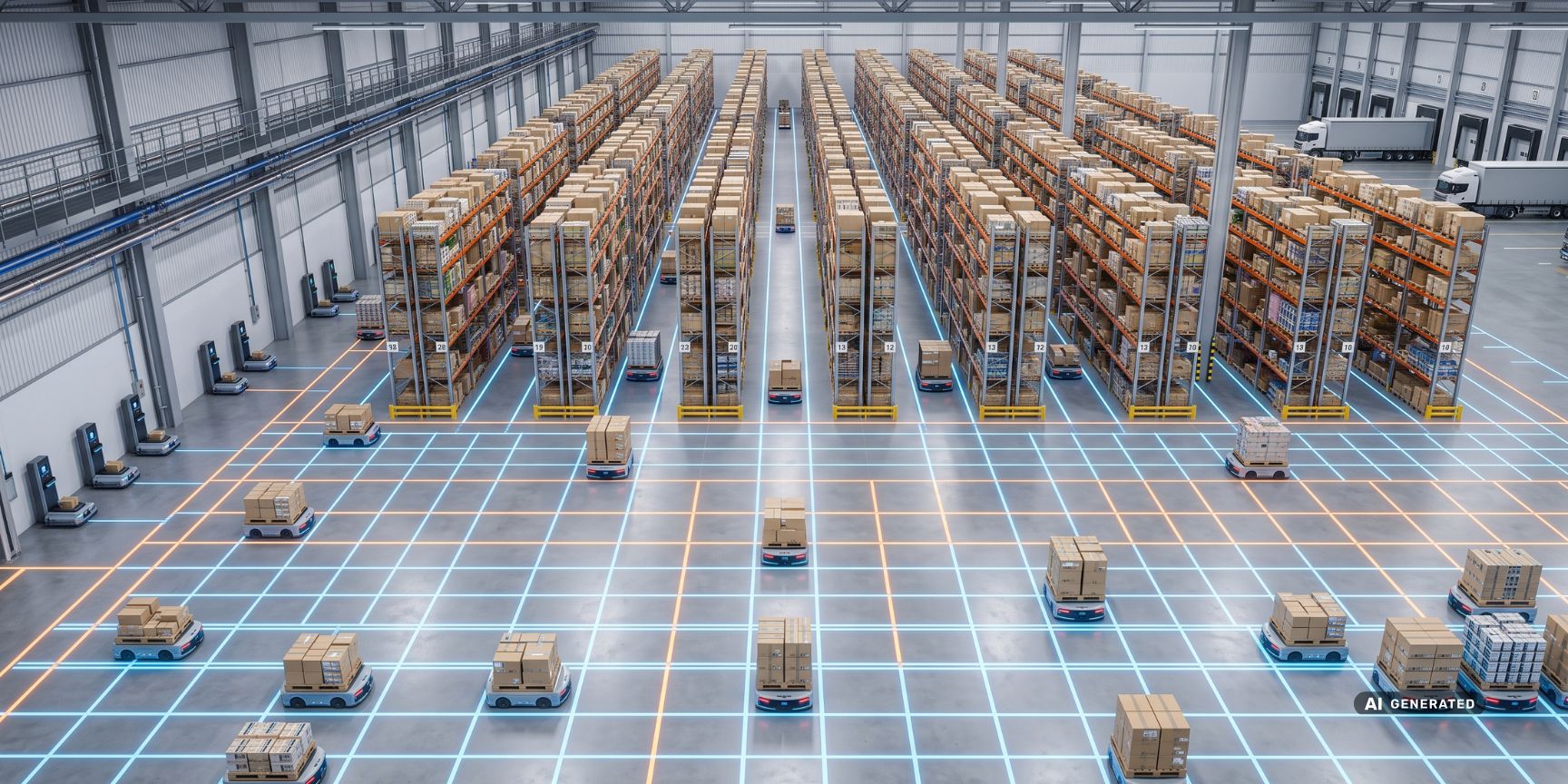
What are modular grid systems? (Definition)
A modular grid system describes the consistent, checkerboard-like and highly flexible division of space, technology and IT resources within a warehouse. Instead of dividing a logistics property into rigidly bricked or firmly bolted areas for incoming goods, storage and outgoing goods, the floor space is divided into standardised, equally sized parcels (grids).
These modules can be defined physically (e.g. by flexible partitions or sliding shelving systems) or purely virtual (by the warehouse management system). The primary goal is absolute adaptability: each grid can change its function as needed without the need for structural interventions in the hall.
The logistics property: structural requirements for the grid
A modular grid system can only develop its full performance if the logistics property (often referred to as a "grey box") offers the right infrastructural conditions. Not every existing property is immediately "grid-ready".
- Wide column grid: The structural column grid of the hall dictates the possibilities. Modern properties rely on large grid widths (e.g. 12 x 24 meters or 24 x 24 meters). The fewer load-bearing pillars cut through the space, the more freely the grids can be arranged.
- Floor conditions (point load & evenness): Since driveways and racks are flexibly moved, the entire industrial floor must have the highest load capacities (often 50 kN/m² or more). For automation technology, extremely high flatness tolerances (e.g. according to the FM2 standard) are mandatory over the entire surface.
- Decentralised media supply: Electricity, data lines and compressed air should be routed modularly from the ceiling (via media routes). This means that packing stations or value-added services (VAS) can be easily moved to any grid.
The strategic game changer in contract logistics
For logistics service providers (3PL) in contract logistics, flexibility is the most important selling point. They usually operate multi-user warehouses in which the goods of a wide variety of customers (from automotive spare parts to fashion) are stored under one roof. Since customer contracts often have terms of only three to five years, the space must be converted as quickly as possible in the event of a change of customers (third-party usability). This is where the modular grid system comes into its own: a grid that currently serves as a block storage (bulk) for pallets can be converted into a pick-and-pack area with shelving in just a few days. This agility minimizes vacancies and massively reduces expensive investment costs (CAPEX) for customer-specific special conversions.
Automation and robotics: When the grid comes alive
The concept of the grid system is the basic prerequisite for the use of state-of-the-art intralogistics technologies. The most prominent example of a radical, three-dimensional grid structure is the AutoStore system. Here, containers are stored extremely compacted in a gigantic aluminum grid (grid). Robots navigate on top of this grid, dig up containers and bring them to the pick ports. But even beyond such compact systems, grids are shaping automation: Autonomous mobile robots (AMR) and automated guided vehicles (AGVs/AGVs) require virtual grids for their navigation. The warehouse management system (WMS) dynamically assigns a function to each grid square (e.g. route, holding zone, buffer). If there is a risk of a traffic jam in an area, artificial intelligence (AI) redirects the robots over neighboring grid fields in milliseconds.
Facts, figures and figures: Profitability in check
The implementation of modular grid systems is a business necessity in order to counter the shortage of space and rising rents.
- Degree of space utilization: While classic layouts (with fixed, wide aisles) often only achieve an occupancy rate of 50 to 60%, dynamic grids enable space utilization of over 75 to 80%.
- Reduction of travel times: In conventional manual warehouses, up to 60% of working time is spent on walking or driving. Dynamic grid allocation – in which fast-moving items (A-items) are automatically placed in grids near the outgoing goods area – measurably reduces travel times by up to 20 to 30%.
- Scalability during peaks: Instead of having to rent external buffer warehouses during seasonal peaks (e.g. Black Friday), grids allow the temporary densification of aisles in order to push the capacity in one's own hall at short notice.
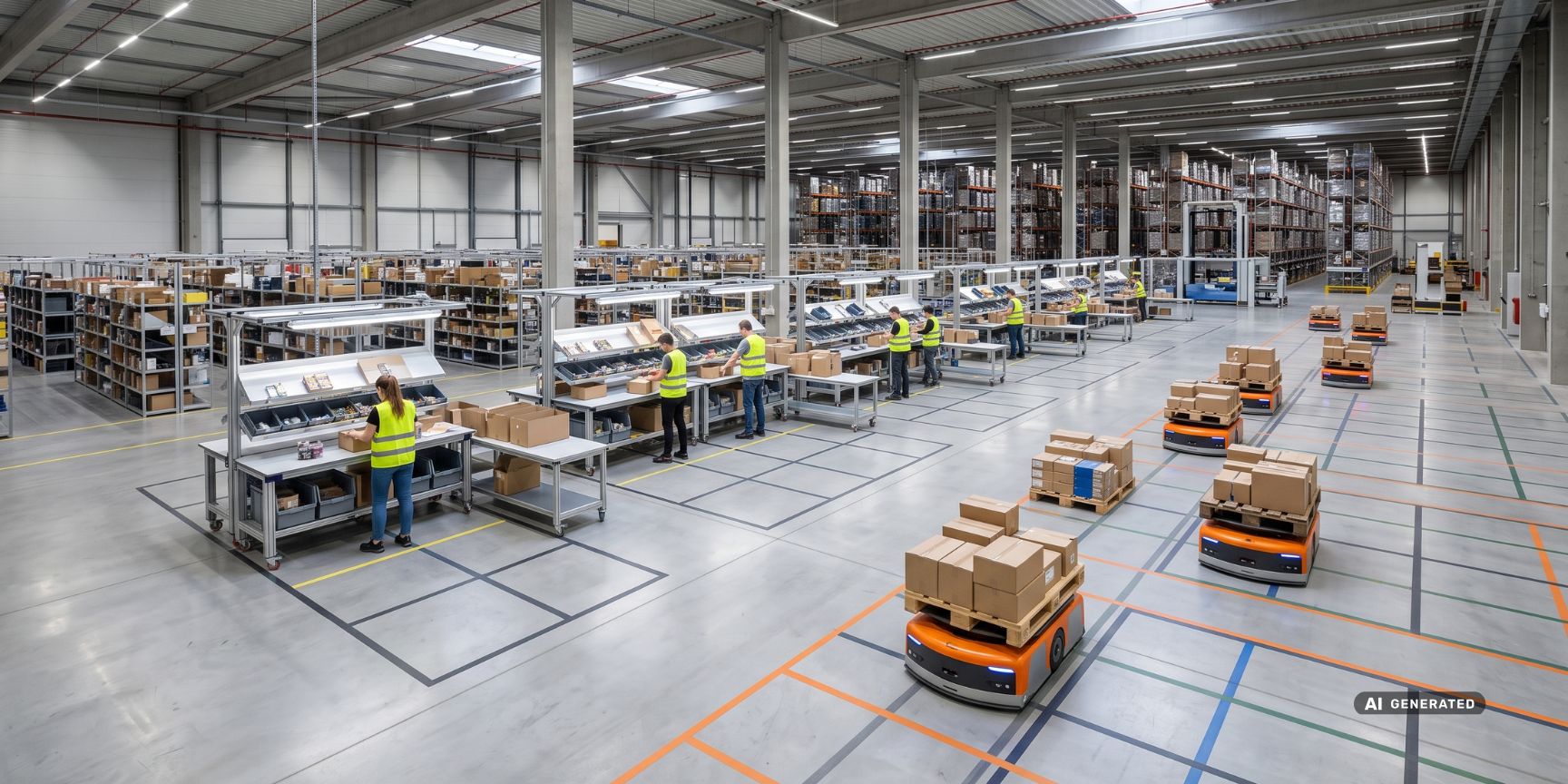
Planning and implementation: The digital twin
The introduction of a modular grid system begins long before moving into the hall. Today, planning is carried out data-supported by means of "digital twins". In a 3D hall simulation, the building is virtually laid out in grids to simulate the material flow under full load. In this way, collisions between forklift trucks, fire protection requirements and bottlenecks at loading gates can be tested before even a single shelf is set up in reality. A rigid IT system is the enemy of the grid: The WMS must have open interfaces (APIs) in order to be able to adapt zone definitions in real time.
Future Outlook: The Breathing Camp
The future of logistics real estate is modular and predictive. The grid of tomorrow will no longer be rescheduled manually, but controlled by artificial intelligence (predictive analytics). The system uses order data and weather forecasts to independently detect when demand peaks are building up and assigns new grid layouts to the autonomous robots overnight. The hall becomes a breathing machine that pulsates in time with global supply chains.
FAQ: Frequently asked questions about modular grid systems in logistics
Question: Is a modular grid system suitable for absolutely every industry?
Answer: In principle, yes, but industries with high volatility, extreme e-commerce growth or rapidly changing assortments (fashion, high-tech, FMCG) benefit most from the flexibility. For the pure long-term repository of heavy, unwieldy industrial plants (e.g. turbines), the approach is less relevant in practice.
Question: How does the grid system affect fire protection in the hall?
Answer: Modularity must never compromise fire protection. Sprinkler systems (ESFR), fire compartments and escape routes must be planned across grids and future-proof. In the event of massive changes to the grids (e.g. the conversion from a flat floor storage to multi-storey shelves), the fire loads must be recalculated.
Question: Are older existing properties (brownfields) suitable for grids?
Answer: Yes, but often with operational compromises. A very close-meshed column grid, uneven floors or low clearance heights (less than 10 meters) limit modular scalability. Comprehensive revitalization is often necessary before the grid principle can be applied in an economically efficient manner.

Your Ideal Logistics Warehouse
Browse listings for warehouse space, logistics real estate, industrial land, and contract logistics solutions.
Browse Exposés
Maximize Exposure for Your Warehouse Space
Showcase your logistics properties and attract qualified inquiries.
Discover Products