



The Supply Chain Act Germany (LkSG): How Transparency is Revolutionizing Logistics Site Selection
Table of Contents
- What the LkSG Means for Warehousing and Site Selection
- Moving Away from Pure Pricing: New Criteria for Site Selection
- The German GSCA in International Comparison
- Understanding the Shift: LkSG vs. The Upcoming CSDDD
- Facts and Figures: The True Cost of Non-Compliance
- Case Study: How "TechGear Europe" Restructured for Compliance
- Technology as the Key to Supply Chain Compliance
- Checklist: Preparing Your Warehousing for the LkSG
- Conclusion: Compliance as a Strategic Lever
The Supply Chain Act Germany (LkSG), often referred to as the German GSCA, has fundamentally changed the rules of the global economy. For businesses, this represents a massive paradigm shift: the days of choosing logistics locations and structuring warehousing based solely on lowest costs and fastest throughput times are permanently over. Today, a new factor has taken center stage: absolute transparency and legal accountability across the entire supply chain.
But what does the LkSG specifically mean for selecting the right logistics real estate? Why do companies need to adapt their supply chain compliance strategies? And how do these requirements differ on an international scale? This in-depth guide explores the strategic challenges and offers practical, actionable solutions for logistics decision-makers.
What the LkSG Means for Warehousing and Site Selection
Since January 2024, the LkSG applies to companies with 1,000 or more employees. It mandates that these organizations properly address human rights and environmental due diligence within their supply chains. Many people think of mines or factories abroad, but an often underestimated—yet highly relevant—segment of the supply chain under this law is warehousing and contract logistics. When a company stores goods in a distribution center, the 3PL operator becomes a direct supplier under the LkSG.
Key Practical Question:Can I be held liable if my logistics provider violates safety standards at their site?
Answer: Yes. If you fail to conduct a risk assessment and implement preventive measures, you face severe penalties from the Federal Office for Economic Affairs and Export Control (BAFA). The law requires you to know exactly who is working in your warehouse, what they are paid, and whether their working conditions meet international human rights standards.
Moving Away from Pure Pricing: New Criteria for Site Selection
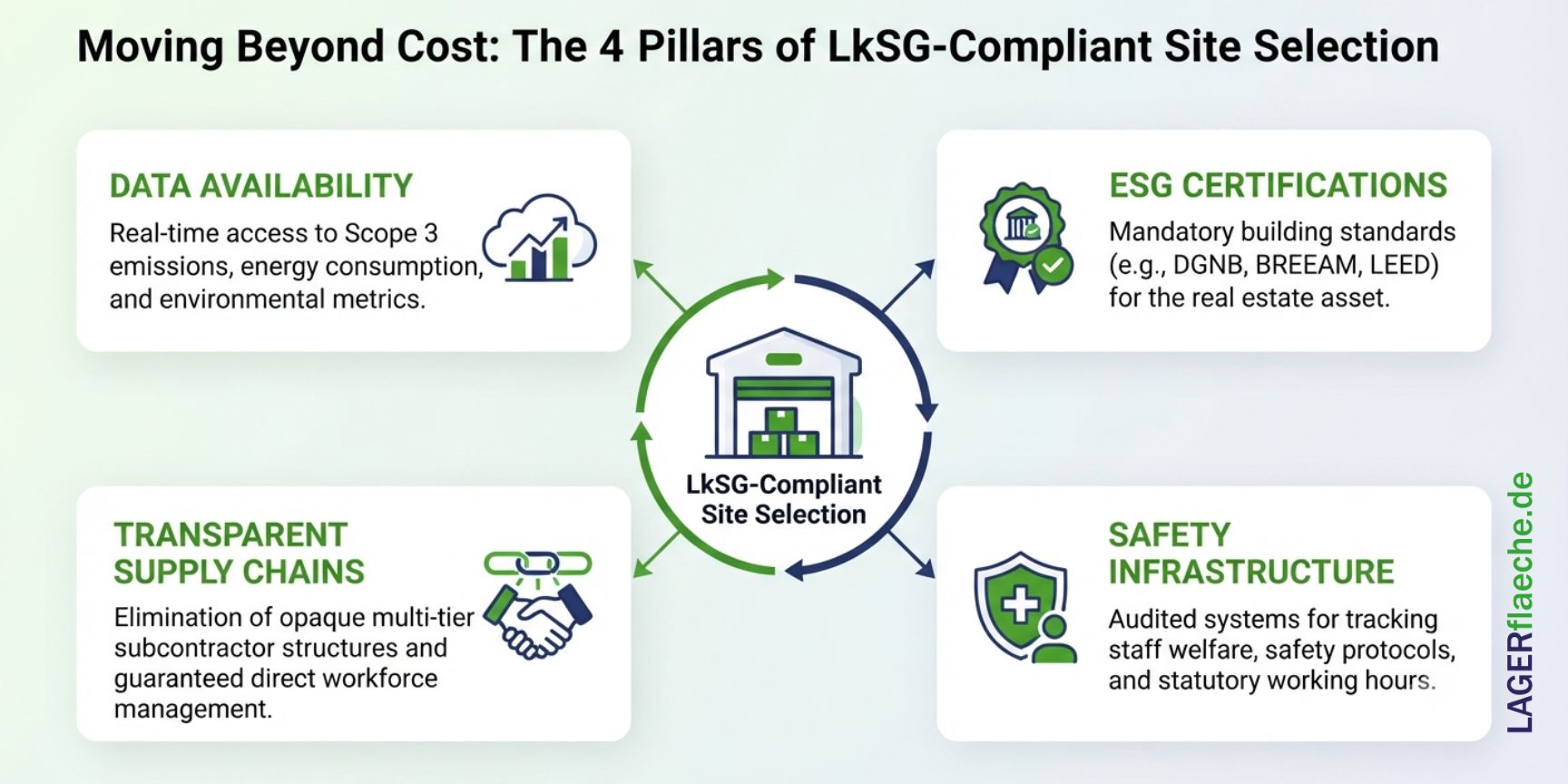
Historically, site selection followed a simple logic: lowest cost per square foot and port proximity. Because of the German GSCA, companies must now adapt their warehousing and stress-test their networks. The new criteria for tendering warehouse space now include:
- Data Availability: Can the 3PL or landlord provide real-time data on Scope 3 emissions and energy consumption?
- Certifications: Does the property hold recognized ESG certifications (DGNB, BREEAM, LEED)?
- Transparent Chains: Does the provider use its own workforce, or opaque subcontractor structures? The latter increases your risk exposure significantly.
- Safety Infrastructure: Are there automated and audited systems in place to monitor the welfare and working hours of the staff?
Companies are increasingly withdrawing from regions where this transparency cannot be guaranteed, a trend driving nearshoring to safer, more regulated jurisdictions.
The German GSCA in International Comparison
Logistics networks are global, making it crucial to understand how the German LkSG compares to international benchmarks.
- Germany (LkSG/GSCA): A preventive, high-bureaucracy model with significant fines (up to 2% of global revenue) and potential exclusion from public procurement.
- France (Loi de Vigilance): Focused on civil liability; companies can be sued directly by NGOs and unions for damages occurring anywhere in their supply chain.
- UK (Modern Slavery Act): Primarily focused on human trafficking rather than environmental or broader human rights. It requires an annual statement, which is less prescriptive than the German model.
- USA (UFLPA): Focused on targeted import bans (e.g., the Uyghur Forced Labor Prevention Act) rather than universal due diligence.
Understanding the Shift: LkSG vs. The Upcoming CSDDD
One of the most important questions for global businesses is: What is the difference between the German GSCA and the EU’s CSDDD?
The CSDDD (Corporate Sustainability Due Diligence Directive) will eventually supersede the German LkSG. It harmonizes requirements across the EU, introduces civil liability, and will eventually pull in medium-sized enterprises much more aggressively than the current German law. For logistics professionals, this means the current "patchwork" of national regulations will be replaced by a stricter, continent-wide standard. Early adoption of high compliance standards today is a vital future-proofing strategy.
Facts and Figures: The True Cost of Non-Compliance
Adapting warehousing structures undeniably costs money, but the cost of inaction is significantly higher:
- Financial Fines: Up to 2% of global annual turnover for serious breaches.
- Procurement Bans: Companies can be barred from public tenders in Germany for up to three years (Source: Federal Law Gazette, LkSG § 22).
- Reputational Damage: According to the Allianz Risk Barometer, supply chain disruptions and human rights scandals are among the top global business risks. A single incident in a remote warehouse can destroy years of brand building.
Case Study: How "TechGear Europe" Restructured for Compliance
TechGear Europe, a Munich-based electronics firm (1,500 employees), faced massive risks with a Southeast Asian hub relying on multi-tier subcontractors. They shifted their consolidation warehouse to Pilsen, Czech Republic. By moving to a DGNB Platinum-certified site, they gained:
- Full Compliance: EU labor standards in a high-risk sector.
- Data Transparency: API-driven dashboards for energy and labor metrics.
- Risk Mitigation: The firm eliminated the legal risks of their previous model, which lacked oversight of local cleaning and security contractors.
Though their warehousing costs rose by 12%, transit times to Western Europe dropped, and the firm integrated the site's ESG data into its CSRD reports, turning a compliance cost into a reporting asset.
Technology as the Key to Supply Chain Compliance
To meet these demands, the infrastructure of logistics properties must undergo a digital upgrade:
- Smart Metering: IoT sensors for precise energy/water tracking.
- Digital Access Control: Electronic time-tracking to prove statutory working-hour compliance.
- Supplier Management Portals: Centralized cloud-based systems for auditing the compliance status of all site subcontractors.
Checklist: Preparing Your Warehousing for the LkSG
If you are planning to lease or renew logistics space, use this checklist to ensure compliance:
Conclusion: Compliance as a Strategic Lever
The Supply Chain Act Germany and the impending CSDDD are forcing the logistics sector into an era of professionalization. Companies that proactively adapt their warehousing and choose ESG-compliant sites will turn legal obligations into a competitive advantage. Today, investors, customers, and regulators demand the same thing: a supply chain that is transparent, clean, and fair.
Latest Blog Posts
Stay up to date with the newest trends, insights, and tips in warehouse and logistics. Our latest articles help you navigate the industry with confidence.

Data Centres vs. Logistics Facilities: The Race for Power and Land
Across Europe, logistics operators are competing for more than land and transport access. They increasingly need something much harder to secure: grid capacity. Data centres are intensifying that competition — and changing how logistics locations are evaluated....

Chinese companies discover Europe's logistics real estate
Chinese companies are becoming an increasingly visible user group in Europe's logistics real estate market. What does this mean for warehouse space, 3PL structures and the requirements for European logistics locations?...
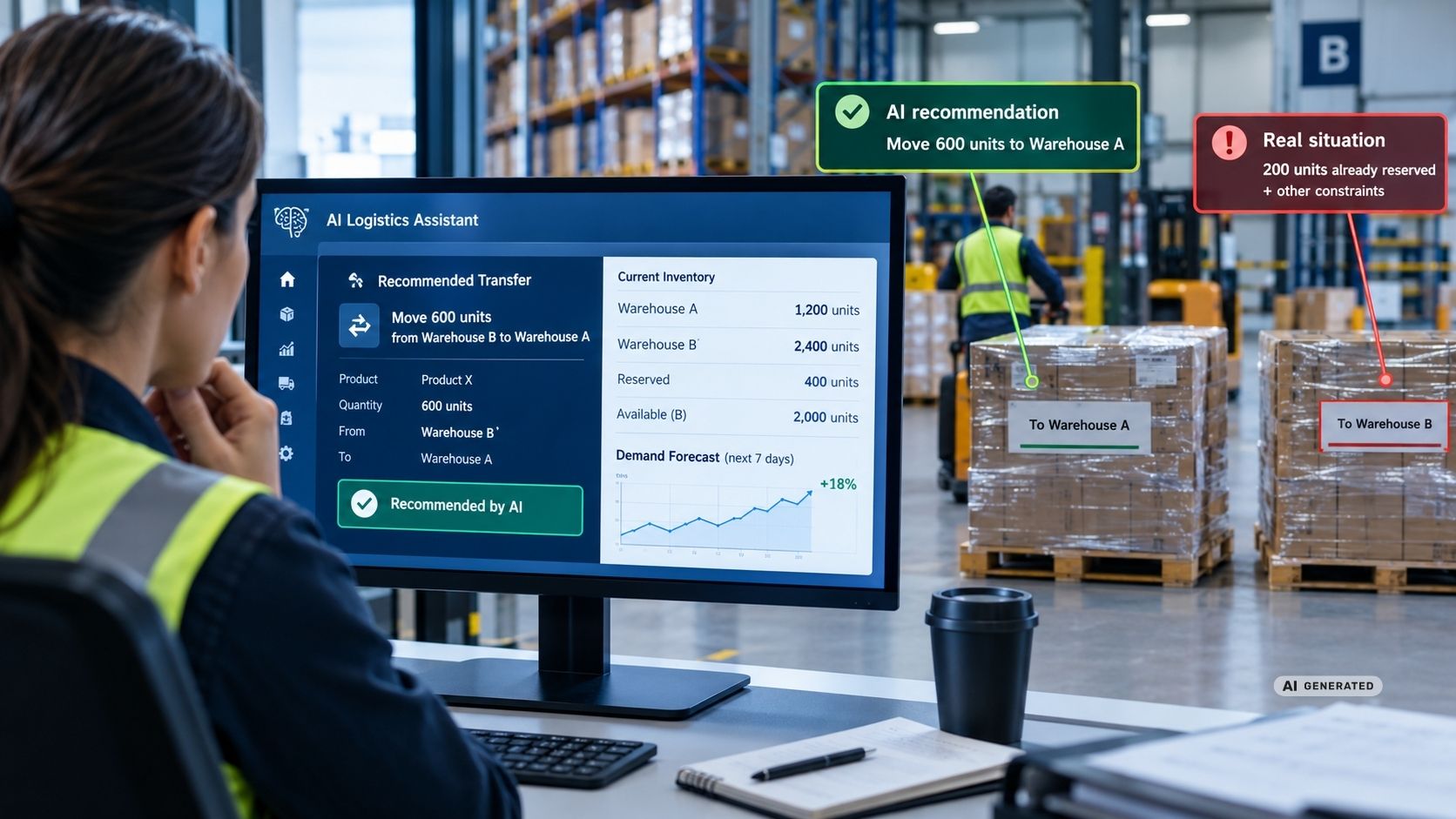
AI Hallucinations in Logistics: When AI Plans the Wrong Delivery
AI can analyze enormous amounts of logistics data — but it can also produce a convincing answer that is simply wrong. The critical question is not whether AI makes mistakes, but what happens when a wrong recommendation becomes an operational decision....
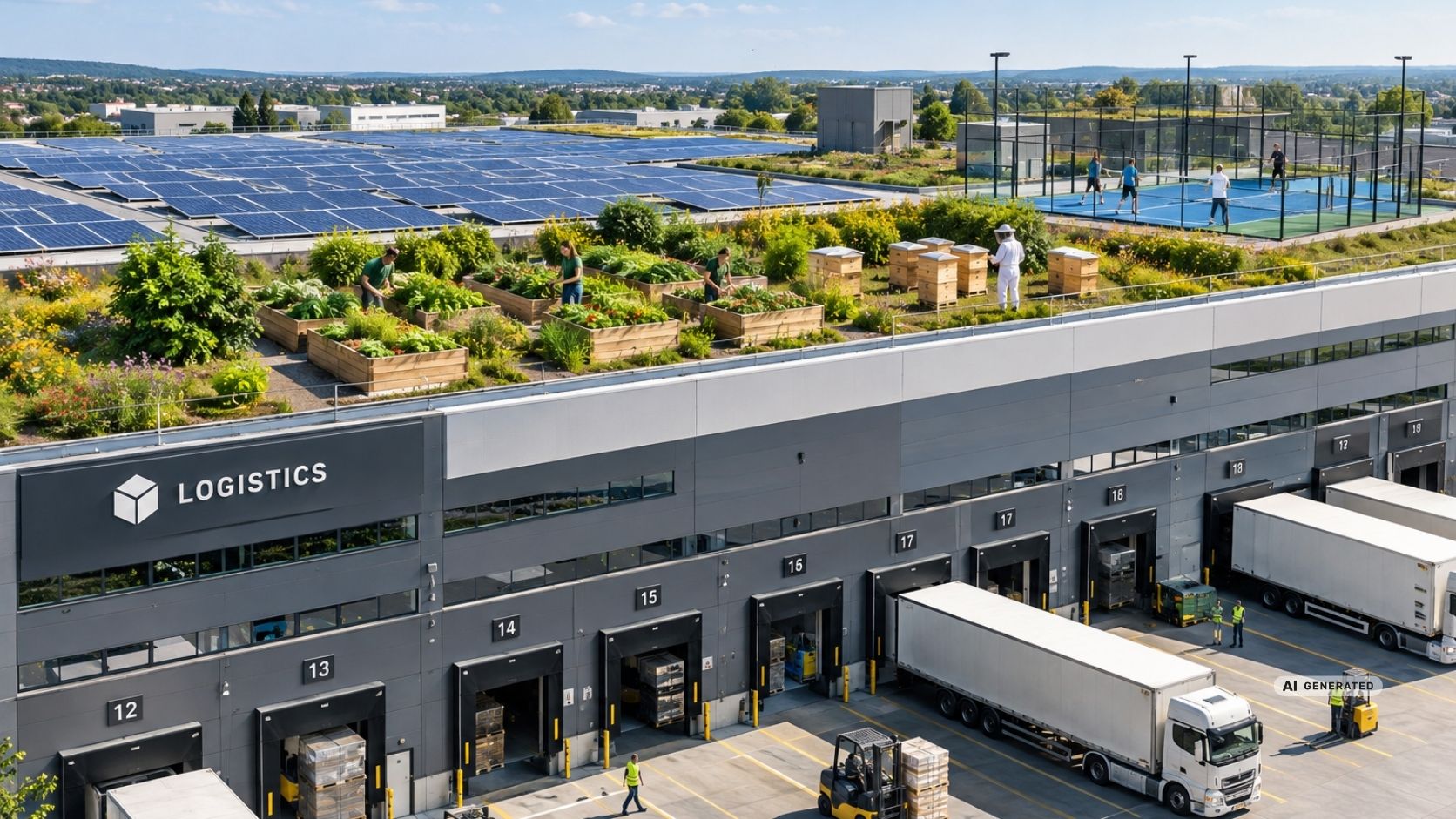
The Green Revolution on the Hall Roof: From Concrete Block to Ecological Power Plant?
Logistics roofs can do more than PV: greening, bees, urban farming and even sports areas turn unused roof space into multifunctional rooms....