


Freight Forwarder, Carrier or Contract Logistics Provider? Deciphering the Great Confusion of Terms in Logistics
Table of Contents
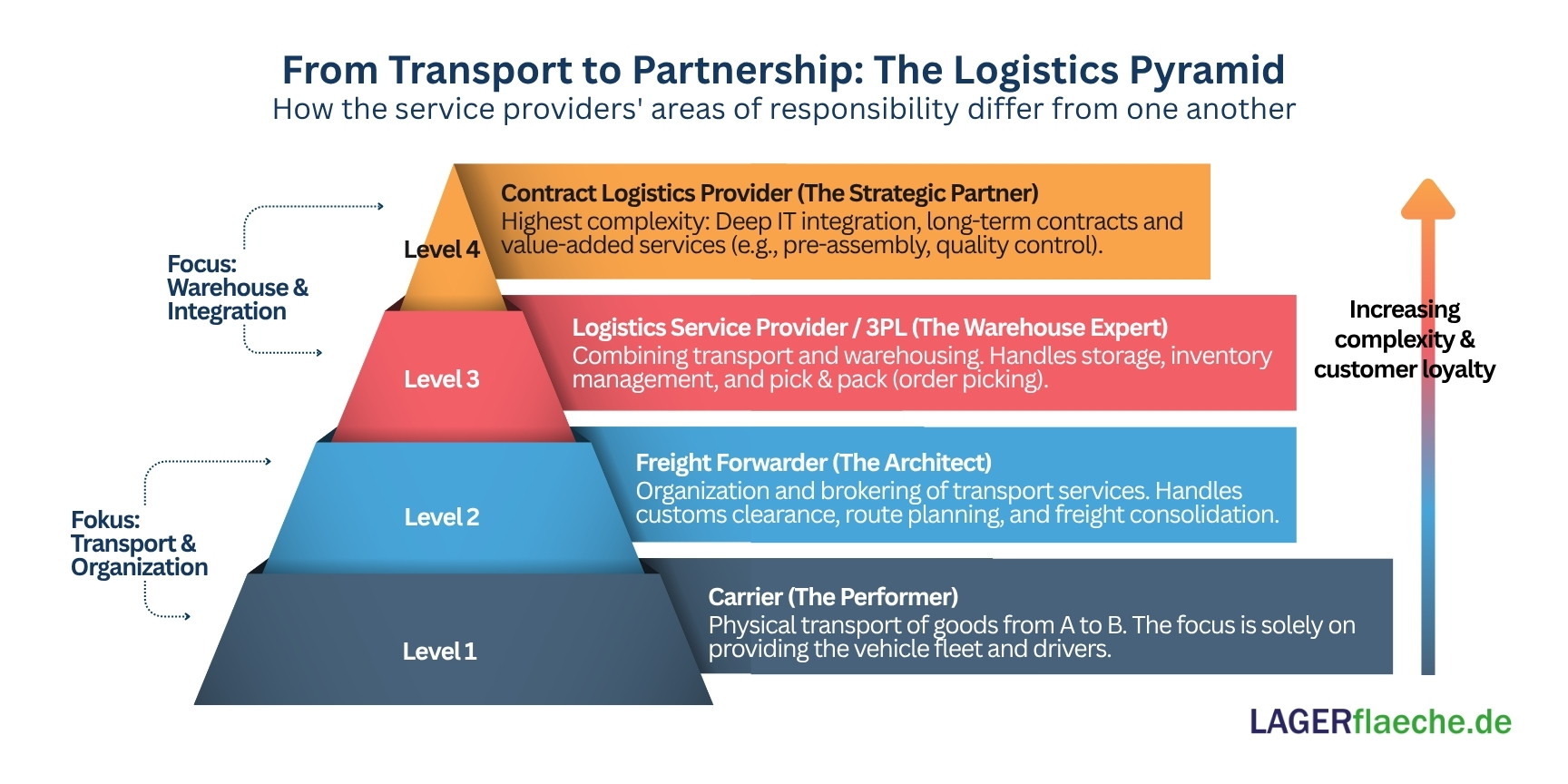
- The Carrier & the Transport Company: The Muscles of Logistics
- The Freight Forwarder: The Architect of Freight Transport
- The Logistics Company / Logistics Service Provider (3PL): The Step into the Warehouse
- Contract Logistics: The Premier Class of Strategic Partnership
- International Differences: Europe and the World in Comparison
- Practical Example: The Path from Parcel Shipping to Contract Logistics
- Conclusion: Who is the Right Partner for You?
If you want to optimize your supply chain, sooner or later you will be faced with the question: To whom do I actually outsource my processes? The logistics industry is full of terms that are often (and wrongly) used synonymously in everyday life. There is talk of a "freight forwarder" when a "carrier" is actually meant, and the "logistics service provider" is often lumped together with the "contract logistics provider".
But what are the legal and operational differences? Who assumes which liability? Which partner is the right one for the pure movement of pallets, and who integrates deeply into your IT structures? In this article, we shed light on the core competencies of the individual actors, look at the legal basis and show how these roles differ in international and European comparison.
The most frequently asked questions in advance: What you will learn in this article
- What is the legal difference between a freight forwarder and a carrier?
- Why isn't every transport company a logistics company at the same time?
- When do we speak of 3PL (Third Party Logistics) and when does real contract logistics begin?
- How do the logistics markets in Germany differ from those in Eastern Europe, Great Britain or the USA?
- Which service provider is best suited to my current business growth?
The Carrier & the Transport Company: The Muscles of Logistics
When we talk about the physical movement of goods, we are talking about the carrier. The transport company is the classic "asset-based" player. He owns the trucks, the ships or the aircraft and employs the driving and escort personnel.
- The focus: the physical execution of the transport from A to B.
- Legal basis (Germany): The freight contract is regulated in the German Commercial Code (HGB) in §§ 407 et seq. The carrier owes the success – namely the intact and punctual arrival of the goods at their destination.
- The reality: Many pure transport companies do not have their own storage space. Their business model is based on maximum utilization of the fleet and the optimization of routes and driving times.
The Freight Forwarder: The Architect of Freight Transport
One of the biggest misconceptions in the industry: The freight forwarder is the one who drives the truck. Wrong! A pure freight forwarder often does not own a single truck. He is the organizer, the architect and the mediator.
- The focus: the organization of the transport. The freight forwarder selects the appropriate means of transport, determines the route, bundles general cargo into consolidated loads (consolidation) and takes care of formalities such as customs clearance.
- Legal basis: Regulated in the freight forwarding contract (§§ 453 et seq. HGB). The freight forwarder does not owe the physical transport, but the proper provision of the transport. (Exception: "Self-entry" according to § 458 HGB, if the freight forwarder carries out the transport with his own trucks himself).
- Facts & Figures: According to the German Freight Forwarding and Logistics Association (DSLV), the logistics industry in Germany generates around 319 billion euros (as of 2022). Freight forwarders are the intellectual link that controls complex, often multimodal (truck, rail, ship) chains.
The Logistics Company / Logistics Service Provider (3PL): The Step into the Warehouse
The term logistics company or logistics service provider is not sharply defined by law like the freight forwarder. In modern supply chain management, this is often referred to as 3PL (Third Party Logistics).
While freight forwarders and carriers operate mainly by road (or rail/sea), the logistics service provider goes into the hall. It combines transport with warehousing.
- Focus: warehousing, inventory management, pick & pack, labeling and returns management.
- Benefit: A retailer stores all of its physical products with the logistics service provider. When an order is received in the online shop, the service provider packs the goods and hands them over to a carrier (or parcel service). The company therefore no longer needs its own storage space .
Contract Logistics: The Premier Class of Strategic Partnership
Contract logistics is the highest and most complex form of service. This is not about short-term transport orders or temporary storage, but about long-term, contractually fixed partnerships (often over 3 to 5 years or longer).
- The focus: deep integration into the customer's value chain. The contract logistics provider takes on tasks that go far beyond standard logistics. This is referred to as Value Added Services (VAS).
- Examples of VAS: Pre-assembly of components for the automotive industry, quality controls, repairs, ironing on textiles (fashion logistics) or just-in-sequence delivery to the assembly line.
- IT integration: The IT systems (ERP, WMS) of the customer and service provider are usually completely merged with each other.
- Investments: Contract logistics companies often invest heavily in special logistics properties, automation technology (such as AutoStore) or special shelving systems that are precisely tailored to this one customer (dedicated warehouse).
International Differences: Europe and the World in Comparison
The distribution of roles in logistics is by no means globally homogeneous. Historical developments, laws and infrastructure have a massive impact on the markets. A look across the borders:
Germany: The structured all-rounder
Germany is the largest logistics market in Europe. Characterized by strong regulations (HGB, ADSp), there is historically a very sharp separation here, but also a strong merger. Many German freight forwarders have developed into comprehensive contract logistics companies (e.g. Dachser, Rhenus, Kuehne+Nagel) that offer everything from a single source (asset-based and non-asset-based).
Eastern Europe (Focus: Poland & Lithuania): The dominance of carriers
While strategic contract logistics is booming in Germany, countries such as Poland and Lithuania are the undisputed heavyweights in the field of carriers.
- Fact: According to Eurostat (2022), Polish transport companies provide almost 20% of the total European road freight transport service.
- Why? Cost advantages for drivers and a strategic fleet policy have led to Eastern European companies dominating the pure transport market (often on behalf of Western European freight forwarders) (keyword: cabotage).
Great Britain & Netherlands: Hotspots of contract logistics
The Netherlands (with the port of Rotterdam) and the UK have an extremely strong 3PL and contract logistics landscape.
- Why? The Netherlands is the classic European gateway. Goods from Asia arrive here and not only have to be transported onward, but also prepared for the European market (VAS, customs). In the UK, the early boom in e-commerce meant that highly automated contract fulfillment centers became standard much earlier than in the rest of Europe.
USA: Freight Brokers vs. Carriers
The US market is massively different. The classic German "freight forwarder" is often divided there. There is the freight broker (pure intermediary of cargo space, owns no trucks, often only an office and telephone/software) and the carrier (carrier). Due to the gigantic distances, the market is more fragmented. In the USA, contract logistics is usually handled by huge 3PL corporations on gigantic areas, often far outside the cities (mega-warehouses).
Practical Example: The Path from Parcel Shipping to Contract Logistics
To make the theory tangible, let's look at the life cycle of a fictitious company: TechGear GmbH (a fast-growing retailer of e-bike accessories).
- Phase 1 (Start-up): TechGear is stored in its own basement. Every day, they call a transport company (e.g. CEP service such as DHL/DPD) that physically picks up the parcels.
- Phase 2 (Growth): TechGear is now importing containers from Asia. They hire a freight forwarder for this. He books the ship, regulates customs in Hamburg and organizes the truck to TechGear. TechGear rents its own storage space, but is soon bursting at the seams.
- Phase 3 (Scaling): TechGear hands over the entire warehouse to a logistics service provider (3PL). This provides the hall, the staff and the forklifts. He stores the goods and picks the orders.
- Phase 4 (Perfecting): TechGear wants e-bike motors to be tested before shipping, loaded with special software updates, and packaged in environmentally friendly, customized boxes. You conclude a 5-year contract with a contract logistics provider. The latter is setting up its own small workshop in the warehouse, integrating its software deeply into TechGear's Shopify store and taking over the complete quality and returns management (value-added services).
Conclusion: Who is the Right Partner for You?
The question of whether you need a carrier, freight forwarder or contract logistics provider depends solely on the depth of your processes to be outsourced.
- Are you only looking for cargo space for pallet A to B? Find a carrier.
- Do you need someone to organize complex imports, customs duties and pre-/ onward carriage? You need a freight forwarder.
- Do you want to save your own warehouse space and staff and hand over warehousing? A logistics service provider (3PL) is the choice.
- Do you want a strategic partner who refines, assembles and tightly integrates your products with your IT? Then contract logistics is your way to success.
In a world where margins are shrinking and competition is becoming fiercer, choosing the right logistics service – and the associated storage space – is the decisive lever for business success. Stop mixing up terms, but demand exactly what your supply chain needs.
💡 Are you currently looking for suitable logistics or contract logistics space to outsource your processes? Visit our platform on LAGERflaeche.de and find the ideal location and service provider for your business model directly!
Latest Blog Posts
Stay up to date with the newest trends, insights, and tips in warehouse and logistics. Our latest articles help you navigate the industry with confidence.

Data Centres vs. Logistics Facilities: The Race for Power and Land
Across Europe, logistics operators are competing for more than land and transport access. They increasingly need something much harder to secure: grid capacity. Data centres are intensifying that competition — and changing how logistics locations are evaluated....
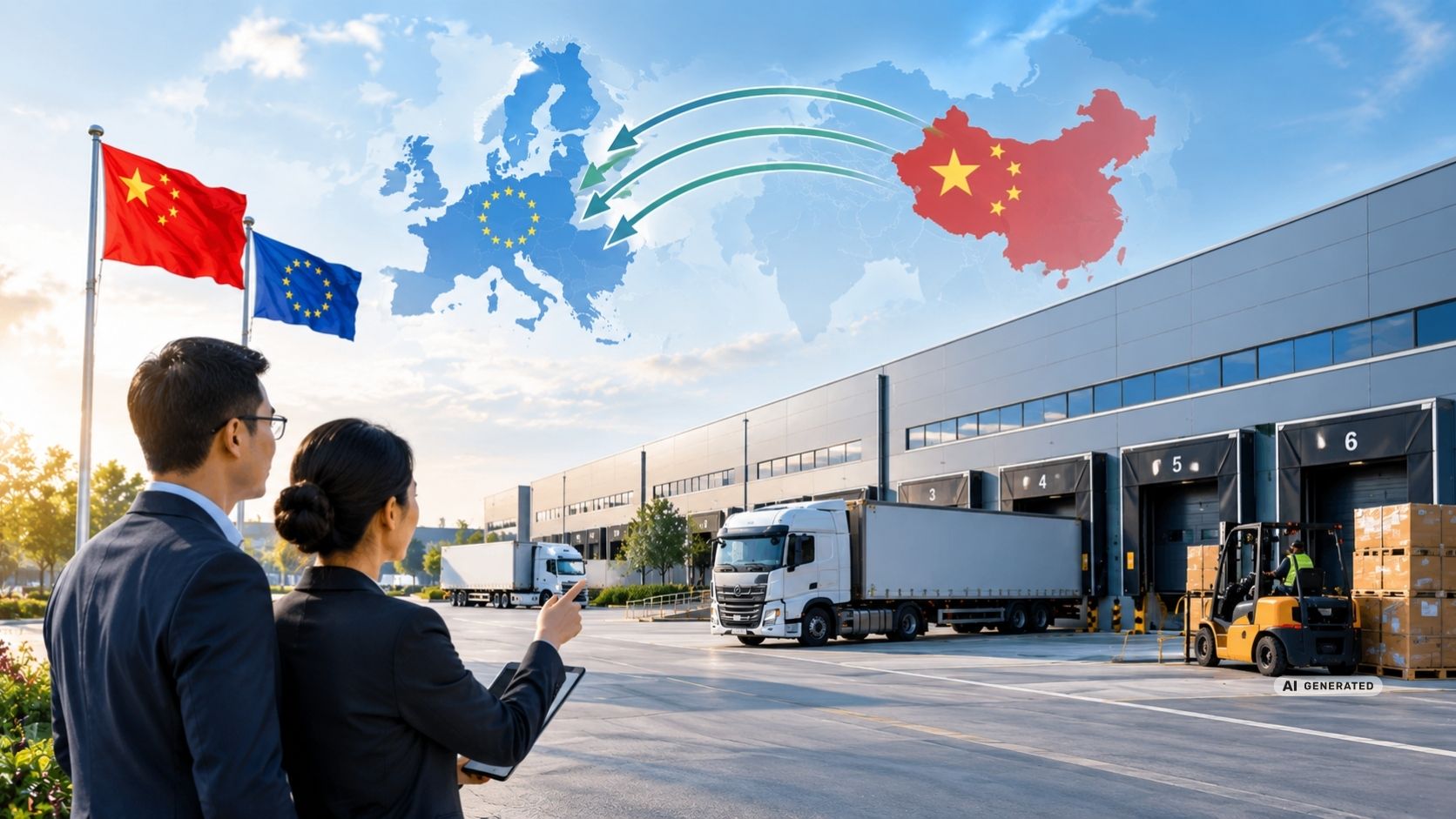
Chinese companies discover Europe's logistics real estate
Chinese companies are becoming an increasingly visible user group in Europe's logistics real estate market. What does this mean for warehouse space, 3PL structures and the requirements for European logistics locations?...
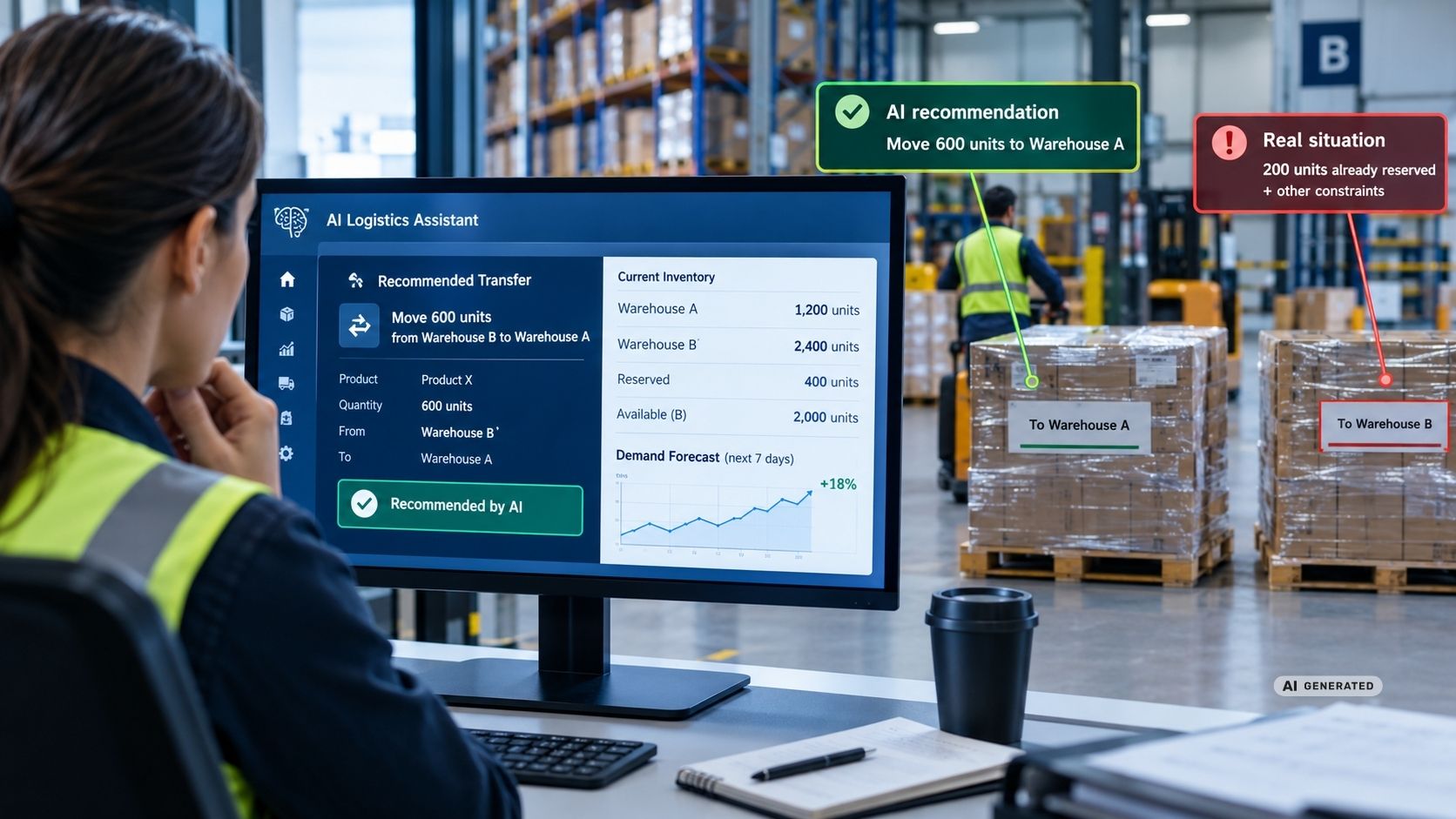
AI Hallucinations in Logistics: When AI Plans the Wrong Delivery
AI can analyze enormous amounts of logistics data — but it can also produce a convincing answer that is simply wrong. The critical question is not whether AI makes mistakes, but what happens when a wrong recommendation becomes an operational decision....
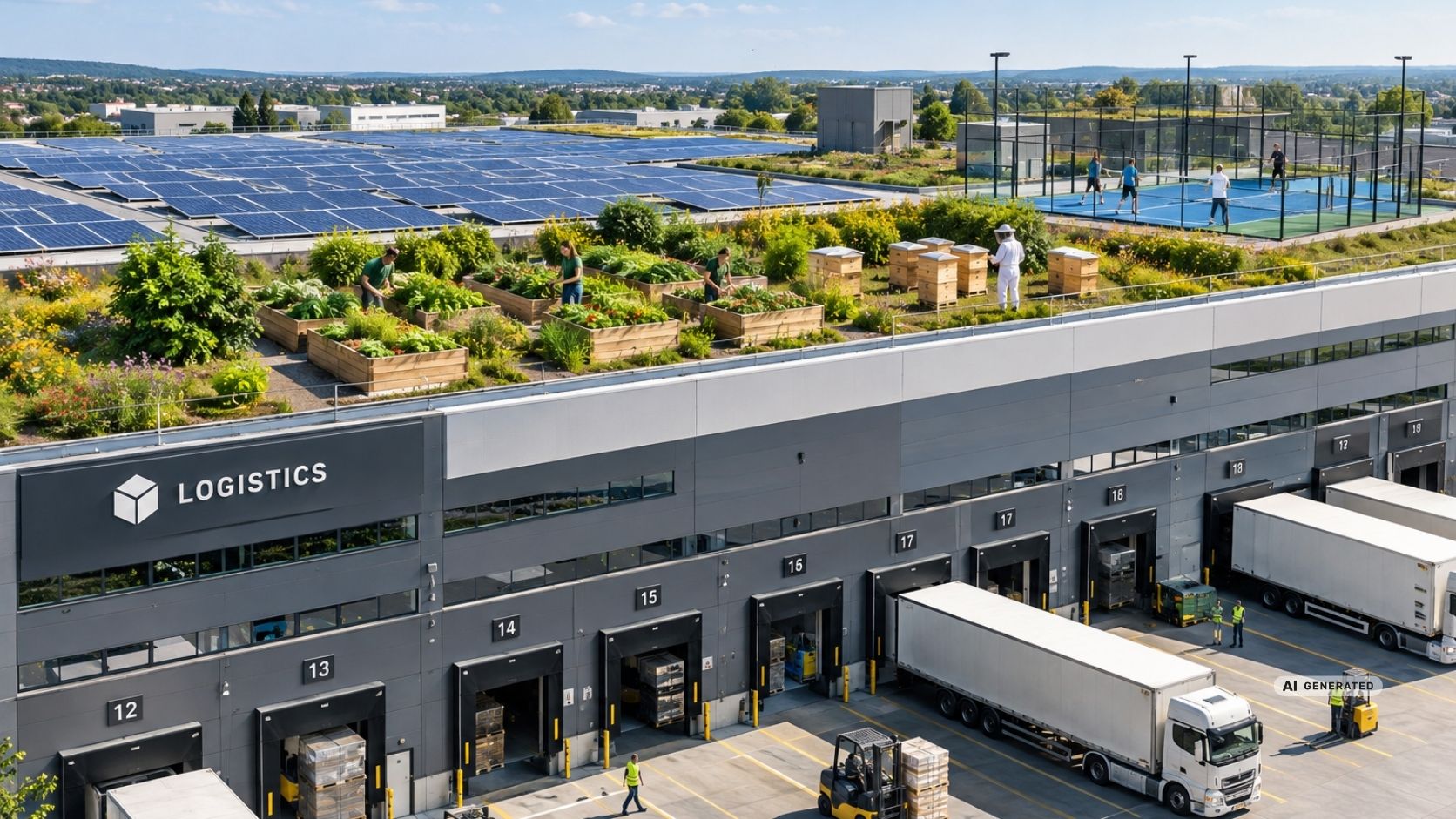
The Green Revolution on the Hall Roof: From Concrete Block to Ecological Power Plant?
Logistics roofs can do more than PV: greening, bees, urban farming and even sports areas turn unused roof space into multifunctional rooms....