


Global Logistics in Online Retail: B2C & B2B Success Factors and Challenges
Welcome to a world where a click can send your product across continents! Online retail has fundamentally transformed our shopping habits, pushing logistics to the very heart of the global economy. But what processes underpin seamless deliveries, and which companies dominate the business – both in the B2C (Business-to-Consumer) and the increasingly vital B2B (Business-to-Business) sectors? Dive into the fascinating world of global e-commerce logistics.
The Core of E-Commerce: Why Logistics is Crucial for B2C & B2B
Imagine this: you order a product online, but it never arrives or is damaged. Frustrating, right? This perfectly illustrates the immense importance of a robust logistics chain. It's the invisible backbone of online retail, ensuring that products reach customers promptly, intact, and efficiently from seller to buyer. This holds true for a single package in the B2C sector as much as for palletized goods or complex supply chains in the B2B segment. From warehousing and transportation to last-mile delivery – every step must be perfectly orchestrated to guarantee customer satisfaction and, consequently, business success.
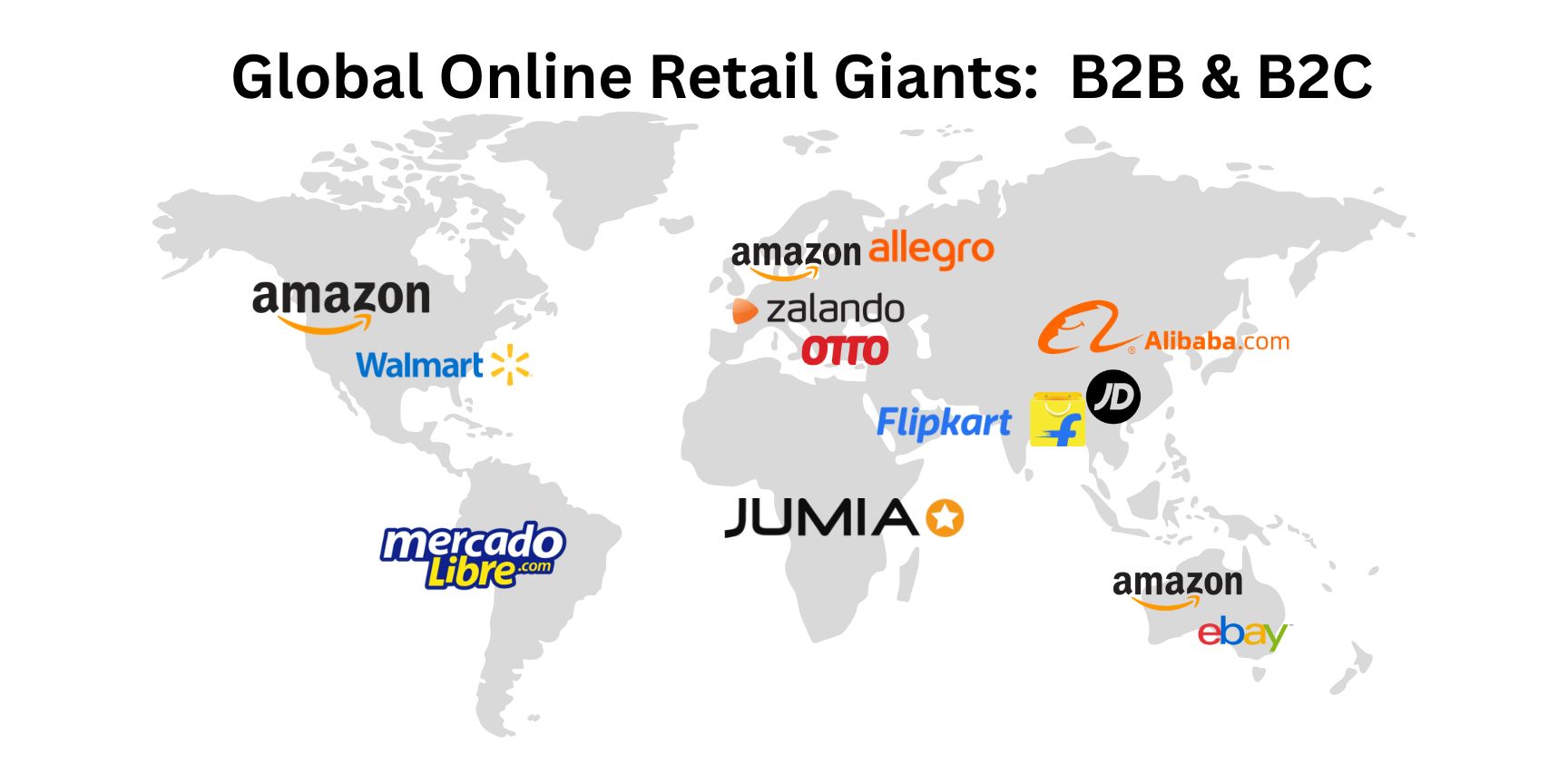
Global Online Retail Giants: Market Leaders in B2C and B2B E-commerce
The global online retail market is fiercely competitive, with several companies evolving into true titans. Their names are widely recognized. Please note that the market shares and figures provided are estimates and can change dynamically (as of mid-2025), as the market is constantly evolving and different analytics firms use varying metrics (e.g., Gross Merchandise Volume (GMV) vs. revenue).
North America:
- B2C: Amazon is the undisputed market leader. Amazon's share of total US e-commerce sales is often cited in the range of 35-40% (including its own sales and marketplace). Other key B2C players include Walmart, Target, eBay, Wayfair, and Etsy.
- B2B: Amazon Business is gaining significant ground, generating approximately $35 billion USD in revenue in 2023, underscoring its position as the largest B2B online marketplace. Traditional distributors like Grainger and Fastenal are also massively shifting their business online.
Europe:
- B2C: Amazon is a major player here too. Other significant players include Zalando (a leader in the online fashion market), Otto (Germany), Bol.com (Netherlands/Belgium), and Allegro (Poland). International players like Shein and AliExpress also have a strong B2C presence.
- B2B: In the B2B sector, established wholesalers like Würth or Sonepar are heavily expanding their digital channels. Specialized B2B platforms and marketplaces for specific industries are also growing in importance, though consolidated market shares are scarce here.
Asia (excluding India):
- B2C: In China, Alibaba with Tmall and Taobao dominate the market, together often holding the largest share (often over 50%) of GMV. JD.com is China's second-largest B2C retailer, frequently cited with around 17-20% market share. Shopee leads in Southeast Asia, Coupang in South Korea, and Rakuten in Japan.
- B2B: Alibaba.com is the world's largest B2B platform for wholesale trade. Asia, led by China, is the world's largest B2B e-commerce market, representing 78.0% of global B2B GMV in 2023.
India:
- B2C: The Indian e-commerce market is growing rapidly. Flipkart (majority-owned by Walmart) and Amazon India are the leading players. Flipkart held a market share of around 35%, with Amazon India closely following at about 32% in the Indian e-commerce market, according to some reports.
- B2B: Platforms like IndiaMART and TradeIndia are vital hubs for digitizing B2B trade.
South America:
- B2C: Mercado Libre is the clear B2C market leader in Latin America, holding a significantly higher share than its closest competitors. Amazon also has a growing presence.
- B2B: Specialized platforms and the digital channels of traditional wholesalers are expanding.
Africa:
- B2C: Jumia is considered the leading B2C provider on the continent. Takealot in South Africa is also a significant player. However, the market is still very nascent and fragmented.
- B2B: B2B e-commerce here is in its early stages but holds enormous potential, particularly in sectors like agricultural products or building materials.
Australia:
- B2C: Amazon is strong here too, alongside local B2C providers such as eBay Australia, Woolworths Online and Coles Online (groceries), as well as Kogan and The Iconic (fashion).
- B2B: Digital offerings from wholesalers and specialized platforms are developing in this region.
Logistics in Asia (China & Southeast Asia): Speed, Scale & Complexity
Asia, particularly China and Southeast Asia, is the world's largest e-commerce market. The challenges for logistics providers here are immense:
- Enormous Volumes: The sheer quantity of B2C packages demands massive, highly automated sorting centers and supply chains. In the B2B sector, it's about the efficient handling of container loads and complex supply chains for global manufacturing.
- Urban Agglomerations: Last-mile delivery in densely populated metropolitan areas requires sophisticated solutions – from parcel lockers to coordinating large deliveries for commercial customers.
- Infrastructure Disparities: While major cities offer modern logistics infrastructure, delivery in rural areas can be a significant challenge for both end-consumers and smaller businesses.
- Efficiency & Cost: Competition is brutal. Logistics providers must operate extremely cost-efficiently to survive – whether handling millions of B2C shipments or optimizing Just-in-Time deliveries in B2B.
India: The Growing E-commerce Market & Its Logistics Hurdles
India is one of the fastest-growing e-commerce markets globally and presents unique challenges for logistics providers:
- Geographical Expanse & Diversity: From metropolises to remote villages, delivery must adapt to varied conditions, both for B2C parcel services and for supplying businesses in rural areas.
- Infrastructure Development: Although infrastructure is rapidly improving, bottlenecks still exist in roads, warehouses, and transportation methods, especially outside major cities. This impacts both B2C and B2B supply chains.
- Payment Methods & Preferences: "Cash on Delivery" is still widespread and requires specific logistics processes for cash handling in the B2C sector. In the B2B segment, complex credit terms and payment modalities often need to be accommodated.
- Addressing & Localization: Many addresses are not precisely mapped, complicating delivery and requiring detailed local knowledge – an issue affecting both B2C and B2B couriers.
- Diversity of Transport Modes: From modern delivery vans to traditional rickshaws, various transportation methods are used to cover the "last mile" – for individual parcels in B2C, and for smaller commercial deliveries in B2B.
Europe: Complex Logistics Due to Diversity – Challenges for B2C and B2B
Europe is a patchwork of different countries, languages, laws, and infrastructures. This presents particular tasks for logistics providers:
- Cross-Border Logistics: Each country has its own customs regulations, taxes, and delivery standards, making international B2C delivery complex. In the B2B sector, specific import/export regulations and certifications add further layers of complexity, requiring precise planning.
- Diverse Geographical Conditions: From alpine regions to islands, delivery requires flexible solutions for both market segments.
- Labor Costs & Staff Shortages: In many European countries, labor costs are high, and there's a shortage of skilled personnel for both warehousing operations and transportation tasks.
- Sustainability Pressure: The demand for eco-friendly logistics is growing louder, affecting B2C deliveries (electric vehicles, parcel lockers) as well as B2B transportation (optimization of truck utilization, multimodal concepts).
North America: Vast Distances, Automation & High Customer Expectations
North America is characterized by its vastness and highly developed logistics infrastructure:
- Long Distances:Transportation across the continent demands efficient networks of roads, rail, and air freight – essential for rapid B2C delivery and reliable B2B supply.
- Labor Shortage: Particularly in the truck driver sector, there's a persistent shortage, impacting both segments.
- Technology & Automation: Many companies are investing heavily in warehouse automation, drone delivery, and autonomous vehicles to boost efficiency and meet high B2C delivery expectations. In the B2B sector, these technologies enable more precise and faster processing of bulk orders.
- Customer Demands: The expectation for fast deliveries is very high ("Same-Day Delivery" in B2C, "Just-in-Time" in B2B).
Emerging Markets: E-commerce Growth & Specific Logistics Issues
In South America, Africa, and other parts of Asia, we are witnessing enormous e-commerce growth, coupled with specific challenges:
- Infrastructure Gaps: Often, there's a lack of well-developed road networks, reliable power supplies, and modern warehouse infrastructure, which complicates B2C delivery and makes B2B supply chains vulnerable.
- Payment Systems: The acceptance of online payment methods is not yet as widespread as in developed countries. Cash on Delivery is often still the norm in the B2C sector. In the B2B segment, local financing and payment models often need to be considered.
- "Last Mile" Challenges: Delivery to remote areas or informal settlements requires creative solutions and local knowledge – for both end-consumers and small to medium-sized businesses.
- Security: In some regions, security concerns can play a role, influencing the planning of both B2C deliveries and B2B transportation.
The Future of E-commerce Logistics: Sustainability, AI & Resilience
The industry isn't standing still. Two major trends are significantly shaping the future of logistics in online retail:
- Sustainability: Green supply chains, carbon-neutral delivery, and the use of electric vehicles are becoming increasingly important. Consumers and regulators demand eco-friendly logistics solutions, including in B2C shipping. In the B2B sector, topics like optimized routes, consolidated deliveries, and the use of sustainable packaging play a major role.
- Artificial Intelligence (AI) & Big Data: AI optimizes route planning, warehouse management, and inventory control. Big Data helps predict customer needs and make supply chains more resilient, which is essential for efficiency in both segments. Predictive analytics, for example, can help anticipate demand for spare parts in the B2B sector.
Conclusion: No Thriving Online Retail Without Strong Logistics – B2C and B2B Inseparable
The global online retail landscape is a colossal ecosystem that could not exist without powerful and innovative logistics. This applies not only to the convenient online shopping of end-consumers (B2C) but also to the complex and high-volume supply chains between businesses (B2B). From the powerhouses in Asia, North America, and India to the emerging markets in developing countries – the challenges are diverse, but the adaptability and innovation of logistics professionals are impressive. Anyone aiming for success in online retail must view logistics not merely as a necessary evil, but as a strategic competitive advantage – across all business models.
Latest Blog Posts
Stay up to date with the newest trends, insights, and tips in warehouse and logistics. Our latest articles help you navigate the industry with confidence.
Data Centres vs. Logistics Facilities: The Race for Power and Land
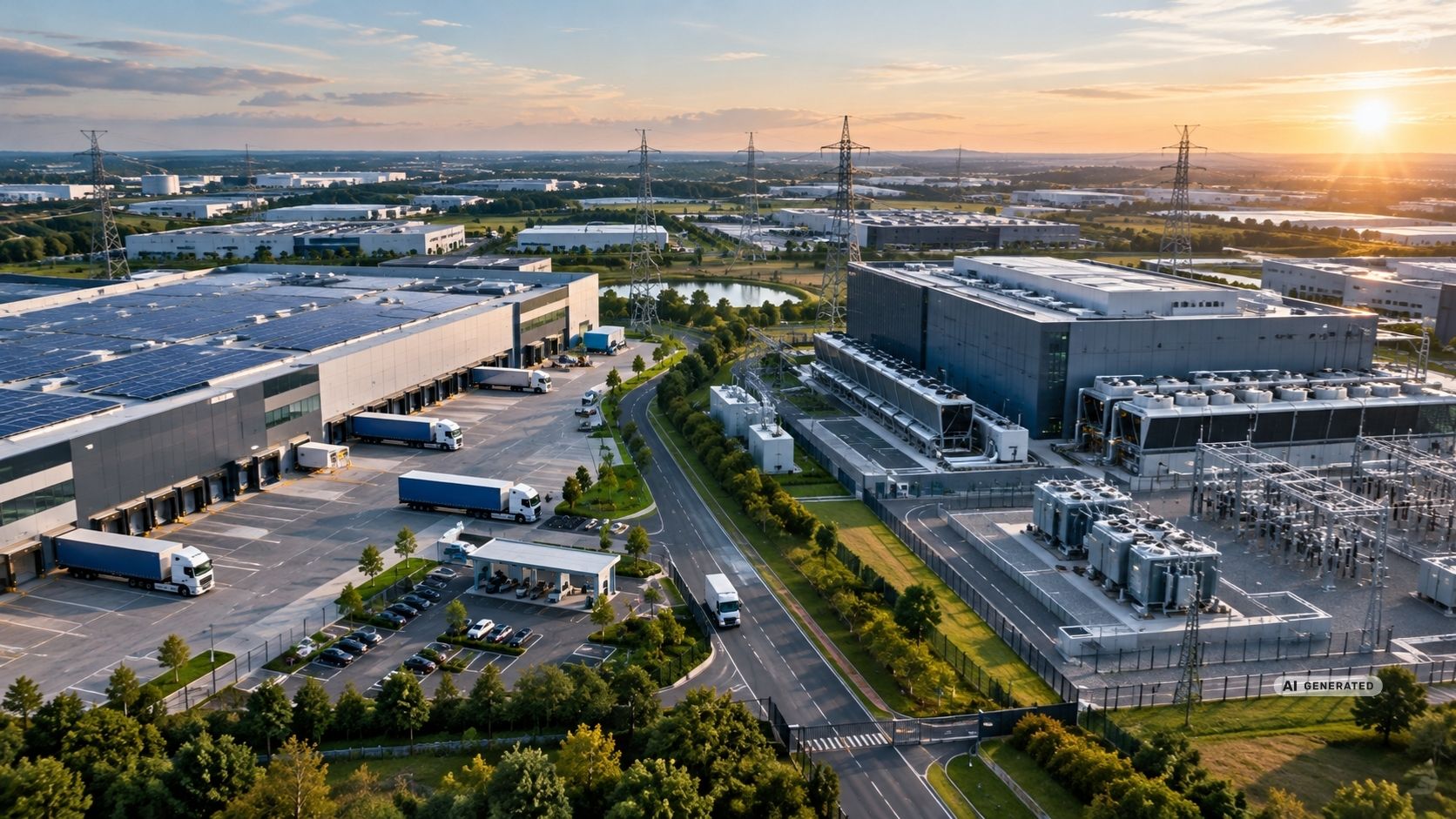
Across Europe, logistics operators are competing for more than land and transport access. They increasingly need something much harder to secure: grid capacity. Data centres are intensifying that competition — and changing how logistics locations are evaluated....
Chinese companies discover Europe's logistics real estate
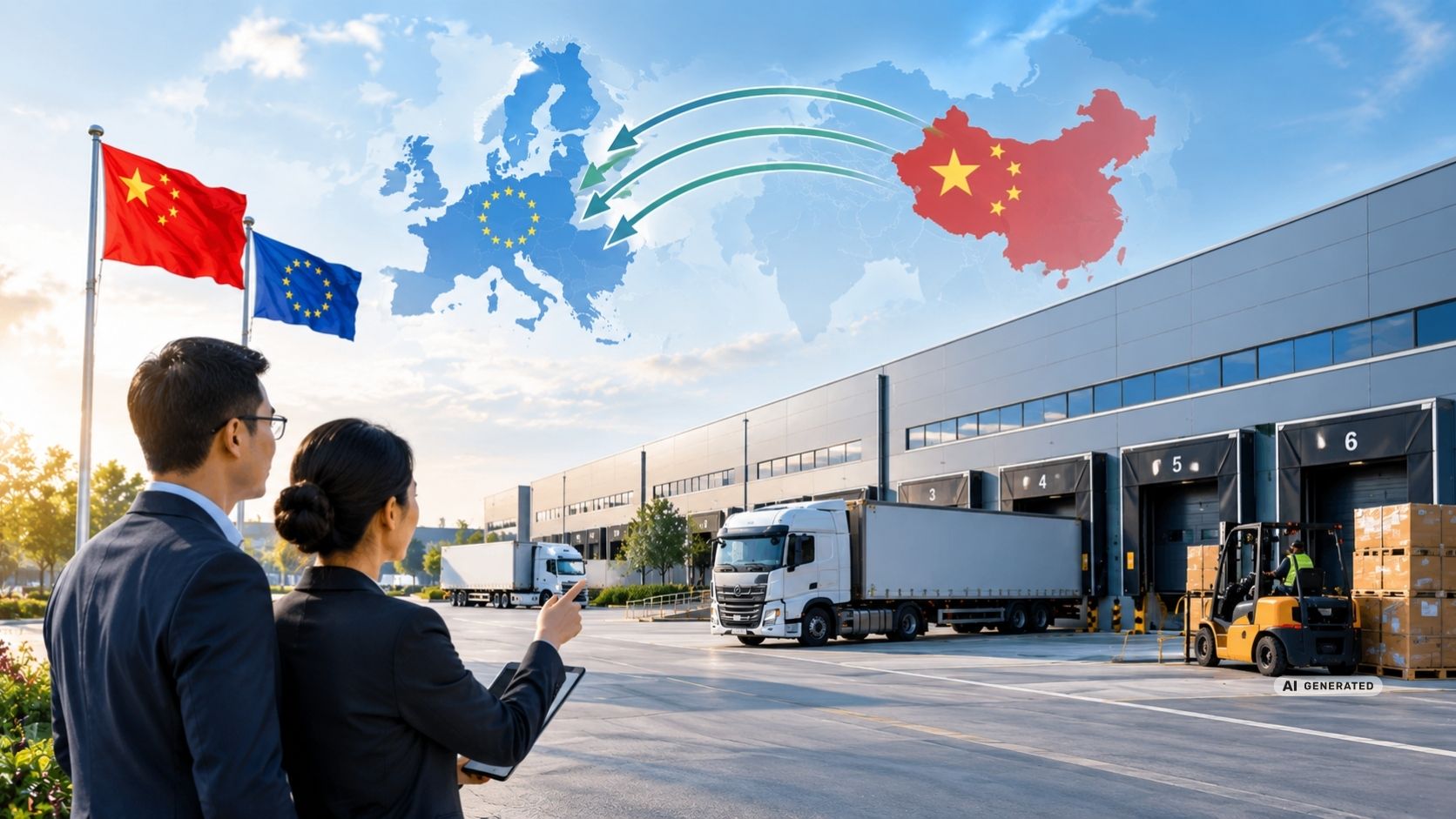
Chinese companies are becoming an increasingly visible user group in Europe's logistics real estate market. What does this mean for warehouse space, 3PL structures and the requirements for European logistics locations?...
AI Hallucinations in Logistics: When AI Plans the Wrong Delivery
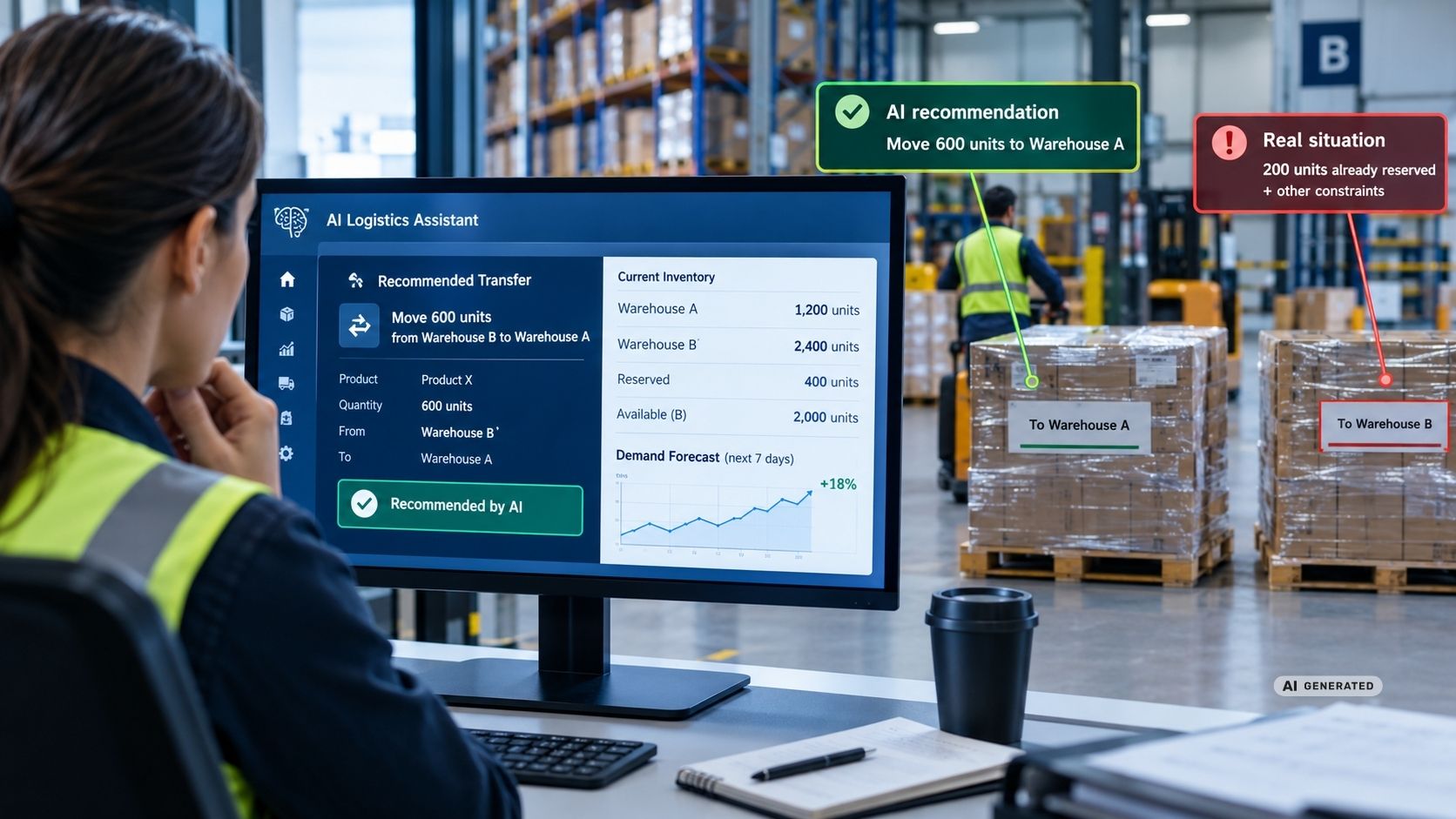
AI can analyze enormous amounts of logistics data — but it can also produce a convincing answer that is simply wrong. The critical question is not whether AI makes mistakes, but what happens when a wrong recommendation becomes an operational decision....
The Green Revolution on the Hall Roof: From Concrete Block to Ecological Power Plant?
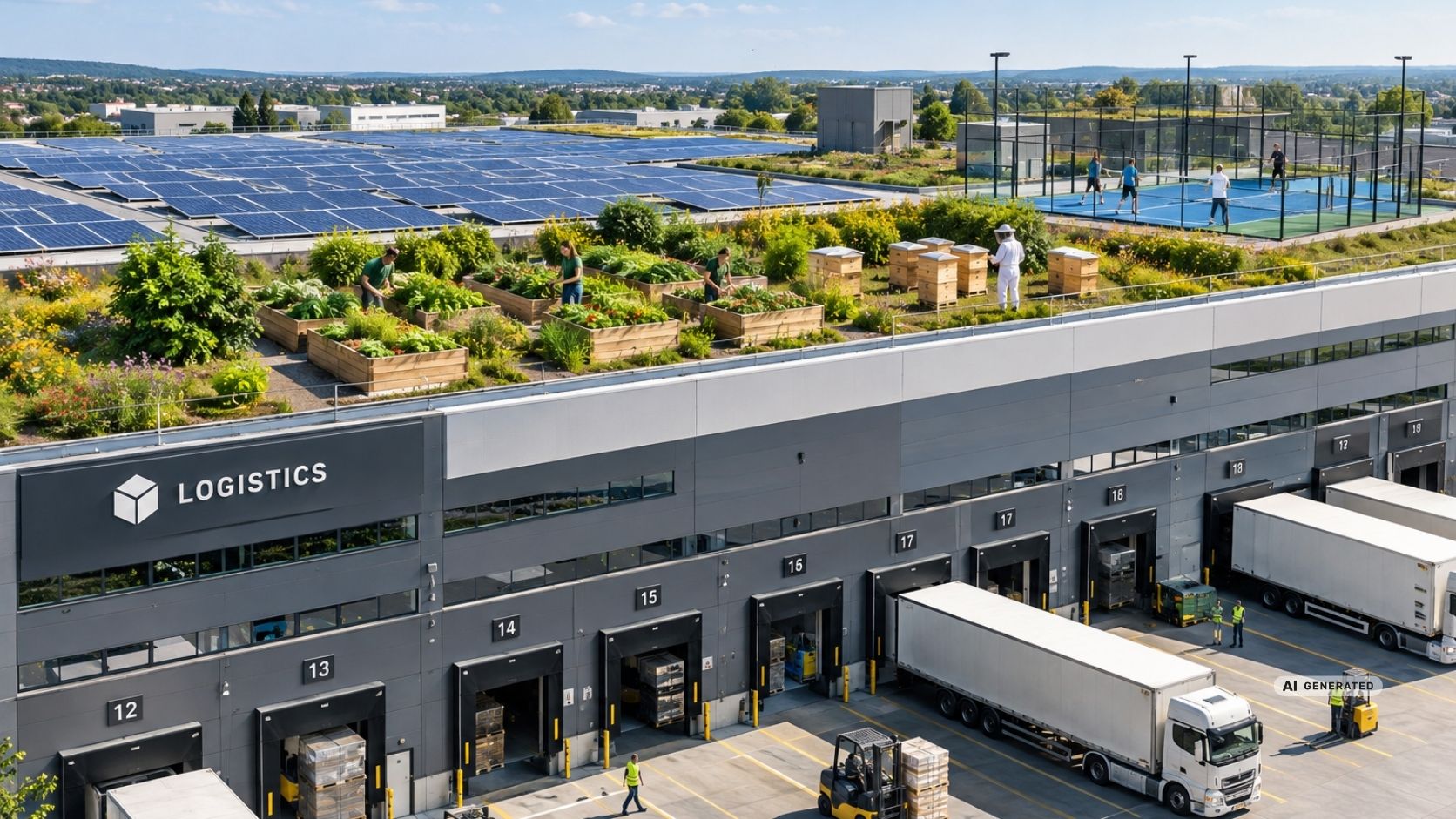
Logistics roofs can do more than PV: greening, bees, urban farming and even sports areas turn unused roof space into multifunctional rooms....