



Valuables logistics in warehouse logistics
Table of Contents
- What is security logistics? (Definition)
- Which goods are among the high-valuables in logistics?
- Structural requirements: The logistics property as a high-security wing
- TAPA and VdS: The most important certifications for the hall
- Contract logistics for valuables: Focus on people and processes
- Why outsourcing pays off in securities logistics
- Frequently Asked Questions (FAQ) on Securities Logistics
Worldwide, cargo theft in supply chains causes billions of dollars in damage every year. When it comes to the storage and handling of extremely expensive or sensitive goods, a standard warehouse is no longer sufficient. The industry's answer to these growing threats is high-security logistics. But what exactly does this term mean, and how do contract logistics companies transform an ordinary logistics property into an insurmountable high-security wing?
What is security logistics? (Definition)
The term "securities" originally comes from the banking and insurance industry and refers to valuables or valuables. Accordingly, valuables logistics is a highly specialized sub-discipline of logistics that deals with the transport, handling and, above all, safe storage of high-value goods. In warehouse logistics, this means the use of extreme physical, technical and personnel security measures to rule out 100 percent theft, manipulation or damage.
Which goods are among the high-valuables in logistics?
Often, only gold bars or cash are thought of when it comes to high-security goods. In modern contract logistics, however, the spectrum is much broader. As a rule, a distinction is made between real valuables and high-value goods at risk of theft:
- Classic valuables: precious metals, jewellery, luxury watches, works of art, cash and securities.
- High-tech & electronics: semiconductors, microchips, latest smartphones, server components.
- Sensitive goods: High-priced pharmaceuticals (e.g. vaccines), designer fashion, branded perfumes and confidential prototypes from the automotive industry.
Structural requirements: The logistics property as a high-security wing
The storage of valuables places extreme demands on the architecture of the logistics property. A simple hall made of trapezoidal sheet metal does not offer sufficient protection.
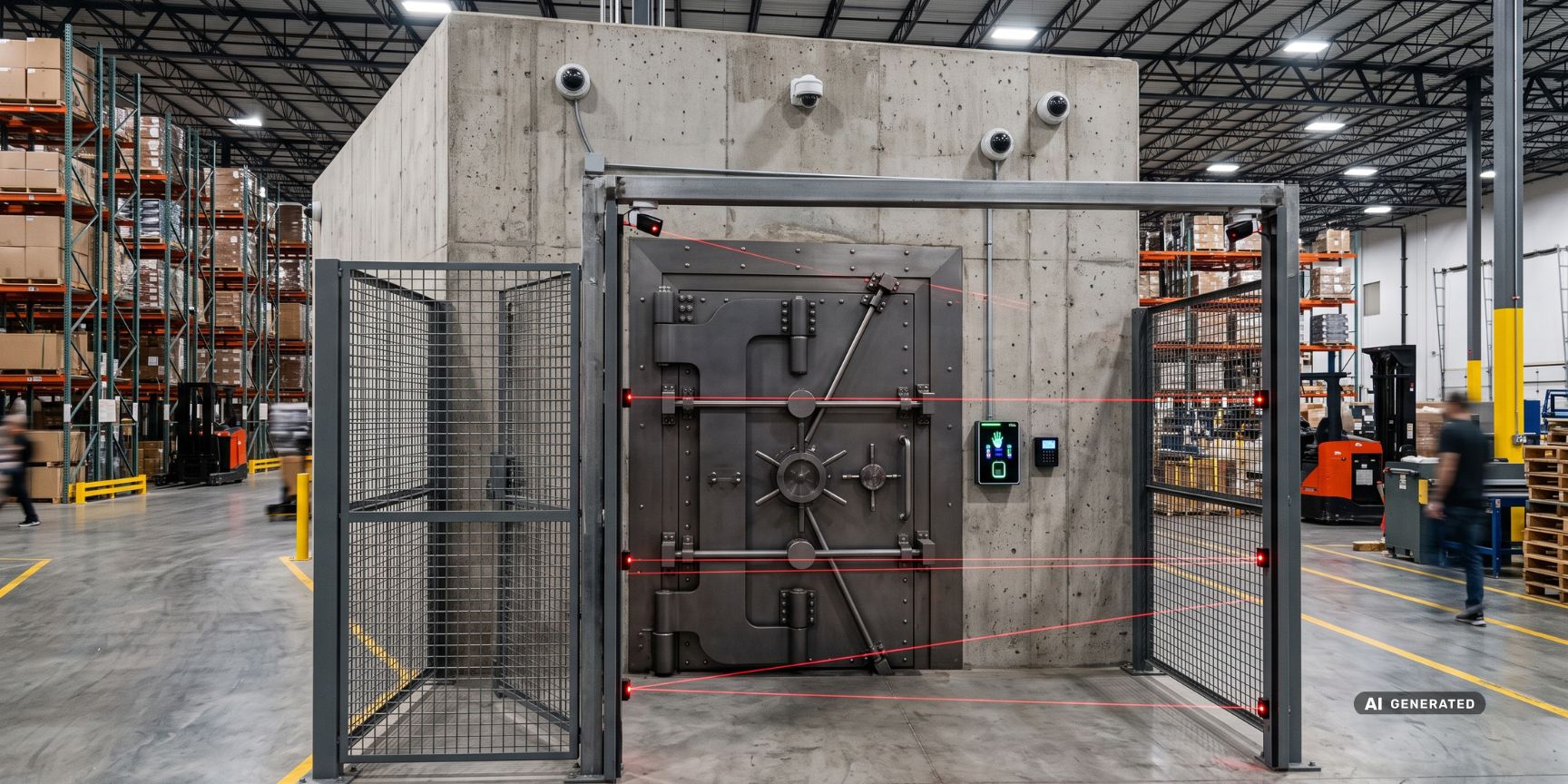
- Room-in-room concepts: Separate valuables warehouses (vaults) made of solid reinforced concrete walls (e.g. according to DIN EN 1143-1) are often built within a large commercial hall.
- Sensor technology & surveillance: The area must be completely controlled by video surveillance (CCTV) without blind spots. In addition, there are seismic sensors (vibration detectors) on the walls, infrared light barriers and volumetric motion detectors.
- Access controls: The hall may only be entered through biometric access systems (palm vein or iris scanners) and security gates.
- Ramps and gates: Loading gates for valuables are often designed as security gates. The truck enters a completely closed box before the actual hall door is opened for unloading (prevents the so-called "tarpaulin slot theft").
TAPA and VdS: The most important certifications for the hall
A contract logistics company cannot simply claim to offer security logistics – it must prove it with hard certificates. The most important global standard is TAPA (Transported Asset Protection Association) certification. For the logistics property, the TAPA FSR (Facility Security Requirements) is decisive. TAPA FSR Level A is the highest award and guarantees a maximum level of safety. In Germany, the guidelines of the VdS (Trust through Security) also play a central role, especially for the insurability of the stored millions of euros.
Contract logistics for valuables: Focus on people and processes
In addition to the hardware (real estate), the software (processes and personnel) is the second success factor. Contract logistics companies that offer security logistics are subject to the strictest operational rules:
- Personnel screening: Every employee who is deployed in the hall undergoes deep background checks and needs a flawless police clearance certificate.
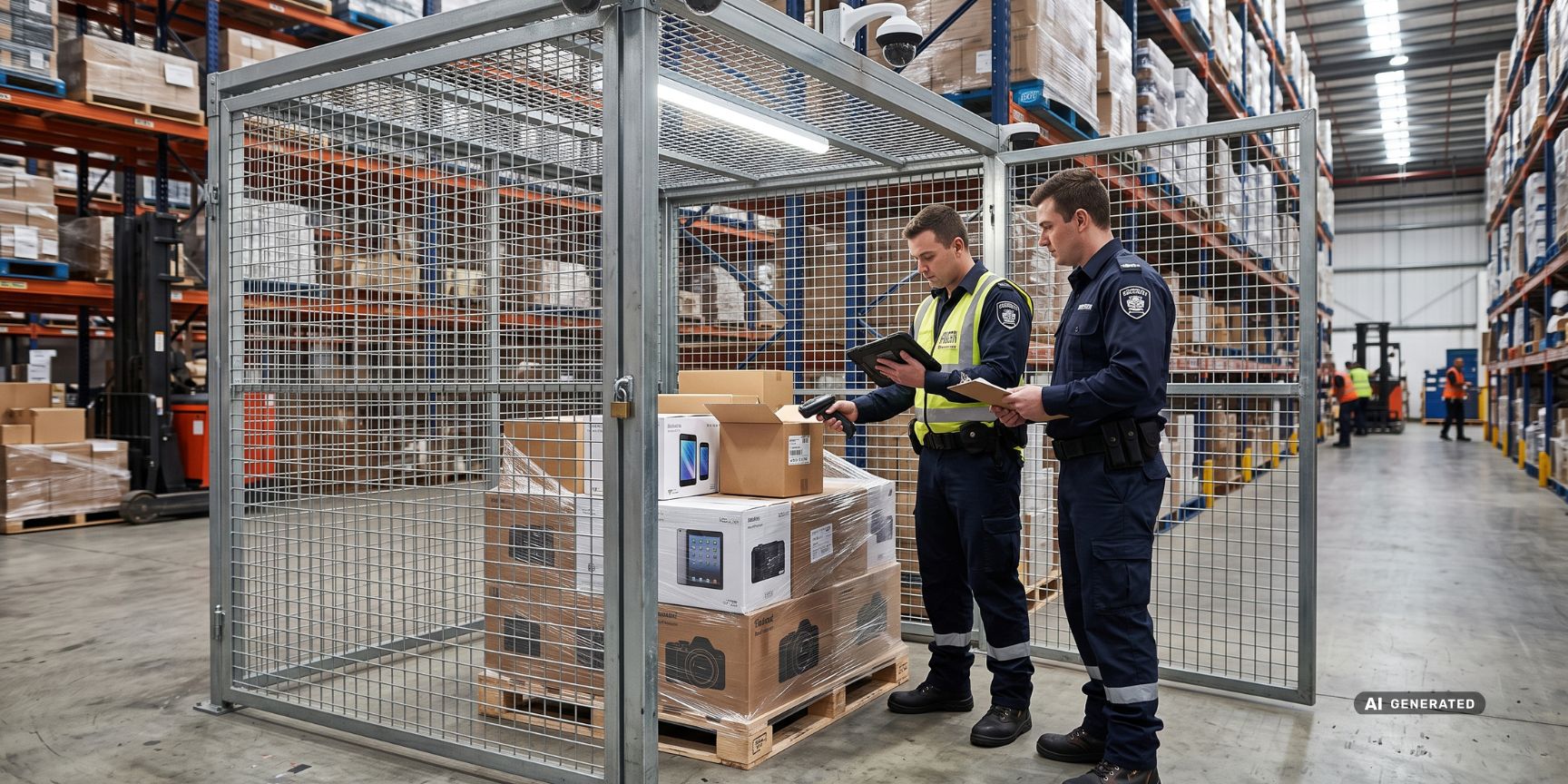
- Four-eyes principle: No employee is allowed to spend time alone in the valuables warehouse. Every pick operation and every put-away operation is authorized by at least two people.
- Seamless tracking: Each item is tracked via RFID or barcode. The Warehouse Management System (WMS) immediately reports any unauthorized movement to the security center.
Why outsourcing pays off in securities logistics
The construction of its own valuables warehouse (CAPEX) and the ongoing operation of security technology and security personnel (OPEX) devour enormous sums. Therefore, more and more manufacturing companies and retailers are relying on outsourcing to specialized contract logistics companies. In a multi-user hall , several customers share the immense costs for the high-security infrastructure. This gives companies access to absolute top standards (such as TAPA A) without having to invest in concrete and sensor technology themselves.
Frequently Asked Questions (FAQ) on Securities Logistics
Question: What is the difference between high-security logistics and normal warehouse logistics?
Answer: While normal warehouse logistics are primarily concerned with efficiency, throughput times (flow rate) and costs per pick, high-value logistics subordinates everything to the aspect of absolute security and seamless monitoring.
Question: How much does a pallet space cost in high-security logistics?
Answer: Since the costs for high-security services, insurance and technology are extremely high, the prices are significantly higher than those of conventional dry storage facilities. While standard pallet spaces often cost between 3 and 6 euros per month, high-security spaces (depending on the insured value) can quickly reach many times that.
Question: Can every logistics hall be upgraded for high-valuable goods?
Answer: Theoretically yes, economically no. The retrofitting of meter-thick reinforced concrete, lock systems and self-sufficient emergency power generators for safety technology in an existing building is often more expensive than a tailor-made new building (greenfield project). For this reason, such zones are usually planned directly in the project development phase of a new logistics property.
Your Ideal Logistics Warehouse
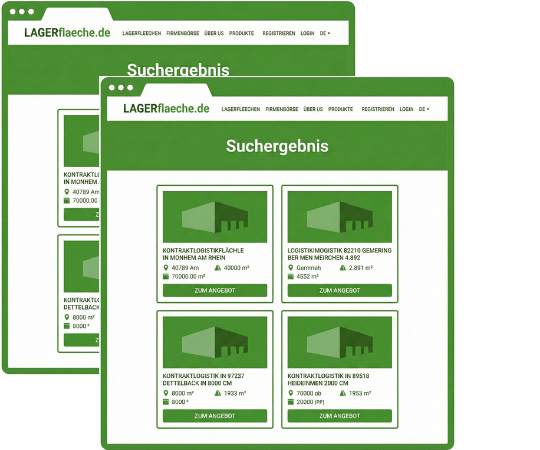
Browse listings for warehouse space, logistics real estate, industrial land, and contract logistics solutions.
Browse Exposés
Maximize Exposure for Your Warehouse Space
Showcase your logistics properties and attract qualified inquiries.
Discover Products