




Energy label A in the warehouse
Table of Contents
- Energy label A in the warehouse: The efficiency standard for logistics real estate
- What does the energy label A mean for a logistics property?
- Why is energy efficiency so important in warehouse logistics?
- The strategic lever for contract logistics
- Facts, figures, data: Where does the warehouse consume energy?
- How does a hall achieve energy label A? (Measures)
- Frequently asked questions (FAQ) about energy label A in the warehouse
- Conclusion: Energy label A as a guarantor of the future
Energy label A in the warehouse: The efficiency standard for logistics real estate
The logistics industry is undergoing massive change. Rising energy prices, strict legal requirements (such as the Building Energy Act – GEG) and the growing ESG (Environmental, Social, Governance) requirements of investors are forcing operators to rethink. At the heart of this change is the energy label A. But what does this top rating mean in practice for warehouse logistics, contract logistics companies and real estate developers?
What does the energy label A mean for a logistics property?
The energy label (or energy certificate) evaluates the energy quality of a building. A logistics hall with the energy label A (or A+) has an extremely low primary energy requirement – usually less than 30 to 50 kWh/(m²a), depending on the exact use of the building (e.g. cold storage vs. dry storage).
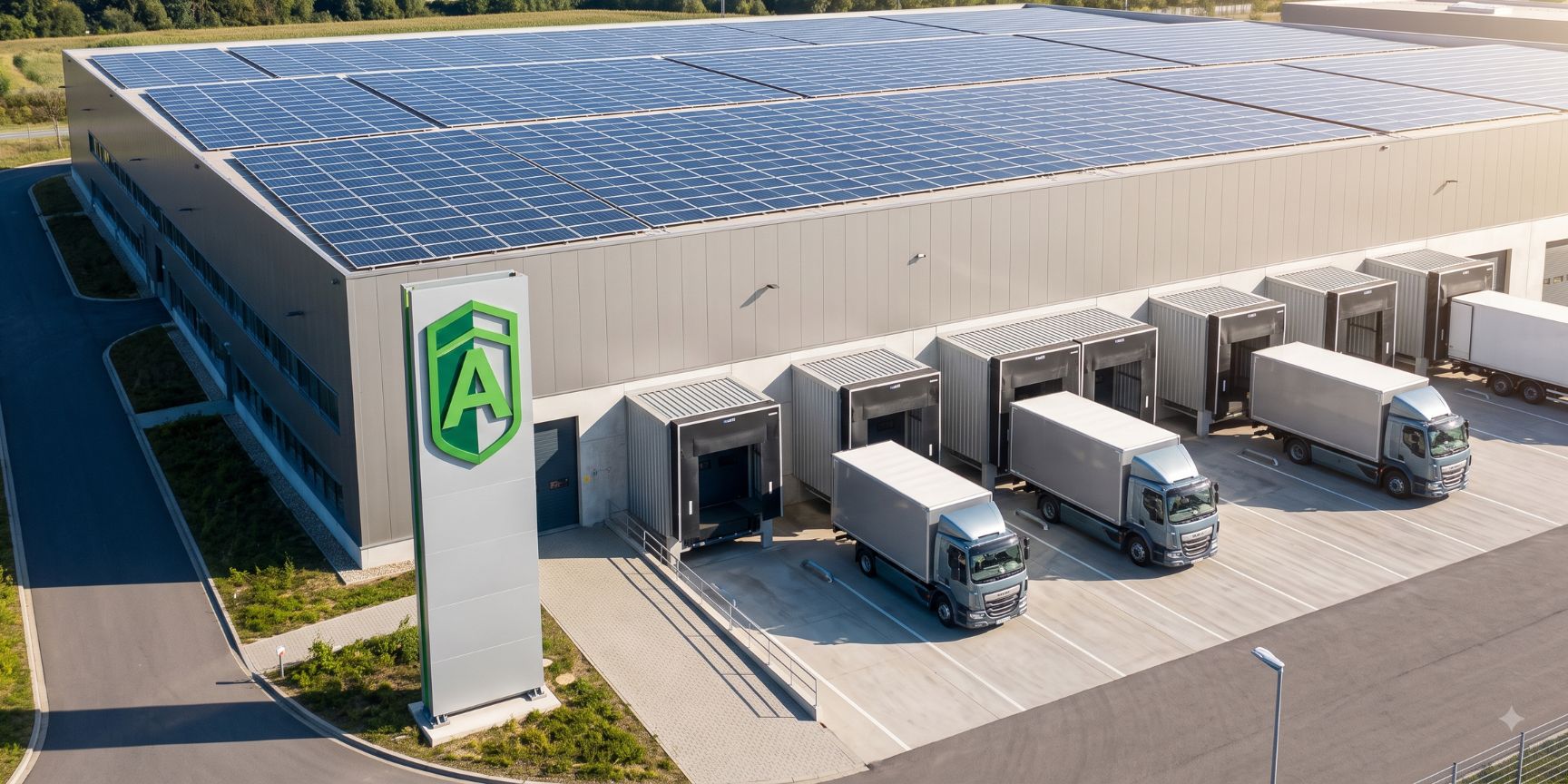
To achieve this peak value, it is not enough to insulate the hall roof alone. The building is regarded as an overall energy system. A hall with label A ideally produces a large part of its required electricity itself through renewable energies (such as photovoltaics) and uses highly efficient systems for heating, cooling and lighting.
Why is energy efficiency so important in warehouse logistics?
In classic warehouse logistics, halls were often just simple "grey boxes" where construction costs (CAPEX) were kept as low as possible. The ongoing operating costs (OPEX) were paid by the tenant anyway. This principle no longer works today. The heating, cooling and lighting of huge cubatures devours enormous amounts of energy. When ancillary costs explode, the profitability of the entire warehouse operation decreases. The energy label A guarantees planning and cost security for the coming decades.
The strategic lever for contract logistics
For service providers in contract logistics, the energy label A is a tough sales argument. Why?
- Competitive prices: If you have extremely low energy costs per square metre as a service provider, you can offer your customers more attractive transaction prices (e.g. pick rate or pallet space price).
- Tender requirements: Many large industrial and commercial corporations have to optimize their own Scope 3 emissions balance (CSRD Directive). Today, they often only award logistics outsourcing contracts (tenders) to contract logistics companies that can prove that they operate in green buildings.
Facts, figures, data: Where does the warehouse consume energy?
To understand why certain measures are mandatory for energy label A, it is worth taking a look at the average consumer in a logistics property:
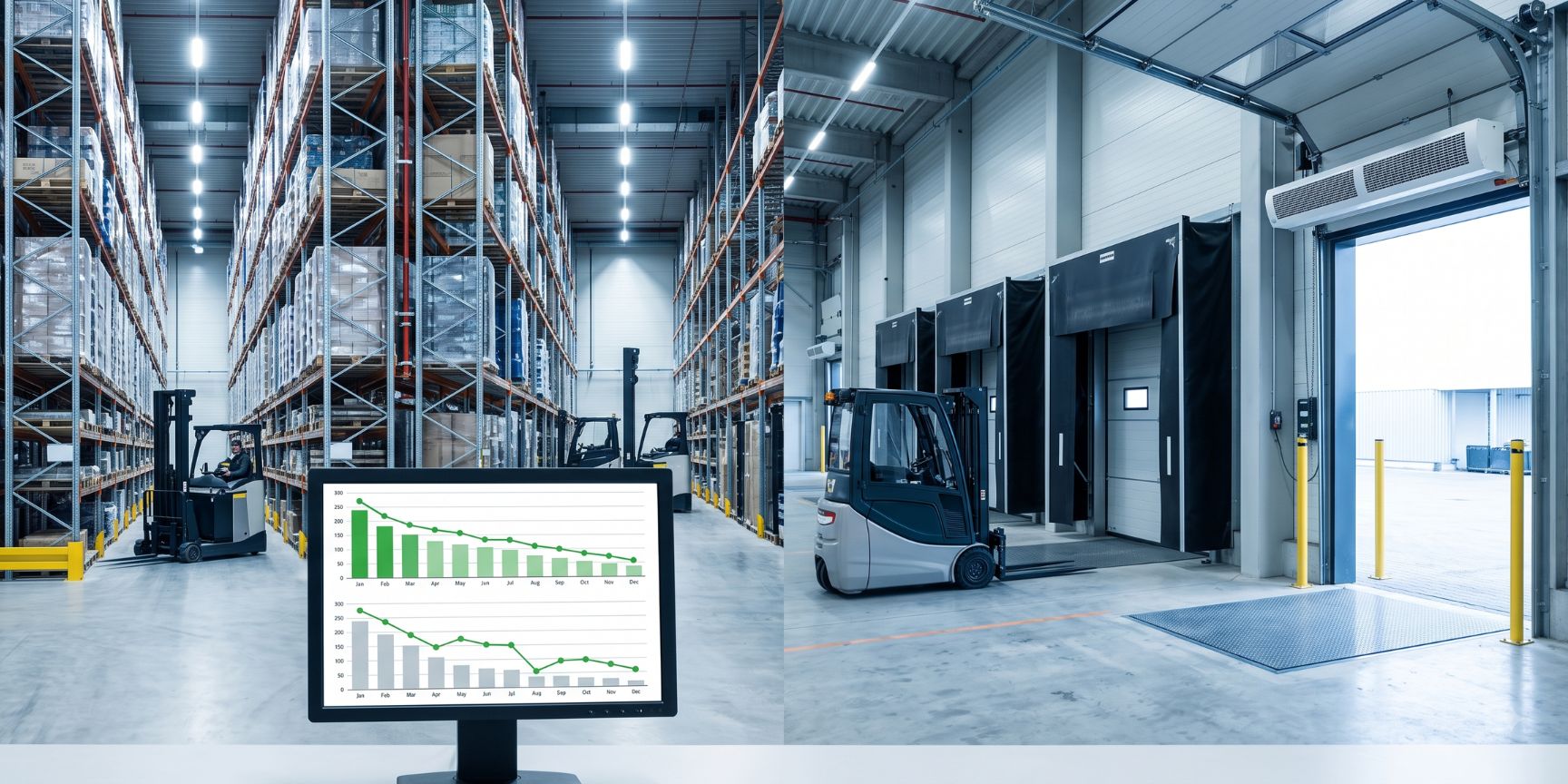
- Lighting: Accounts for up to 50% of electricity consumption in older halls. Switching to intelligent LED systems with presence detectors reduces this value by up to 80%.
- Heating/temperature control: The constant opening of the doors at the loading ramps leads to enormous heat losses. Air curtains and modern dock shelters are essential here.
- Intralogistics: Charging industrial trucks (forklifts) or operating automation technology (e.g. AutoStore systems) requires a lot of electricity, which ideally comes directly from the hall roof.
How does a hall achieve energy label A? (Measures)
The path to the top grade requires the interaction of modern architecture and building technology (TGA):
- Building envelope: Excellent insulation values for façade and roof panels as well as thermal bridge-free constructions.
- Heat pump technology: Elimination of fossil fuels (gas/oil). Heating is often provided by air-to-water heat pumps or geothermal energy, combined with industrial surface heating systems (floor slab as heat storage).
- Photovoltaics (PV): Covering the entire roof with solar modules is now the industry standard.
- Smart metering & building automation: AI-supported systems measure and control energy consumption in real time, dim the lights in unused aisles and regulate the temperature based on zones.
Frequently asked questions (FAQ) about energy label A in the warehouse
Question: Is energy label A also achievable for old existing buildings (brownfields)?
Answer: Yes, through a far-reaching energy-efficient renovation (deep refurbishment). This often requires a renewal of the building envelope, the replacement of the heating systems and a lighting upgrade. The investment effort is high, but it is worth it due to drastically decreasing OPEX and the massive increase in the value of the property.
Question: How does the energy label A influence the hall rent?
Answer: Modern Class A logistics properties often achieve a so-called "Green Premium" on the market – the basic rent per square metre is higher. For the tenant (e.g. the contract logistics provider), this still pays off, as the warm rent is often cheaper or at least more calculable due to the minimal ancillary costs ("total cost of occupancy").
Question: Is the energy label A equivalent to a DGNB or LEED certificate?
Answer: No. The energy label A evaluates purely the energy efficiency in operation. Certificates such as DGNB (German Sustainable Building Council) or LEED take a holistic view of the property – including the building materials used (life cycle), water use, biodiversity on the property and even the social quality (social rooms, break areas). However, a label A is a mandatory basic requirement for these top certificates.
Conclusion: Energy label A as a guarantor of the future
Whether it's a stand-alone location, a multi-storey logistics hall or a classic multi-user warehouse: Energy label A has gone from being a "nice-to-have" to an absolute market standard. Project developers who are still planning logistics properties without the highest energy standards today are building the so-called "stranded assets" of tomorrow – buildings that will neither be rentable nor saleable in a few years. For tenants and logistics service providers, moving into a hall with energy label A not only means applied climate protection, but also the strategic key to stable margins and satisfied, environmentally conscious clients
Your Ideal Logistics Warehouse
Browse listings for warehouse space, logistics real estate, industrial land, and contract logistics solutions.
Browse Exposés
Maximize Exposure for Your Warehouse Space
Showcase your logistics properties and attract qualified inquiries.
Discover Products