Commission-free offer
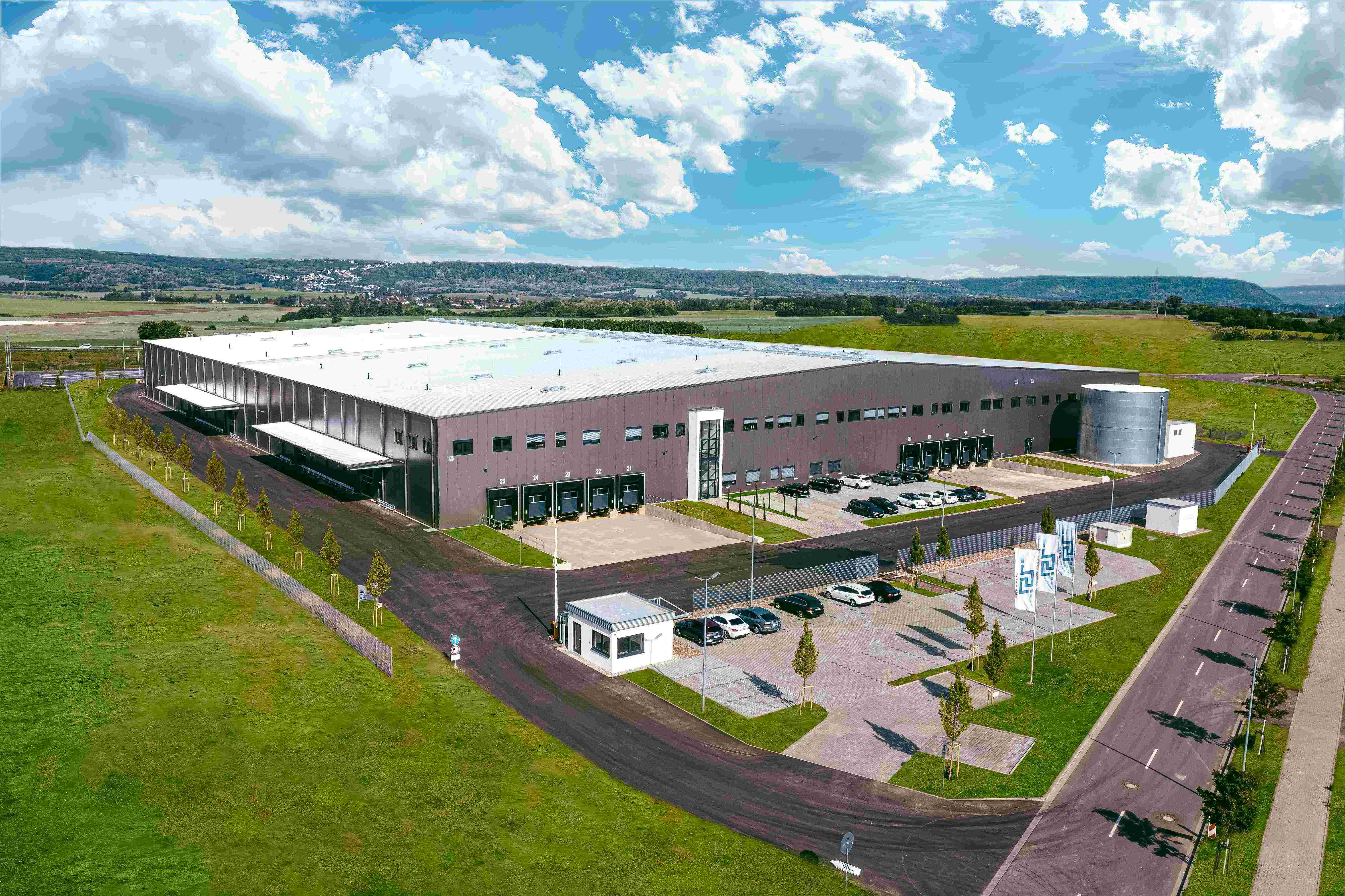
Lager - und Produktionshalle in Saarlouis Lisdorfer Berg
Object no.: 10189
Contract logistics
Warehousing (warehouse with management)
Germany
66740 Saarlouis
17563 m²
10000 (PP)
Price on request

Here you will find interesting information on the topic of Retail Logistics. Visit our contract logistics providers, forwarders, warehouse keepers and find a suitable Retail Logistics provider with your storage requirements.
At LAGERflaeche.de you can use the map search or search mask to look for suitable offers. Find selected Retail Logistics facilities and rent/buy at LAGERflaeche.de!
Object no.: 10189
Warehousing (warehouse with management)
Germany
66740 Saarlouis
Price on request
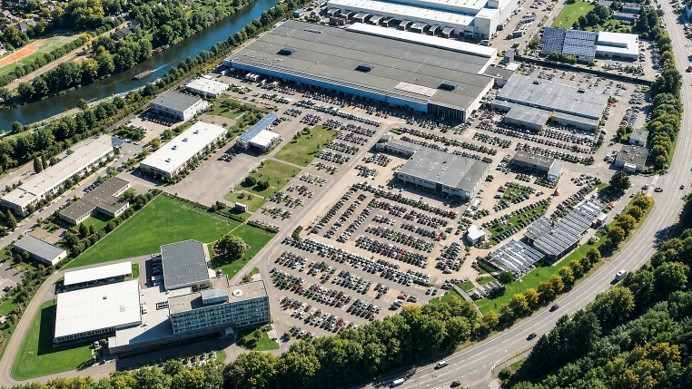
Object no.: 10188
Warehousing (warehouse with management)
Germany
66130 Saarbrücken-Güdingen
Price on request
In the retail logistics sector, the comprehensive planning and execution of the entire retail processes plays an important role. Only with elaboration in detail is it possible to meet one's own requirements and to adapt the work to the wishes of the customers. But what exactly is retail logistics principle and what does the implementation of the numerous tasks in practical operations depend on?
In contrast to a capital good, a retail good is not used for further processing. This would be exactly the definition of a capital good, as it must have a demonstrable added value for the forwarder and is not intended for sale to the end consumer. On this basis, it is nevertheless very important for the logistics company to make its own processes as simple as possible in order to perform as successfully as possible in national and international trade.
Nevertheless, it plays an important role in the logistical cost optimisation and efficiency increase to acquire such goods cheaply and to sell the individual products successfully in this way. Retail logistics processes stand for a gigantic management process involving the entire flow of information and goods between companies and suppliers as well as between companies and customers. The aim is to offer one's own production goods and merchandise at the point of sale as quickly as possible and to keep the costs of the entire process as low as possible. This can only be achieved through precisely timed tours and connections that can be guaranteed in terms of technology, personnel and industry.
In many cases, typical consumer goods are the fast-moving consumer goods, as these are requested by retailers at daily intervals. Especially the articles that must have a basic topicality can hardly be included in the warehouse processes, as they are unsaleable after a few days. A good example of such a commodity is newspapers, which are often only valid for a day or a week.
Food and non-food represent a further demarcation in the convenience goods sector. In the internal supply chains, food items often have priority because they cannot be stored permanently. Many food items also require active cooling, which must be taken into account for durable and convenient storage. For this reason, food items are also fast-moving items in most cases. Non-food items also often spend more time in the warehouse, as they are stored more flexibly and for longer periods.
Inventory turnover plays an important role here. This refers to the frequency of the complete replacement of the warehouse stock and is of great importance in operational warehouse management. The higher this key figure is in practice, the more successfully the existing retail logistics concept functions. For this purpose, the sale of the product, the leaving of the warehouse and the payment in order to be able to purchase the product again for resale are evaluated as a complete cycle.
For this purpose, the goods are differentiated into two categories. The products that leave the warehouse again within a very short time after being stowed are called fast-moving consumer goods or FMCG. Due to high demand, these are often only stored for a short time in order to save costs and effort. Goods with a low sales speed, on the other hand, are called slow-moving items. This is especially true for products with seasonal demand, which is why the stock of such items should be regularly scrutinised for optimisation.
→ Procurement logistics
→ Production logistics
→ Distribution logistics
In order to combine internal production with delivery conditions and personnel cycles in the best possible way, new possibilities for increasing operational efficiency are increasingly being identified. Computer-based merchandise management systems are a modern means to this end, and more and more companies are using them to optimise their performance. In this way, all FMCG, i.e. fast-moving consumer goods, can be made available just-in-time at any time in order to meet their logistical requirements. In retail logistics, it is therefore inevitable to ensure an increase in work performance so that it can outdo that of the competition. Faster delivery to the POS in turn makes it possible to expand their network, which in turn reduces operating costs. In this respect, it is inevitable to accelerate growth and to optimise the logistical processes for a permanently fast delivery of FMCG. In the field of digital development, there are already numerous new approaches to this, through which profit can be increased around systemic logistics.
A constant review and optimisation of one's own processes should ultimately lead to difficulties in implementation being avoided as concretely as possible. However, it is problematic that the optimisation of one's own retail chains is often a never-ending process that becomes increasingly important due to more modern technology, personnel conditions and reactions from competitors. Despite the exact definitions and improvements of one's own processes, not all developments can be foreseen in advance. In the area of predictive maintenance, misjudgements can certainly occur that weaken one's own effectiveness and counteract the expected profit. Since the logistics company has to enable an optimal process for both the supplier and the customer, finding full-fledged compromises is unavoidable. Often these are not easy to identify, as all companies are working to optimise their own profit and different strategies clash.
For more information on the various logistics sectors, it is well worth taking a look at our Contract Logistics page, where we offer you a lot more interesting information.