Commission-free offer
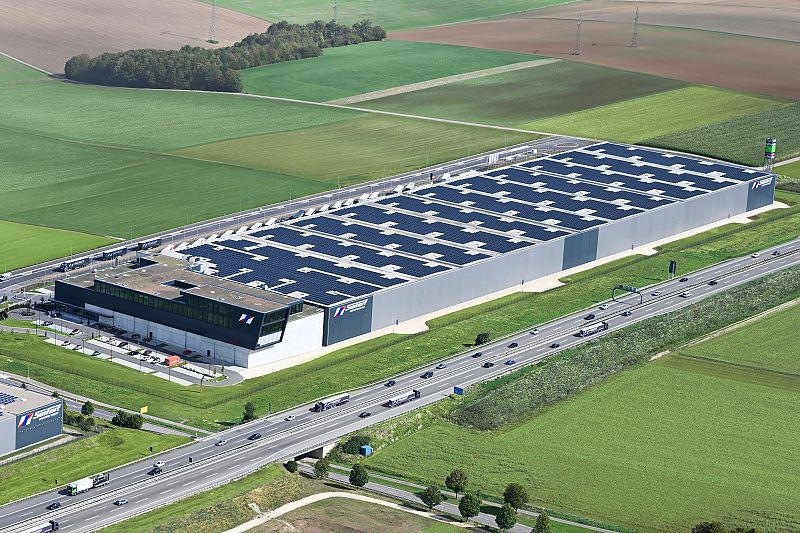
Kontraktlogistik Ulm
Object no.: 9049
Contract logistics
Warehousing (warehouse with management)
Germany
89079 Ulm
50000.00 m²
60000 (PP)
Price on request

The logistics hotspot in the heart of southern Germany.
Object no.: 9049
Warehousing (warehouse with management)
Germany
89079 Ulm
Price on request
» The GVZ Region Ulm in an expert check
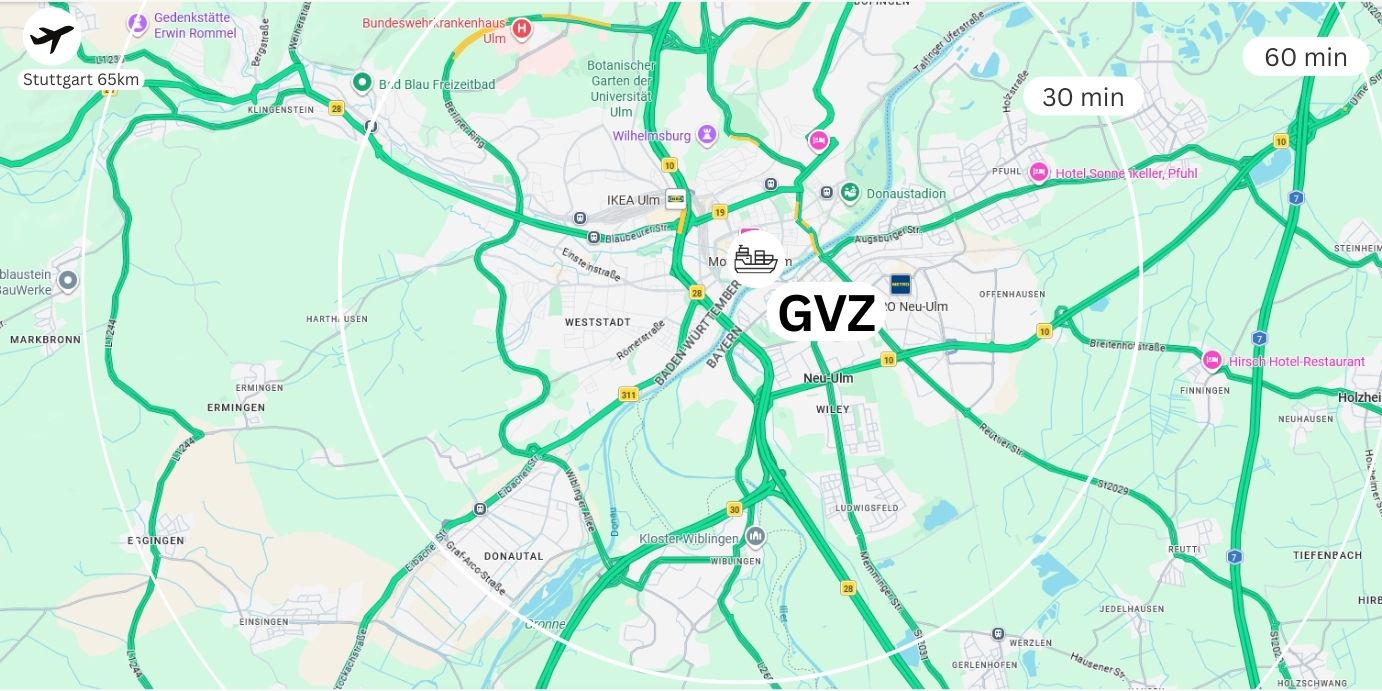
» Strategic Location: The Geography of Success
» Infrastructure and modality: bimodality in perfection
» Key Facts: The location in figures (data as of 2025/2026)
» Key economic indicators: cost structure and investment climate
» Why "Top Logistics Region"? The success factors
» Companies located there: A "Who's Who" of logistics
» Workforce and skilled worker situation
» Questions that decision-makers need to ask now
» Conclusion: A location with future security
The logistics industry is facing massive upheavals: decarbonization, a shortage of skilled workers and the need for resilient supply chains are redefining the success of locations. In the midst of this area of tension, the Ulm Region Freight Centre (GVZ) asserts itself as one of the most efficient logistics hubs in Europe. But what makes this location between the metropolitan regions of Stuttgart and Munich so attractive? Is it purely the geographical location, or is the secret in the profound interlocking of industry, science and infrastructure?
In this dossier, we analyse all the factors critical to success – from the hard facts of land prices to the complex connection to the trans-European networks.
The GVZ Region Ulm is not just "cheap". It is located in the center of the European economic axis West-East (Paris-Bratislava/Budapest) and North-South (Scandinavia-Genoa). Located within the boundaries of the city of Ulm and the municipalities of Dornstadt and Beimerstetten, it forms the operational heart of the Danube-Iller logistics region.
The region acts as a bridgehead for the supply of southern Germany and as a gateway for transit traffic across the Alps and towards Eastern Europe. The spatial proximity to the "science city of Ulm" also ensures a symbiosis of physical cargo handling and highly specialized research (e.g. in battery technology or autonomous driving).
A modern freight village is defined by its ability to efficiently link modes of transport. While many locations advertise with the "Trimodal" label, the Ulm region is concentrating on high-performance bimodality (rail/road).
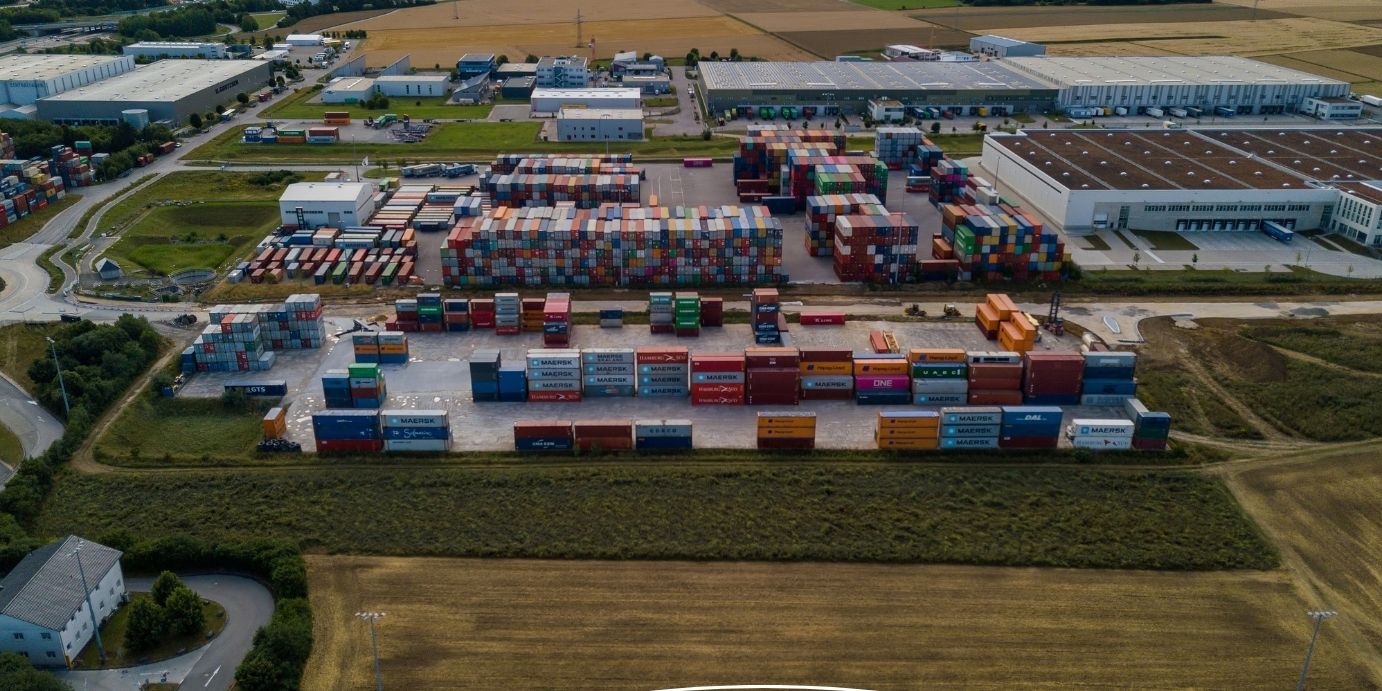
The Ulm-Dornstadt container terminal is operated by DUSS (Deutsche Umschlaggesellschaft Schiene-Straße) and is one of the most efficient in inland Germany.
The GVZ benefits from its immediate proximity to the Ulm/Elchingen motorway junction, the intersection of the:
In contrast to locations such as Duisburg or Mannheim, the Ulm freight village does not have a direct water connection. In this section, the Danube is not developed for commercial freight shipping (large motor cargo ships). For companies that are absolutely dependent on inland shipping, the pre-carriage usually takes place via the ports on the Rhine or Neckar.
→ Warehouse Stuttgart
→ Warehouse Mannheim
→ Warehouse Heilbronn
| Feature | Detail |
| Total area | Approx. 160 hectares (continuous expansion) |
| Company | More than 50 companies located here |
| Workplaces | Approx. 4,500 direct employees in the GVZ |
| Handling capacity | > 100,000 TEU per year (Dornstadt terminal) |
| Certification | Regular top rankings in the European GVZ ranking |
Source: Own research based on data from the city of Ulm and GVZ companies.
For investors, the question of profitability is closely linked to local assessment rates and land prices. Compared to the metropolises of Stuttgart or Munich, the Ulm region offers an attractive price-performance ratio.
The assessment rates vary slightly between Ulm and the surrounding municipalities such as Dornstadt:
The Danube-Iller region is regularly listed in studies (e.g. by bulwiengesa) as one of the top logistics regions in Germany. But why?
→ Augsburg Freight Center
→ Ingolstadt Freight Center
→ Nuremberg Freight Center
The GVZ is characterised by a healthy mix of global freight forwarders and specialised logistics service providers:
A critical point of any location description today is the human factor. What does it look like in Ulm?
The situation: The unemployment rate in the Ulm region is traditionally one of the lowest in Germany (often below 3%). This means fierce competition for workers.
The solution sets of the region:
Question: Is the Ulm freight village ready for e-mobility in heavy-duty transport?
Answer: Yes. Ulm is playing a pioneering role through the expansion of high-performance charging points in the vicinity of motorway connections and private investments by logistics companies in charging infrastructure at depots.
Question: How secure is the expansion of the terminal?
Answer: The expansion of the DUSS terminal is part of the Federal Transport Infrastructure Plan. Capacities have already been significantly increased in order to shift the modal split in favour of rail.
The GVZ Region Ulm is much more than a collection of warehouses. It is a highly optimized ecosystem that thrives on the balance between central location, moderate costs and technological innovation. For companies that serve the southern German market or want to act as a hub for European flows of goods, there is no way around Ulm.
Commercial property, logistics property and contract logistics in Hesse at a glance - LAGERflaeche.de!
Object no.: 10182
Rental
Germany
34399 Oedelsheim
Price on request
Object no.: 10181
Rental
Germany
34385 Bad Karlshafen-Helmarshausen
Price on request
Object no.: 10104
Warehousing (warehouse with management)
Germany
64646 Heppenheim
Price on request
Object no.: 10073
Warehousing (warehouse with management)
Germany
34582 Borken
Price on request