Commission-free offer
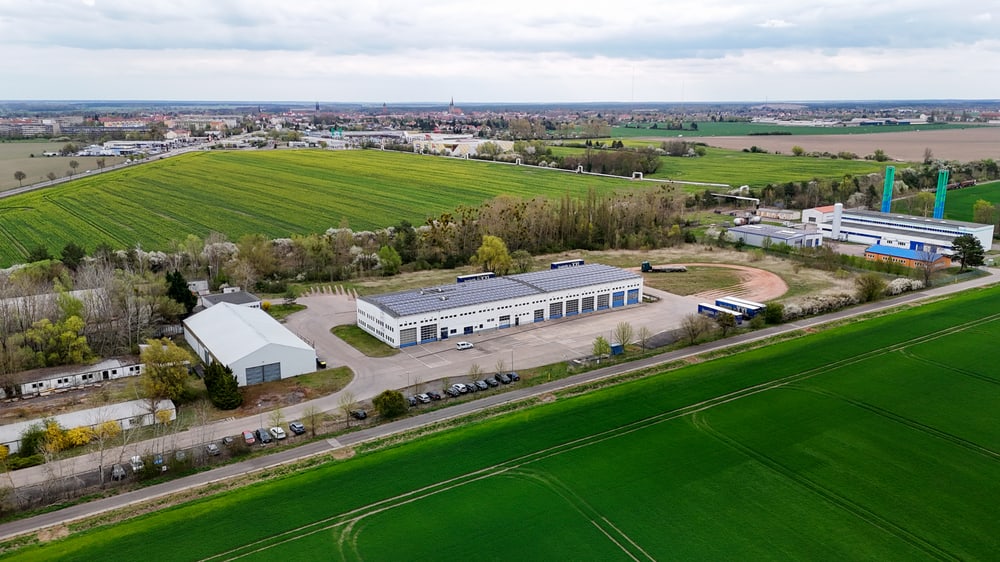
Kontraktlogistik in Salzgitter
Object no.: 9894
Contract logistics
Warehousing (warehouse with management)
Germany
38239 Salzgitter
3000 m²
Price on request

A Trimodal Power Hub in Lower Saxony.
Object no.: 9894
Warehousing (warehouse with management)
Germany
38239 Salzgitter
Price on request
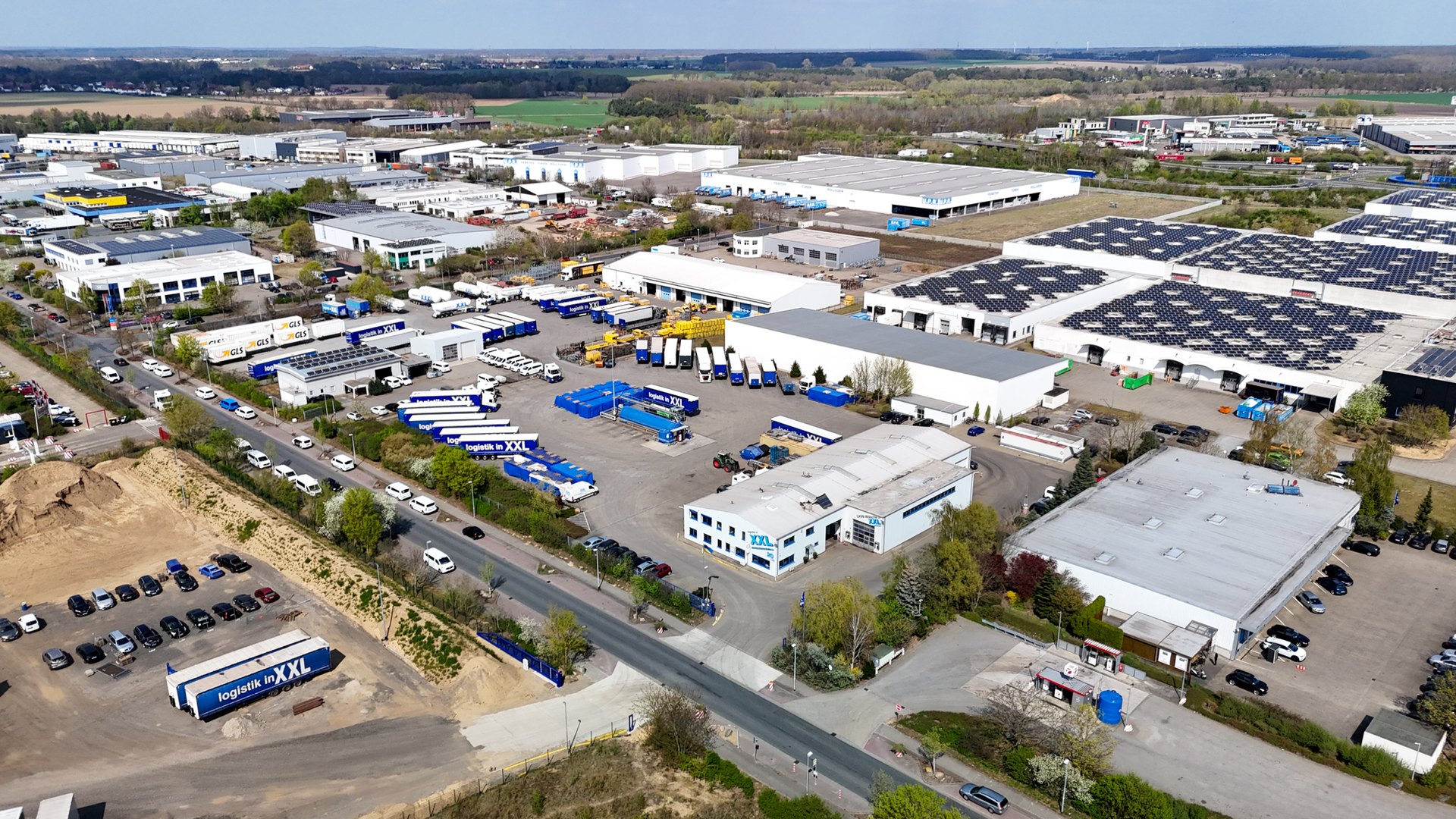
Object no.: 9310
Warehousing (warehouse with management)
Germany
38112 Braunschweig
Price on request
» Location analysis: The Salzgitter Freight Village – A Trimodal Power Hub in Lower Saxony
» General Description: Industry Meets Logistics
» Infrastructure and Modality: The Trimodal Heart
» Key Facts: Salzgitter Freight Village at a Glance
» Location of the GVZ in the Top Logistics Region
» Economic Conditions: Prices & Taxes
» Special Features and Unique Selling Points (USP)
» Companies Located and Industry Focus
» Workforce and Skilled Worker Situation
» Economic Development and Outlook
» Conclusion for the Reader
Salzgitter is much more than just steel. In the logistical map of Germany, the location plays a key role that is often underestimated, but is essential for the supply chains of German industry. But what makes this location so resilient and attractive for shippers and logistics companies compared to other freight villages?
This non-fiction text analyses the Salzgitter freight center (and the associated logistical industrial areas) in detail – from the assessment rates to the port's infrastructure.
Why is Salzgitter not a classic "distribution freight village", but an industrial backbone?
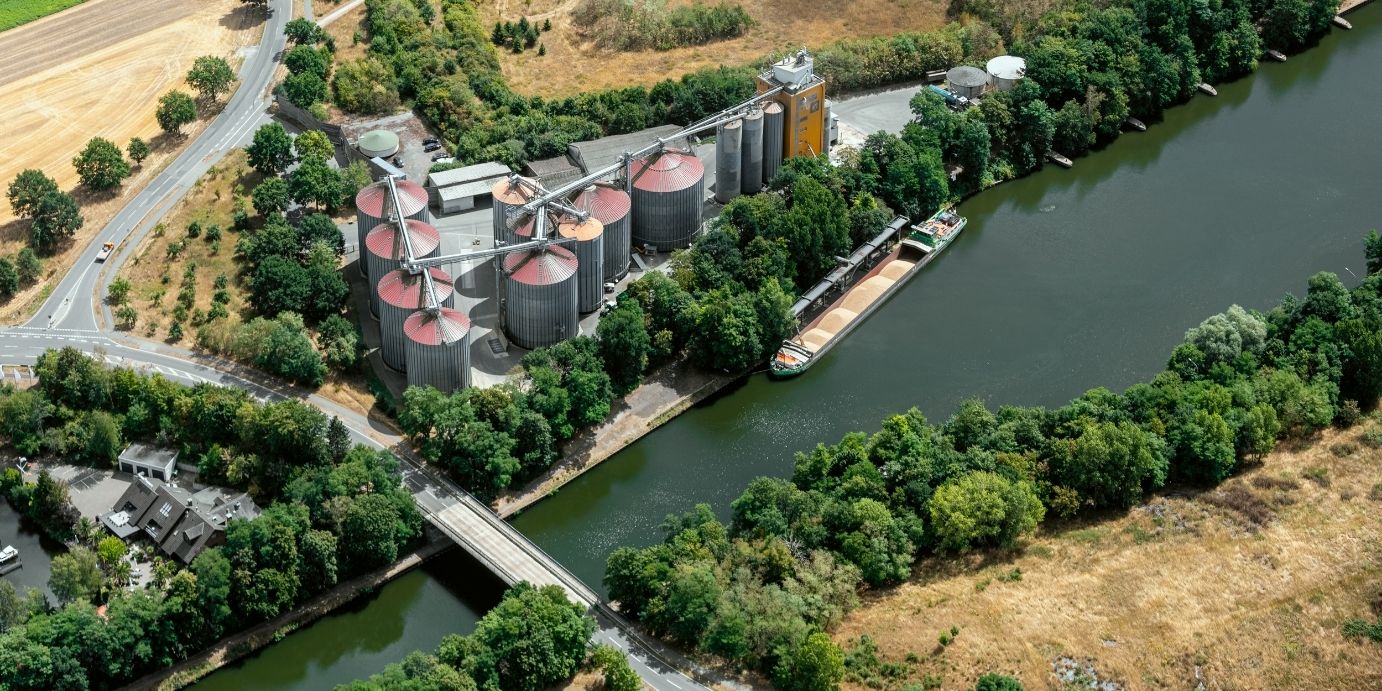
The freight transport center in Salzgitter is fundamentally different from pure distribution locations on greenfield sites. It has grown historically and is symbiotically linked to large-scale industry. Here you will find one of the highest industrial densities in Lower Saxony. The logistical heart is the area around Salzgitter-Beddingen and Watenstedt, where the CT terminal (combined transport) and the inland port are located.
Salzgitter acts as a hinge between the seaports (Hamburg, Bremerhaven) and the hinterland. It is not only a transshipment point, but a value-added services center where production and logistics (contract logistics) merge. The city itself is part of the Hanover-Braunschweig-Göttingen-Wolfsburg metropolitan region, one of the most important economic regions in Europe.
Important for decision-makers: The location is characterized by its trimodality. The ability to efficiently link road, rail and waterways makes it particularly resilient to disruptions in individual modes of transport.
The infrastructure is the decisive criterion for the choice of location. How well are the modes of transport in the Salzgitter freight village actually networked?
The inland port of Salzgitter (Beddingen) is the public inland port with the highest throughput in Lower Saxony.
Is the rail in Salzgitter powerful enough for the modal shift? Yes, due to a special feature:
The road connection ensures the pre-carriage and onward carriage (last mile):
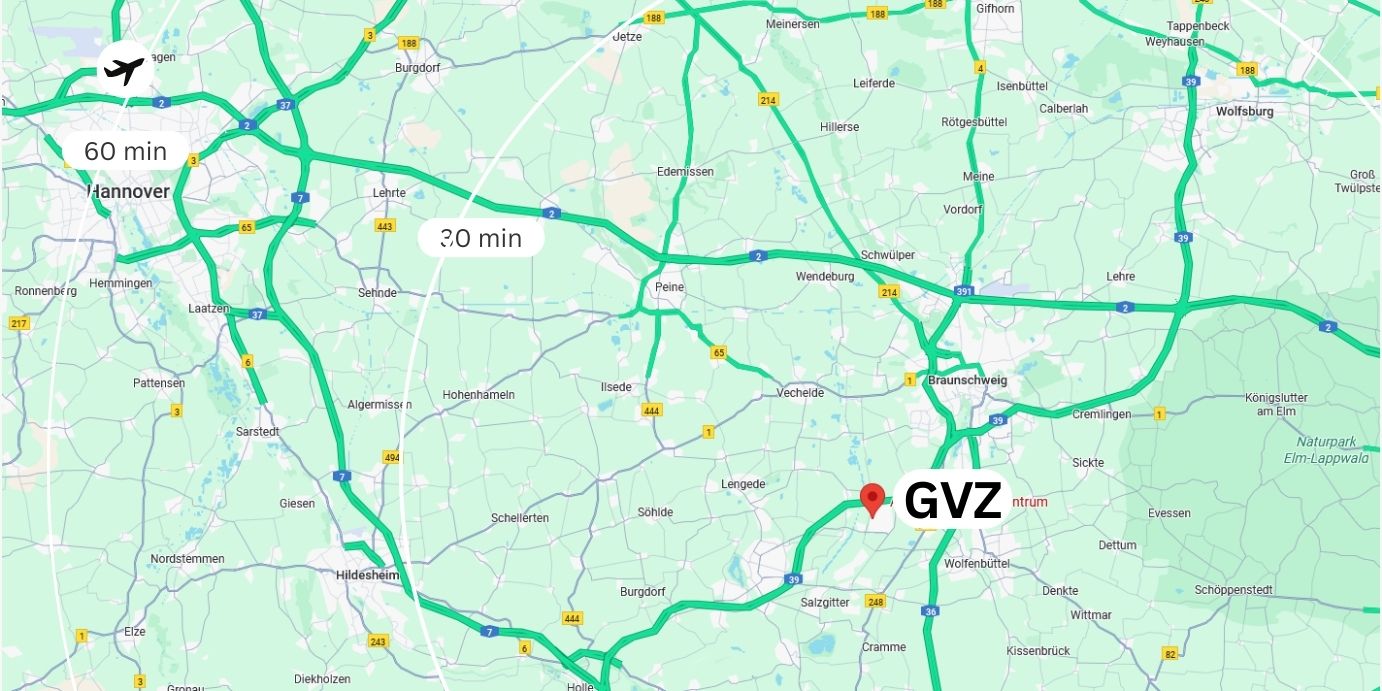
Nearest airport:Hanover-Langenhagen Airport (HAJ) is about 60-70 km away and can be reached via the A39/A7 in about 45 minutes. It is one of the most important cargo airports in northern Germany and operates 24/7 (with restrictions), which is crucial for express freight (automotive).
→ Warehouse Goslar
→ Warehouse Osnabrück
→ Warehouse Göttingen
| Feature | Facts & Figures |
| Type | Trimodal location (road, rail, water) |
| Highway | A39 (direct), A7 & A2 (no) |
| Port | Inland port of Salzgitter-Beddingen (including container terminal) |
| Railway siding | Available, operator VPS & DB, block train capable |
| Rental price (logistics) | approx. 4.50 – 7.50 €/m² (and rising) |
| Trade tax rate | 470 % |
| Airport | Hanover (HAJ), approx. 60 km |
| Top Industries | Automotive, steel, chemicals, mechanical engineering |
| Special feature | Location of the VW Gigafactory (battery cells) |
Why is this region one of the top logistics locations in Germany?
Salzgitter is an integral part of the Hanover-Braunschweig logistics region. In the rankings of the Fraunhofer Working Group for Supply Chain Services (SCS), this region is regularly listed as a top cluster.
For investors and tenants, the "hard facts" of the cost structure are decisive. How expensive is the location compared to top 7 locations such as Hamburg or Munich?
(Note: Prices are subject to market fluctuations; Status of estimates: Q4/2024)
Salzgitter still offers attractive conditions compared to the overheated markets in Hamburg or Hanover, but is picking up due to the shortage of space.
The tax burden is a factor that companies must include in the TCO (Total Cost of Ownership).
Property tax B: 600% (as of 2024, subject to new property tax reform adjustments).
→ Kassel Freight Center
→ Hanover-Lehrte Freight Center
→ Osnabrück Freight Center
What distinguishes the Salzgitter freight village from an 08/15 logistics park on the motorway?
The neighborhood determines the business potential. Who is already there?
The ecosystem is dominated by automotive and steel/metal processing.
Can you still find staff in Salzgitter at all?
This is the most critical question for any new investor.
Where is the Salzgitter freight village heading in the next 5 to 10 years?
Transformation is the buzzword. The change from the combustion engine to electromobility (VW battery cell factory) and from coal to hydrogen (steel production) is triggering huge investments.
The Salzgitter freight village is not a location for companies that are "only" looking for cheap space. It is a high-performance location for companies that need multimodality and are looking for proximity to the manufacturing industry (especially automotive and battery).
Those who can compensate for the comparatively high labor costs with productivity and the excellent infrastructure will find one of the most stable logistics ecosystems in Germany here. The question is not whether to go to Salzgitter, but how quickly to secure space in the vicinity of the upcoming battery cell production.
References:
Commercial property, logistics property and contract logistics in Hesse at a glance - LAGERflaeche.de!
Object no.: 10182
Rental
Germany
34399 Oedelsheim
Price on request
Object no.: 10181
Rental
Germany
34385 Bad Karlshafen-Helmarshausen
Price on request
Object no.: 10104
Warehousing (warehouse with management)
Germany
64646 Heppenheim
Price on request
Object no.: 10073
Warehousing (warehouse with management)
Germany
34582 Borken
Price on request