


Engine of the economy or restructuring case? Why logistics is at a standstill without immigration
Table of Contents
- Status Quo: The Bare Numbers of Addiction
- Does Logistics Need Immigrants? An Analysis of the Need
- Where are the Opportunities? More Than Just "Hands"
- The Hurdles: Where is the Crunch in the Gears?
- Does Politics Help Logistics? A Critical Assessment
- International Comparison: What do Other Countries do Better?
- Practical Example: The "Logistics Hub North"
- Frequently Asked Questions (FAQ) – In a nutshell
- Conclusion: Immigration is not a "Can", but a "Must"
The shelves in the supermarket are full, yesterday's parcel is here today – a matter of course for most Germans. But behind the scenes of German warehouse logistics, a storm is brewing. The shortage of skilled workers is no longer just a buzzword, but an existential threat to security of supply.
The central question is: Is immigration merely a "gap filler" for unpopular jobs, or is it the strategic opportunity to make Germany fit for the future as a logistics location?
In this deep dive, we shed light on the hard facts, analyze the political landscape, and take a look outside the box at international best practices.
Status Quo: The Bare Numbers of Addiction
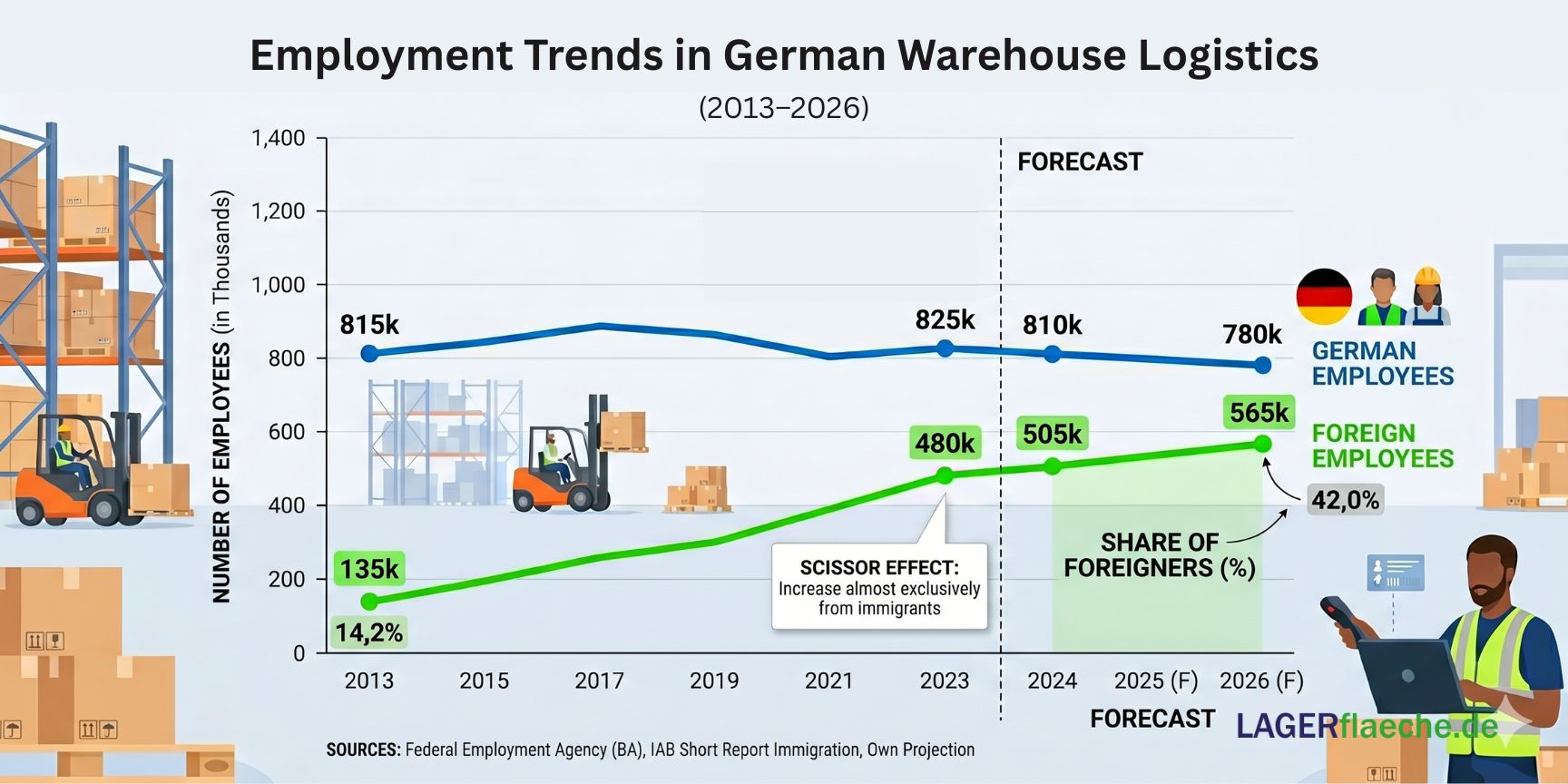
Logistics is the third largest economic sector in Germany. But who moves the goods? A look at the statistics of the Federal Employment Agency (BA) and the Institute for Employment Research (IAB) shows a clear trend: The proportion of employees without a German passport in warehousing has risen massively in the last ten years.
- Growth: While the proportion of foreign employees in logistics was still around 15% in 2013, it rose to over 38% by 2024. In conurbations and large logistics hubs (such as the Port of Hamburg or the Leipzig freight transport centre), this figure is often already above the 50% mark.
- Trend: While the number of German employees in warehouse logistics is declining for demographic reasons (retirement of the baby boomers), the number of immigrants is steadily increasing. Without this development, the industry growth of recent years, driven by the e-commerce boom, would have been impossible.
Why is that? Logistics offers low barriers to entry. While in other professions years of certification processes are often necessary, in warehouse logistics (especially in the area of picking and handling), even people without a perfect knowledge of German can quickly become productive.
Does Logistics Need Immigrants? An Analysis of the Need
The answer is a resounding yes. But why? It is not only the sheer shortage of heads, but also a structural shift in the German labor market.
The demographic factor
By 2035, Germany will lose around 7 million people in employment due to the ageing of society. Logistics is in direct competition with other sectors (construction, care, industry) for the remaining workforce. Since work in the warehouse is often physically demanding and takes place in shifts, young nationals often opt for supposedly more attractive office jobs.
The Growth Gap
Despite automation and AI, the need for manual activities in the "last mile" and in specialized warehouses (e.g. returns management) is increasing. A study by the DSLV (Federal Association of Freight Forwarding and Logistics) confirms: One in four positions in logistics cannot currently be filled in a timely manner.
Where are the Opportunities? More Than Just "Hands"
To see immigration as an opportunity means to think beyond the mere shortage of personnel.
- Diversity as a driver of innovation: Teams with different cultural backgrounds often bring new problem-solving approaches to the table. In a globally networked industry such as logistics, intercultural competence is a real asset.
- Flexibility and motivation: Many immigrants, especially from Eastern Europe or third countries, have a high level of motivation, as the job in Germany is often the basis for a new existence.
- Language bridges: In warehouses that operate internationally, multilingual employees help communicate with drivers from all over Europe.
The Hurdles: Where is the Crunch in the Gears?
Despite all the opportunities, integration is not a foregone conclusion. Companies report considerable difficulties:
- Language barriers: Safety briefings and complex warehouse management systems (WMS) require a minimum level of language comprehension. Misunderstandings can be expensive or even dangerous here.
- Bureaucratic madness: The Skilled Immigration Act is a step in the right direction, but the processing times in the immigration offices are often a deterrent. The recognition of foreign qualifications (e.g. forklift licence, truck driving licence) takes months.
- Housing shortage: What good is the commitment of a worker from abroad if he cannot find affordable housing in logistics hotspots such as Munich or Frankfurt?
- Social integration: Integration does not end at the factory gate. Acceptance within the existing workforce must be actively moderated to avoid tensions.
Does Politics Help Logistics? A Critical Assessment
The political landscape is divided in two. On the one hand, there are efforts such as the Skilled Workers Immigration Act (FEG) and the introduction of the opportunity card (based on a points system).
The reality in the logistics niche: Many regulations are aimed at highly qualified people (IT specialists, engineers). The "helpers" in warehouse logistics fell through the cracks for a long time. Only the most recent adjustments allow easier immigration with professional experience, even without formal recognition in advance.
Point of criticism: The digitization of the authorities is lagging behind. A logistics company needs staff now, not in 18 months. Although politicians provide the legal framework, they often fail due to administrative implementation (keyword: issuing visas at embassies).
International Comparison: What do Other Countries do Better?
Germany is in global competition for workers. How are other nations doing?
| Country | Strategy | Result for logistics |
| Netherlands | High degree of automation & liberal working models. | Less dependence on unskilled workers, but high demand for technicians. |
| Poland | Hub for Ukrainian workers. | Enormous growth, is increasingly becoming a competitor for German locations. |
| USA | "Green Card" system and historically grown immigration culture. | High dynamics, but often precarious working conditions. |
| United Kingdom | After Brexit: Severe restrictions. | Negative example: Massive shortage of drivers and empty shelves (2021/22) showed what happens when immigration is abruptly stopped. |
Conclusion of the comparison: Compared to the UK, Germany has the advantage of the EU internal market, but loses to the Netherlands in process efficiency and to Poland in wage costs.
Practical Example: The "Logistics Hub North"
A medium-sized contract logistics company from Lower Saxony was faced with the problem in 2023: 30 vacancies in the warehouse, no applications from the region.
The solution: The company launched its own recruitment program in Vietnam and Moldova.
- Investment: The company provided living space in rented apartments and financed German courses during working hours.
- The result: 25 positions could be filled within a year. Turnover in this group is close to 0%, compared to 40% for casual workers from the region.
- Benefits for the reader: Success in immigration requires personal initiative. You can't wait for state mediation, but as an employer you have to offer "infrastructure for life".
Frequently Asked Questions (FAQ) – In a nutshell
Why is the number of immigrants in logistics increasing?
Because the supply of labor in Germany is shrinking and logistics continues to grow through e-commerce. The industry acts as an "integration engine".
Is automation a solution?
Partially. Robots can pick, but loading and unloading containers or handling unstable goods still requires human flexibility.
What is the biggest difficulty for companies?
The legal uncertainty in the employment of refugees (work bans, risk of deportation despite a permanent job).
Conclusion: Immigration is not a "Can", but a "Must"
German warehouse logistics is at a crossroads. Without targeted and low-bureaucracy immigration, Germany will lose competitiveness as a business location. Logistics is dependent on immigrants – not only as "hands", but as an integral part of a globalised world of work.
Practical recommendation: Stop looking for the "perfect German warehouse worker". Instead, invest in:
- Digital voice assistance systems for the avalanche transceiver.
- Company mentoring to socially bind foreign colleagues.
- Political lobbying through associations for faster visa procedures.
Immigration is the greatest opportunity for logistics – we just have to manage it professionally.
Latest Blog Posts
Stay up to date with the newest trends, insights, and tips in warehouse and logistics. Our latest articles help you navigate the industry with confidence.
Data Centres vs. Logistics Facilities: The Race for Power and Land
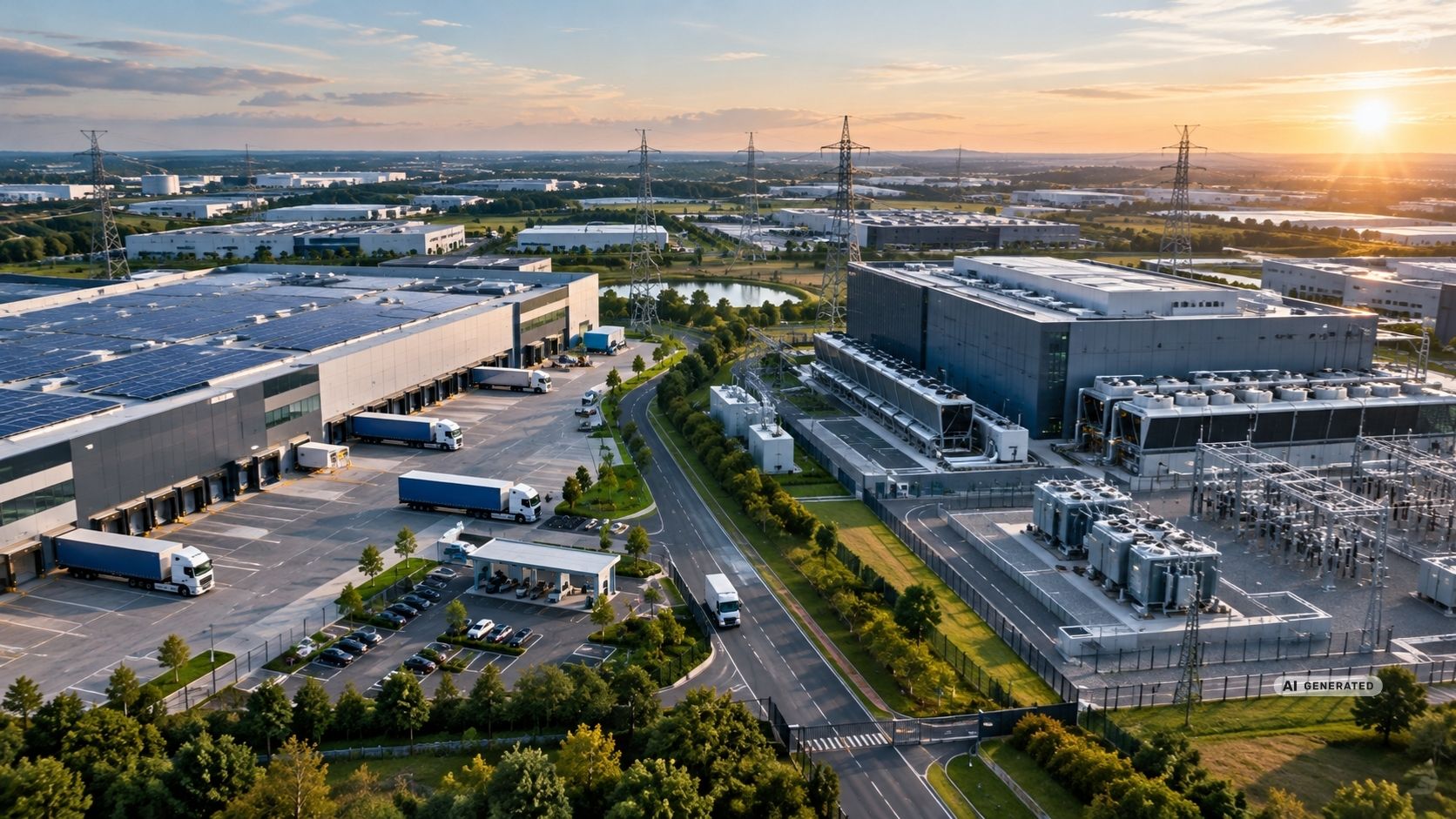
Across Europe, logistics operators are competing for more than land and transport access. They increasingly need something much harder to secure: grid capacity. Data centres are intensifying that competition — and changing how logistics locations are evaluated....
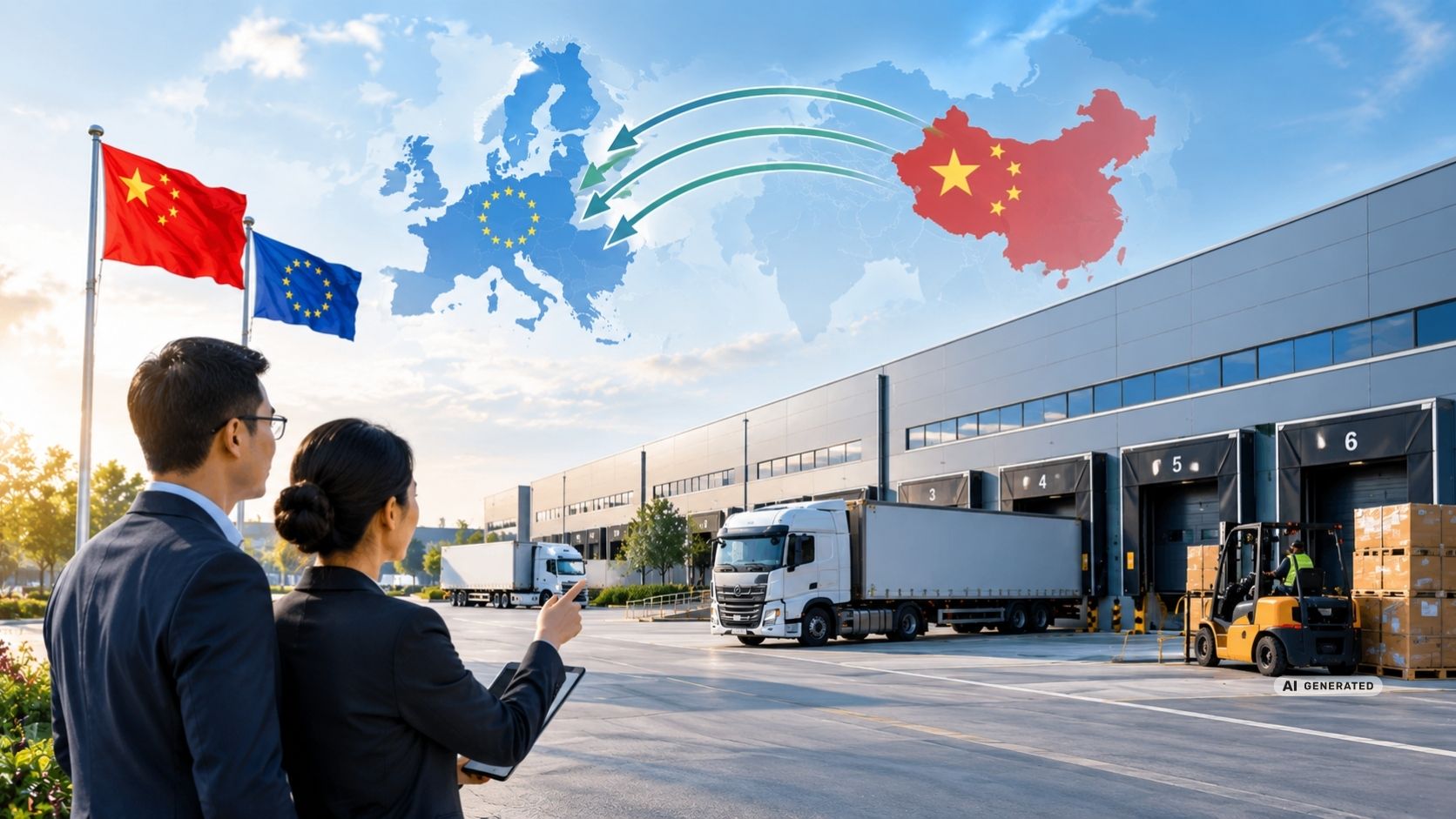
Chinese companies discover Europe's logistics real estate
Chinese companies are becoming an increasingly visible user group in Europe's logistics real estate market. What does this mean for warehouse space, 3PL structures and the requirements for European logistics locations?...
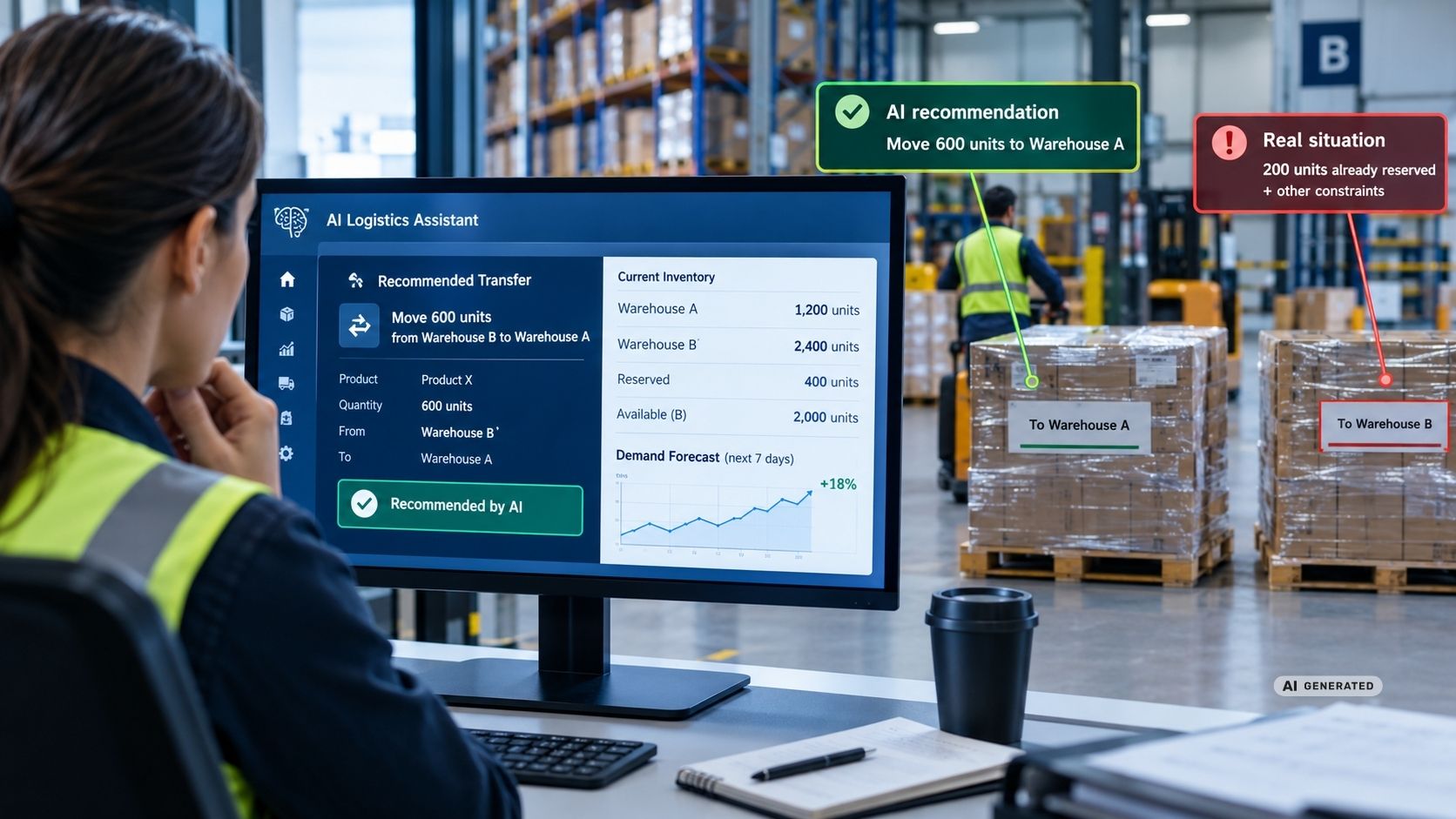
AI Hallucinations in Logistics: When AI Plans the Wrong Delivery
AI can analyze enormous amounts of logistics data — but it can also produce a convincing answer that is simply wrong. The critical question is not whether AI makes mistakes, but what happens when a wrong recommendation becomes an operational decision....
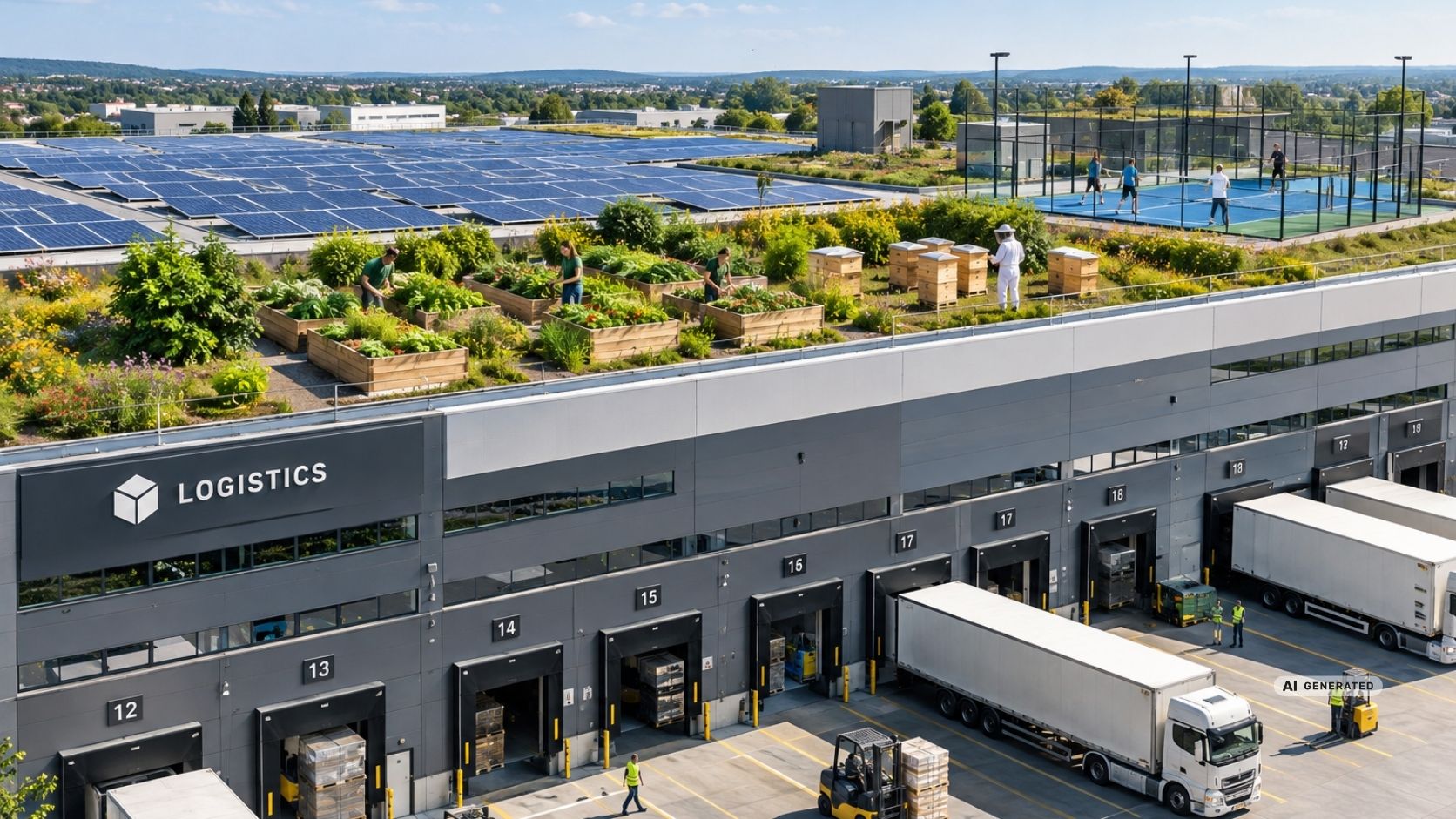
The Green Revolution on the Hall Roof: From Concrete Block to Ecological Power Plant?
Logistics roofs can do more than PV: greening, bees, urban farming and even sports areas turn unused roof space into multifunctional rooms....