



Logistics Crime 2026: The Rubble of 2025 and the Path to New Security
Table of Contents
- The Statistical Review: The 7-fold Escalation and its Drivers
- Phantom Carrier 2.0: The Digital Identity Trap
- The Dark Side of the Workforce: When Insider Knowledge becomes a Weapon
- Germany in the International Crosshairs: A Comparison
- Liability 2026: Why "Recklessness" Means Ruin Today
- Defense Technologies 2026: The Ramp of the Future
- Case Study: The Foiled 2 Million Coup (March 2026)
- What do Politicians and Police do? The "Soko Freight"
- Conclusion: Resilience as a Business Model
Welcome to the year 2026. If we look back on the last 24 months, the year 2025 will go down in the history books of logistics as the "year of the great cargo quake". While the industry was still discussing moderate growth rates in 2023, in 2025 we were overwhelmed by a wave of organized crime that eclipsed everything that had come before.
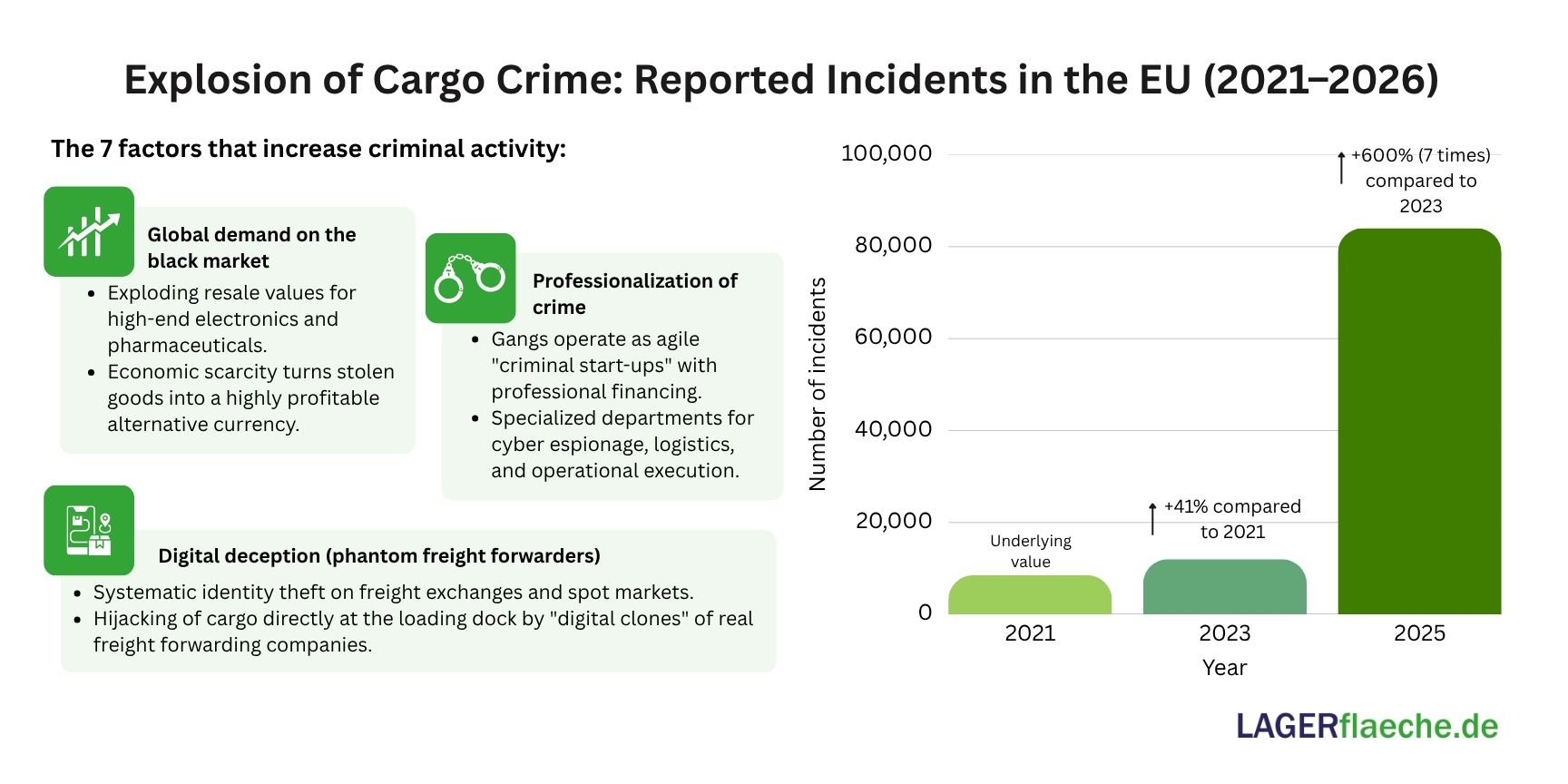
The naked truth: Cargo thefts at ramps and warehouses occurred seven times more often in 2025 than in 2023. We are not talking about petty criminals here, but about an industrially organized shadow economy. In this comprehensive dossier, we shed light on why the system collapsed, who the masterminds are and how the logistics elite will react in 2026 to secure their existence.
Central questions that we answer today:
- What factors led to the 7-fold escalation in 2025?
- How have "phantom carriers" developed technologically?
- Why is insider knowledge the most valuable currency for gangs today?
- Which countries will be considered "no-go areas" for unprotected transport in 2026?
- What exactly is politics doing after the chaos of the previous year?
The Statistical Review: The 7-fold Escalation and its Drivers
The jump from around 12,000 reported incidents in the EU in 2023 to over 84,000 in 2025 was a shock for insurers and service providers alike. According to the TAPA EMEA Intelligence Report 2026, direct property damage in Germany alone was over 2.2 billion euros.
The three main drivers of the crisis:
- Economic asymmetry: The extreme demand for semiconductors and specialized pharmaceutical products in 2025 created a black market whose margins exceeded the drug trade.
- Professionalization 4.0: Criminal gangs from Eastern Europe and South America merged their IT skills. The murder weapon was no longer the bolt cutter, but the laptop.
- Infrastructure congestion: The shortage of certified parking spaces (SSTPA) peaked in 2025, forcing truck drivers to pause in unsafe commercial areas – a found fodder for gangs.
Phantom Carrier 2.0: The Digital Identity Trap
The phenomenon of "phantom carriers" has developed from a marginal phenomenon to the greatest threat to freight exchanges in 2025.
A phantom carrier is a fraudster who "hijacks" a legal company identity. Through Business Email Compromise (BEC), they take over the communication of real existing freight forwarders. When you place an order in 2026, everything looks perfect digitally: the insurance policy is genuine, the EU license is valid. But the truck that appears at your ramp belongs to a shadow network.
Practical tip 2026: Never rely on digital documents alone. The "call-back procedure" via verified landline numbers of the management is now absolutely mandatory.
The Dark Side of the Workforce: When Insider Knowledge becomes a Weapon
Analyses by the BKA from the first quarter of 2026 show: In over 60% of major thefts in warehouses (damage > €500,000), there were indications of insider knowledge.
Gangs specifically recruit employees in precarious situations or infiltrate their own people as temporary workers. These "moles" provide crucial details:
- When are the security staff at the shift change?
- Which trailers contain High-Value Electronics (HVE)?
- Where are the "blind spots" of camera surveillance?
The fight against cargo theft in 2026 is therefore also a battle for corporate culture and the screening of personnel.
Germany in the International Crosshairs: A Comparison
Germany remains the main destination due to its geographical location. But how does it compare?
| Country | Risk status 2026 | Primary Threat | Police reaction |
| Germany | Critical | Phantom Carriers & Ramp Scams | Founding of the "Soko Fracht" (federal-state task force) |
| Poland | High | Warehouse break-ins by highly mobile gangs | Massive upgrading of the highway police with AI cameras |
| United Kingdom | Very high | Violence against drivers (cargo hijacking) | National Cargo Crime Strategy 2025 |
| USA | Extreme | "Full Truckload Theft" (Whole Trains) | FBI Task Forces & Use of Covert GPS Baits |
| Mexico | Maximum | Armed robberies (cartels) | Use of armed convoys as standard |
In Germany, the risk is particularly perfidious, as the perpetrators rely on the anonymity of the crowd and the legal slowness of cross-border investigations.
Liability 2026: Why "Recklessness" Means Ruin Today
The judiciary reacted after the wave of 2025. Anyone who awards freight orders to subcontractors today (2026) without identity verification is acting recklessly within the meaning of Section 435 of the German Commercial Code (HGB).
The consequence: the liability cap (e.g. 8.33 SDRs) is abolished. Freight forwarders are liable for the full value of the goods with their entire assets. Insurance companies have massively tightened their policies for 2026: Without proof of TAPA TSR certification or complete digital driver verification, you are often left with the costs in the event of a claim.
Defense Technologies 2026: The Ramp of the Future
How do top logistics companies protect themselves today? We are seeing a shift from reactive guarding to preventive technology.
- The digital twin of the load: Sensors in the pallet (not only on the truck) report light, vibration and deviations from the geofence in real time to an AI center.
- Biometric driver ID: ID is no longer sufficient at the ramp. The driver must authenticate himself via facial scan or fingerprint, which is compared with the customer's data.
- AI video analysis: Today, camera systems automatically detect when a license plate is forged (incorrect font, reflection pattern) and immediately block the barrier.
Case Study: The Foiled 2 Million Coup (March 2026)
A medium-sized logistics company in Hesse received a request for the transport of high-end servers. The carrier seemed serious, the documents fit.
The rescue:
The company used a new 2026 security protocol. When the truck arrived, the AI camera compared the driver's face with the photo uploaded during the digital login.
Result: Mismatch.
The police were silently alerted while the driver was "stopped" at the ramp. It turned out that the driver was part of an internationally wanted gang that had already committed 14 phantom thefts.
What do Politicians and Police do? The "Soko Freight"
After the disaster of 2025, political inaction was ended.
- Cross-border data sharing: Europol launched the "Cargo-Secure" platform in 2026, on which freight forwarders can report suspicious requests in real time.
- Tougher penalties: Gang-like cargo theft is now punished as severely as robbery, which is intended to increase the deterrent effect.
- Infrastructure offensive: The German government is funding the construction of 50 new high-security parking spaces along the A1, A2 and A7 in 2026 with up to 80% of the costs.
Conclusion: Resilience as a Business Model
The year 2025 was a wake-up call. In 2026, security is no longer a "nice-to-have", but a core product. Logistics service providers that do not invest in technology and processes will disappear from the market – either through massive losses or through the withdrawal of insurance coverage.
Your checklist for 2026:
- Zero Trust at the Ramp: Every identity is verified biometrically or by call-back.
- Employee screening: Regular training and background checks are mandatory.
- Technology integration: Leverage IoT tracking at the merchandise level.
The criminals won in 2025 – in 2026 we will strike back.
References:
- TAPA EMEA Intelligence Report 2026: Analysis of the 2025 Crisis.
- BKA Federal Situation Report 2025: Organized Crime in the Supply Chain.
- Insurance Monitor 2026: New liability guidelines for road haulage.
- Europol Cargo-Secure Initiative, Whitepaper 2026.
Latest Blog Posts
Stay up to date with the newest trends, insights, and tips in warehouse and logistics. Our latest articles help you navigate the industry with confidence.

Data Centres vs. Logistics Facilities: The Race for Power and Land
Across Europe, logistics operators are competing for more than land and transport access. They increasingly need something much harder to secure: grid capacity. Data centres are intensifying that competition — and changing how logistics locations are evaluated....
Chinese companies discover Europe's logistics real estate
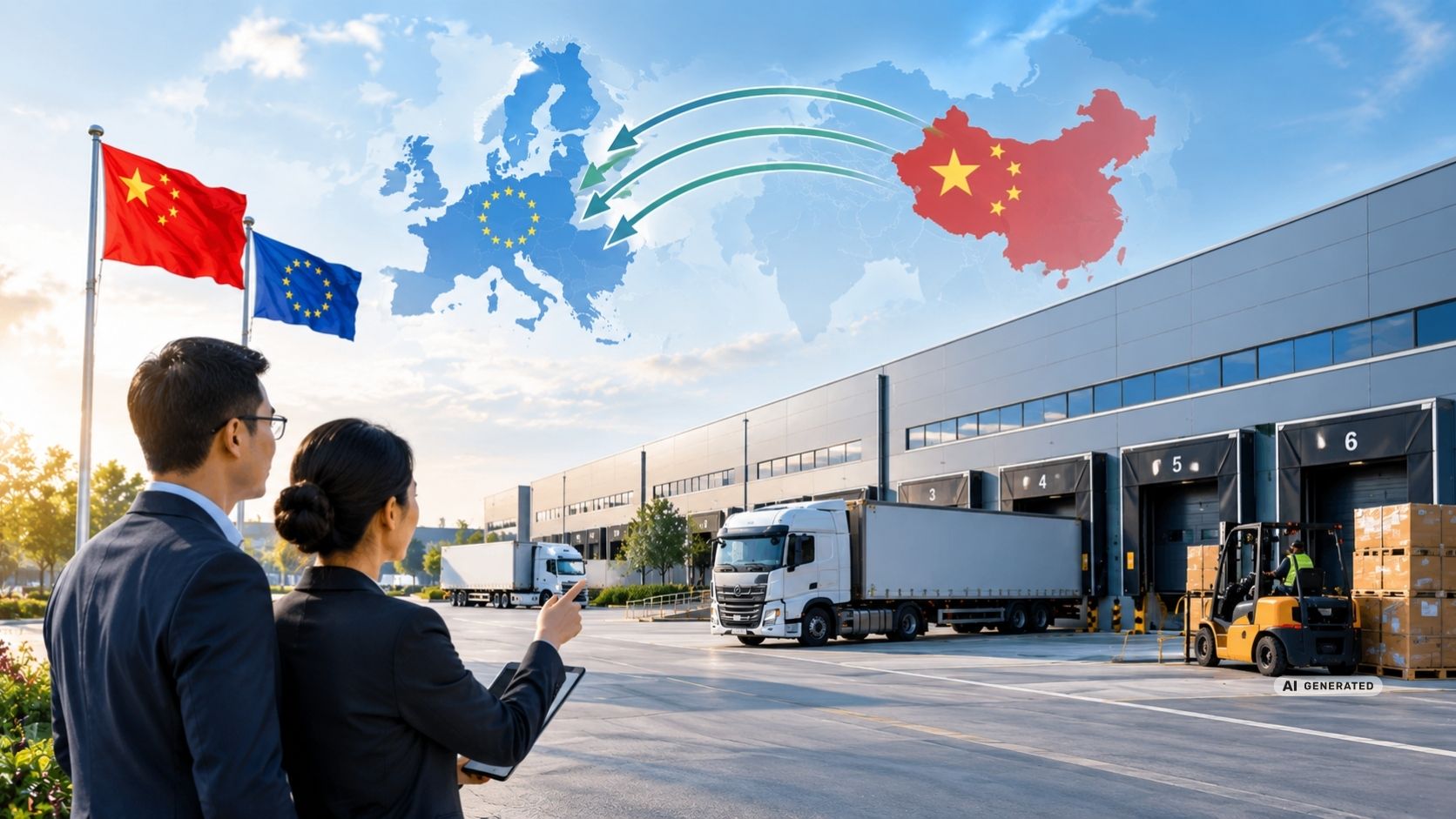
Chinese companies are becoming an increasingly visible user group in Europe's logistics real estate market. What does this mean for warehouse space, 3PL structures and the requirements for European logistics locations?...
AI Hallucinations in Logistics: When AI Plans the Wrong Delivery
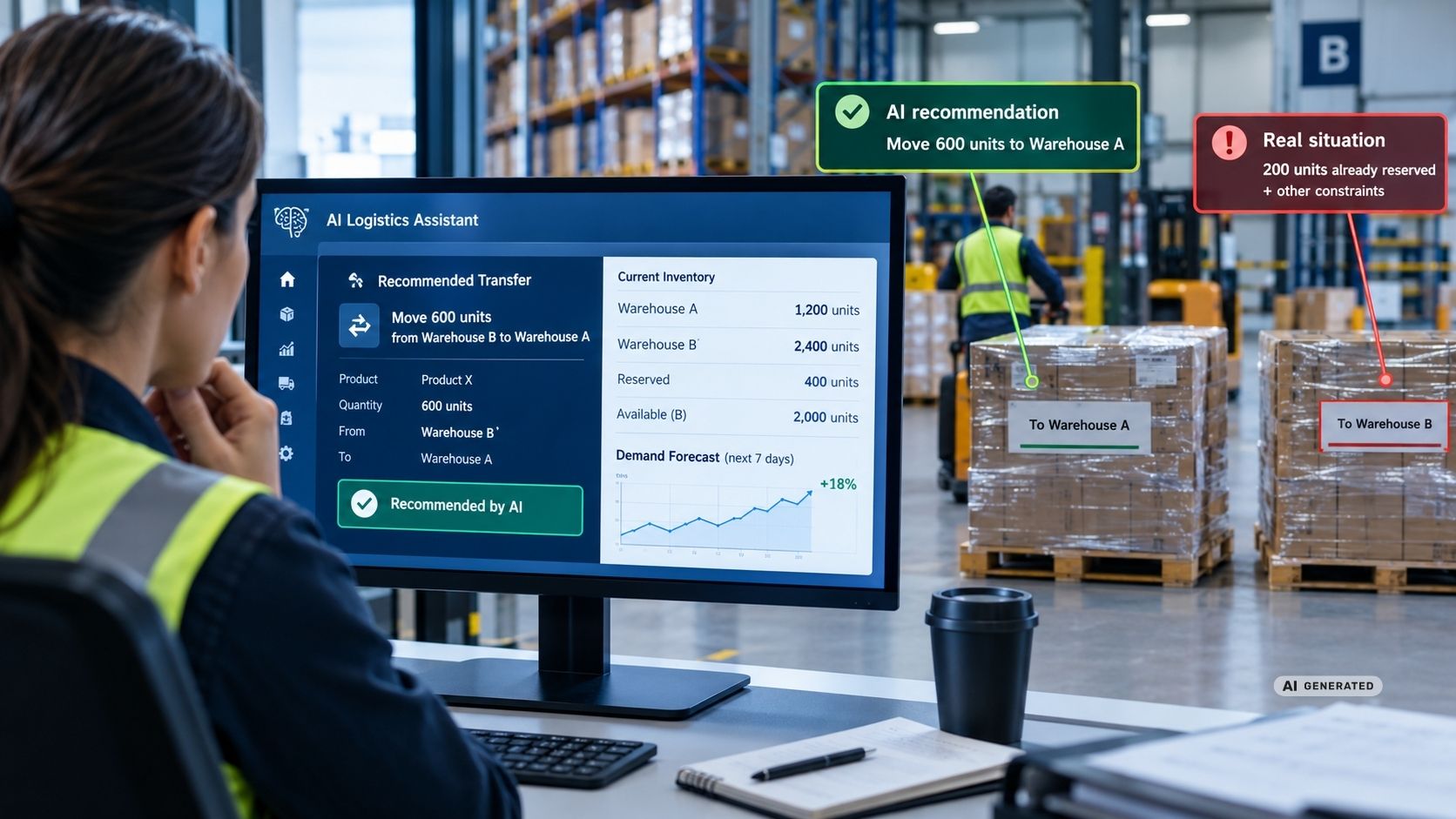
AI can analyze enormous amounts of logistics data — but it can also produce a convincing answer that is simply wrong. The critical question is not whether AI makes mistakes, but what happens when a wrong recommendation becomes an operational decision....
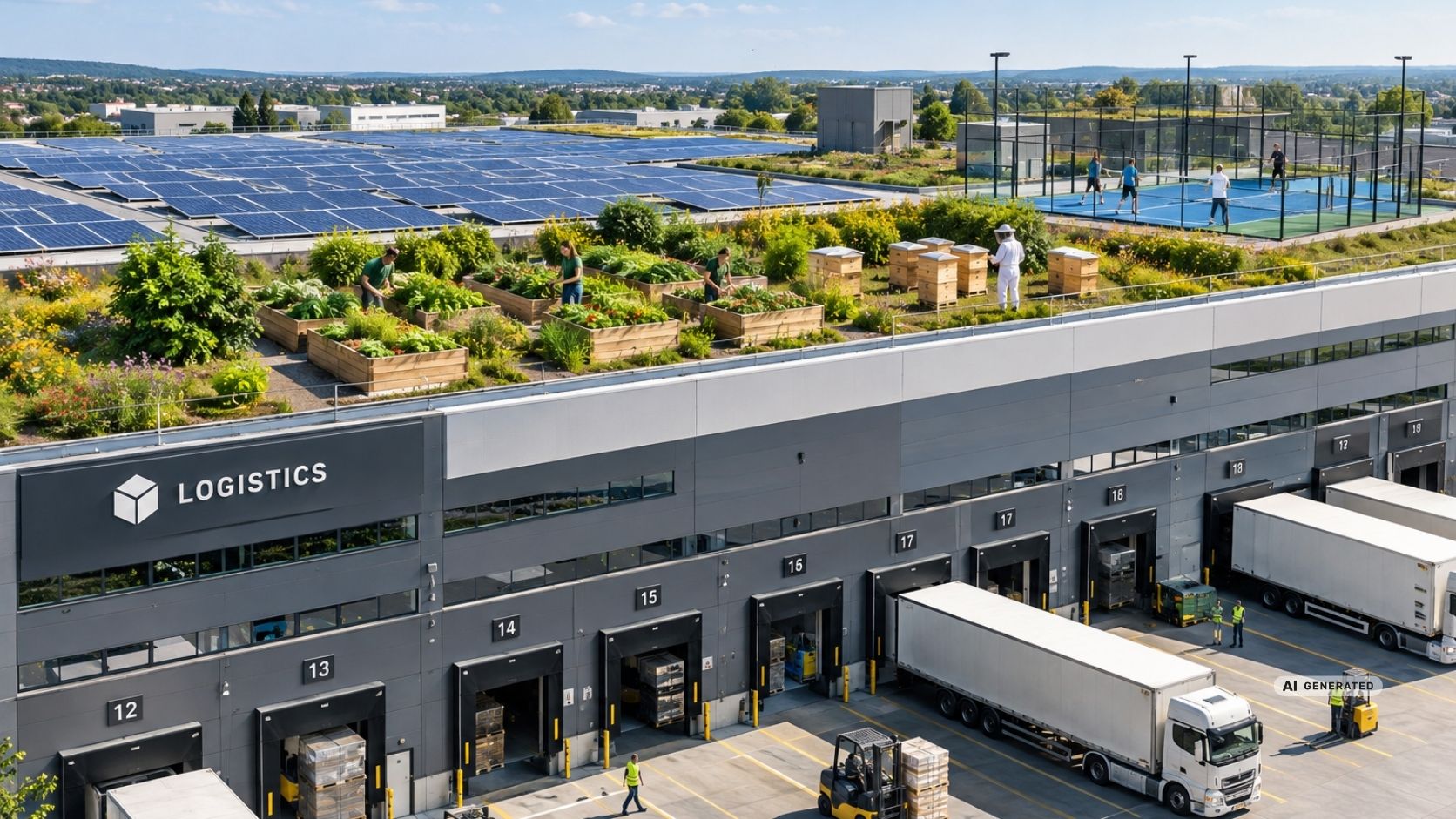
The Green Revolution on the Hall Roof: From Concrete Block to Ecological Power Plant?
Logistics roofs can do more than PV: greening, bees, urban farming and even sports areas turn unused roof space into multifunctional rooms....