




Pay-per-Shelf in Warehouse Logistics
Table of contents
- Guide & Glossary: Pay-per-Shelf in Modern Warehouse Logistics
- What is pay-per-shelf? (Definition)
- The Billing Logic: From CAPEX to Flexible OPEX
- Pay-per-shelf in contract logistics: The lever for retailers
- Logistics Property & Hall: Architectural Requirements
- Industry focus: For whom is the shelf model worthwhile?
- Figures, data, facts: A practical calculation example
- FAQ: Frequently asked questions about pay-per-shelf
- Conclusion: Maximum flexibility for the supply chain
Guide & Glossary: Pay-per-Shelf in Modern Warehouse Logistics
Warehouse logistics is undergoing radical change. Booming e-commerce and unpredictable supply chains in particular are forcing companies to critically question their fixed costs. For a long time, the market was dominated by rigid rents per square metre or classic pallet space billing. But what happens when a retailer primarily sells small parts, cosmetics or fashion that are not stored on Euro pallets at all? This is where pay-per-shelf enters the stage – a highly flexible billing model that redefines the rules of the game in contract logistics and the use of logistics real estate.
What is pay-per-shelf? (Definition)
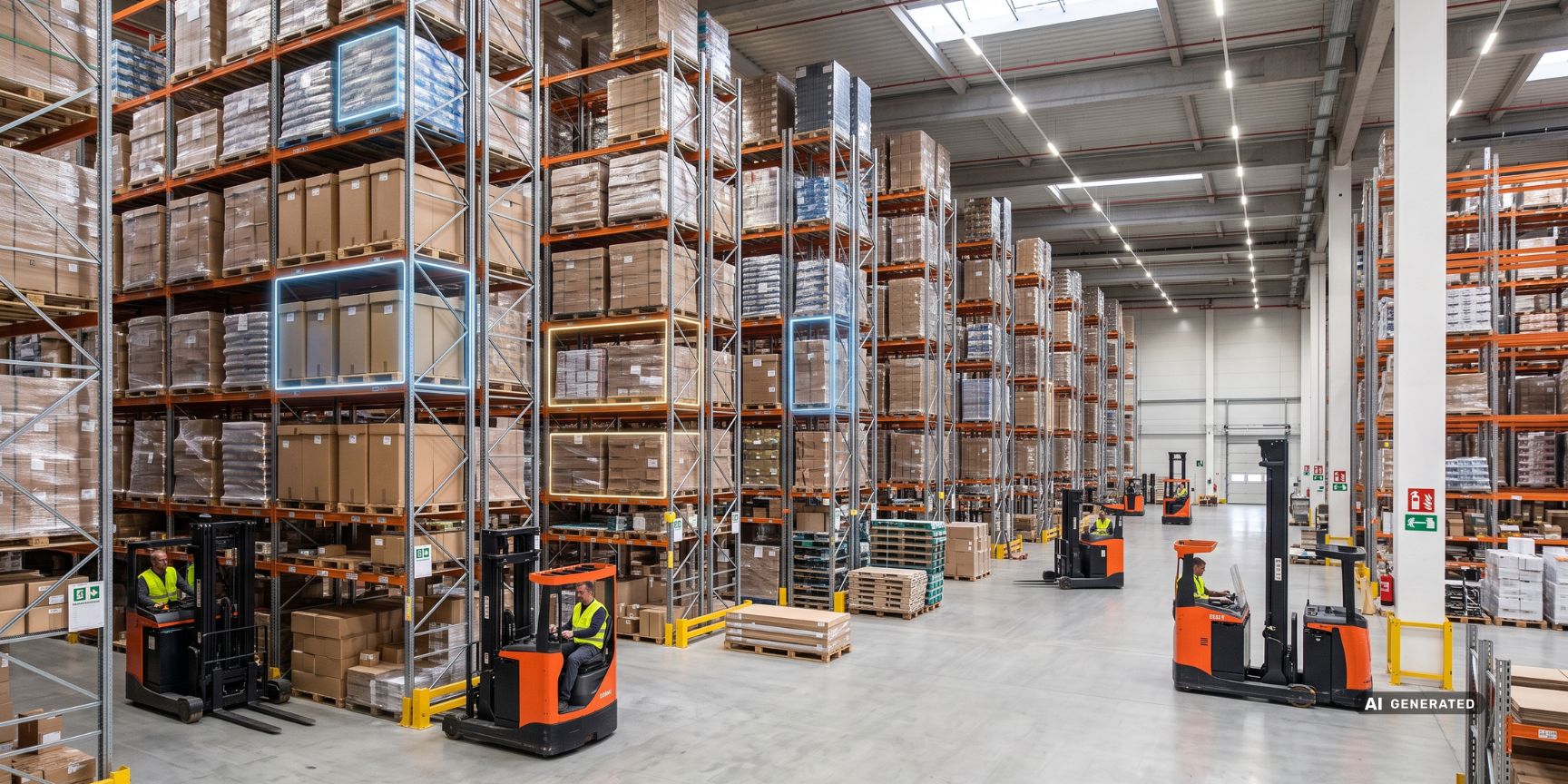
Pay-per-shelf (to German: payment per shelf) is a usage-based billing model in warehouse logistics. Instead of paying a flat rate for an entire hall, fixed square meters or entire pallet spaces, the logistics service provider bills exactly according to the number of shelves occupied. This model is primarily used in shelving warehouses, where unpalletized goods, cardboard boxes, open-fronted storage bins or loose individual items (such as textiles) are stored. It is the epitome of flexibility: On the cut-off date, the customer only pays for the physical space on the shelf that is actually occupied by his goods.
The Billing Logic: From CAPEX to Flexible OPEX
The in-house operation of a shelving warehouse ties up an enormous amount of capital. The rent for the logistics property continues to run continuously, and the expensive purchase of the racking systems has a massive impact as fixed costs (CAPEX - Capital Expenditure). Pay-per-shelf transforms these fixed costs into variable operating costs (OPEX - Operational Expenditure). In months with low inventory (e.g. in the summer slump), costs automatically decrease because fewer shelves are occupied. At peak times, such as before Black Friday, the space requirement scales upwards without the retailer having to add its own halls or buy new shelves.
Pay-per-shelf in contract logistics: The lever for retailers
In contract logistics, service providers (3PL) take over storage for various clients under one roof as part of multi-user warehouses. Pay-per-shelf is particularly attractive for e-commerce retailers here, as it is often seamlessly combined with pay-per-pick (payment per picked item). The logistics service provider provides the complete infrastructure and takes care of value-added services (VAS) such as quality controls, labeling and returns management. By bundling several customers in one hall, the logistics company makes optimal use of its racking facilities and passes these synergy effects on to retailers in the form of attractive shelf prices.
Logistics Property & Hall: Architectural Requirements
A pay-per-shelf model places completely different structural demands on a commercial property than a classic pallet block warehouse. When small parts are stored in shelving racks, the focus is on ergonomics and space compaction.
- Mezzanine levels: In order to make use of the usual hall heights of 10 to 12 metres (UKB), multi-storey shelving systems (mezzanines) made of steel are installed. The hall requires a high floor load capacity of at least 50 kN/m².
- Fire protection: Cardboard boxes and textiles on dense shelves carry a high fire load. Comprehensive in-rack sprinkler systems (integrated directly into the shelf levels) are often mandatory.
- Lighting: Since employees pick directly at the shelves, intelligent LED light strips with an illuminance of 200 to 300 lux are required by law in the aisles and are operationally essential.
Industry focus: For whom is the shelf model worthwhile?
Not every product fits on the shelving shelf. Pay-per-shelf is the absolute gold standard for industries that are characterized by an enormous variety of items (high number of SKUs) and small batch sizes:
- Fashion & textiles: Flat-packed goods such as T-shirts, shoes or accessories.
- Cosmetics & pharmaceuticals: Small jars, vials or medicine packs.
- Electronics & spare parts: smartphones, cables, screws in open-fronted storage bins (KLTs). For heavy machine parts, beverage pallets or bulk goods (FMCG), on the other hand, the classic pay-per-pallet model in high racks remains the more economical choice.
Figures, data, facts: A practical calculation example
How do contract logistics companies calculate these prices? A typical shelf is provided with a fixed monthly price. Depending on the region, the IT connection and climatic requirements (e.g. air-conditioned hall for cosmetics), experience has shown that the cost of a shelf is between €0.50 and €1.80 per month. Example: An e-commerce retailer has a collection with 5,000 different items (SKUs). He occupies 1,200 shelves at a logistics service provider. At a price of €0.80, he only pays €960.00 in pure storage costs per month. If he sells the stock and occupies only 800 shelves in the following month, his invoice immediately drops to €640.00.
FAQ: Frequently asked questions about pay-per-shelf
What is the difference between pay-per-shelf and pay-per-pick? Pay-per-shelf charges for pure storage (the physically occupied space on the shelf per period). Pay-per-pick is a transaction fee for movement (grabbing, scanning and packing an item for shipping). In contract logistics, both models are usually combined.
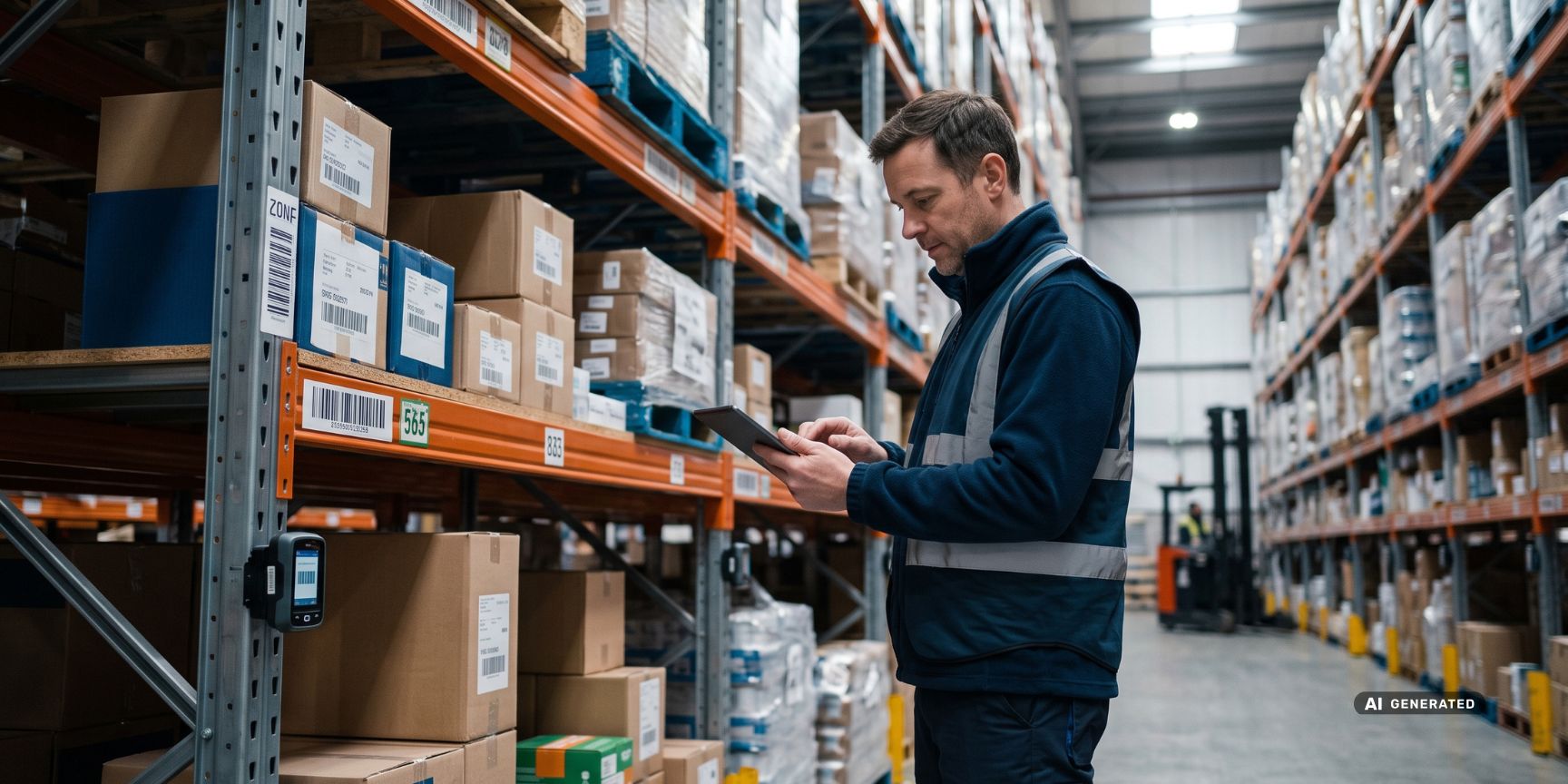
How is it recorded how many shelves I occupy? This is done fully automatically via the logistics service provider's Warehouse Management System (WMS). Each shelf has a unique barcode. During storage and retrieval, scanning is carried out, which allows the system to calculate the average occupancy rate on a daily basis.
Can I combine pay-per-shelf with pallet spaces? Yes, this is the standard scenario in multi-user warehouses. Replenishment (excess stock) is often stored cost-effectively on Euro pallets in the reserve warehouse (pay-per-pallet). Only when goods are separated for individual shipment do they move to the shelving warehouse (pay-per-shelf).
Who bears the risk of vacancies in the logistics hall? In this model, the vacancy risk (idle costs) lies entirely with the contract logistics provider. He must ensure that his hall and shelves remain optimally utilized through clever sales work and the combination of different customers (with different seasonalities).
Are Value Added Services (VAS) included in the pay-per-shelf price? No. The shelf price only covers the rent of the shelf space and a proportion of electricity/heating. Value-added services such as quality controls, ironing on textiles or returns processing are contractually defined as separate handling fees (in the SLA).
Is pay-per-shelf suitable for hazardous substances? To a certain extent. This is possible for small containers of hazardous substances (such as certain cosmetics or lithium-ion batteries), but requires a specially equipped logistics property (fire protection sections, WGK films, extinguishing water retention basins). This often drives up the price per shelf noticeably.
How quickly can I scale my shelf space? This is the biggest advantage. With most service providers, capacities can be adjusted within a few days or weeks, as the physical shelf infrastructure is already in place in the huge logistics parks and only needs to be systemically reallocated.
Conclusion: Maximum flexibility for the supply chain
Pay-per-shelf is much more than just a buzzword in e-commerce. It is the logical answer to volatile markets, short product life cycles and the pressure to minimise fixed costs on the balance sheet. Anyone who cleverly combines the model with a high-performance contract logistics provider in a top-equipped logistics property secures a supply chain that breathes: it grows immediately with success and protects liquidity in quieter phases.
Your Ideal Logistics Warehouse
Browse listings for warehouse space, logistics real estate, industrial land, and contract logistics solutions.
Browse Exposés
Maximize Exposure for Your Warehouse Space
Showcase your logistics properties and attract qualified inquiries.
Discover Products