




LOFO in warehouse logistics
Table of contents
- LOFO (Lowest In – First Out) in Logistics
- What does LOFO mean? (Definition & Basics)
- The material flow: How does LOFO work in practice?
- Bearing interest rate and capital commitment: A costly effect
- Contract Logistics: Challenges for Logistics Service Providers
- Logistics Property & Hall: Architecture for Expensive Long-Term Holdings
- Facts, figures, data: A comparison of warehouse principles
- FAQ: Frequently Asked Questions (Q&A)
- Conclusion: Theoretical Benefit vs. Physical Reality
LOFO (Lowest In - First Out) in logistics
Inventory management is at the heart of any functioning supply chain. But how do you decide which goods leave the warehouse first? In addition to well-known concepts such as FIFO (First In – First Out), there are also purely value-based valuation methods. One of the most exciting – and often most challenging in practice – is the LOFO method.
What does LOFO mean? (Definition & Basics)
The acronym LOFO comes from warehouse logistics and business cost accounting and stands for "Lowest In – First Out". In this consumption sequence method, those goods that have the lowest purchase or production price leave the warehouse first.
The consequence: the most expensive and valuable products remain in inventory for the longest time. While time-based principles regulate the physical flow of materials or shelf life, LOFO is a purely monetary instrument. It is mainly used for internal analyses in cost accounting in order to keep the cost of materials low and to set the residual value of the warehouse high on the balance sheet.
The material flow: How does LOFO work in practice?
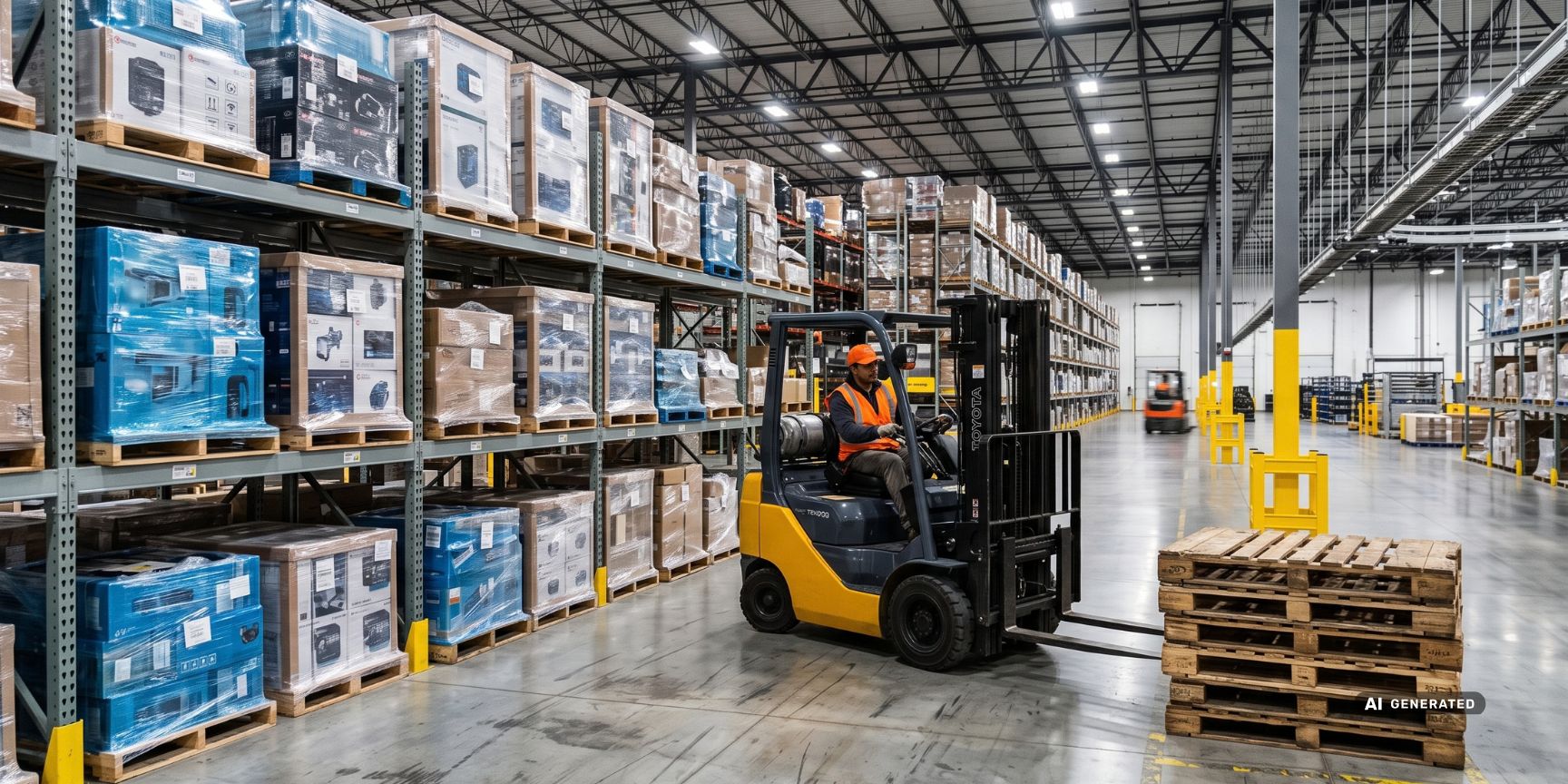
In intralogistics, the actual time of storage does not play a role in the LOFO strategy. The Warehouse Management System (WMS) sorts the stocks on the shelf exclusively according to their purchase value.
A practical example: A company stores aluminum plates over the course of a year. Batch A costs 3.50 euros each, batch B 4.70 euros due to market fluctuations and batch C 4.00 euros. If the production department now reports material requirements, the WMS navigates the picker specifically to the plates of batch A (3.50 euros), as these have the lowest value. The expensive batch B (4.70 euros) remains untouched on the shelf. This often leads to long and unproductive travel times, as it is not the proximity to the outgoing zone but the price that dictates retrieval.
Bearing interest rate and capital commitment: A costly effect
The decision in favor of LOFO has serious financial implications for the entire logistics site. Every item that is in a logistics hall ties up capital. The average storage period is the decisive multiplier for calculating the opportunity cost of this tied-up capital.
With the help of the storage period, the so-called storage interest rate can be determined. Since LOFO ensures that the most expensive goods remain in the hall for the longest time, it massively increases capital commitment. The warehouse inevitably becomes an expensive long-term portfolio. The interest costs for the tied-up capital explode, which is why this procedure is usually only used for strategic raw material stockpiling, when security of supply takes priority over liquidity.
Contract Logistics: Challenges for Logistics Service Providers
If a company outsources its inventories to a service provider (3PL) in contract logistics, LOFO poses special operational hurdles. Contract logistics companies work on the basis of dynamics, high throughput and fast turnover frequencies.
However, if the most expensive pallets remain untouched as slow movers for months or years, they block valuable storage spaces. In order to reduce process costs, service providers have to move these inventories to deeper zones of the reserve warehouse. Billing in contract logistics is therefore often based on the "pay-per-pallet" model, so that the customer pays for the blocked (and actually existing) inventory.
Logistics Property & Hall: Architecture for Expensive Long-Term Holdings
Since LOFO means that the most expensive goods de facto "hibernate" in the hall for the longest time, the logistics property mutates into a warehouse of valuables. This dictates specific construction and safety requirements:
- Security & TAPA: A simple hall made of trapezoidal sheet metal does not provide sufficient protection. High-quality, long-term stocks require seamless video surveillance and often certification according to TAPA FSR (Facility Security Requirements).
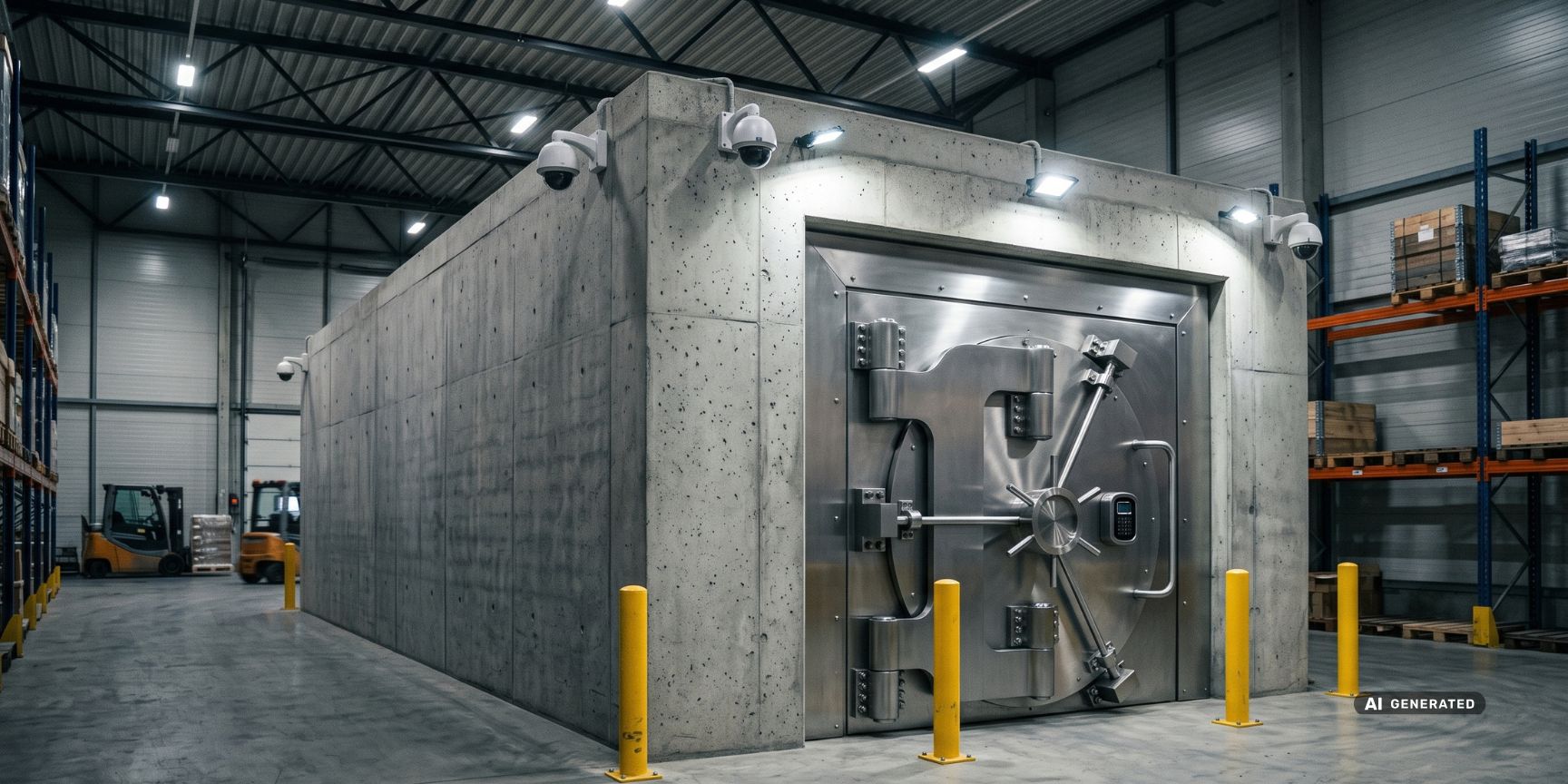
- Room-in-room concepts: Often, separate valuables warehouses or vaults made of solid reinforced concrete walls are built within a large commercial hall in order to physically protect the expensive stocks of the LOFO strategy.
- Load capacity and volume: If expensive heavy goods are stored permanently, an industrial floor with a load capacity of at least 50 kN/m² (approx. 5 tonnes per square metre) is mandatory. The standard for modern logistics halls today is also 10 to 12 metres of lower edge truss (UKB) in order to efficiently stack the dead capital upwards.
Facts, figures, data: A comparison of warehouse principles
In order to correctly classify the orientation of LOFO, it helps to take a look at the logistical alternatives:
- FIFO (First In – First Out): Time-based. First delivered goods go out first. Standard for food to avoid spoilage.
- LIFO (Last In – First Out): Time-based. Goods that were last stored are removed first (e.g. typical for bulk materials in block storage).
- HIFO (Highest In – First Out): Value-based. The most expensive commodity leaves the warehouse first (the exact opposite of LOFO).
- LOFO (Lowest In – First Out): Value-based. The cheapest goods leave the warehouse first, which maximizes the residual value of the warehouse in terms of balance sheet policy.
FAQ: Frequently Asked Questions (Q&A)
Question: When is the LOFO method used in logistics?
Answer: Companies very rarely use LOFO for the actual material flow, but primarily as a theoretical model in internal cost and performance accounting. It serves to keep the imputed cost of materials artificially low and to visually enhance the residual value of one's own warehouse.
Question: Is LOFO allowed for statutory accounting?
Answer: No. In Germany, the LOFO procedure violates the applicable commercial and tax law because it violates the strict lowest value principle. For the official balance sheet, only FIFO, LIFO and average valuations are permitted.
Question: What are the disadvantages of LOFO for intralogistics?
Answer: The principle ensures an unnecessary number of physical transfers and long travel times. The WMS has to analyze the current price for each picking process. In addition, the risk of obsolescence increases, as high-priced goods are almost never retrieved.
Conclusion: Theoretical Benefit vs. Physical Reality
The Lowest In – First Out Principle (LOFO) is a theoretically fascinating business construct, but it is often exposed as a yield killer in the hard practice of warehouse logistics. Those who systematically outsource the cheapest goods first inevitably hoard extremely expensive capital in their logistics property. This drives up the internal interest costs for the company and at the same time requires massive upfront investments (CAPEX) in state-of-the-art security technology and vaults. While LOFO may offer niche advantages in internal cost calculation, future-oriented contract logistics companies continue to rely on highly dynamic, time-based concepts such as FIFO on the operational floor to keep throughput times short and hall utilization profitable.
Your Ideal Logistics Warehouse
Browse listings for warehouse space, logistics real estate, industrial land, and contract logistics solutions.
Browse Exposés
Maximize Exposure for Your Warehouse Space
Showcase your logistics properties and attract qualified inquiries.
Discover Products