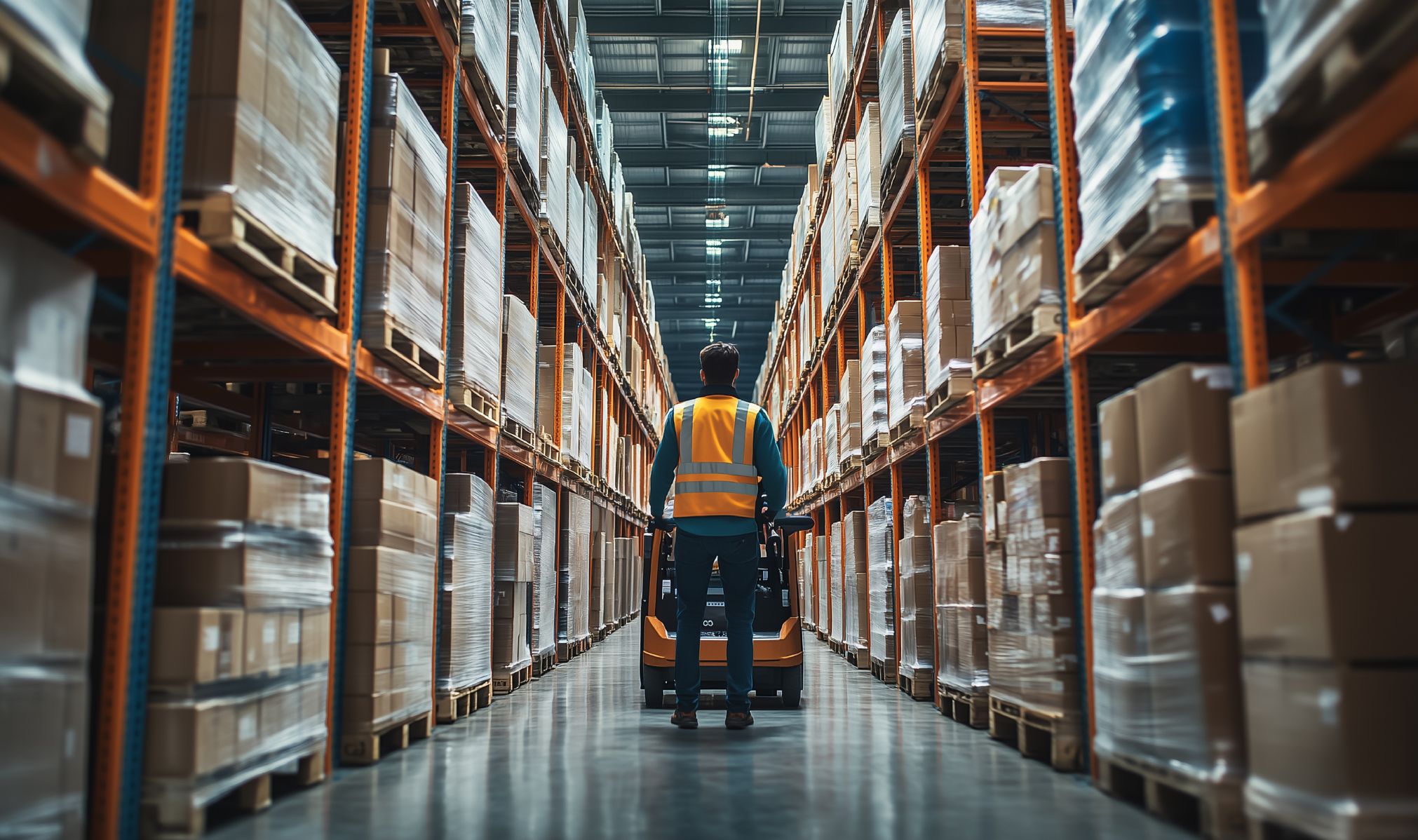
In the field of transport, pallets are of central importance for the efficient storage and transport of goods. The selection of a suitable pallet type depends on the specific requirements, such as load capacity or hygiene regulations. Pallets are indispensable in warehouse logistics and offer numerous advantages. They facilitate the movement of goods, optimise space requirements thanks to the possibility of stackable storage and protect products from environmental influences. They also increase the efficiency of loading and unloading processes, promote standardisation in logistics and simplify inventory control through the use of barcodes or RFID tags. Companies benefit from savings and flexible application options thanks to a wide range of materials and sizes
Benefits and advantages of pallets
The use of pallets plays a key role in sustainable logistics. More and more companies are turning to reusable and recyclable materials such as wood, plastic and metal to minimise waste and reduce costs over the entire life cycle. Advanced technologies improve the traceability of goods, increase transparency in the supply chain and optimise processes for future-oriented logistics. In view of globalisation, standardised pallets, especially IPPC pallets, are essential for international trade. They enable flexible adaptation to fluctuating demand and promote sustainable practices. Combining traditional pallet logistics with innovative approaches is crucial to achieving both economic and environmental goals. Overall, pallets are crucial for efficient warehouse logistics as they optimise processes and reduce costs. Choosing the right pallet is of great importance for the efficiency of storage and transport; Euro pallets and special variants such as Düsseldorf pallets or IPPC pallets in particular play a central role here.
The variety of pallets: types and varietie
Euro pallets are the standard pallets in Europe with dimensions of 120 cm x 80 cm and a weight of 20 to 23 kg. They offer stability, exchangeability and a load capacity of up to two tonnes. In addition to Euro pallets, there are different variants such as Düsseldorf pallets for smaller goods and industrial pallets in larger sizes. The materials range from wood to plastic and cardboard, with plastic pallets being increasingly favoured for food transport. Handling differs between two-way and four-way pallets, while returnable and one-way pallets offer different cost and utilisation benefits. IPPC pallets are suitable for international shipping, while chemical and drum pallets are used for special industrial applications. Mesh box pallets ensure stability when transporting heavy goods, while special pallets can be customised.
Pallet types with specific properties:
- Euro pallet: Standard size (1200 mm x 800 mm), made of wood, ideal for the international exchange of goods.
- Mesh pallet: Variable in size, made of metal or wood, suitable for foodstuffs.
- Plastic pallet: Robust and hygienic, ideal for sensitive products.
- Chemical pallet: Resistant to corrosion, especially for chemical storage.
- Swivelling pallet: Facilitates unloading in confined spaces.
- USA pallet: Widely used in North America (1200 mm x 1000 mm), good for the food industry.
- Disposable pallet: Inexpensive, made of wood or cardboard, for single use.
- Pool pallet: Is divided and reused in the pooling system.
Calculate pallet prices: save with the pallet report
There are a few basic aspects to consider for the effective storage and transport of pallets. Optimised stacking increases the available space and reduces damage to the goods. Choosing the right type of pallet, based on cost and material strength, plays a crucial role. The pallet report makes it possible to precisely determine the total costs and thus supports informed purchasing decisions. The correct arrangement of pallets not only ensures ideal space utilisation, but also reduces the risk of damage during transport. It is essential to observe the permissible payloads and load capacities and to securely fasten the loads. The calculator provides current prices for various pallet types and takes market conditions into account. Rely on our expertise to sustainably optimise your storage and transport processes.