Commission-free offer
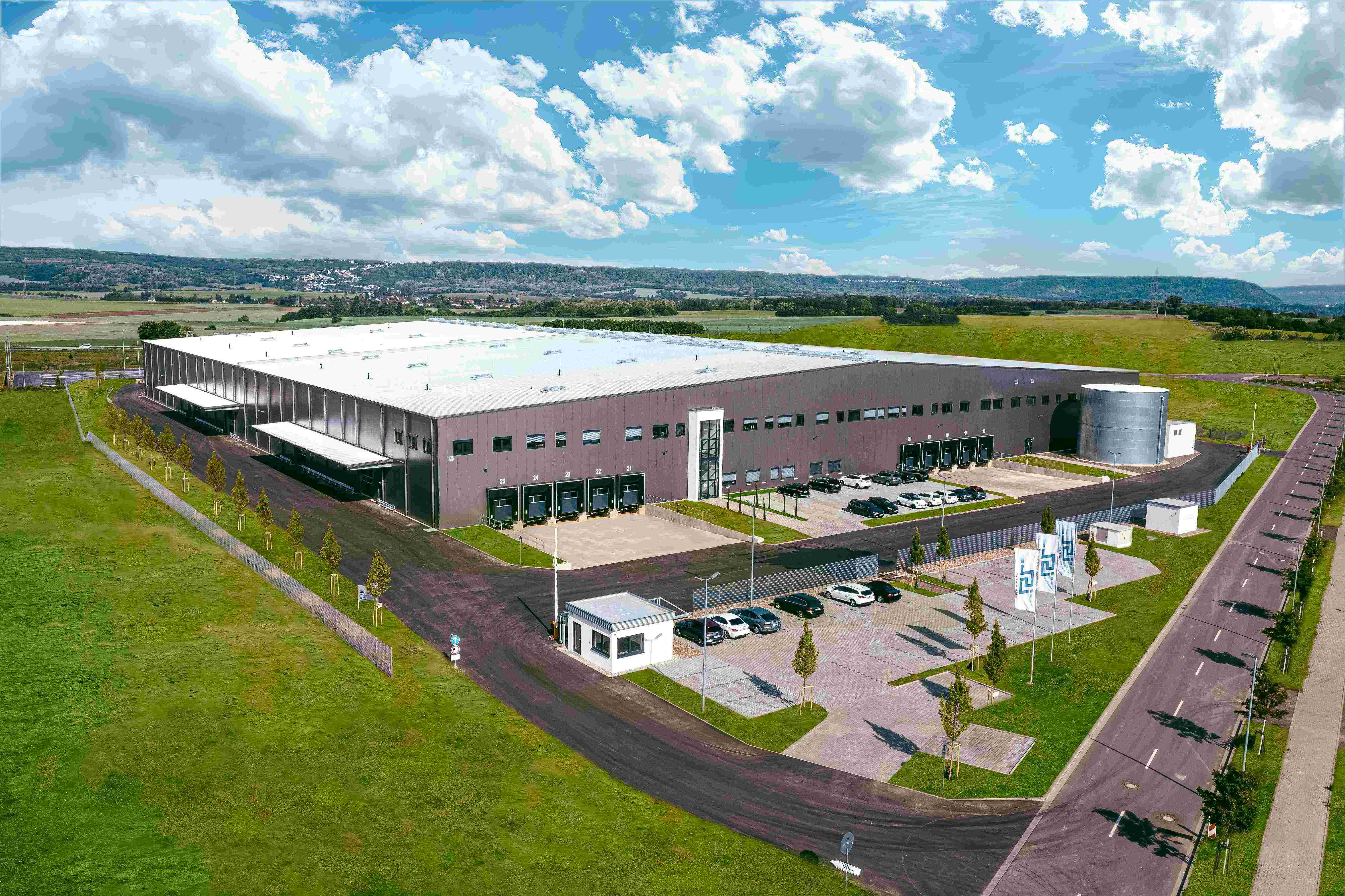
Lager - und Produktionshalle in Saarlouis Lisdorfer Berg
Object no.: 10189
Contract logistics
Warehousing (warehouse with management)
Germany
66740 Saarlouis
17563 m²
10000 (PP)
Price on request

Here you get a direct overview of useful Textile Logistics companies with their storage offers. Additional information about the services of the contract logistics provider, such as transports, etc., can be obtained by linking the exposé to our company exchange entry.
Textile Logistics locations in different cities and regions: Our options include a map search or a search mask. Filtered search for textile logistics companies and rent/warehousing - at LAGERflaeche.de!
Object no.: 10189
Warehousing (warehouse with management)
Germany
66740 Saarlouis
Price on request

Object no.: 10177
Warehousing (warehouse with management)
Germany
50259 Pulheim
Price on request
Production in textile logistics comprises of two areas. The primary sector, i.e. the harvesting of cotton, for example. And production in the secondary sector, where there can also be several stages: The processing of cotton into yarn, for example, the weaving of the yarn into fabrics and the production of clothing or other textiles from the fabrics.
How many and which production stages there are depends on the raw materials and the end product. As a result of the number of production stages and for cost reasons, globally networked production systems have emerged. The fact that the quality is increasingly inferior is also due to the fluctuating demand and uncertainty of demand as well as the seasonal cycles and rapid changes in collections. Ever changing new trends combined with the changing seasons create an increasing range of products and article diversity. This cycle is closed by ever shorter product life cycles, which are partly caused by poor quality.
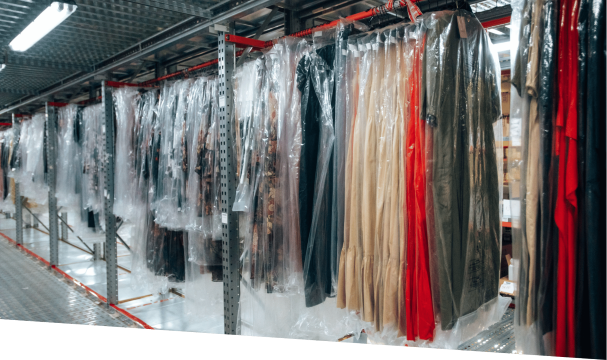
The storage of textiles is also subject to various influences. For example, the goods must not become soiled, are often sensitive goods and, when they reach the end consumer, should also look high quality and well cared for, i.e. have no creases or the like.
Basically, a distinction is made between flat goods or hard goods and hanging goods. Loose goods are somewhat easier to handle. These articles, neatly folded in boxes or similar, can be stored relatively easily on pallets. Hanging garments are garments that are hung on hangers. Since textile warehouses should often be automated for cost reasons, special attention should be paid to the machine handling of hanging garments; to handle the hangers and prevent the garments from slipping off the hangers. In the textile industry, sewing in RFID receivers is an excellent way to identify articles. These are so small that they are often not even detected by the customer, can be washed along with the garment and can be attached to almost any article without getting lost.

As the production of textiles mainly takes place overseas, the transport is also subject to various restrictions and peculiarities. Already at the beginning of the transport chain there are various customs clearances, which can often stand in the way of ensuring fast, short-term availability. After transport to national distribution centres, it is often necessary to prepare the goods to make them ready for the sales floor, floor ready. This is done with steam dummies, toppers or tunnel finishers, among others. In addition, value-added services are integrated at this point, such as article surveillance, labelling, store identification, sewing or the attachment of accessories. Quality inspections, washing tests or fabric samples also take place at this point. Large parts of the articles become hanging goods here, which are "stored" on trolley tracks and picked from there to prevent the fabrics from creasing again before the goods are delivered to the point of sale. Once the goods have been picked and packed for retail, they are delivered to various shops, markets or e-commerce retailers. This often involves returns, as the textile industry has a very high rate of returns, especially since the establishment of online retailing. Here it is important to invest in optimised returns logistics and to carefully examine options such as direct shipping from returns processing. Online retailers as well as wholesalers or branches are equally affected by this returns problem. More innovative ideas are expected in the near future to counter the growth of mail-order giants like Zalando.