



The Ultimate Checklist for Peak Seasons: How E-Commerce Retailers and Logistics Providers Master the Discount Battles
Table of Contents
- The Global Discount Battle: More than just Black Friday
- The European Patchwork: Why Germany is not the same as France or Poland
- Forecasting is everything: Forward-looking Inventory and Workforce Planning
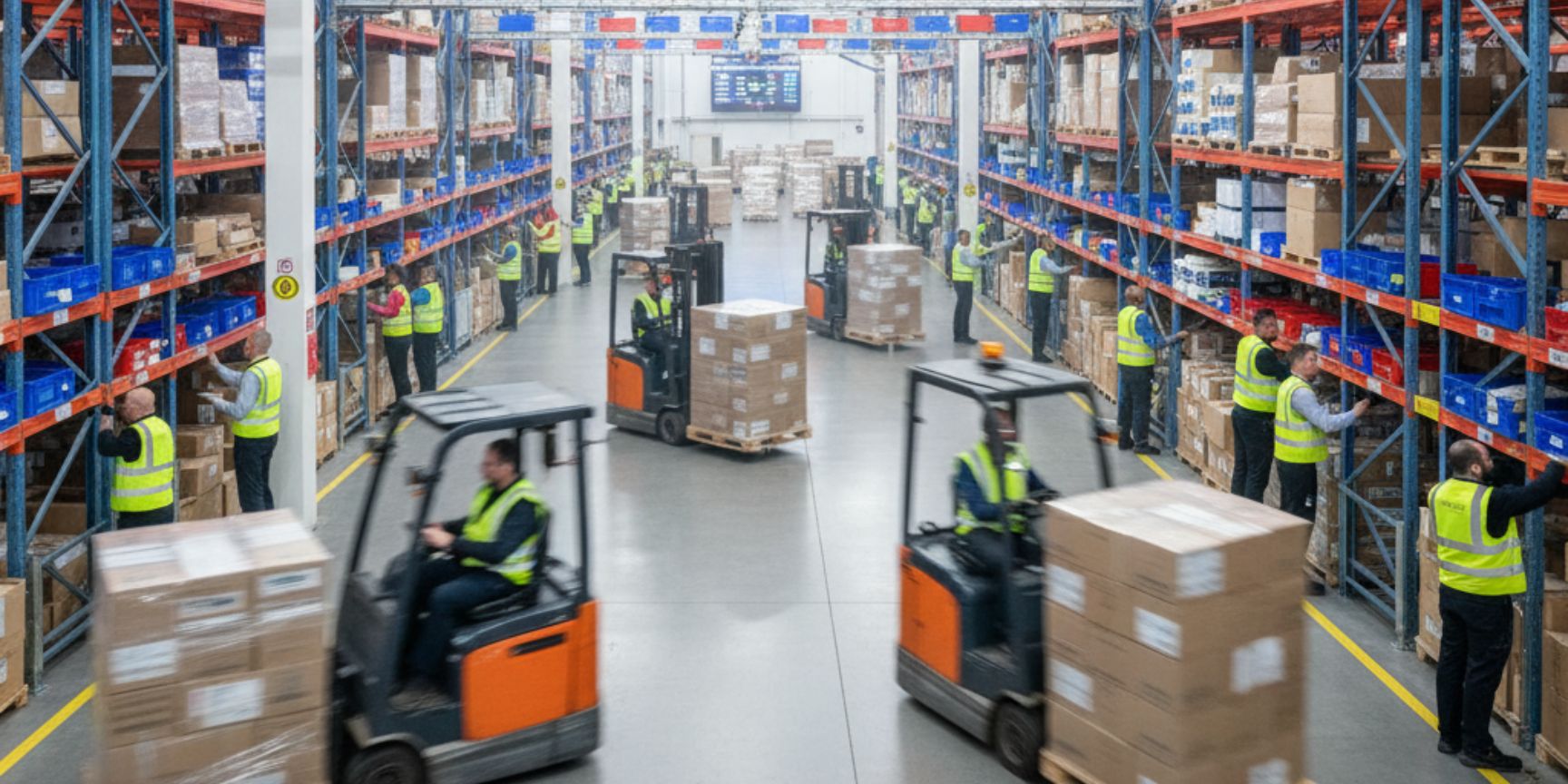
- The Heart of the Operation: Warehouse Logistics under High Pressure
- The Last Mile: The Art of the Diversified Shipping Strategy
- After the Purchase is before the Problem: Professional Returns Management
- Real-Life Case Study: Chewy.com and the Automation Offensive
- Conclusion: Strategic Foresight beats Short-Term Hustle and Bustle
The Global Discount Battle: More than just Black Friday
The discount battle has long since ceased to be a purely American phenomenon. While Black Friday and Cyber Monday are also firmly established in Germany – the German Retail Association (HDE) predicted spending of around 5.8 billion euros for these days in 2023 – new, global giants are entering the market.
Singles' Day on 11.11., originally from China, is the largest shopping event in the world in terms of global sales. While it is still gaining popularity in Germany, a survey by Statista shows that 41% of Germans are already aware of the event. For retailers with an international outlook, ignoring Singles' Day is a missed opportunity, especially with regard to the Asian market.
In addition, there are established greats such as Amazon Prime Day, which specifically targets the loyal Prime clientele, as well as the traditional seasonal drivers: the Easter and Christmas business and the summer and winter sales (SSV/WSV). Each of these events has its own dynamics, target group and requires adapted logistical preparation.
The European Patchwork: Why Germany is not the same as France or Poland
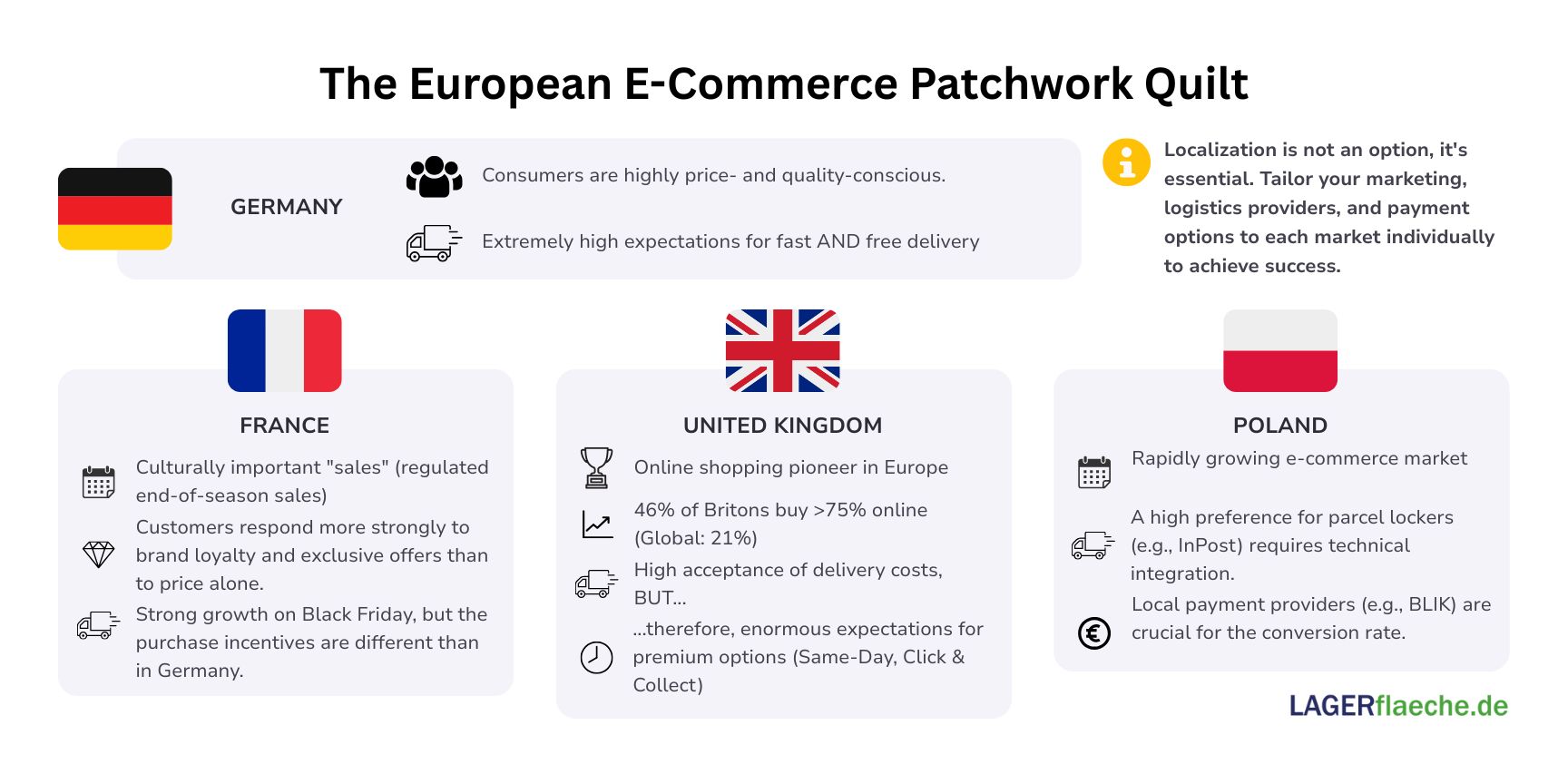
Anyone who believes that they can transfer a strategy that was successful in Germany one-to-one to other European markets will quickly reach their limits. The cultural, economic and regulatory differences are significant.
Germany vs. France:
While German consumers are considered to be very price- and quality-conscious and have high expectations of fast and free deliveries, in France the "Soldes" (legally regulated summer and winter sales) play a culturally deeply rooted role. An analysis by Remazing for Black Friday Week 2023 showed strong growth in both countries, but the purchase incentives are set differently. French customers often react more strongly to exclusive offers and brand loyalty than to the pure price.
Germany vs. United Kingdom:
British consumers are pioneers in online shopping compared to other European countries. According to a study by IT Supply Chain, 46% of UK shoppers made over 75% of their purchases online after the pandemic, compared to a global average of 21%. This leads to a higher acceptance of delivery costs, but also to a huge expectation of delivery options such as same-day delivery or click & collect.
Germany vs. Poland:
The Polish e-commerce market is growing rapidly. However, one challenge in cross-border trade to Poland is logistics costs and delivery preferences. Many Polish consumers prefer delivery at parcel terminals (e.g. from InPost), which requires these providers to be integrated into their own logistics chain. In addition, local payment providers such as BLIK play a decisive role in the conversion rate, as KOMOJU found in a country comparison of payment methods. If you only rely on credit cards and PayPal, you will lose potential customers.
Forecasting is everything: Forward-looking Inventory and Workforce Planning
The most important question before every peak season is: How many orders do we really expect? Accurate demand forecasting is the foundation of any successful campaign.
- Data analysis: Use sales data from previous years. Analyze not only the overall sales, but also the performance of individual products (top sellers vs. slow sellers) and channels. Consider external factors such as market trends and competitive actions.
- Procurement of goods: Bottlenecks in the supply chain are fatal during the peak season. Communicate with your suppliers early on and plan for buffers for unforeseen delays. Remember: your suppliers are also in high season.
- Workforce planning: Personnel requirements in logistics can easily double or triple during peak periods. Plan not only the number of seasonal workers required, but also their induction. Well-trained temporary workers make fewer mistakes and are more productive. A report by Mintsoft on peak season emphasizes that almost 17% of companies postpone planning until a month before the event – a risky game.
The Heart of the Operation: Warehouse Logistics under High Pressure
The camp is the epicenter of the action. If processes come to a standstill here, the entire chain collapses.
- Optimized layout: Ensure short distances. Place fast-moving items (the products you will sell most often) near the packing stations. Before the peak season, critically review your warehouse layout.
- Automation and technology: Modern warehouse management systems (WMS), handheld scanners and semi-automated processes are not an option, but a must. They drastically reduce the error rate during picking and increase efficiency. Even small automation steps, such as the use of conveyor belts, can make a huge difference.
- Goods receipt and storage: The ordered goods must not only arrive on time, but also be available for sale as quickly as possible. Schedule dedicated teams and time slots for goods receipt to avoid backlogs.
The Last Mile: The Art of the Diversified Shipping Strategy
Relying on a single shipping service provider is an incalculable risk during peak season. What happens if this provider is overloaded, strikes or a depot fails?
A multi-carrier strategy is the key to resilience.
- Risk diversification: Work with at least two, preferably three, different parcel services. This allows you to flexibly switch to another provider in the event of bottlenecks.
- Variety of offers for customers: Offer your customers different options (standard, express, pick-up point). According to a study cited by nShift, 72% of customers consider a choice of delivery options to be important. This not only increases customer satisfaction, but can also increase the conversion rate in the checkout.
- International partners: For cross-border shipping, you need partners who are strongly positioned in the destination country and are familiar with local conditions (e.g. customs clearance).
After the Purchase is before the Problem: Professional Returns Management
With the increasing sales figures, the number of returns explodes after the peak season. A disorganized returns process can wipe out the entire profit.
- Factor in high rates: Return rates are high, especially in the fashion sector. In Germany, the general rate is around 50%, according to data from Prime AI. This figure must be included in the calculation of logistics costs and personnel requirements for the period after the events.
- Speed up processes: A returned product that lies unprocessed in the warehouse for weeks is dead capital. Establish a fast process for receiving, inspecting, reprocessing, and restocking items.
Data analysis for prevention: Why do customers return items? Is it because of the fit, the product description or the quality? Analyze the reasons for returns in order to improve your offer in the long term and reduce the rate.
Real-Life Case Study: Chewy.com and the Automation Offensive
This case study, based on public annual reports and industry analysis (such as from Supply Chain Dive and Modern Retail), shows how a company with an extremely complex product range solved its peak season problems through massive technology investments.1
The Company: Chewy.com
A leading U.S. online retailer of pet supplies.2 Chewy is known for its huge assortment, ranging from small treats to extremely heavy, bulky 20kg bags of pet food, as well as for its highly customer-centric service.3
The Challenge (the "Pre-Automation Age"):
Chewy experienced explosive growth, which was accelerated by the pandemic (a "demand shock"). The company ran into hard limits with its traditional, manually operated warehouse network, especially during peak season (Christmas business/Black Friday).
- Complex product range: Manually picking thousands of different SKUs – especially the mix of light toys and heavy food in one order – was extremely inefficient and error-prone.
- High physical strain: The handling of the heavy feed bags led to concerns about the ergonomics and safety of employees and slowed down processes.
- Fulfillment Ceiling: Similar to other e-commerce retailers, Chewy reached a point where the physical capacity of warehouses dangerously extended the "time-to-ship" during peak season. More marketing only led to more backlogs.
- Rising costs: High staffing requirements (especially expensive seasonal workers), rising labor costs, and inefficiencies drove up fulfillment costs per order.
The Strategy (the Introduction of "AFCs" – Automated Fulfillment Centers):
Instead of just hiring more people or building larger but "dumb" warehouses, Chewy launched a multibillion-dollar, multi-year initiative to automate its logistics network.
- Building an AFC network: Starting in 2020, Chewy began building a network of new, highly automated fulfillment centers (AFCs).4 By the end of 2024, six of these centres were already in operation.
- Technology mix: These AFCs use a mix of cutting-edge technologies:
- Goods-to-Person (G2P): Robotic systems that bring shelves to stationary employees.5
- High-speed sorting systems: Systems that automatically assign thousands of items per hour to the right orders.6
- Custom box technology: Machines that cut a box in the exact right size for each order to reduce air in the package (and thus shipping costs) and save filling material.
- Strategic goal: Management's stated goal is to process over 70% of the total order volume through this highly efficient, automated network.7
The Results (Hard Key Figures):
The CEO of Chewy repeatedly emphasized in analyst calls that the AFCs were the decisive factor in successfully managing the "highest order period during the holiday peak".8 The reported metrics are impressive:
- Productivity: Up to a 50% increase in labor productivity in AFCs compared to older, manual warehouses.9th
- Cost reduction: A 30% reduction in fixed and variable costs per unit.10th
- Storage density: A 30% increase in volume (throughput) per square meter – so warehouses are much more efficient.
- Safety & Ergonomics: An improvement in ergonomics and safety of up to 60% as robots take over the lifting of the heaviest loads.11
- Customer experience: The AFCs made it possible to reduce shipping distances by 25% and drastically reduce cycle time (from order to shipment).12
- Savings: The first automated centers alone resulted in estimated annual savings of around $60 million.13
This case study shows that with high volumes and complex products, a strategic investment in automation is the only way to not only survive during peak season, but to scale profitably and exceed customer expectations.
Conclusion: Strategic Foresight beats Short-Term Hustle and Bustle
The big shopping events are a marathon, not a sprint. Success is not based on hectic actionism in the week before Black Friday, but on months of data-driven and strategic preparation. From precise forecasting and warehouse optimization to intelligent last-mile management and efficient handling of the inevitable wave of returns, each step in the chain must mesh smoothly with the other.
By understanding the international differences and adjusting your strategy accordingly, you will not only open up new markets, but also build robust and resilient logistics that can withstand the pressures of each peak season. After all, in the end, it is not only the discount that determines long-term success, but above all the smooth and positive customer experience.
Latest Blog Posts
Stay up to date with the newest trends, insights, and tips in warehouse and logistics. Our latest articles help you navigate the industry with confidence.

Data Centres vs. Logistics Facilities: The Race for Power and Land
Across Europe, logistics operators are competing for more than land and transport access. They increasingly need something much harder to secure: grid capacity. Data centres are intensifying that competition — and changing how logistics locations are evaluated....
Chinese companies discover Europe's logistics real estate
Chinese companies are becoming an increasingly visible user group in Europe's logistics real estate market. What does this mean for warehouse space, 3PL structures and the requirements for European logistics locations?...
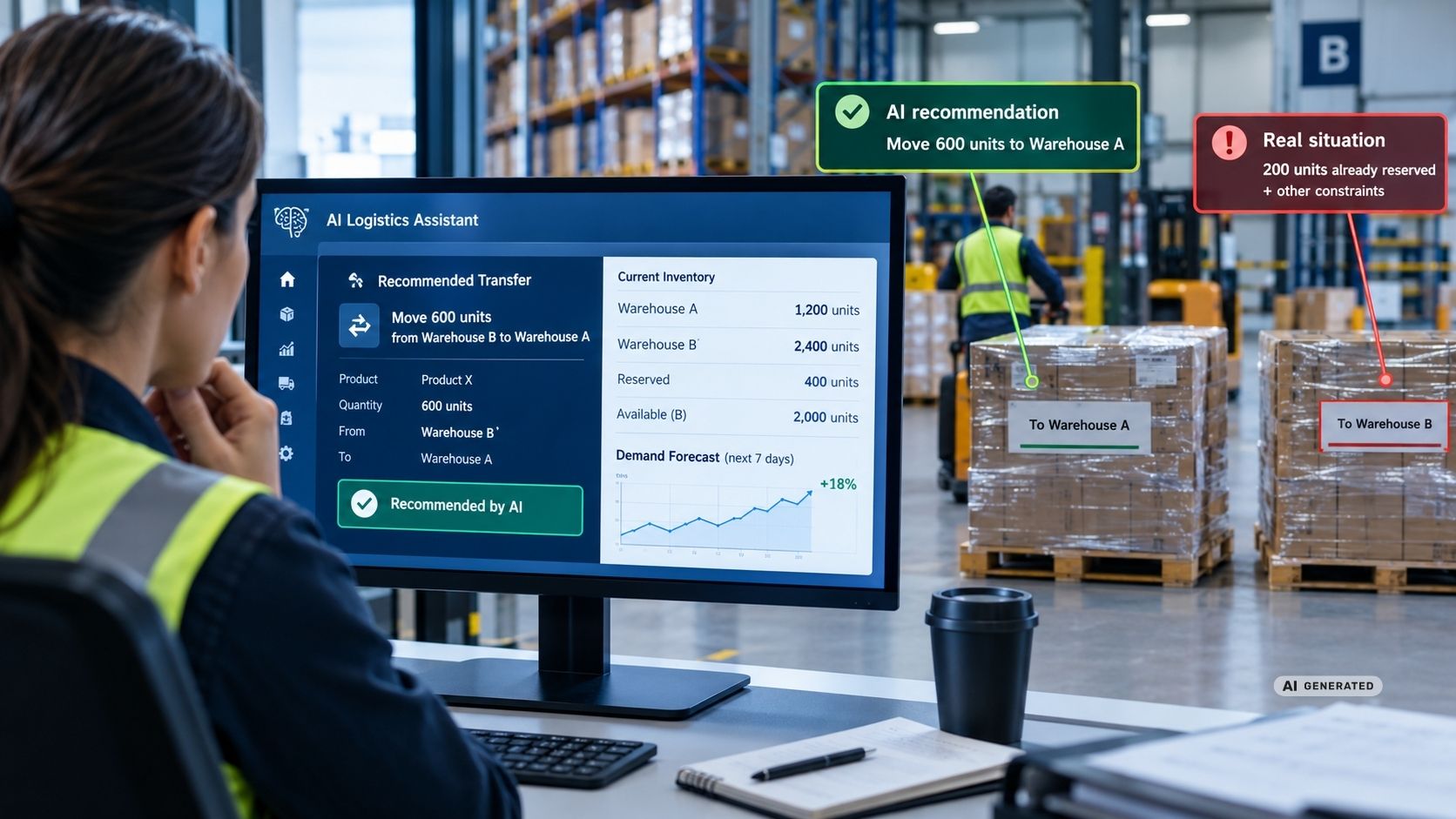
AI Hallucinations in Logistics: When AI Plans the Wrong Delivery
AI can analyze enormous amounts of logistics data — but it can also produce a convincing answer that is simply wrong. The critical question is not whether AI makes mistakes, but what happens when a wrong recommendation becomes an operational decision....
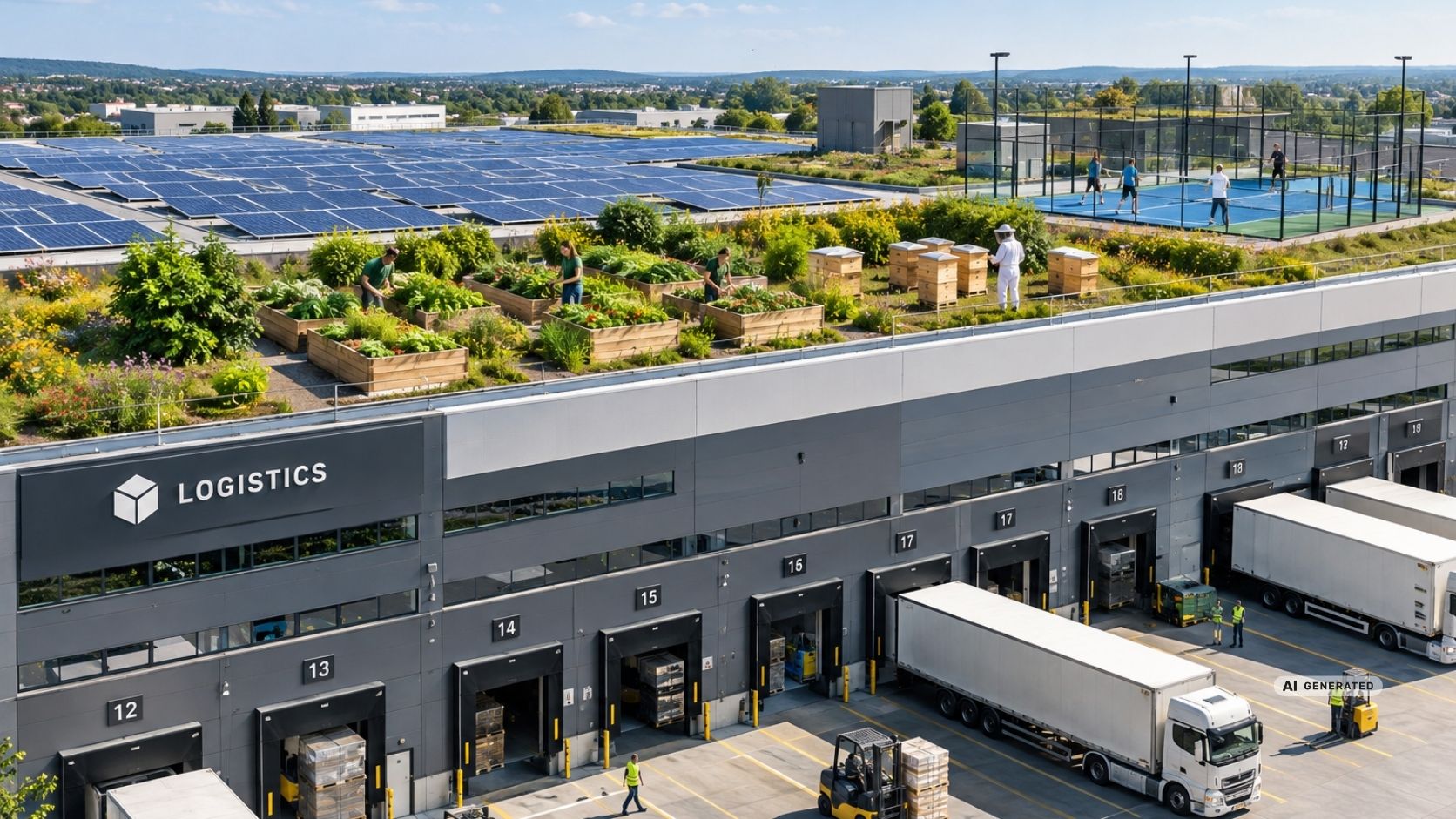
The Green Revolution on the Hall Roof: From Concrete Block to Ecological Power Plant?
Logistics roofs can do more than PV: greening, bees, urban farming and even sports areas turn unused roof space into multifunctional rooms....