



From Silo to Synergy: How to Master Omni-channel Warehousing
Table of Contents
- Multi-channel vs. Omni-channel: More than just a Buzzword
- The Heart of the Operation: Which Warehouse Model is the Right one?
- Efficiency Boosters: Automation and Robotics
- The Store as a Warehouse: Ship-from-store and Click & Collect
- Making Success Measurable: The Most Important KPIs for Omni-channel Logistics
- Conclusion: A Journey, not a Destination
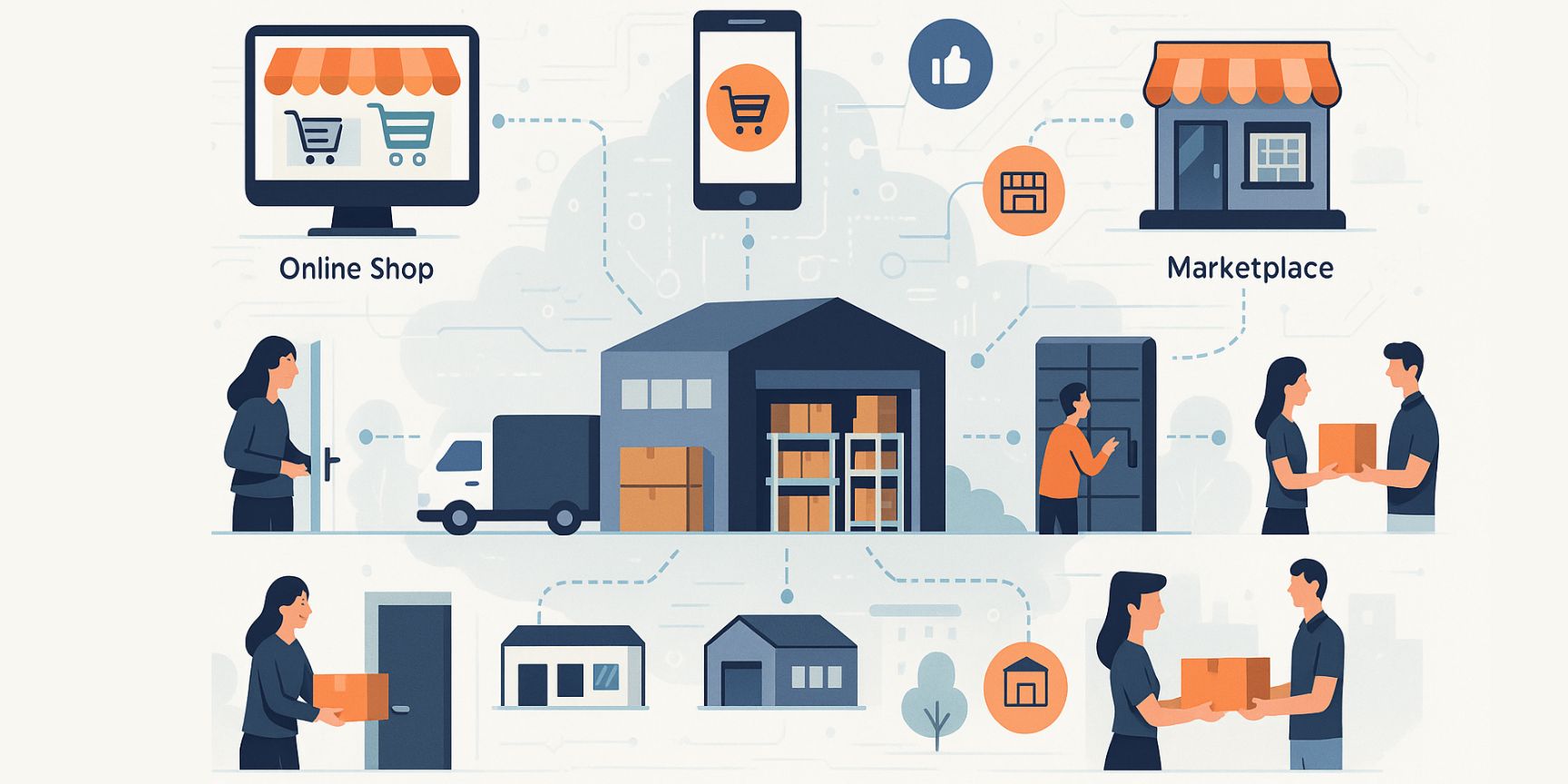
The customer is king – and today, this king shops online, in stores, on mobile devices, and via social media as a matter of course. For retailers, this new freedom poses an enormous challenge for logistics. A pure multi-channel strategy, in which the sales channels operate separately from one another, is no longer sufficient. The future belongs to omni-channel warehousing, a seamlessly integrated logistics system that serves all channels from a single source. But how can companies structure their warehouses so that they can efficiently supply both fast-paced e-commerce and traditional brick-and-mortar retail?
Multi-channel vs. Omni-channel: More than just a Buzzword
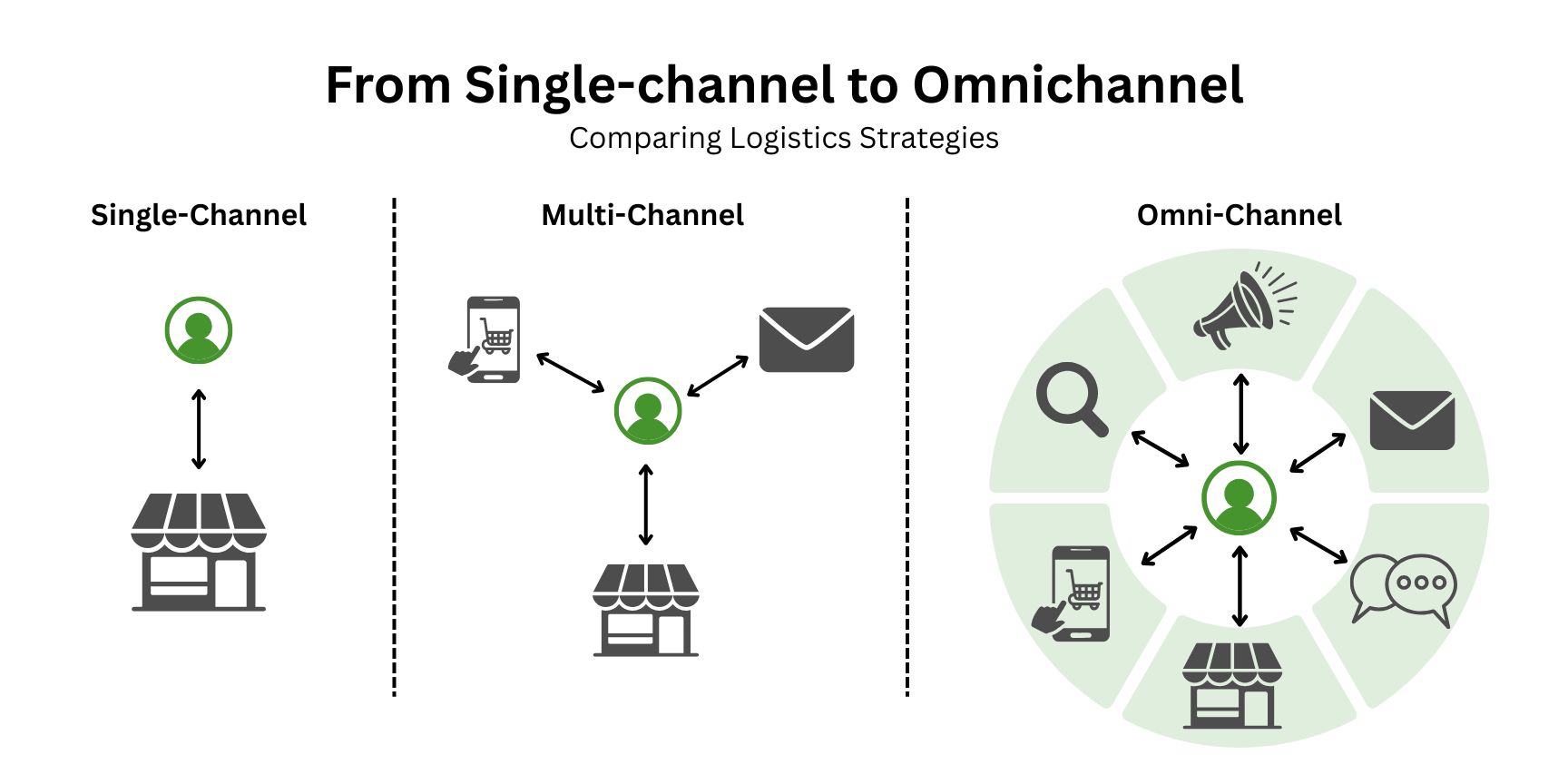
Have you ever wondered what the actual difference is between multi-channel and omni-channel? A multi-channel approach means that a company uses multiple channels to sell products—for example, an online store and physical stores. However, each channel is treated as a separate silo with its own inventory and processes.
The omni-channel approach goes one crucial step further: it puts the customer at the center and connects all channels with each other. The goal is a consistent and seamless shopping experience. For the warehouse, this presents the ultimate challenge: it must be able to serve a wide variety of order types – from pallet deliveries to stores to individual packages for online customers – from a central inventory pool. Studies show that companies with strong omni-channel strategies retain around 89% of their customers, compared to only 33% for companies with weak strategies (source: UniformMarket, 2025).
The Heart of the Operation: Which Warehouse Model is the Right one?
The most important strategic decision is choosing the right warehouse model. There are basically two opposing philosophies: separate and integrated warehousing.
- Separate warehousing: Here, there is one warehouse for e-commerce (fulfillment center) and one or more central warehouses for supplying stores. This model has often evolved over time and is easier to manage, but it leads to separate inventories, less flexibility, and higher overall costs.
- Integrated warehousing: All inventories are managed in a single, central pool that serves all channels. This can be done either in a central distribution center or by integrating stores as mini-distribution centers (ship-from-store).
The decision depends heavily on the product portfolio and order structure. A study by renowned researchers at ResearchGate found that durable, slow-moving products with high margins can perform better in a separate (multi-channel) environment. In contrast, bulky goods with low margins and high replenishment costs benefit significantly from an integrated omni-channel approach.
The Anatomical Structure of the Omni-channel Warehouse
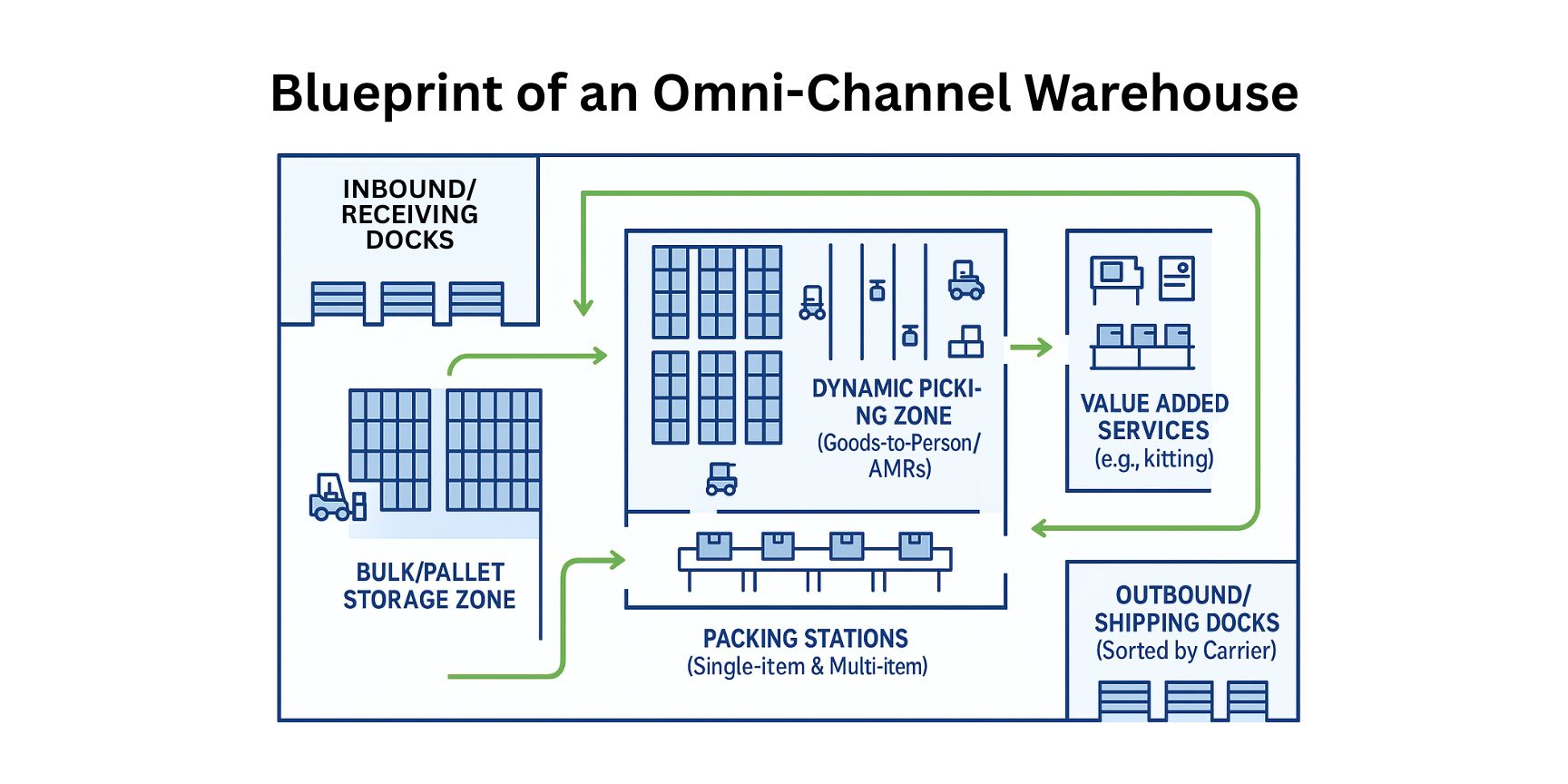
An efficient omni-channel warehouse differs fundamentally in structure from a pure e-commerce or branch warehouse. It must combine two worlds: large-volume pallet picking for branches and small-batch single-item picking for online orders.
How does this work in practice? Successful models often use zone picking:
- Zone 1: Pallet warehouse: A classic high-bay warehouse for replenishment and store delivery.
- Zone 2: Small parts warehouse: Dynamic racking systems (e.g., shelf racks, flow racks) for fast picking of individual items. “Goods-to-person” systems are often used here.
- Packing area: Flexible packing tables that are equipped for both individual online orders and for bundling items for stores.
This layout minimizes employee travel distances and speeds up throughput times, which is a crucial factor since, according to a McKinsey study, 60-70% of customers already use omni-channel options and expect fast deliveries.
The Brain of the Warehouse: The irreplaceable role of the WMS
An omni-channel warehouse without a powerful warehouse management system (WMS) is like a body without a brain – it cannot function. The WMS is the central software that controls all processes and ensures the all-important transparency across all channels.
An omni-channel-capable WMS must master the following core functions:
- Centralized inventory management: Real-time visibility of all inventory, whether in the warehouse, in the store, or in transit.
- Intelligent order management (order routing): Automatic assignment of an order to the optimal shipping location (e.g., central warehouse, ship-from-store) based on criteria such as inventory, distance to the customer, and shipping costs.
- Support for different picking strategies: Simultaneous processing of multi-order picks (for e-commerce) and pallet picks (for stores).
- Seamless integration: Connection to ERP systems, online stores, and store POS systems.
The investment in such a system can be significant. A cloud-based WMS for a medium-sized company can cost between €34,000 and €150,000 in the first year, while on-premise solutions require significantly higher initial investments (source: IChiba OnePlatform, 2025). However, the ROI is quickly realized through reduced stock shortages, optimized shipping costs, and higher customer satisfaction.
Efficiency Boosters: Automation and Robotics
In view of rising personnel costs and the need for ever faster processing, automation is becoming the key to a profitable omni-channel warehouse. It is not a question of completely replacing humans, but of supporting them with technology.
Useful automation solutions include:
- Shuttle systems: These “goods-to-person” systems bring the required items directly to the order picker. Swisslog, a leading provider, emphasizes that shuttles combine excellent storage density with high throughput – ideal for coping with peaks in demand in e-commerce.
- Autonomous mobile robots (AMRs): These robots navigate independently through the warehouse to bring shelves to the employee or transport picked goods to the packing station.
- Conveyor technology and sorters: Automated conveyor belts and sorting systems distribute the goods quickly and accurately to the various shipping areas (e.g., by shipping service provider or store).
The Store as a Warehouse: Ship-from-store and Click & Collect
Why leave untapped potential unused? Integrating your own stores into your fulfillment strategy is one of the biggest advantages in omnichannel retail.
- Click & collect: The customer orders online and picks up the goods in the store. This not only saves shipping costs, but according to data from Adobe, 61% of customers prefer to return online purchases to the store, which increases customer frequency.
- Ship-from-store: The store becomes a mini-warehouse and ships online orders directly to nearby customers. This drastically reduces delivery times and enables same-day delivery.
However, these services require accurate inventory at the store level and trained staff who can handle logistics tasks in addition to sales.
Making Success Measurable: The Most Important KPIs for Omni-channel Logistics
You can't improve what you don't measure. Specific key performance indicators (KPIs) are essential for evaluating the performance of an omni-channel warehouse. In addition to traditional warehouse metrics, cross-channel metrics are becoming increasingly important:
| KPI | Description | Why is it important? |
| Perfect Order Rate | The percentage of orders that were delivered without errors (correct item, correct quantity, undamaged, on time). | The gold standard metric for customer satisfaction. |
| Order Cycle Time | The average time from order placement to shipment. | A direct indicator of processing speed. |
| Dock-to-Stock Time | The time it takes to store newly arrived goods and make them available. | Crucial for avoiding out-of-stocks. |
| Inventory Accuracy | The match between the inventory recorded in the system and the physical inventory. | The foundation for all omni-channel services such as click & collect. |
| Cost per order | The total storage and shipping costs broken down to a single order. | Measures cost efficiency across all channels. |
Conclusion: A Journey, not a Destination
The transition to an omni-channel warehouse is not a one-time project, but a continuous optimization process. The market, technology, and customer expectations are constantly evolving. Companies such as Tchibo and bonprix demonstrate how a holistic omni-channel strategy that views the warehouse as a central building block can increase both online sales and foot traffic in stores.
The key to success lies in the intelligent linking of warehouse structure, technology (WMS, automation), and processes. Those who manage to break down the silos between channels and establish truly integrated logistics not only secure a decisive competitive advantage, but above all create one thing: an outstanding customer experience that inspires enthusiasm and long-term loyalty.
Latest Blog Posts
Stay up to date with the newest trends, insights, and tips in warehouse and logistics. Our latest articles help you navigate the industry with confidence.

Data Centres vs. Logistics Facilities: The Race for Power and Land
Across Europe, logistics operators are competing for more than land and transport access. They increasingly need something much harder to secure: grid capacity. Data centres are intensifying that competition — and changing how logistics locations are evaluated....
Chinese companies discover Europe's logistics real estate
Chinese companies are becoming an increasingly visible user group in Europe's logistics real estate market. What does this mean for warehouse space, 3PL structures and the requirements for European logistics locations?...
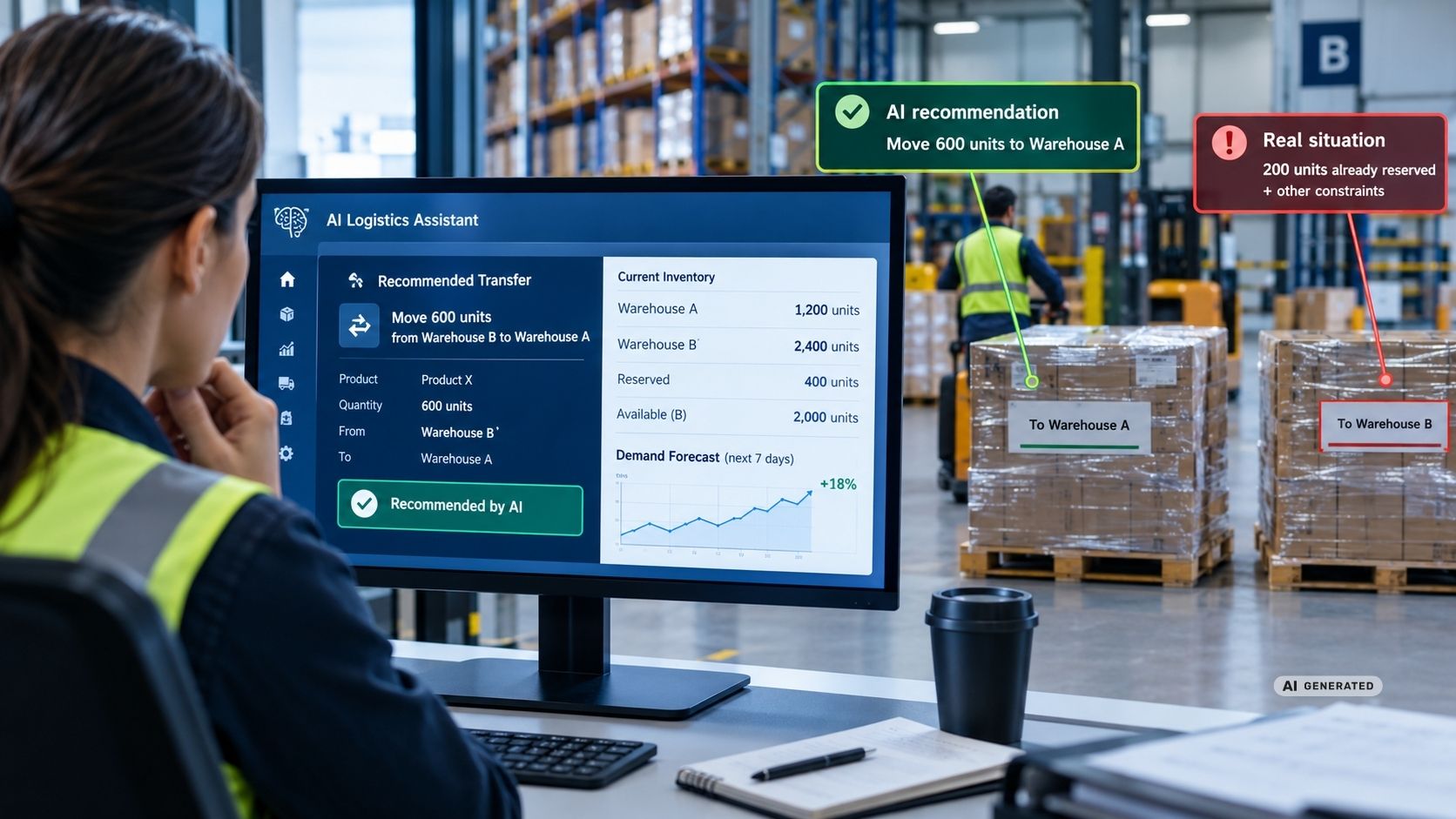
AI Hallucinations in Logistics: When AI Plans the Wrong Delivery
AI can analyze enormous amounts of logistics data — but it can also produce a convincing answer that is simply wrong. The critical question is not whether AI makes mistakes, but what happens when a wrong recommendation becomes an operational decision....
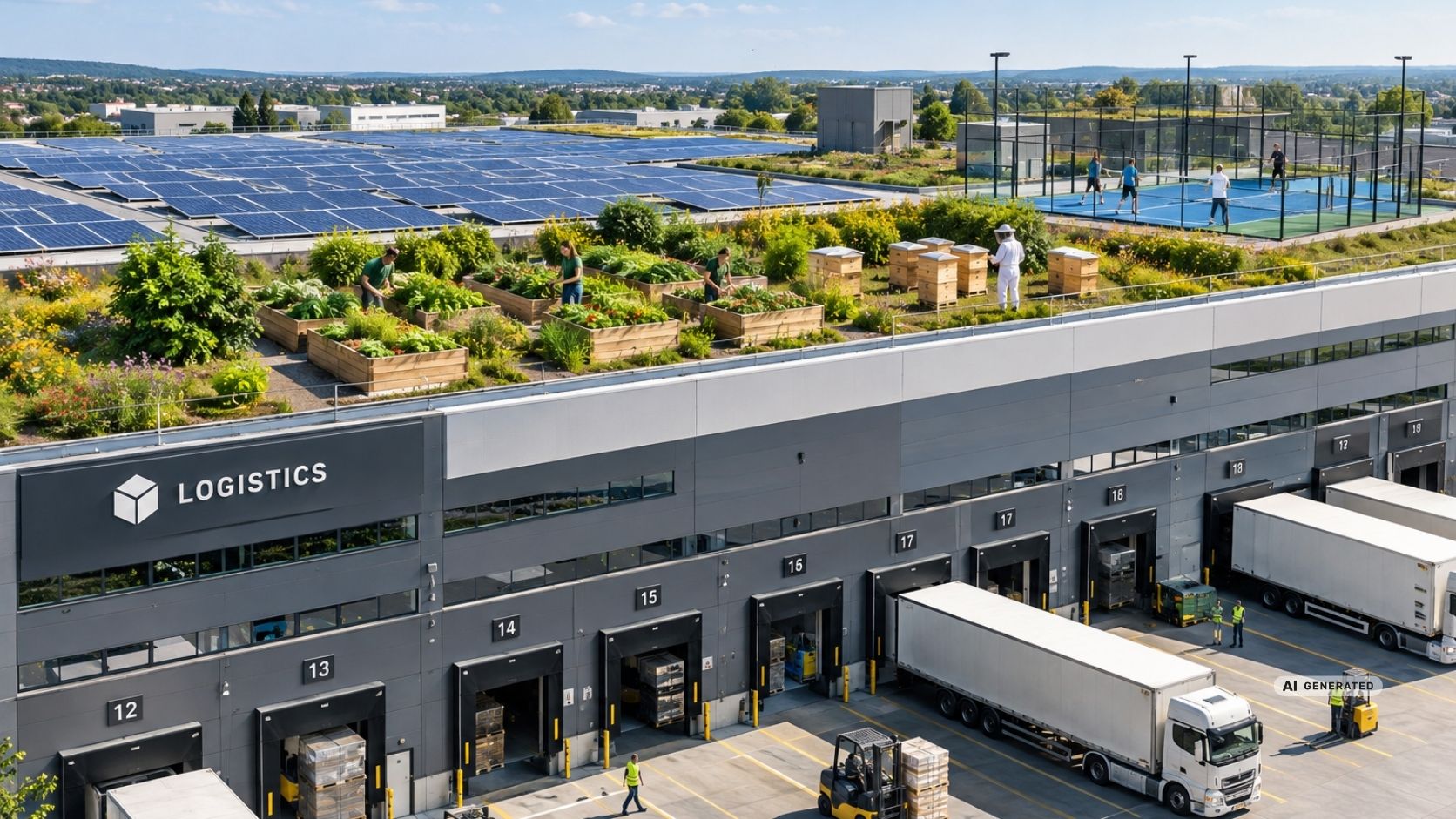
The Green Revolution on the Hall Roof: From Concrete Block to Ecological Power Plant?
Logistics roofs can do more than PV: greening, bees, urban farming and even sports areas turn unused roof space into multifunctional rooms....