


The silent revolution: How high-performance batteries are redefining logistics
Table of Contents
- The paradigm shift: From lead-acid to lithium-ion in intralogistics
- Impact on contract logistics: More than just moving pallets
- Looking ahead: What do solid-state batteries and AI promise?
- The ultimate game-changer: Your own power plant on the warehouse roof
- The big question (re-evaluated): Is the battery always the best answer?
- The World Map of Warehouse Energy: A Look Beyond Germany's Borders
- Your practical check: Is your logistics ready for the energy revolution?
- Conclusion: A charged future with strategic foresight
Imagine a huge warehouse. It used to be filled with the noise and exhaust fumes of diesel-powered forklifts. Today, driverless transport systems whirr quietly through the aisles, 24 hours a day, 7 days a week. This change is not a dream of the future, but reality. It is powered by a technology that we know from everyday life, but which is triggering a revolution on an industrial scale: the battery. But how exactly do batteries change logistics? And what happens if the electricity for it comes directly from your own roof?
The paradigm shift: From lead-acid to lithium-ion in intralogistics
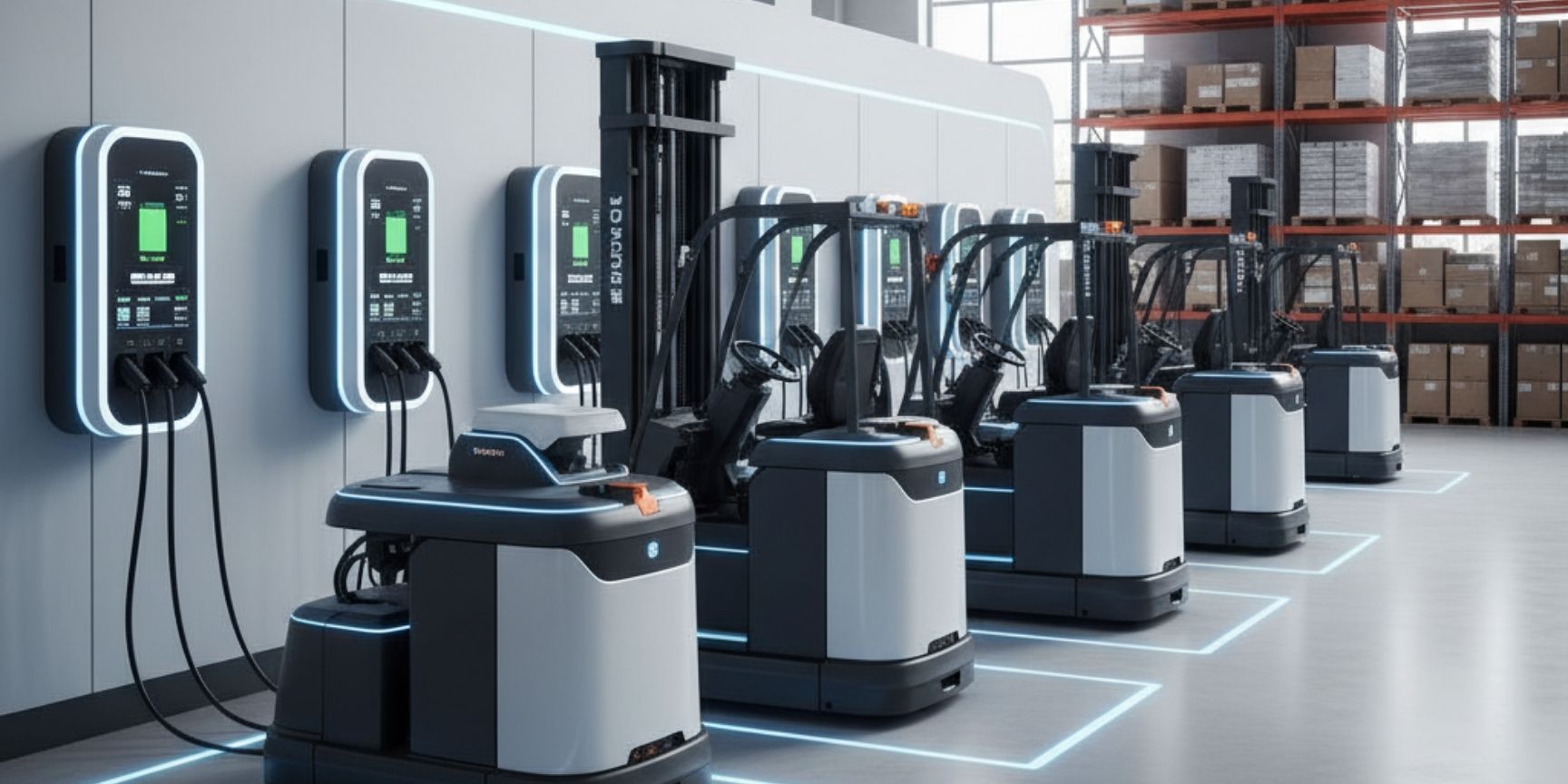
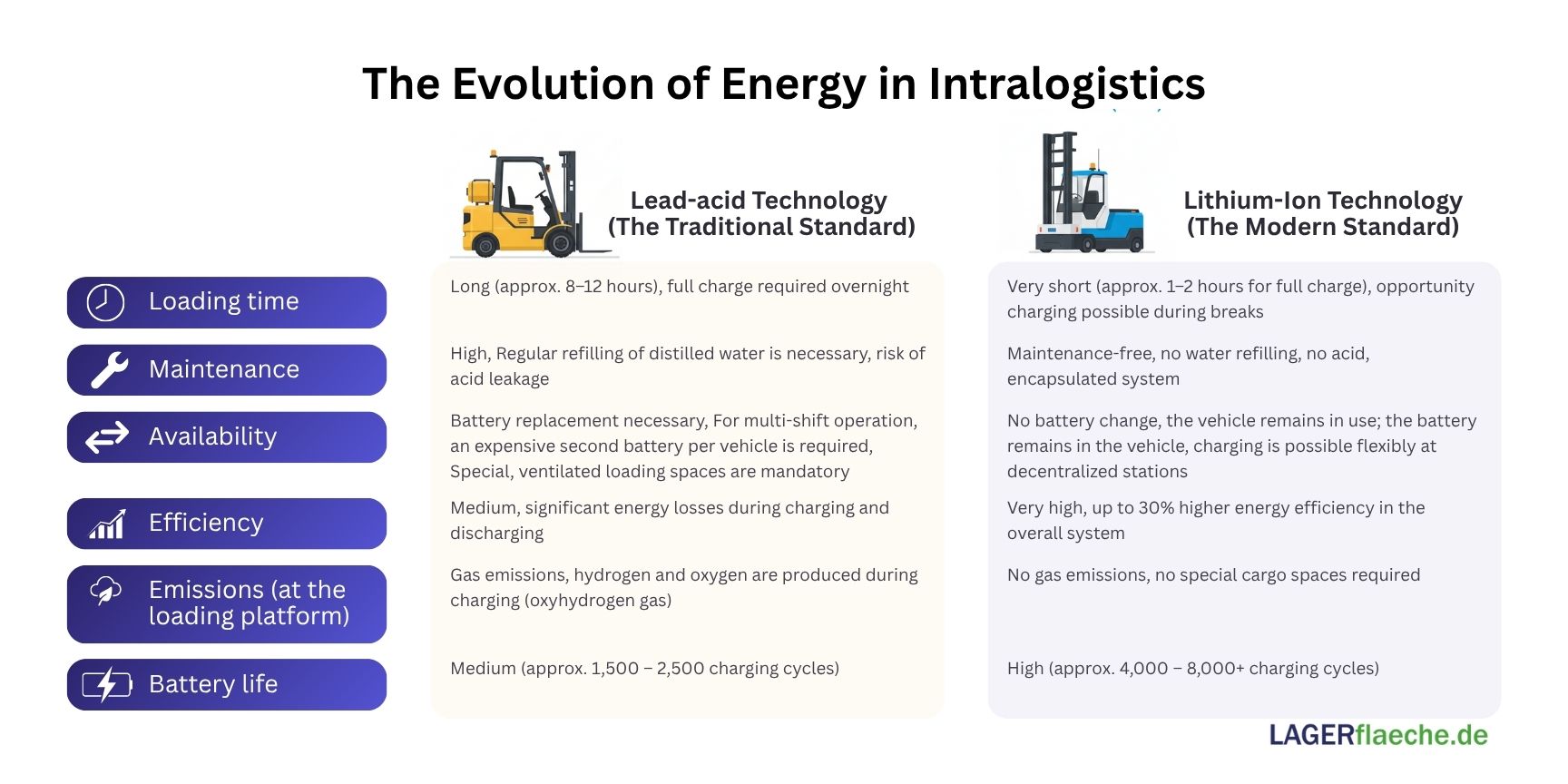
Anyone who talks about batteries in logistics is referring to the triumphal march of lithium-ion technology. It has replaced the old, maintenance-intensive lead-acid batteries and changed the rules of the game. Their benefits are overwhelming:
- Opportunity charging: Vehicles can be charged during any break – no matter how short. This maximizes uptime and eliminates expensive replacement batteries.
- Higher energy efficiency: Li-ion batteries have a significantly higher efficiency. Up to 30% less energy is lost during charging and discharging.
- Longer service life & maintenance-free: They can withstand more charge cycles and do not require distilled water refills, which massively reduces the total cost of ownership (TCO).
According to an analysis by consulting group Berylls Strategy Advisors, over 70% of all new forklift trucks sold in Europe are expected to be electric by 2030. This change is not just an upgrade, but a fundamental intervention in process planning that ushers in a new era of flexibility.
Impact on contract logistics: More than just moving pallets
Contract logistics benefits massively from this new flexibility. A fleet that is ready for use virtually around the clock thanks to intermediate charging can react to peaks in demand without having to keep expensive additional vehicles on standby. In addition, the batteries become data-supplying links in the chain through their management systems (BMS). Logistics managers can analyze consumption, optimize charging cycles and plan maintenance in advance. The battery is transformed from a passive storage system into an active efficiency driver.
Looking ahead: What do solid-state batteries and AI promise?
The development is rapid. The next wave is already in the starting blocks:
- The solid-state battery: It is considered the "Holy Grail" of battery technology. Without liquid electrolytes, it is safer, more durable and, above all, more energy-dense. For logistics, this means even longer running times and potentially even faster charging processes.
- Artificial intelligence (AI) in energy management: AI-supported systems will proactively control the entire energy demand of a warehouse. They analyze order data and electricity prices to create the optimal charging plan for the entire fleet and avoid load peaks.
The ultimate game-changer: Your own power plant on the warehouse roof
The previous debate about energy costs and sustainability will be fundamentally changed when a decisive factor is added: the self-generation of energy. Logistics real estate has an often untapped superpower: huge, flat roof areas that are ideal for photovoltaic (PV) systems .
The combination of PV system and battery-electric fleet creates an unbeatable synergy:
- Drastically reduced energy costs: The self-generated solar power is almost free of charge after the system has been amortized. This pulverizes one of Germany's biggest disadvantages – the high grid electricity prices. The operating costs of the fleet are reduced to a minimum.
- Unbeatable energy efficiency: The path from the sunbeam on the roof via the charging cable to the battery and to the wheel of the forklift is extremely short and efficient. This is referred to as "sun-to-wheel" efficiency, in which around 70-80% of 100 units of solar energy can actually be used for locomotion.
- Energy self-sufficiency and grid stability: Surplus electricity can be temporarily stored in stationary storage systems (often from "second-life" vehicle batteries) to bridge night shifts or days with little sun. The company becomes less dependent on electricity price fluctuations. In the future, fleets could even help stabilize the warehouse's internal power grid via bidirectional charging (vehicle-to-grid).
This sector coupling (the combination of electricity generation and consumption in the transport sector) is the key to a truly sustainable and economical logistics operation.
The big question: Is the battery always the best answer?
Against the background of self-generated electricity, the alternative hydrogen must also be reassessed. Can't you just use solar power to produce green hydrogen yourself? Yes, but the devil is in the details.
| Criterion | Lithium-ion battery + PV | Hydrogen Fuel Cell + PV |
| Efficiency ("Sun-to-Wheel") | Very high (approx. 70-80%) | Niedrig (ca. 25-35 %) |
| Process & Infrastructure | PV system - > charging stations (relatively simple) | PV system -> electrolyzer -> compressor -> H2 filling station (very complex & expensive) |
| Refueling/charging time | 1-2h (full), minutes (intermediate charging) | 3-5 minutes (full) |
| Economy | Extremely high cost-effectiveness through efficiency | Very high investment costs, energy losses make operation expensive |
The conclusion becomes even clearer here: The attempt to produce hydrogen for internal use with valuable self-generated electricity via the inefficient detour of electrolysis is uneconomical for 99% of all warehouse logistics applications. The massive energy losses during conversion make the direct route – solar power into the battery – the only logical step. Hydrogen remains an option for special cases or regions with a massive, politically promoted oversupply of renewable energies, but not for the energy-efficient operation of a single logistics center.
The World Map of Warehouse Energy: A Look Beyond Germany's Borders
- Germany: With its high density of logistics space and strong PV know-how, Germany is in an ideal position to become a pioneer in energy self-sufficient logistics. High electricity prices create the necessary incentive.
- USA: In sunny states such as California or Arizona, the combination of huge logistics centers and PV systems is already a common model. Economies of scale are driving development here.
- China: As the world's largest producer of solar panels and batteries, China is pushing ahead with electrification and its own power generation in order to reduce dependence on energy imports.
- Netherlands: The innovation-friendly Netherlands is already experimenting with complete "energy hubs" in which logistics parks are not only self-sufficient, but also stabilize the surrounding grid.
Your practical check: Is your logistics ready for the energy revolution?
As a logistics manager, ask yourself the following questions:
- What do my operations look like? Do they fit the profile of the intermediate shop?
- Do I have roof or open spaces for a photovoltaic system?
- What energy costs do I have today and what savings are possible through your own electricity?
- Does my current electricity infrastructure allow for electrification or do I have to replan it as part of an overall concept (PV + charging)?
Conclusion: A charged future with strategic foresight
Battery technology is the catalyst for smarter and more flexible logistics processes. However, in combination with the decentralised generation of renewable energies, it is becoming an economic and ecological necessity. The focus is shifting from the mere purchase of vehicles to the development of a holistic energy concept for the entire site. Companies that leverage the synergies of photovoltaics, intelligent charging management and an electric fleet now not only secure a cost advantage, but also a resilient and sustainable future.
Latest Blog Posts
Stay up to date with the newest trends, insights, and tips in warehouse and logistics. Our latest articles help you navigate the industry with confidence.
Data Centres vs. Logistics Facilities: The Race for Power and Land
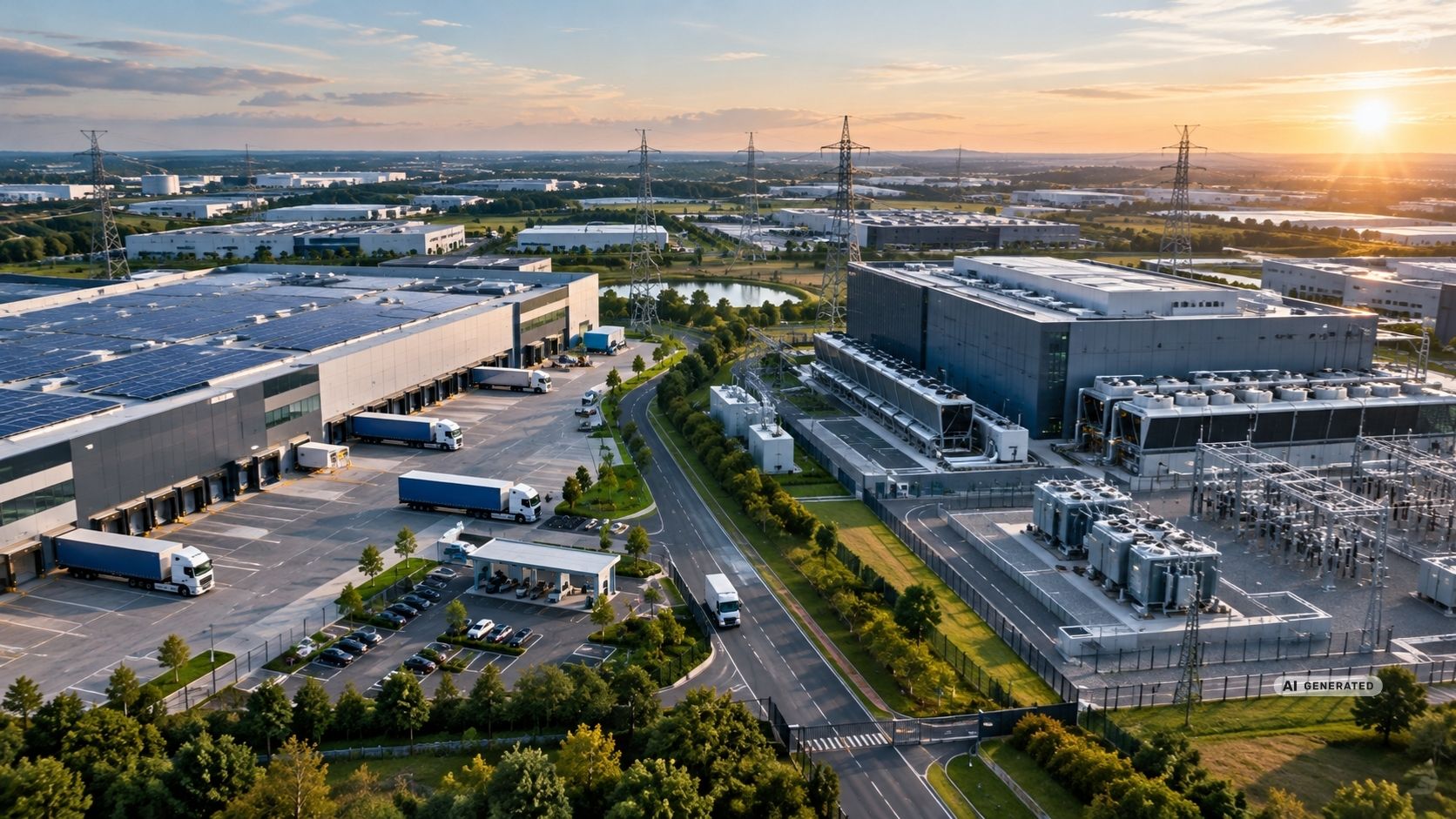
Across Europe, logistics operators are competing for more than land and transport access. They increasingly need something much harder to secure: grid capacity. Data centres are intensifying that competition — and changing how logistics locations are evaluated....
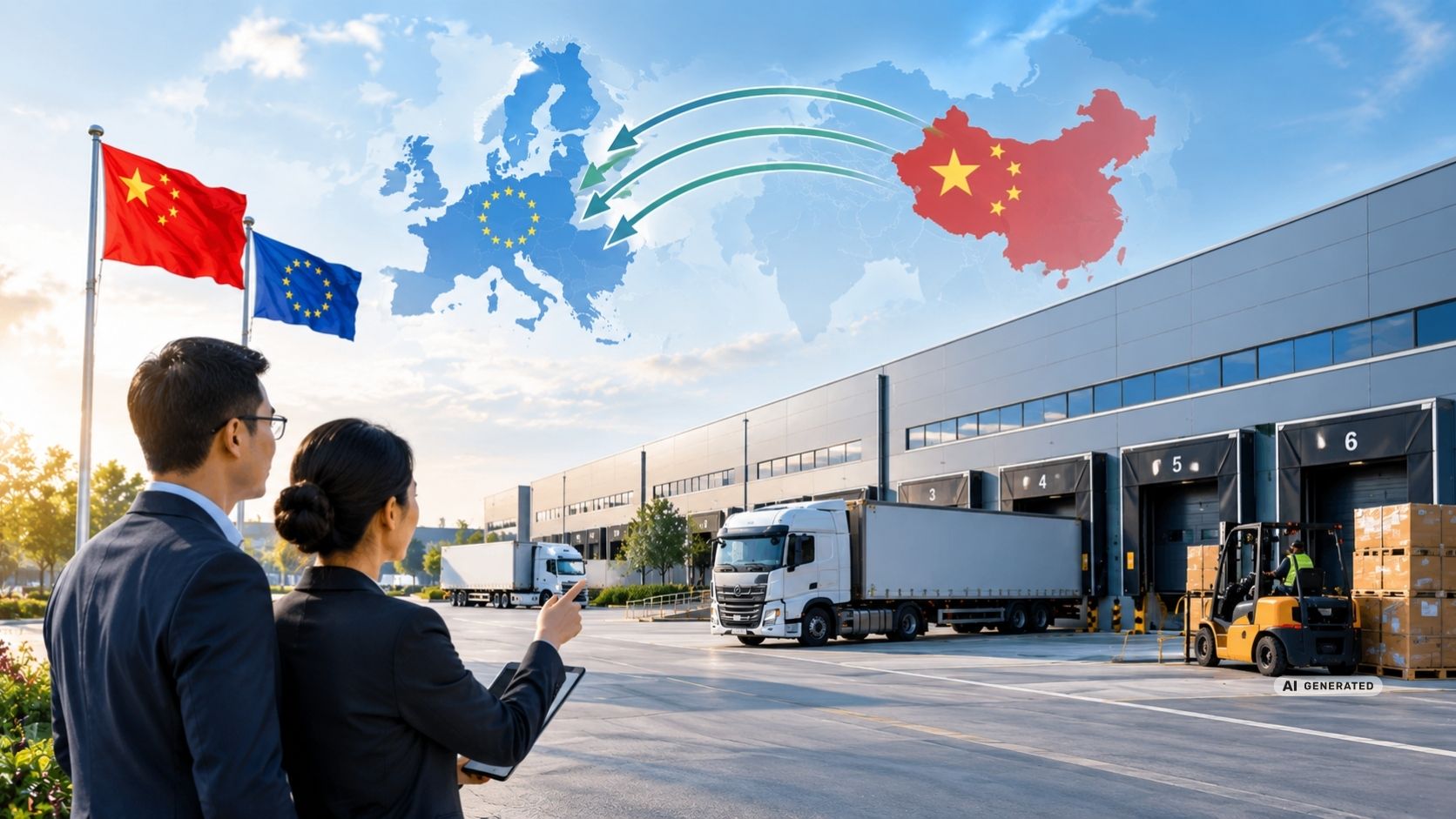
Chinese companies discover Europe's logistics real estate
Chinese companies are becoming an increasingly visible user group in Europe's logistics real estate market. What does this mean for warehouse space, 3PL structures and the requirements for European logistics locations?...
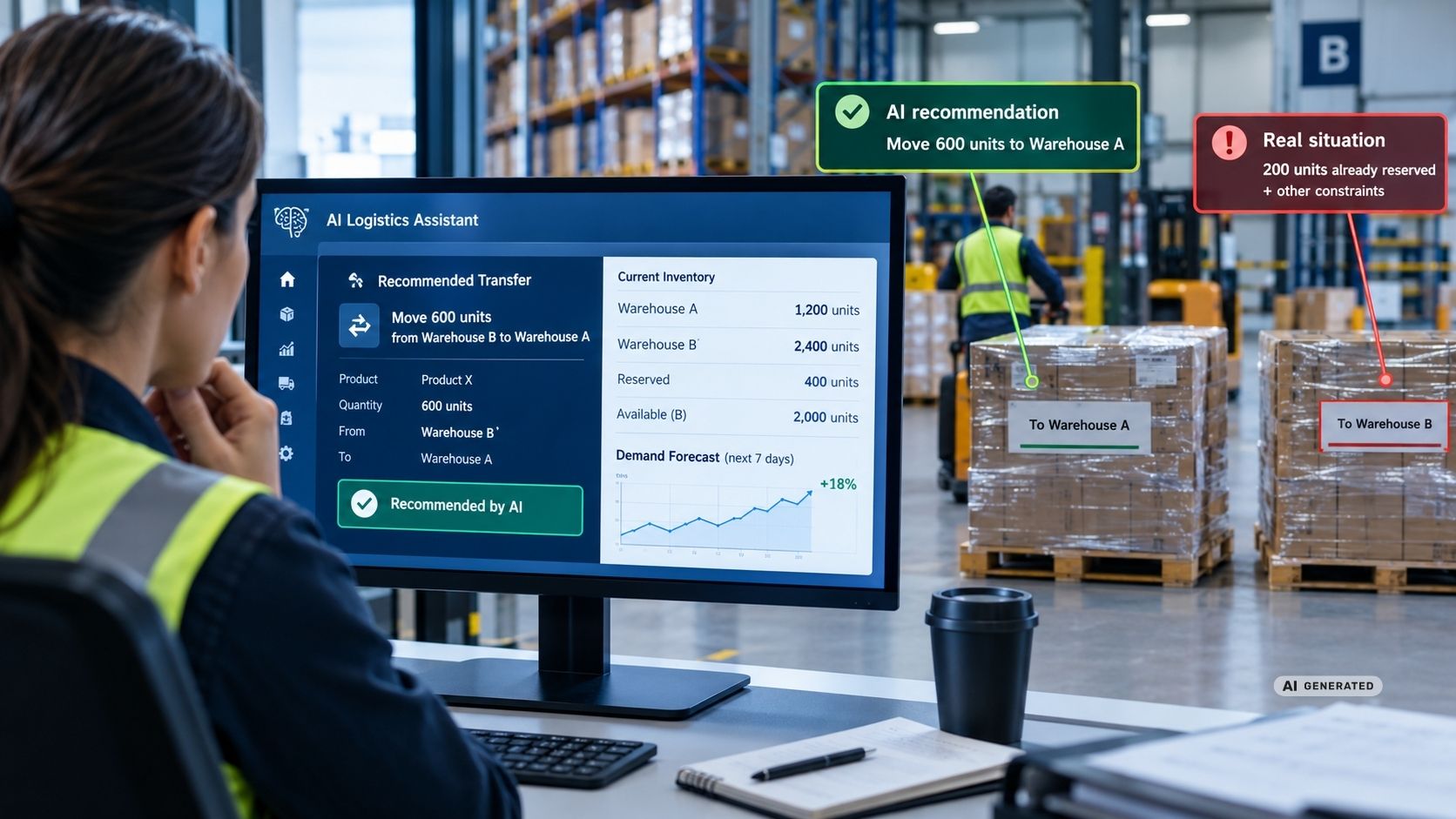
AI Hallucinations in Logistics: When AI Plans the Wrong Delivery
AI can analyze enormous amounts of logistics data — but it can also produce a convincing answer that is simply wrong. The critical question is not whether AI makes mistakes, but what happens when a wrong recommendation becomes an operational decision....
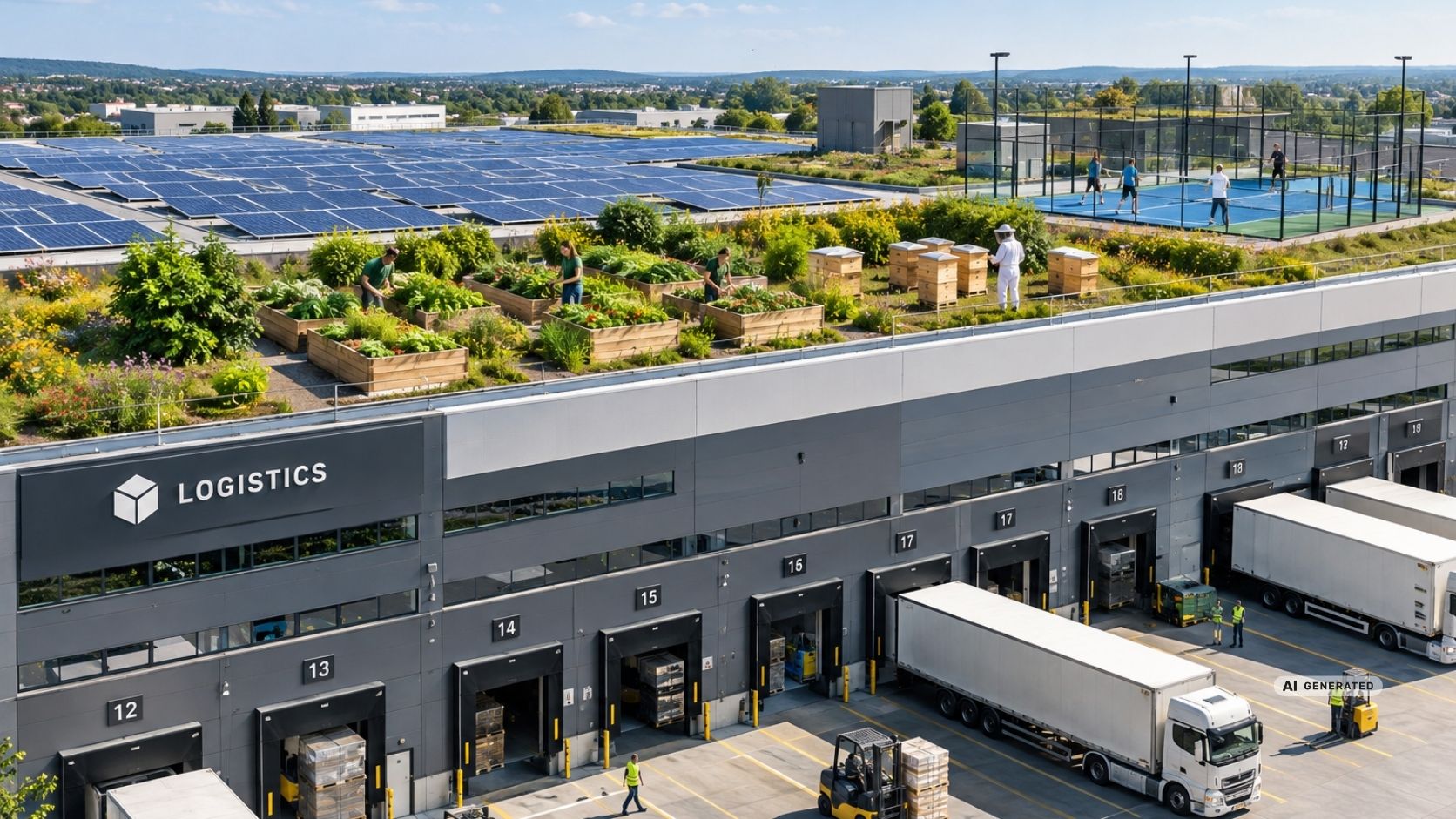
The Green Revolution on the Hall Roof: From Concrete Block to Ecological Power Plant?
Logistics roofs can do more than PV: greening, bees, urban farming and even sports areas turn unused roof space into multifunctional rooms....