



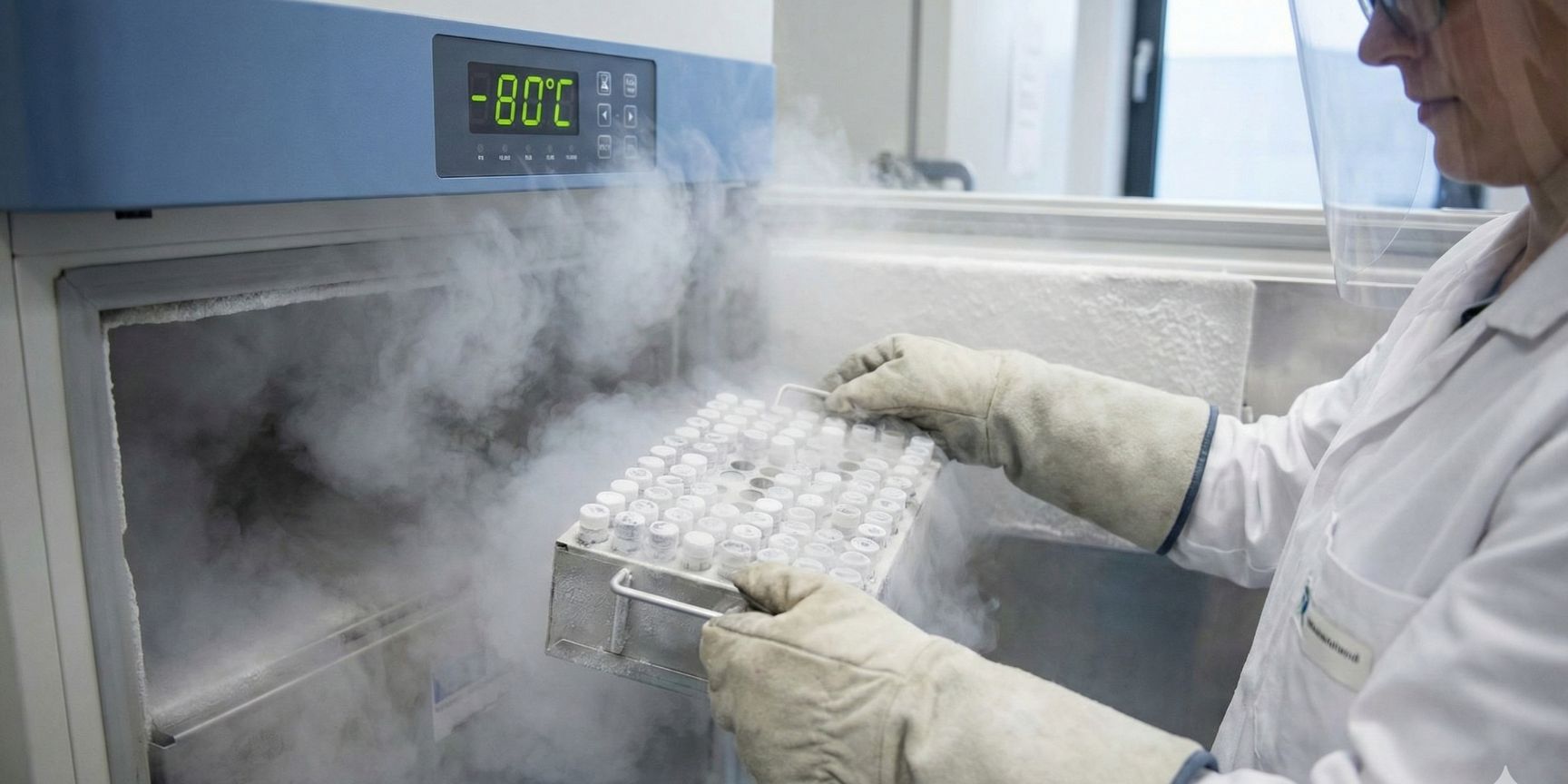
The Premier Class of Refrigeration: Why Ultra-low Temperature Logistics at -80°C Changes Everything
Table of Contents
- What makes ULT Logistics (-80°C) so Special?
- The Logistics Property: A Fortress Against the Heat
- The Service Provider: Zero-defect Tolerance as a Business Model
- Practical Example: The "Operation Warp Speed" of Logistics – The COVID-19 Vaccine
- The Biggest Challenges: Energy, Costs and the Last Mile
- Global Differences: Why Germany cools Differently than the USA or China
- The Future: What will Drive the -80°C Logistics of Tomorrow?
- Conclusion: More than just "Cold"
As the world waited for a vaccine against COVID-19 in 2020, a term that had previously only been familiar to a small niche of scientists and logistics specialists came into the spotlight overnight: ultra-low temperature logistics. The requirement to store and transport BioNTech/Pfizer's mRNA vaccine at -70°C (±10°C) was more than just a logistical challenge; it was a wake-up call for an entire industry.
But what distinguishes this "royal class of cold" from the normal refrigerated or frozen logistics that we know from the supermarket?
It is crucial to sharpen the terms:
- Refrigerated logistics (fresh food logistics): Usually in the range of +2°C to +8°C. Affects fresh food, many medications (e.g. insulin) and flowers.
- Frozen Logistics: Defined at -18°C. The standard for frozen foods (pizza, vegetables, etc.).
- Ultra-Low Temperature Logistics (ULT): Starts at -20°C, but primarily covers the range from -60°C to -80°C. This is the domain of highly sensitive biotechnological products, research materials, certain raw materials and modern vaccines or cell therapies.
Why is this extreme temperature range so critical? And what unseen hurdles do service providers and real estate developers have to overcome in order to maintain this chain without interruption? This article dives deep into the world of -80°C logistics.
What makes ULT Logistics (-80°C) so Special?
The fundamental difference is not only the temperature, but the physics and the consequences of an error. At -80°C, biological and chemical degradation processes are almost completely stopped. In mRNA vaccines or cell therapies, the complex molecular structure is so fragile that even a few minutes above this threshold can irrevocably destroy its effectiveness.
The value of the goods is exorbitant. A single transport container can contain research material or patient-specific therapies worth several million euros. Unlike a pallet of melted ice cream, there is no "second choice" here. A break in the cold chain (a "temperature excursion") means not only financial loss, but in the worst case the loss of irreplaceable research results or the failure of a therapy for a patient.
To achieve and maintain these temperatures, there are two core methods:
- Active cooling: Specialized ultra-low temperature freezers (ULT freezers) that work with compressor cascade systems or partly with Stirling engines, as well as actively cooled containers.
- Passive cooling: The most common approach to transportation. Highly insulated boxes filled with dry ice (solid CO₂, -78.5°C). However, this requires precise management, as the dry ice sublimates (volatilizes) and needs to be refilled regularly.
The Logistics Property: A Fortress Against the Heat
What does a logistics property that is designed for -80°C have to do? The answer is much more than just "a thick wall". An ULT warehouse is a high-security and high-tech wing.
Redundancy is everything
The biggest enemy is a power outage. An ULT bearing must therefore have N+1 or N+2 redundancy. This means:
- Power supply: At least two independent power feeders, paired with huge diesel emergency generators (NEA) and uninterruptible power supplies (UPS) for IT.
- Refrigeration units: If one refrigeration unit fails, a second one must be able to take over immediately and automatically without the temperature in the warehouse rising by even one degree.
Extreme insulation and lock systems
Any air exchange with the outside world is a massive loss of energy and a risk. The walls (often thick sandwich panels) and insulation values are extreme. The doors are crucial: incoming and outgoing goods are carried out via specialised, fast-closing lock systems, often with "buffer zones" pre-cooled to -20°C to minimise thermal shock to the main warehouse.
24/7/365 Monitoring and Validation
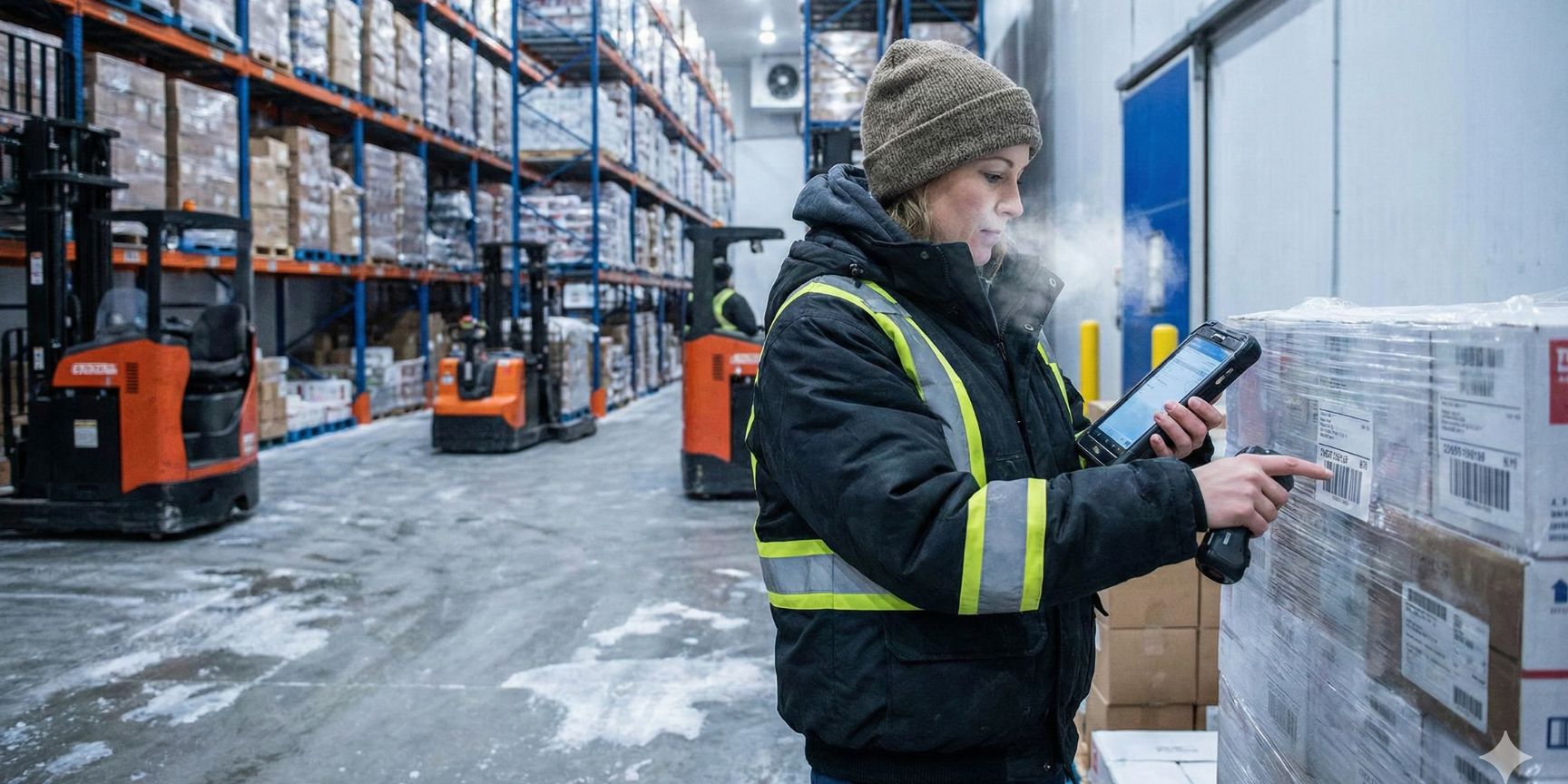
Such a camp is permanently "in the intensive care unit". Hundreds of calibrated sensors perform seamless thermal mapping. Any deviation of 0.5°C triggers a staggered alarm – first at the technician on site, then at the external security service, then at management. These systems, just like the warehouse software (WMS), must be validated according to GxP standards in order to prove data integrity to authorities.
The investment cost of such a property can exceed the cost of a standard dry storage facility by three to five times per square meter.
The Service Provider: Zero-defect Tolerance as a Business Model
What distinguishes a logistics provider that transports a pallet of yoghurt at +4°C from one that handles biotech material at -80°C? It is quality management (QM).
The regulatory hurdle is Good Distribution Practice (GDP). This EU guideline (and its global counterparts such as the FDA rules in the USA) is the code of pharmaceutical logistics. For the ULT sector, GDP means in concrete terms:
- Validated processes: The service provider not only has to say that it can maintain -80°C. He must have proven it through extensive tests (validation) and document this completely. Which container is used? How long does dry ice last at +30°C outside temperature? What is the Contingency Plan if the truck is stuck in a traffic jam?
- Trained personnel: Handling dry ice is dangerous (risk of suffocation due to CO₂ outgassing, extreme cold burns). Personnel must be trained not only logistically, but also in dangerous goods handling and emergency protocols.
- Seamless audit trail: The most important point. From the outgoing goods at the manufacturer to the handover in the laboratory, the temperature profile must be recorded every minute. Modern IoT data loggers send the temperature (and GPS data, vibrations) to the cloud in real time. If the temperature deviates, there is an alarm before the shipment arrives at its destination – not only when the logger is read out at the end.
The core competence is not transport, but validated risk management.
Practical Example: The "Operation Warp Speed" of Logistics – The COVID-19 Vaccine
Nothing illustrates the challenges of ULT logistics better than the global distribution of the BioNTech/Pfizer vaccine from the end of 2020.
- The challenge: A product that had to be stored at -70°C (±10°C) was to be distributed globally in billions of doses – to a world that had no infrastructure for this.
- The solution (transport): Pfizer developed its own "Thermal Shipper". These suitcase-like boxes were passively cooled and filled with dry ice. They could maintain the temperature for up to 10 days and were equipped with GPS and temperature loggers.
- The solution (storage): Large logistics companies such as DHL, UPS and FedEx built "freezer farms" – halls filled with hundreds of ULT freezers – at their global air freight hubs (e.g. Frankfurt, Louisville) in record time. A study by DHL and McKinsey estimated global demand at "around 200,000 pallet shipments, 15 million deliveries in coolers and 15,000 flights" (source: DHL Freight Connections, 2020).
- The bottleneck (dry ice): The sudden, immense demand for dry ice led to global supply bottlenecks.
- The "last mile": The hardest part. The vaccination centers and doctors' offices did not have -80°C camps. The vaccine had to be administered within 5 days (at +2°C to +8°C) after removal from the thermal shippers. This required "just-in-time" logistics of military precision.
This example has catapulted ULT logistics from a niche into the mainstream and triggered a massive surge in innovation and investment.
The Biggest Challenges: Energy, Costs and the Last Mile
Despite the progress, the hurdles in the ULT space remain immense.
The energy guzzler -80°C
The biggest challenge is energy consumption. A standard -80°C laboratory freezer (approx. 250 litres) consumes between 10 and 12 kilowatt hours (kWh) per day. Older models can even require up to 30 kWh/day (source: Laborjournal, 2022). By comparison, a modern household freezer (-18°C) often requires less than 1 kWh/day. In a warehouse with hundreds of such devices, energy costs are exploding. Sustainability and energy efficiency are becoming the central economic issue.
The seamless chain
Every handover is a risk. From producer to truck, from truck to plane, from airplane to central warehouse, from warehouse to the "last mile" to the clinic. This chain must be seamless not only physically, but also in terms of data. If a data logger fails, the entire shipment is of no regulatory value, even if the temperature has been maintained.
The "last mile" to the laboratory
The distribution from the central ULT hub to the end customer (clinic, research institute) remains the bottleneck. Small, passive boxes are often used here. Time windows are tight, the recipient must be ready and store the goods correctly immediately. Late acceptance by the recipient can break the entire chain.
Global Differences: Why Germany cools Differently than the USA or China
The requirements of GDP (Good Distribution Practice) in the EU and similar GxP standards worldwide (such as those of the FDA) set a global minimum standard for pharmaceutical logistics. However, the implementation and the challenges differ drastically.
Germany / Western Europe (e.g. Netherlands, Belgium):
- Strength: Extremely high infrastructure density. Short distances, excellent road networks and large pharmaceutical airport hubs (Frankfurt, Amsterdam, Brussels).
- Focus: Very high GDP compliance and process reliability. Quality and reliability often take precedence over pure price.
- Challenge: High energy and labor costs as well as strict environmental regulations.
United States:
- Strength: Large, specialized logistics service providers (e.g. UPS, FedEx) with their own air freight hubs that specialize in pharmaceuticals.
- Challenge: Geography. The distances are immense. A "last mile" here can be hundreds of kilometers, which makes passive cooling (dry ice) and emergency planning extremely complex.
- Difference: A greater dependence on domestic air freight than in the dense EU.
Asia (e.g. China, India):
- Challenge: Infrastructure gap. While metropolises such as Shanghai or Mumbai have state-of-the-art logistics centers and airports, the cold chain in rural or second-tier regions often breaks down quickly due to a lack of infrastructure and know-how.
- Development: Massive catch-up process. China is investing gigantic sums in the development of a national pharmaceutical cold chain in order to become more independent (also strategically).
- Risk: Inconsistent quality standards and a lack of transparency in the supply chain are often still a problem.
Germany benefits from its central location, its dense infrastructure and its historically high quality standards in engineering, which favors the implementation of stable ULT chains.
The Future: What will Drive the -80°C Logistics of Tomorrow?
The COVID vaccines were just the beginning. The true, long-term driver for ULT logistics is another sector: personalized medicine.
Cell and Gene Therapies (CGT)
Therapies such as CAR-T cell therapy against cancer are patient-specific. Cells are removed from the patient, biotechnologically "sharpened" in the laboratory and injected back into the patient. These living cells almost always have to be cryopreserved (often at -150°C in nitrogen) or at least transported at -80°C. The market for cell and gene therapies is growing rapidly. Forecasts predict an increase from approximately $4.5 billion (2023) to over $28 billion by 2031 – a compound annual growth rate (CAGR) of over 25% (source: The Insight Partners, 2024). Each of these therapies is an individual ULT logistics order.
Sustainability & Energy Efficiency
In view of the energy costs (see Challenge 1), "Green Logistics" is essential for survival in the ULT sector. The future lies in:
- More efficient cooling systems (e.g. Stirling technology).
- Better, vacuum-insulated panels.
- Use of phase change materials (PCM) as a partial replacement for energy-intensive dry ice.
- Bearings are powered by renewable energy (solar on the roof).
Digitalization (AI and IoT)
The future of surveillance is not reactive, but predictive.
- IoT sensors are the standard.
- Artificial intelligence (AI) will use this data to optimize routes (minimum transport time) and perform predictive maintenance: AI warns the technician that a refrigeration unit is likely to fail in the next 48 hours before it happens.
Conclusion: More than just "Cold"
Ultra-low temperature logistics at -80°C is the silent heroine behind the greatest medical breakthroughs of our time. It has gone from being a niche to a strategically critical infrastructure.
It is extremely expensive, energy-intensive and absolutely unforgiving of mistakes. The requirements for real estate, service providers and IT systems are closer to the aerospace industry than to traditional freight forwarding.
While the COVID pandemic has been the catalyst, it is the unstoppable growth of personalized medicine (cell and gene therapies) that will drive investment and innovation in this sector for decades to come. The challenge now is to make this extreme logistics not only reliable, but also sustainable and efficient.
Latest Blog Posts
Stay up to date with the newest trends, insights, and tips in warehouse and logistics. Our latest articles help you navigate the industry with confidence.
Data Centres vs. Logistics Facilities: The Race for Power and Land
Across Europe, logistics operators are competing for more than land and transport access. They increasingly need something much harder to secure: grid capacity. Data centres are intensifying that competition — and changing how logistics locations are evaluated....
Chinese companies discover Europe's logistics real estate
Chinese companies are becoming an increasingly visible user group in Europe's logistics real estate market. What does this mean for warehouse space, 3PL structures and the requirements for European logistics locations?...
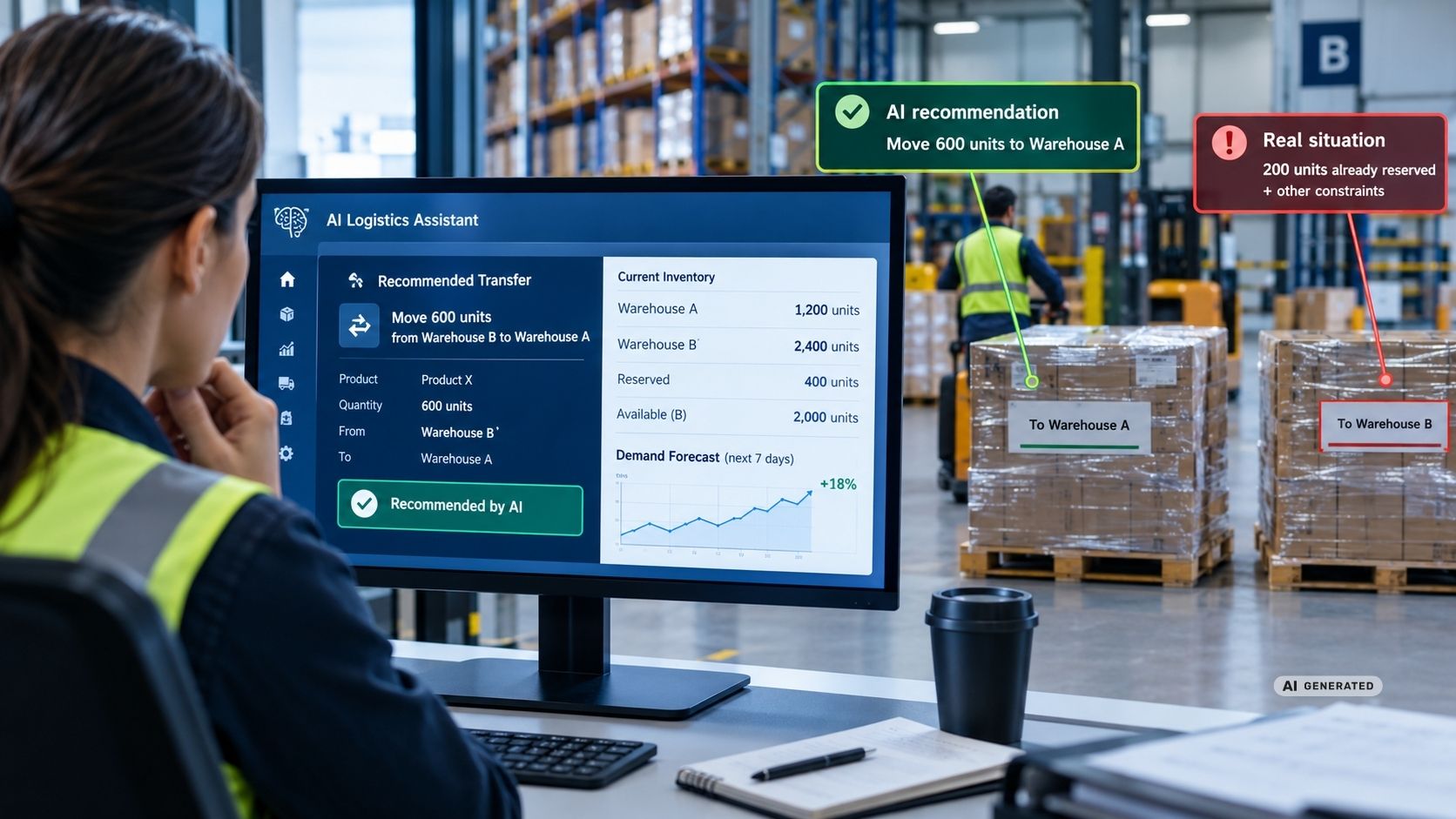
AI Hallucinations in Logistics: When AI Plans the Wrong Delivery
AI can analyze enormous amounts of logistics data — but it can also produce a convincing answer that is simply wrong. The critical question is not whether AI makes mistakes, but what happens when a wrong recommendation becomes an operational decision....
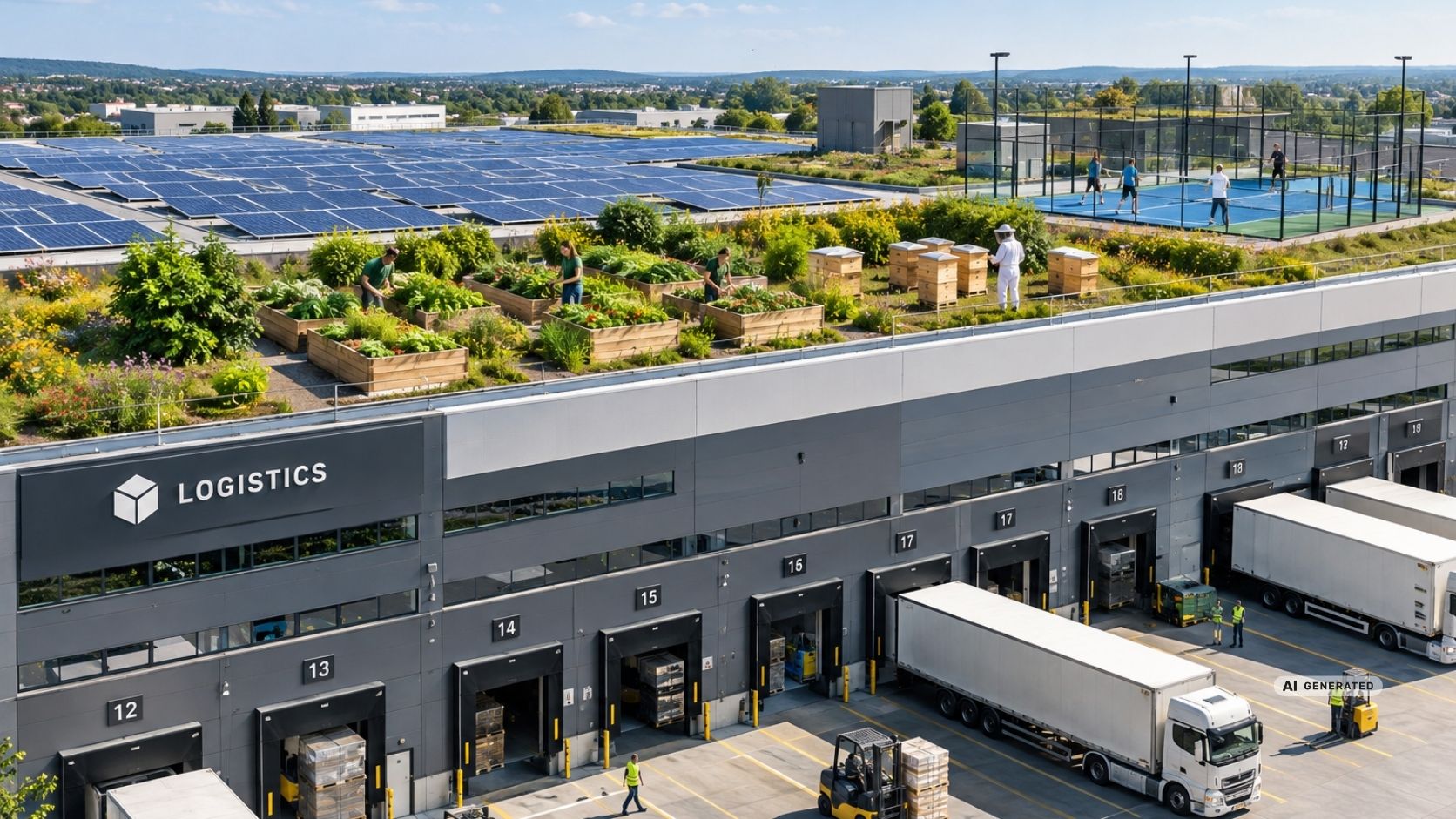
The Green Revolution on the Hall Roof: From Concrete Block to Ecological Power Plant?
Logistics roofs can do more than PV: greening, bees, urban farming and even sports areas turn unused roof space into multifunctional rooms....