


Occupational Safety in the Warehouse: Cost Trap or Competitive Advantage? A Deep Dive into Warehouse Logistics
Table of Contents
- The Foundation: What is Involved in Occupational Safety in Intralogistics?
- Identify and Proactively Avoid Risk Areas
- Organizational Measures: More than just Paperwork
- Collision Protection for Racks: Why Shelf Protection is Vital
- Impact Protection and Collision Protection: Regulations and Advantages
- Bearing Protection Devices and Materials: Steel vs. Plastic
- Is Corner Protection, Impact Protection, Collision Protection only Expensive or does it also Save Money? (ROI Consideration)
- Innovations: What New Developments make the Workplace Safer?
- International Comparison: Germany vs. Worldwide
- Practical Example: How "Müller Logistik GmbH" saved 40% on Maintenance Costs
- Conclusion: Safety is an Attitude
Have you ever wondered what a single, unnoticed bump on a heavy-duty rack really costs your company? It's not just the steel beam that needs to be replaced. It is the downtime, the redeployment of goods, the administrative effort and – in the worst case – the health of your employees.
Occupational safety in warehouse logistics has long been more than just following the rules of the employers' liability insurance association. At a time when just-in-time deliveries and e-commerce are setting the pace, a secure warehouse is an efficient warehouse. This article sheds light on the depth of the matter: from the physics of impact protection to the psychology of employees to the global comparison of safety standards.
The Foundation: What is Involved in Occupational Safety in Intralogistics?
Occupational safety in the warehouse is a complex ecosystem. Many reduce it to helmets and high-visibility vests, but that does not go far enough. It is about the interaction of man, machine, material and method.
To make a warehouse truly safe, we need to look at three levels:
- Technical safety: The condition of the racks, industrial trucks, fire protection systems and floor conditions.
- Organizational security: Traffic route plans, operating instructions, inspection dates (e.g. rack inspection in accordance with DIN EN 15635).
- Personal safety: training, personal protective equipment (PPE), but also the psychological stress caused by time pressure.
Important facts: According to the DGUV (German Social Accident Insurance), over 30,000 reportable occupational accidents occurred in the field of warehousing and logistics in 2022. A large part of this is related to industrial trucks (forklifts) and tripping accidents.
Identify and Proactively Avoid Risk Areas
Where are the real dangers? Often it is the routine areas that become a trap.
- Traffic junctions: This is where pedestrians and 4-tonne forklifts meet.
- Avoidance: Strict separation of driveways and sidewalks by railings or floor markings. Installation of panoramic mirrors in obscure corners.
- Shelf damage: A bent stand base dramatically reduces the load-bearing capacity of the shelf.
- Avoidance: Consistent use of collision protection and regular shelf inspection.
- Loading zones & ramps: Risk of falling for forklifts and risk of crushing for people.
- Avoidance: Immobilizers for trucks, traffic light systems and scissor lift tables with roll-off protection.
- Falling Objects: Unsecured pallets at a height of 10 meters.
- Avoidance: Push-through protection and rear wall grilles on shelves.
Expert tip: Introduce "near-miss reporting". If employees can report where there was almost a crash, you can react before blood flows.
Organizational Measures: More than just Paperwork
How do you control the behavior of hundreds of employees? Organizational measures form the framework for safe action.
This necessarily includes a risk assessment in accordance with Section 5 of the Occupational Health and Safety Act. This must not be a "copy-paste" document, but must reflect the real conditions on site. An often-underestimated point is the traffic concept. Does right-before-left apply in the camp? Are there one-way street regulations in the aisles? In addition, instruction is essential. Once a year is mandatory, but short "safety briefings" (e.g. 5 minutes per week) keep the topic in mind.
Collision Protection for Racks: Why Shelf Protection is Vital
Why is a small dent in rack steel so dangerous? Racks are statically optimized systems. They carry enormous loads with minimal dead weight.
DIN EN 15635 ("Fixed shelving systems made of steel") defines limit values for deformation. A bulge of only 3 mm over a length of 1 meter can already reduce the load-bearing capacity of a highly loaded stand to such an extent that there is a risk of collapse (domino effect).
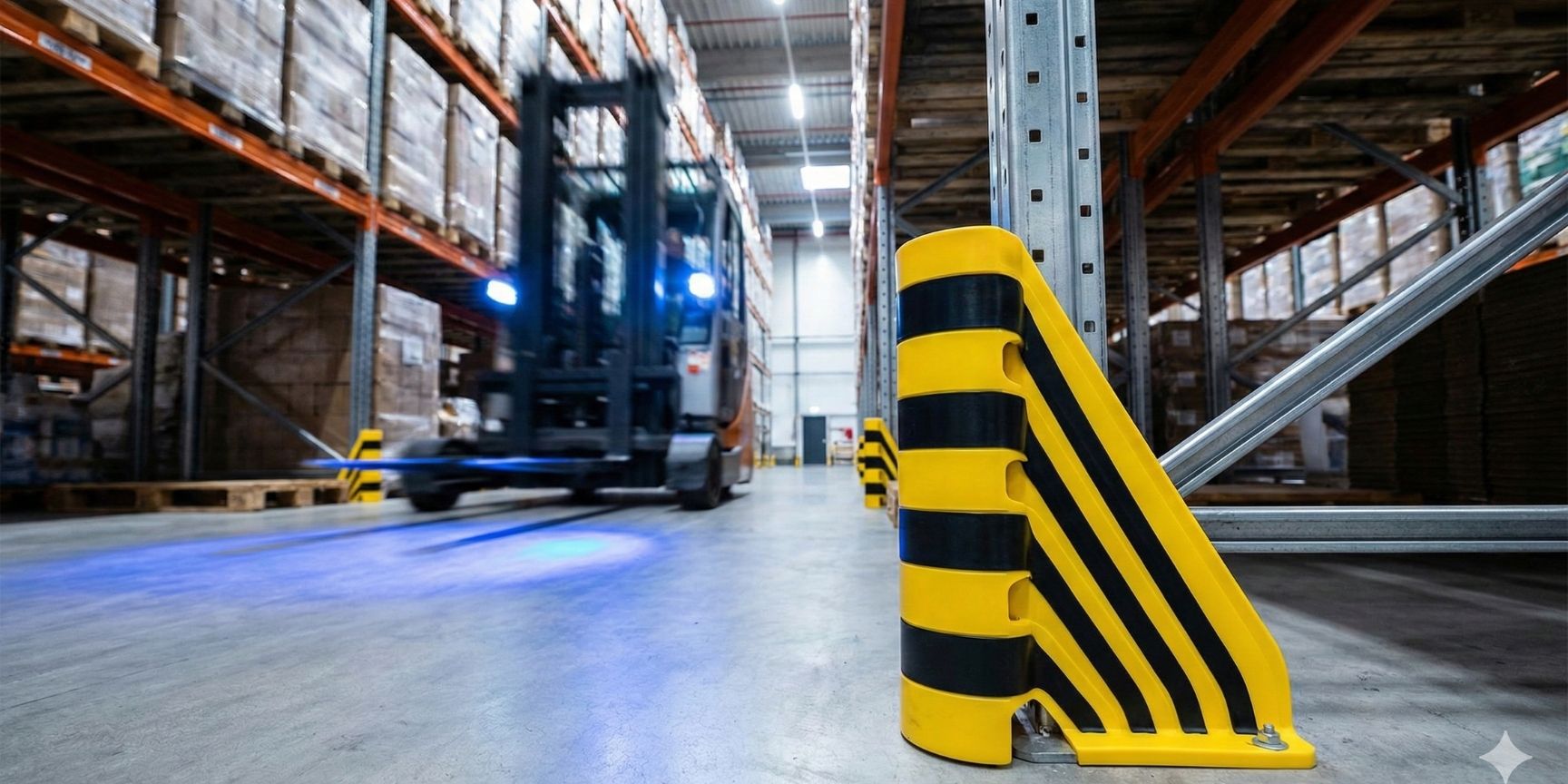
Collision protection is therefore not an option, but life insurance. It serves as a sacrificial component. It absorbs the energy of the impact before it reaches the static load-bearing structure of the rack.
Impact Protection and Collision Protection: Regulations and Advantages
Many camp leaders ask: "Is this compulsory or optional?" The answer is clear: it is mandatory.
DGUV Rule 108-007 (formerly BGR 234) stipulates: Fixed racks operated by non-track-bound industrial trucks (free-moving forklifts) must be secured by collision protection at the corner areas (entrances and exits of the alleys).
The technical requirements:
- The protection must be at least 400 mm high.
- It must be able to absorb an energy of at least 400 joules.
- It must be marked yellow and black (hazard marking).
- It must not be bolted to the shelf (so as not to direct forces into the shelf).
Advantages beyond the regulation:
- Protection of the investment: A shelf stand replacement often costs €500–1000 (including assembly, unloading, locking). Collision protection costs a fraction.
- Avoidance of business interruptions: A locked shelf means that goods are not available.
- Legal certainty: In the event of a claim, the insurance company first checks whether the legal measures have been complied with.
Bearing Protection Devices and Materials: Steel vs. Plastic
A paradigm shift in logistics is currently taking place here. Traditionally, steel was used almost exclusively. But new materials are entering the market.
Classic steel impact protection
- Advantage: Cheap to buy, extremely robust for cuts/scratches.
- Disadvantage: Conducts the impact energy into the ground. The result: torn out ground anchors and damage to the hall floor ("concrete bursts"). After a strong impact, the steel is deformed and needs to be replaced (painting work is often not enough).
Polymer / plastic impact protection (The "flexible" system)
- How it works: These guards are made of special polymers (e.g. Memaplex) that are elastic.
- Advantage: The "memory effect". In the event of an impact, the material deforms, absorbs the energy and returns to its original shape.
- Result: No damage to the ground, no damage to the vehicle, the protection does not have to be replaced after a bump.
- Disadvantage: Higher acquisition costs, more sensitive to sharp edges (forks).
Table: Comparison of materials
| Criterion | Steel | Polymer/Plastic |
| Purchase price | Low | Medium to High |
| Maintenance costs | High (varnishing, swapping) | Very low |
| Soil damage | Common (dowels tear out) | Almost none |
| Durability | Disposable (defective after crash) | Reusable (springs back) |
| Visibility | Paintwork may peel off | Solid-colored material |
Is Corner Protection, Impact Protection, Collision Protection only Expensive or does it also Save Money? (ROI Consideration)
Let's do the math. Is security a cost block?
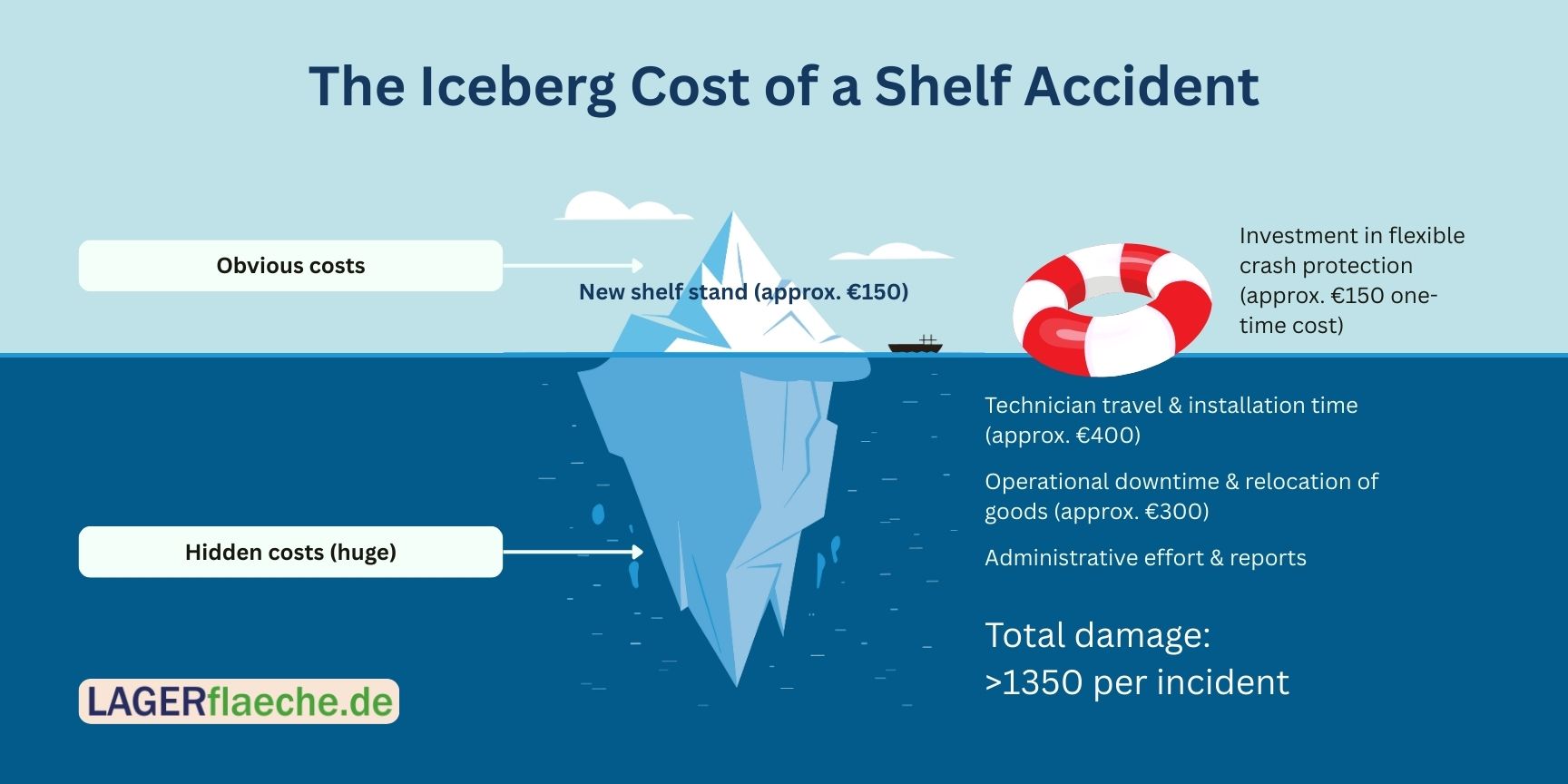
Scenario: A forklift driver touches a corner stand while reversing.
- Without protection: The stand is deformed.
- Cost of spare part: 150 €
- Costs assembly/technician: 400 €
- Costs for clearing shelves and repacking goods: 300 €
- Cost of hall floor repair (torn dowels of the old stand): 500 €
- Total damage: approx. €1,350 (+ downtime).
- With flexible protection: The forklift drives against the protection.
- The protection springs back.
- No damage to the shelf.
- No damage to the ground.
- Possibly scratches on the guard.
- Costs: 0 € (one-time investment was approx. 100–200 €).
Conclusion: After the first damage prevented, high-quality collision protection has already paid for itself. It saves massive amounts of money by eliminating "hidden costs" (floor repair, admin effort).
Innovations: What New Developments make the Workplace Safer?
Technology never sleeps. AI and sensor technology are revolutionizing safety.
- Smart collision protection systems: There are now protective devices with integrated sensors. If the sensor reports an impact, the warehouse manager is informed via app. This means that no damage remains undetected ("hit and run" is avoided).
- Floor spots & projectors: Instead of paint that rubs off, LED systems dynamically project warning symbols (e.g. "Stop") onto the floor when a forklift approaches.
- Wearables & AI-Cameras:
- AI cameras on the forklift recognize people ("human detection") and automatically brake the vehicle, but distinguish between a person and a pallet.
- Vibration vests: Employees wear vests that vibrate when a forklift gets too close.
- Zone speed control: Modern forklifts automatically reduce speed as soon as they drive indoors or when the fork is raised.
International Comparison: Germany vs. Worldwide
How does Germany compare globally? Are there differences in mentality?
Germany & DACH region
Germany is considered the "gold standard" for regulations worldwide. The combination of TÜV,employers' liability insurance associations (DGUV) and strict DIN standards ensures an extremely high level of safety. Here, security is often "compliance-driven" – you do it because it is a regulation and is controlled. The annual rack inspection is an established standard here.
United States
In the USA, the OSHA (Occupational Safety and Health Administration) regulates safety.
- Difference: The system is more reactive and more lawsuit-heavy. While preventive testing is carried out in Germany, in the USA there is a threat of immense civil lawsuits in the event of accidents. Therefore, US companies often rely on massive physical barriers ("heavy duty"), sometimes more massive than in Europe, to ward off lawsuits.
- The training of forklift drivers in the USA is often less standardized than the German "forklift license".
Eastern Europe (e.g. Poland, Czech Republic)
These countries have caught up a lot due to EU integration and often use the same EN standards (European standards) as Germany.
- Difference: Often the warehouses there are newer and more modern (greenfield projects), which is why, paradoxically, more modern protection systems (e.g. polymer collision protection) are often installed there than in old existing German buildings. The openness to innovation is higher in some cases.
Asia (e.g. China)
Here the picture is divided into two parts. In high-tech hubs (Alibaba, JD.com), the degree of automation and thus the security (due to the elimination of the human factor) is higher than in Europe. In smaller, traditional camps, however, safety awareness and enforcement of protective clothing or collision protection is often significantly lower than in the West.
Practical Example: How "Müller Logistik GmbH" saved 40% on Maintenance Costs
Case study (fictitious, but practice-based)
Müller Logistik GmbH (food retailer) had a problem: there was a lot of activity in its outgoing goods. Every year, about 15 rack stands had to be replaced and the hall floor had to be renovated in 20 places because the heavy electric tow tractors tore the steel ram protection out of the anchors during maneuvering.
The measure:
The safety officer decided to retrofit.
- Replacement of the rigid steel collision protection with flexible polymer protection in the main traffic zones.
- Installation of ceiling projectors that display a warning symbol on the floor when forklifts come out of the aisles.
The result after 12 months:
- Number of rack-stands to be replaced: 0.
- Soil remediation costs due to torn anchors: 0 €.
- The flexible protection had to be replaced in two places (material costs), but the floor remained intact.
- Total savings: Maintenance costs in the racking area fell by 40%.
- Side effect: The drivers reported less stress because the visual warning (projectors) made it easier to "look around the corner".
Conclusion: Safety is an Attitude
Occupational safety in the warehouse, and especially ram protection, is not an annoying evil. It is a business lever. If you buy cheap (no protection or rigid steel in high-frequency ranges), you end up paying twice through floor repairs and downtime.
The future belongs to intelligent, absorbent materials and a sensor-based warning culture. Take a close look at your warehouse tomorrow morning: do you only see shelves, or do you see a protected value creation system?
References:
- DGUV (German Social Accident Insurance): Accident statistics 2022/2023.
- DIN EN 15635: Fixed steel shelving systems – Application and maintenance of storage equipment.
- DGUV Rule 108-007 (formerly BGR 234): Storage equipment and equipment.
- OSHA (Occupational Safety and Health Administration) Standards 1910.
- Technical article Logistik Heute / Logistik Watchblog (General market trends polymer vs. steel).
Latest Blog Posts
Stay up to date with the newest trends, insights, and tips in warehouse and logistics. Our latest articles help you navigate the industry with confidence.
Data Centres vs. Logistics Facilities: The Race for Power and Land
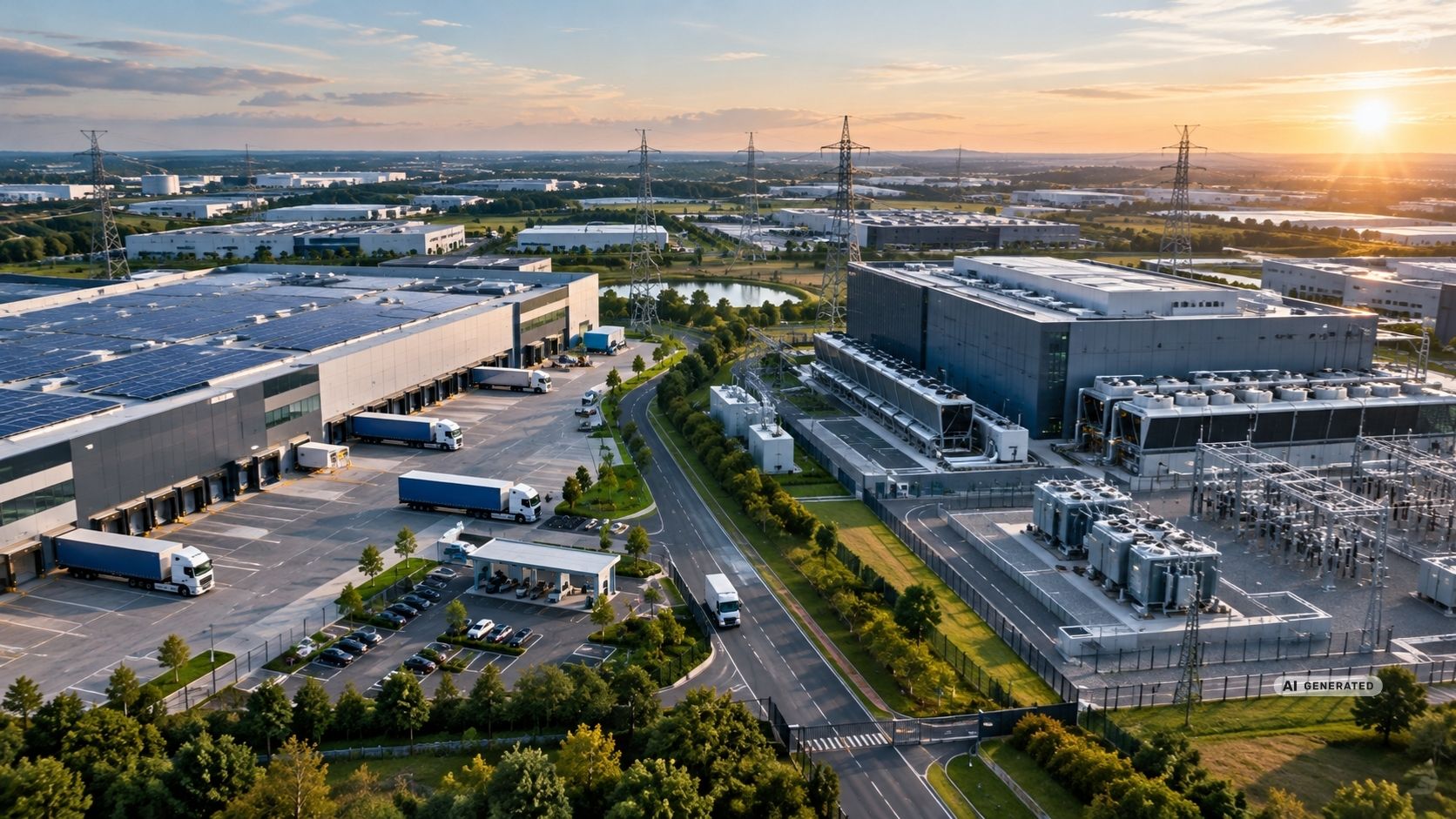
Across Europe, logistics operators are competing for more than land and transport access. They increasingly need something much harder to secure: grid capacity. Data centres are intensifying that competition — and changing how logistics locations are evaluated....
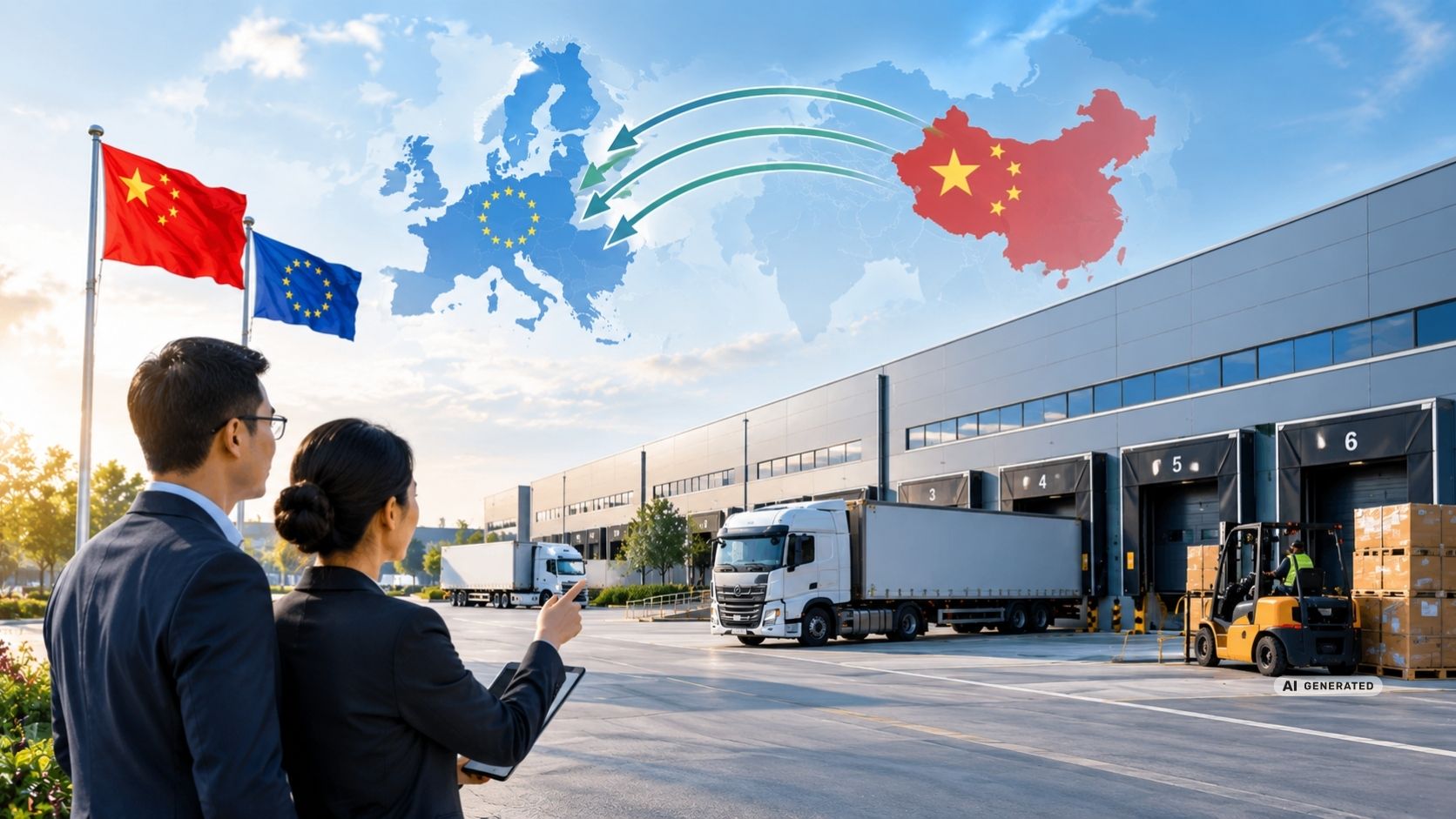
Chinese companies discover Europe's logistics real estate
Chinese companies are becoming an increasingly visible user group in Europe's logistics real estate market. What does this mean for warehouse space, 3PL structures and the requirements for European logistics locations?...
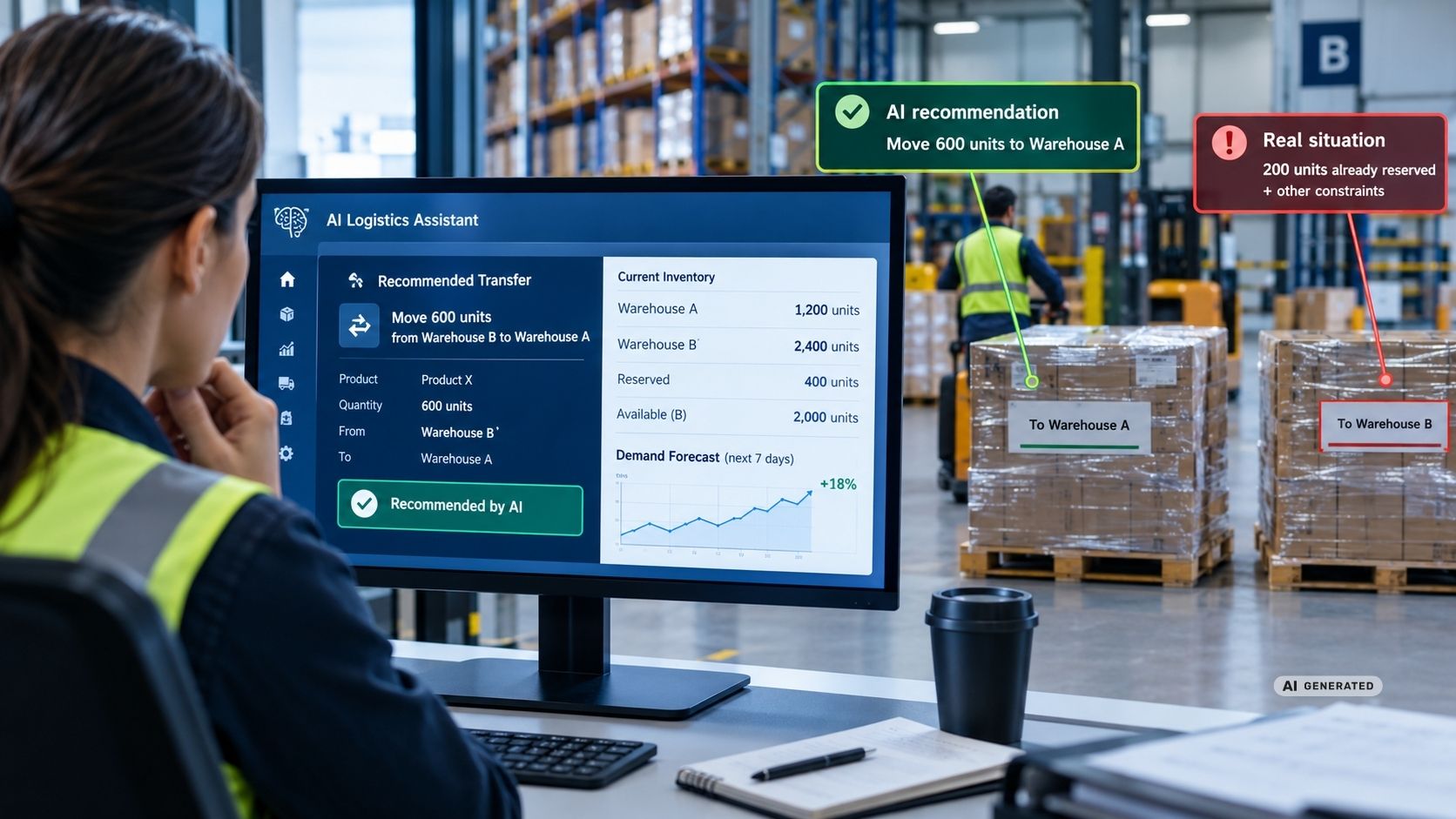
AI Hallucinations in Logistics: When AI Plans the Wrong Delivery
AI can analyze enormous amounts of logistics data — but it can also produce a convincing answer that is simply wrong. The critical question is not whether AI makes mistakes, but what happens when a wrong recommendation becomes an operational decision....
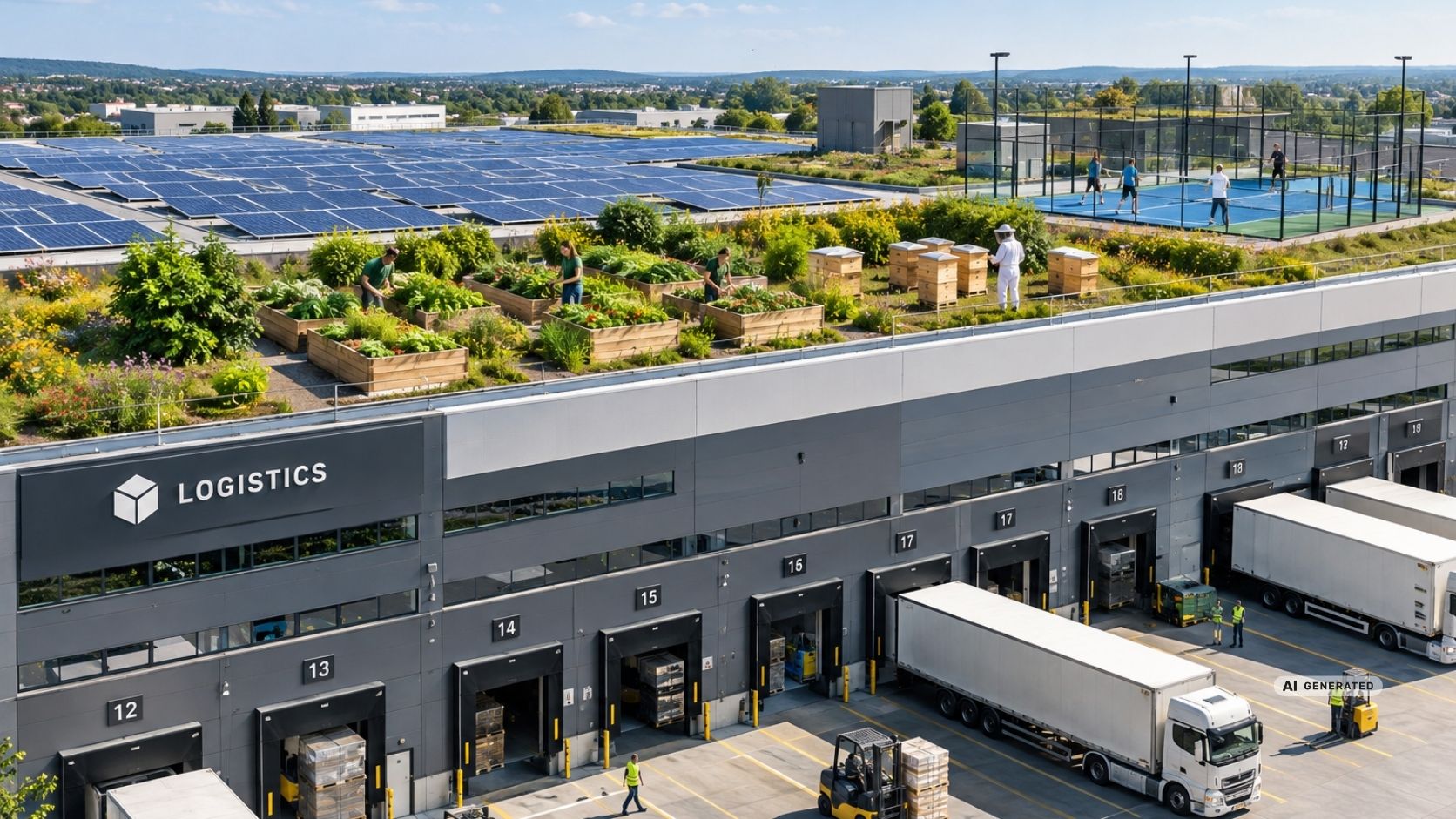
The Green Revolution on the Hall Roof: From Concrete Block to Ecological Power Plant?
Logistics roofs can do more than PV: greening, bees, urban farming and even sports areas turn unused roof space into multifunctional rooms....