


Open-heart surgery: Maintenance and refurbishment in 24/7 warehouse operation
Table of Contents
- The Economy of Silence: What Does a Standstill Really Cost?
- Soil remediation during ongoing operation: When the asphalt can't wait
- Ramp renovation: The bottleneck of logistics
- Rack renovation according to DIN EN 15635: Safety without clearing out?
- Software-Updates in der 24/7-Intralogistik: Blue-Green Deployment
- 6. The Global Comparison: Germany vs. Worldwide
- The Future: Predictive Maintenance and the Digital Twin
- Practical Example: The "Flying" Soil Remediation at an Online Giant
- Conclusion: Maintenance is not a cost block, but an insurance policy
In modern intralogistics, standstill is the most expensive word in the vocabulary. When the trucks are queuing up at the ramp and the order pickers are working piecework, any necessary repair acts like a massive disruptive factor. But the reality is inexorable: a defective shelf, a cracked industrial floor or striking software can not only slow down the flow of materials, but bring it to a complete standstill.
How can the balancing act between maximum throughput and the necessary substance retention be mastered? What technological leaps have revolutionized maintenance in recent years, and why does the world often look at Germany in awe (or shaking its head) when it comes to safety? In this deep dive, we'll shed light on the strategies you can use to keep your bearing fit without turning off the engine.
The Economy of Silence: What Does a Standstill Really Cost?
Before we talk about techniques, we need to talk about numbers. The costs of unplanned downtimes in logistics have risen massively in recent years. According to studies by Vanson Bourne, unplanned downtime in industrial sectors costs an average of up to €250,000 per hour. In a highly automated distribution center that handles 10,000 parcels per hour, the damage adds up not only in lost sales, but also in penalties (contractual penalties) and long-term reputational damage.
The key questions we need to answer:
- How do I sanitize a floor while forklifts roll over it?
- Can software updates succeed without a "maintenance window"?
- Why is preventive maintenance more expensive in Germany, but cheaper in the long term than in the USA?
Soil remediation during ongoing operation: When the asphalt can't wait
The industrial floor is the component in the warehouse that is subject to the most stress. Potholes or cracks in the joints lead to increased wear on the forklift tyres and jeopardise load stability. A classic renovation with concrete would take weeks – time that no one has.
The Solution: Reaction Resins and PMMA Technology
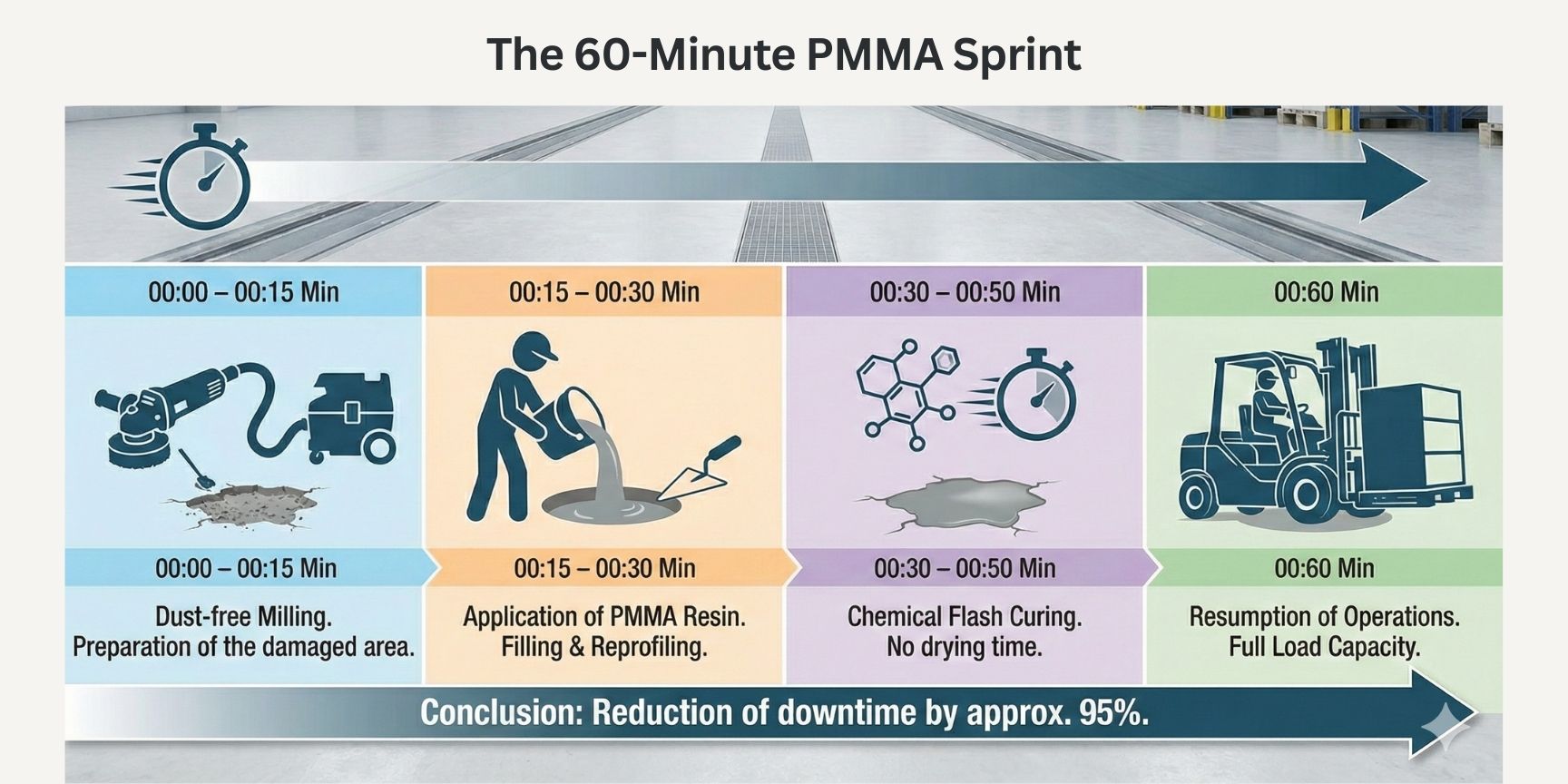
In recent years, the use of polymethyl methacrylate (PMMA) has become established. These resins cure completely within 30 to 60 minutes and are immediately fully resilient again.
Prerequisites for success:
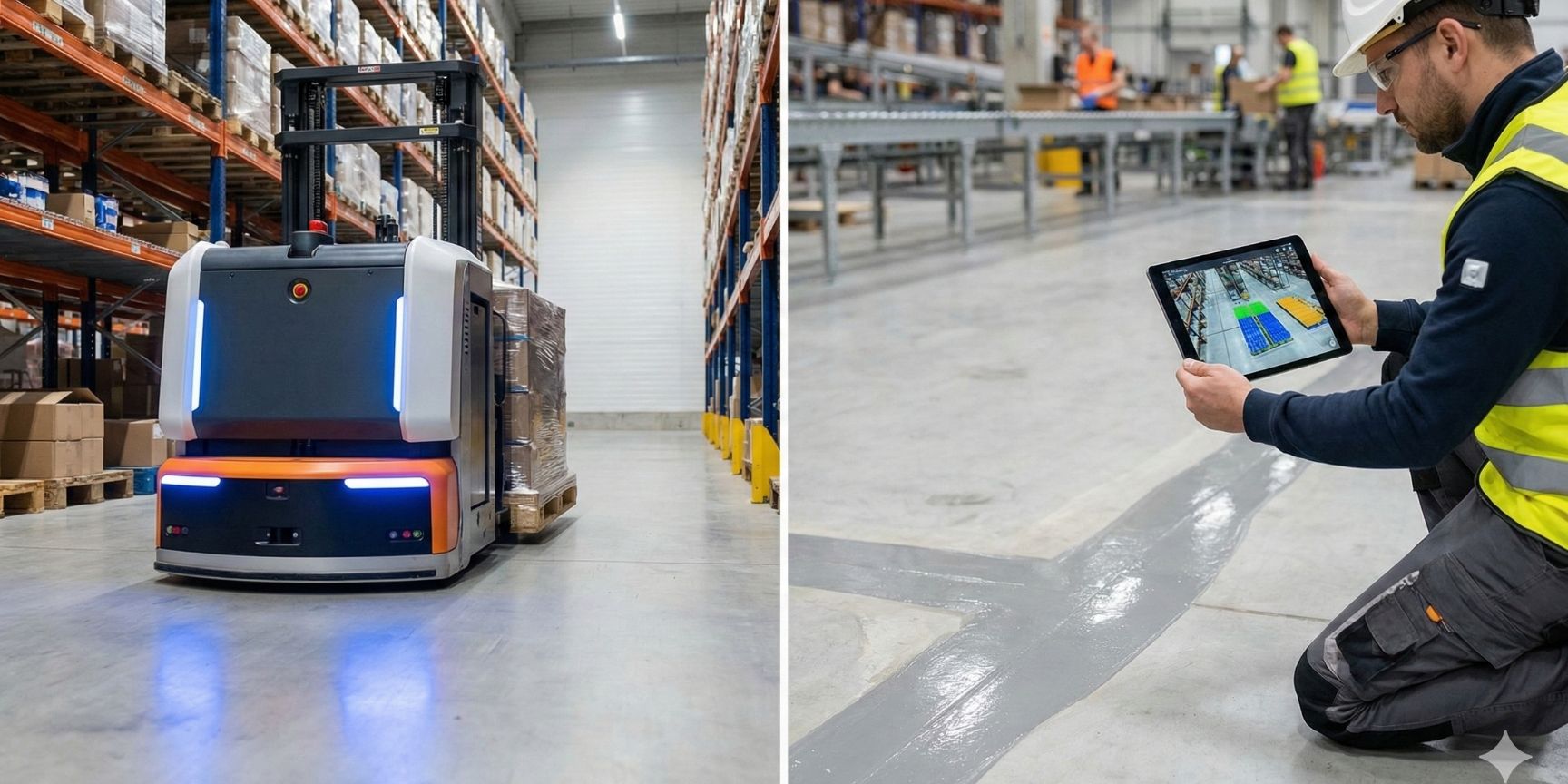
- Sector planning: The warehouse is divided into microscopic zones. While Zone A is being renovated, traffic will be diverted via Zones B and C.
- Extraction technology: Modern milling machines work almost dust-free, which is essential in order not to contaminate sensitive stored goods or sensors.
Ramp renovation: The bottleneck of logistics
When the ramps are occupied and trucks are waiting in the yard, renovating the dock levellers is a logistical nightmare. Here, modular prefabrication has proven to be a game changer.
Instead of welding and concreting the ramp on site for days, complete precast ramp modules are now used. An exchange often takes place on the night shift or on a Sunday.
- Duration: Today, an experienced construction crew often only needs 6 to 8 hours to completely replace a dock leveller, including foundation adjustment.
- Fact: According to the Main Association of the German Construction Industry, the use of quick-mix concrete systems reduces the closure time by up to 70%.
Rack renovation according to DIN EN 15635: Safety without clearing out?
Collision damage to the shelf support profile is a critical event in Germany. According to DIN EN 15635, damaged parts must be replaced immediately. In the past, this meant emptying the shelf compartment, removing loads, replacing the support.
Today, there are certified rack straightening systems. With hydraulic devices, the supports are brought back into shape under load (after strict static testing) or reinforced with special sleeves.
- Advantage: Time savings of up to 80%, as the tedious restacking of the pallets is no longer necessary.
- The prerequisite: an annual expert review that detects weak points before collapse occurs.
Software-Updates in der 24/7-Intralogistik: Blue-Green Deployment
What happens if the Warehouse Management System (WMS) needs a critical security update? In a world without downtime, there is no longer a "maintenance window" from 10:00 p.m. to 4:00 a.m.
The technology of choice is the so-called Blue-Green Deployment.
- Two identical production environments (Blue and Green) are running.
- The new software version will be installed on the "green" environment, while live operation will continue on the "blue" environment.
- After successful tests, the data traffic is simply switched to "Green" via router.
- In case of errors, the rollback to "Blue" takes place in milliseconds.
This requires a consistent microservices architecture. Instead of a huge software monolith, only small parts (e.g. the module for labeling) are updated.
The Global Comparison: Germany vs. Worldwide
Why does maintenance differ so much between regions?
| Region | Focus | Special features |
| Germany | Safety & Durability | Strict regulations (DGUV, DIN), high investments in prevention, focus on certified specialist companies. |
| USA | Efficiency & Scale | "Run-to-failure" mentality is more common. Maintenance is often only carried out in the event of a defect, but extremely fast spare parts logistics. |
| China | Speed & Automation | Massive use of AGVs (Automated Guided Vehicles), maintenance is often carried out on a modular basis by robot replacement. |
| Scandinavia | Ergonomics & Digitalization | Pioneer in remote maintenance and augmented reality for technicians. |
In Germany, the costs for maintenance are often higher (approx. 2-4% of the new value of the plant per year), but the service life of the equipment is significantly longer. In countries with less regulation, equipment is often "used up" and replaced after 10 years, while German warehouses often remain productive for 20-30 years.
The Future: Predictive Maintenance and the Digital Twin
The future of maintenance means: Repair before it breaks. Sensors on motors, conveyor belts and rollers collect vibration and temperature data in real time. An algorithm detects when a warehouse will fail in three weeks.
A digital twin of the warehouse makes it possible to simulate renovation measures in advance in the virtual world. This makes it possible to calculate exactly how the closure of Gate 4 will affect the waiting time of the trucks.
"In five years, the AI will no longer suggest the maintenance date, but will order the spare part autonomously and book the external service provider for a time slot with the lowest utilization." – Forecast from the Logistics Report 2025.
Practical Example: The "Flying" Soil Remediation at an Online Giant
A large e-commerce distributor in North Rhine-Westphalia was faced with the problem that the main lane of the forklifts in the incoming goods area was crumbling massively.
- Challenge: 24/7 operation, 300 truck movements per day.
- Implementation: Use of a fast-curing polymer concrete in combination with a mobile drive-over bridge.
- The highlight: An extremely flat steel plate was fixed over the rehabilitated area, over which the forklifts could drive again immediately, while the material underneath hardened in peace.
- The result: zero minutes of downtime for incoming goods.
Conclusion: Maintenance is not a cost block, but an insurance policy
Smooth maintenance during the ongoing process is not a question of luck, but of preparation. The prerequisites are:
- Modular design of hardware and software.
- Real-time data on the condition of the plant (IoT).
- Partnerships with service providers specialising in fast-track remediation.
Anyone who invests in intelligent maintenance today will save the astronomical costs of a total failure tomorrow. The technology for this is available – you just have to use it courageously.
Latest Blog Posts
Stay up to date with the newest trends, insights, and tips in warehouse and logistics. Our latest articles help you navigate the industry with confidence.
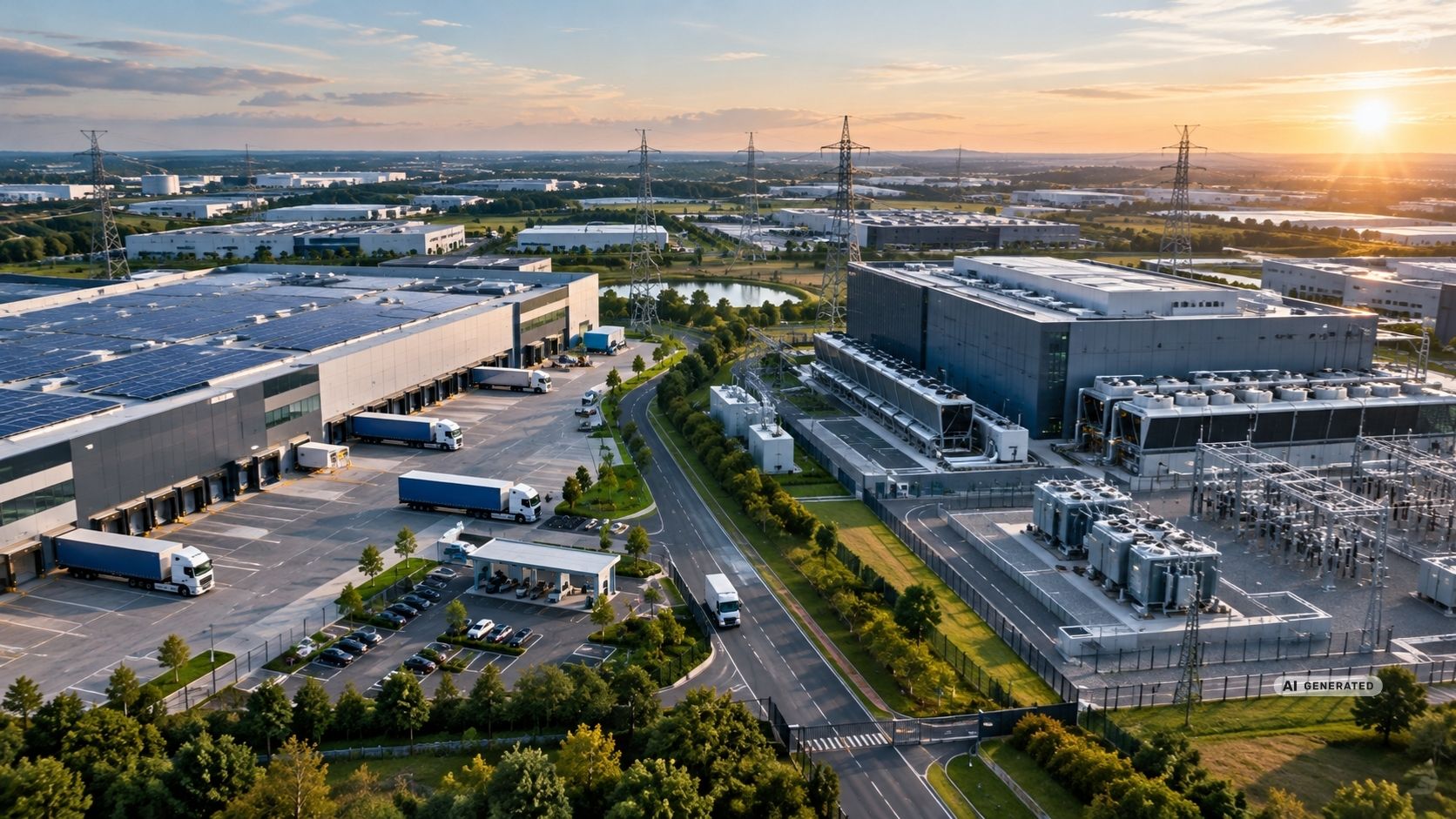
Data Centres vs. Logistics Facilities: The Race for Power and Land
Across Europe, logistics operators are competing for more than land and transport access. They increasingly need something much harder to secure: grid capacity. Data centres are intensifying that competition — and changing how logistics locations are evaluated....
Chinese companies discover Europe's logistics real estate
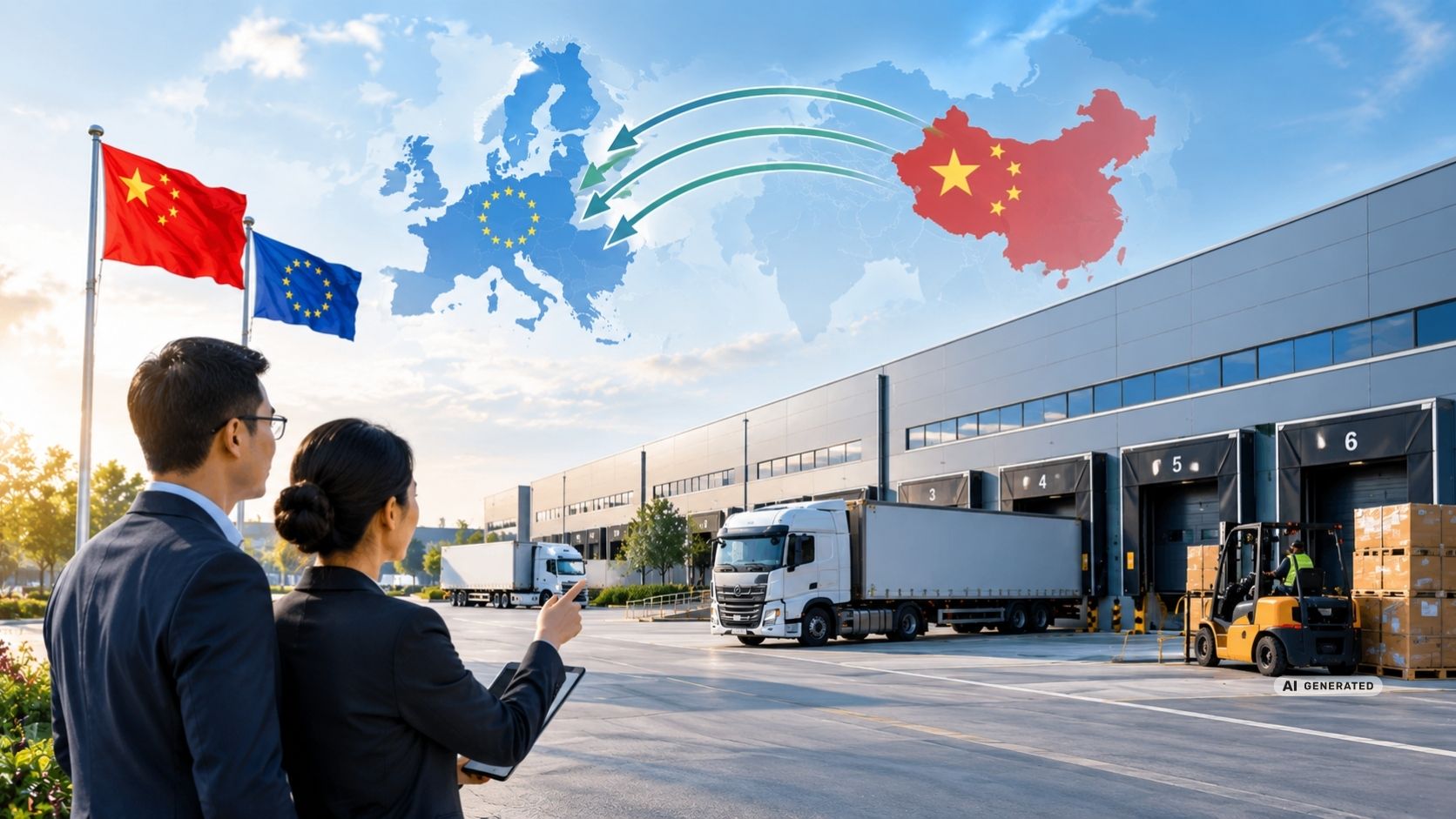
Chinese companies are becoming an increasingly visible user group in Europe's logistics real estate market. What does this mean for warehouse space, 3PL structures and the requirements for European logistics locations?...
AI Hallucinations in Logistics: When AI Plans the Wrong Delivery
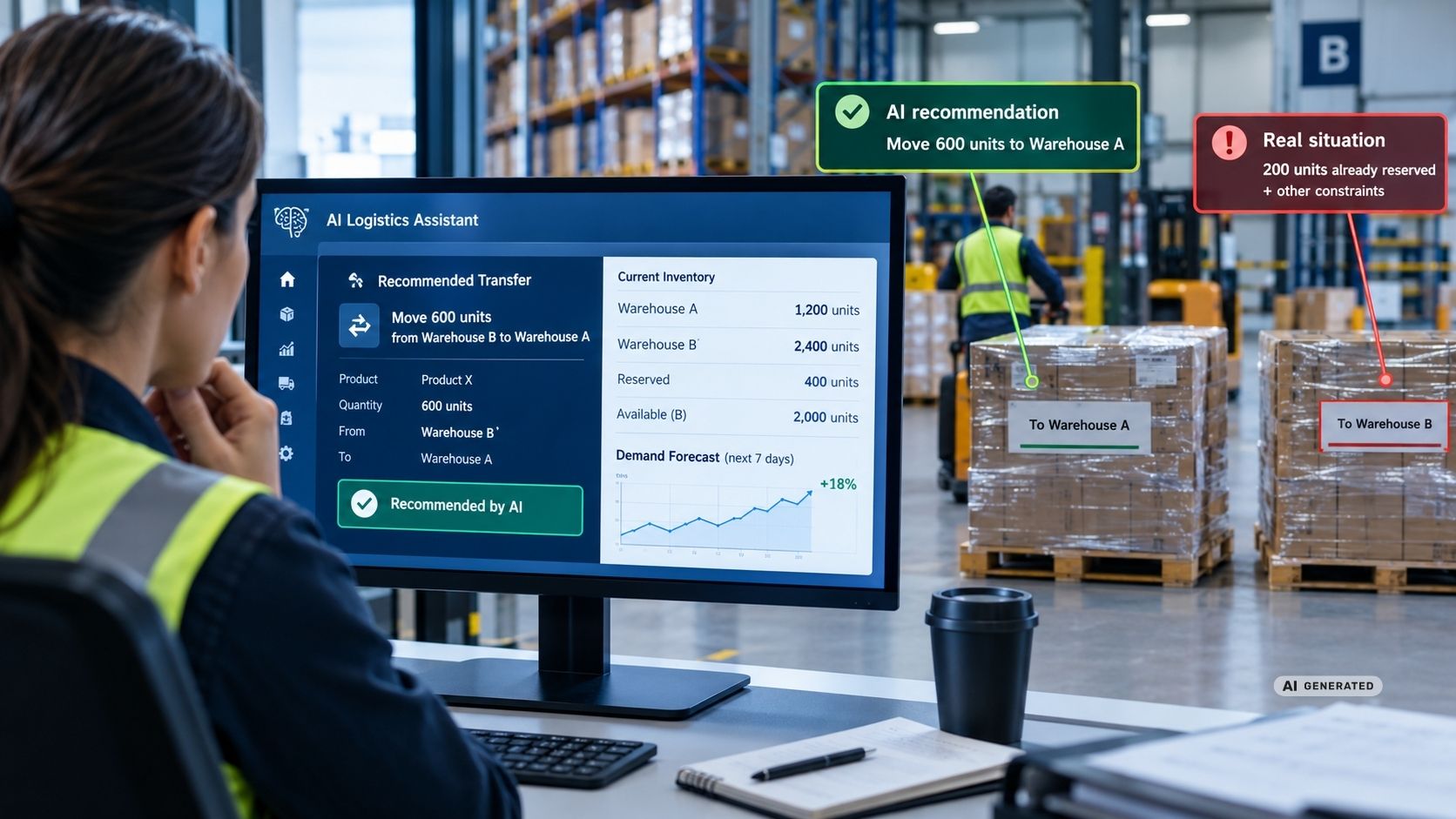
AI can analyze enormous amounts of logistics data — but it can also produce a convincing answer that is simply wrong. The critical question is not whether AI makes mistakes, but what happens when a wrong recommendation becomes an operational decision....
The Green Revolution on the Hall Roof: From Concrete Block to Ecological Power Plant?
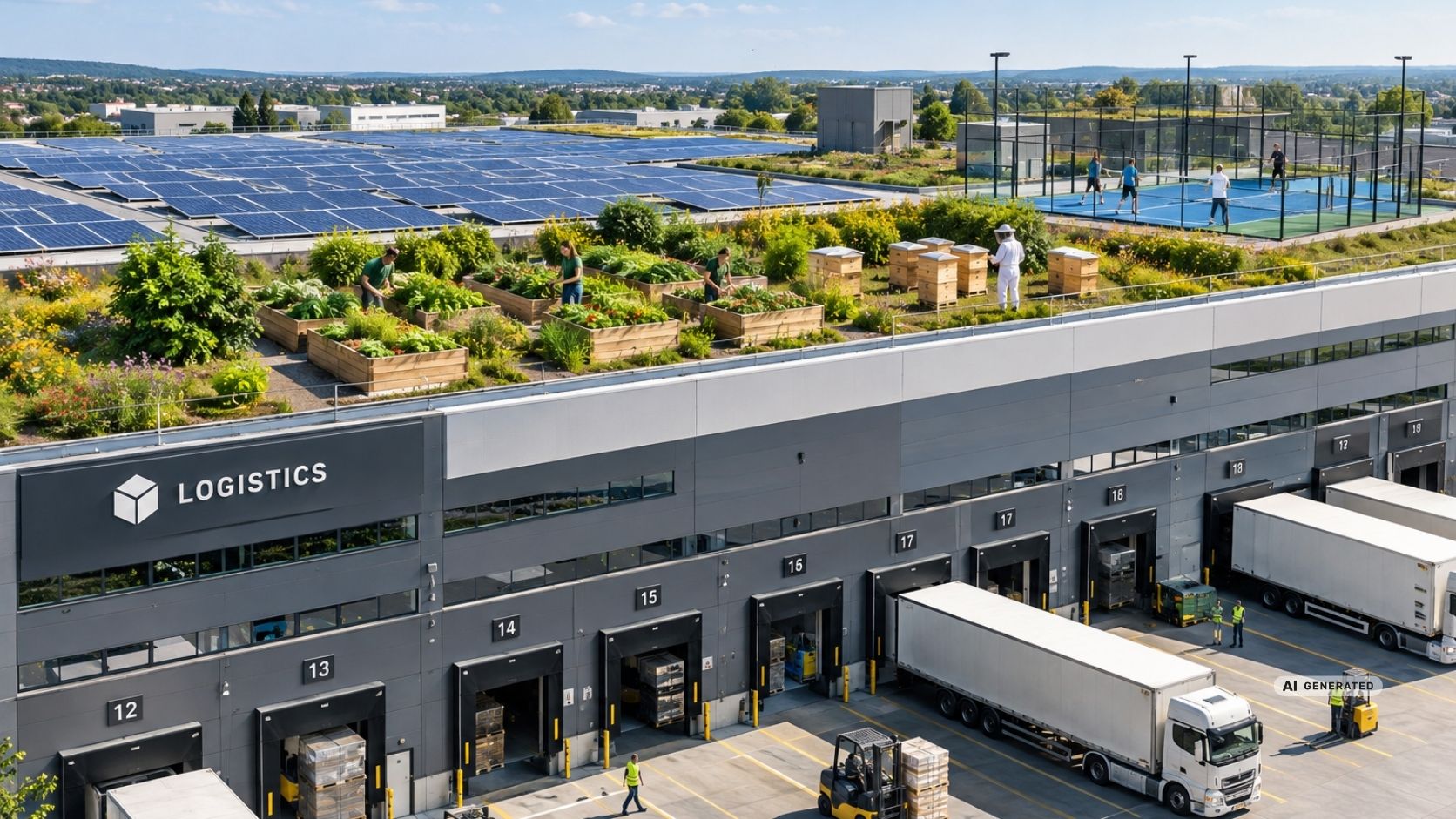
Logistics roofs can do more than PV: greening, bees, urban farming and even sports areas turn unused roof space into multifunctional rooms....