


Lean warehousing: More than just tidying up – your way to a highly efficient warehouse
Table of Contents
- What does lean warehousing really mean in logistics?
- The birth of "lean thinking": A look back
- The Lean Toolbox: The Most Important Methods at a Glance
- The importance of lean warehousing today and in the future
- Lean in a global context: Why Germans "lean" differently
- Implementation challenges: Why do projects fail?
- Conclusion: The practical utility value for your warehouse
In a globalized world where supply chains are becoming more complex and cost pressure is constantly increasing, logistics managers are looking for ways to optimize their processes. One term that comes up again and again in this context is lean warehousing. But what is really behind this management approach? Is it just another buzzword or a fundamental lever for sustainable success?
This comprehensive guide examines the topic from all angles. We explain what lean warehousing means, where the method comes from and what immense importance it has for every warehouse today and in the future. We also explore the exciting question of why the "lean idea" is lived differently in Germany than, for example, in the USA or its country of origin, Japan.
What does lean warehousing really mean in logistics?
Lean warehousing is the consistent application of lean management principles to all processes in the warehouse. The ultimate goal is to create a maximally efficient, value-adding flow of goods and information. At its core, it is about systematically identifying and eliminating waste (Japanese: muda).
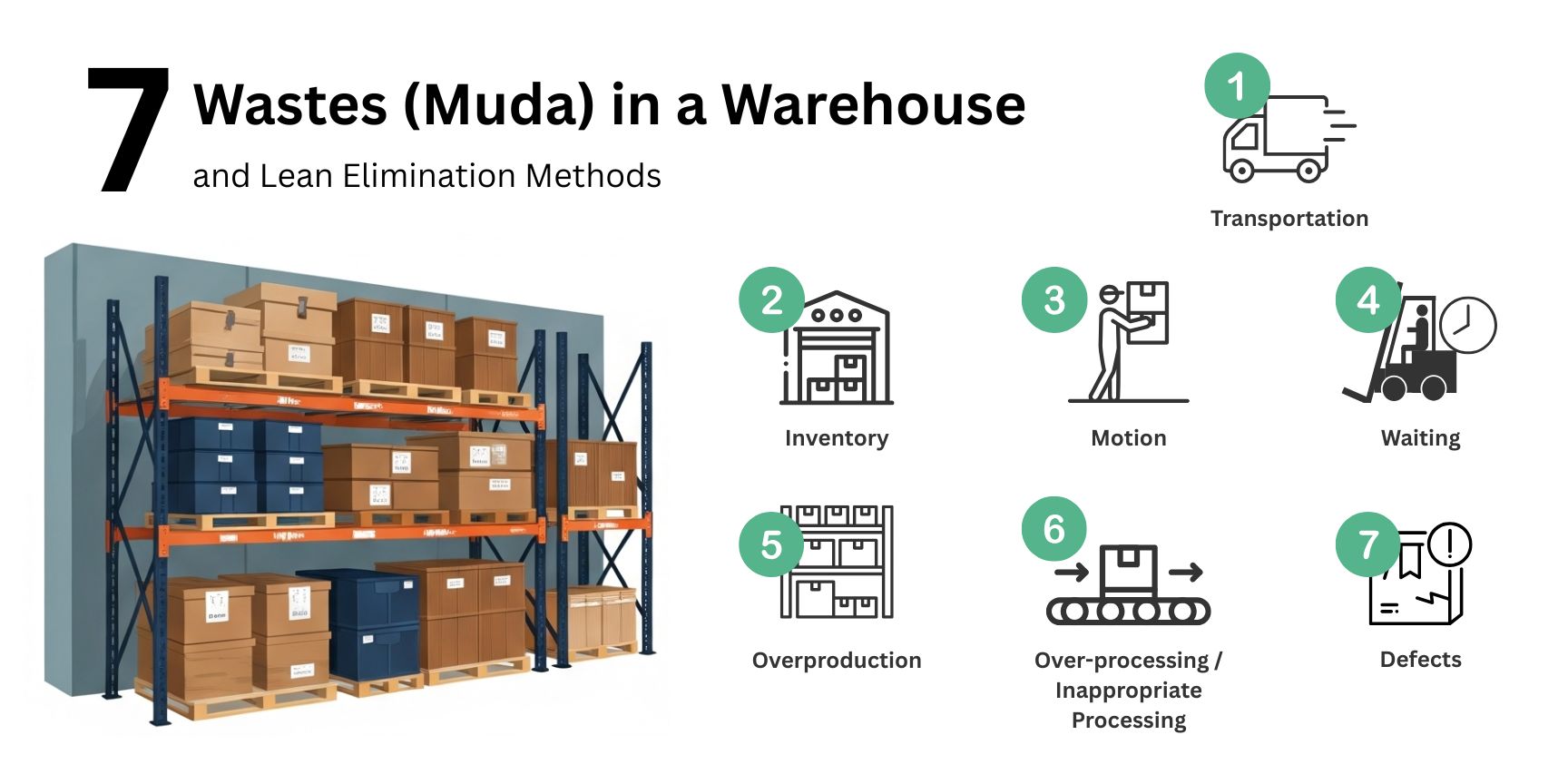
Waste in the warehouse is anything that consumes resources but does not create value for the customer. The classic Lean doctrine defines seven types of waste that can be perfectly transferred to the warehouse:
- Transport: Unnecessary journeys by forklifts, long routes during picking or multiple relocations of pallets.
- Inventory: Too much inventory that ties up capital, blocks storage space, and increases the risk of obsolescence.
- Movement: Unnecessary movements by employees, such as bending over, stretching, or searching for tools and information.
- Waiting: Waiting times of employees for transport orders, for the release of warehouse areas or for the arrival of goods.
- Overproduction: Storing goods that are not yet needed or picking orders early.
- Wrong processes/technology: Cumbersome workflows, unsuitable software or the use of the wrong warehouse technology.
- Errors/rejects: Incorrectly picked items, damage to the goods or incorrect inventory records that require expensive rework.
An often-cited eighth type of waste is the untapped potential of employees. This is exactly where lean warehousing comes in and actively incorporates the knowledge and creativity of warehouse employees into the improvement process. It's not about people working harder, but about working smarter.
The birth of "lean thinking": A look back
The roots of lean management do not lie in logistics, but in the automotive industry. After the Second World War, Toyota was faced with the challenge of producing a wide variety of products with limited resources. Under the leadership of Taiichi Ōno, the company developed the Toyota Production System (TPS). This system focused on zero waste, just-in-time production, and a culture of continuous improvement.
The approach only gained worldwide fame in 1990 through the book "The Machine That Changed the World". In it, the authors James P. Womack, Daniel T. Jones and Daniel Roos described the superiority of Toyota's "lean" system over Western mass production. This wake-up call led to a broad adoption of lean principles in the industry.
The logistics industry followed suit. They realized that the principles that made a production line more efficient could also transform a warehouse. There was a decisive milestone in Germany: In January 2010, the German Logistics Association (BVL) launched the "Lean Management in Lägern" working group. Under the scientific supervision of the Karlsruhe Institute of Technology (KIT), leading retail, industrial, and logistics companies developed a common understanding and a guideline for transferring the methodology to the warehouse environment. This marks the beginning of a structured and professionalized examination of lean warehousing in the German-speaking world.
The Lean Toolbox: The Most Important Methods at a Glance
Lean warehousing is not an abstract concept, but comes alive in everyday warehouse life through concrete methods and tools.
The 5S method: The foundation for everything else
5S is a systematic approach to organizing workplaces and environments. The goal is to create clean, safe and uncluttered workspaces where waste is immediately visible.
- Seiri (sorting): Remove anything that is not needed for the current step. (Red card actions help to mark superfluous items).
- Seiton (Systematizing): Give everything that remains a firm, ergonomically sensible and clearly marked place.
- Seiso (clean): Keep the workplace meticulously clean. Cleaning is also an inspection for damage.
- Seiketsu (Standardize): Make the rules of sorting, systematizing, and cleaning the standard for all comparable workplaces.
- Shitsuke (Self-discipline & constant improvement): Stick to the standards and make the 5S philosophy a habit.
Kaizen: The Path of Continuous Improvement
Kaizen means "change for the better" and describes an attitude in which all employees – from warehouse managers to order pickers – continuously and proactively seek out and implement small opportunities for improvement in their work area.
Kanban: Governance with vision
Kanban is a method for controlling production and logistics processes according to the "pull principle". Material is only delivered when it is actually consumed. This is often done via simple visual cues, such as an empty box or a Kanban card, which triggers a replenishment process. The result: drastically reduced inventories and avoided overproduction.
Value Stream Mapping: Making Waste Visible
In value stream mapping, the entire process – from goods receipt to shipping – is represented graphically. Not only the value-adding activities are recorded, but above all the non-value-adding ones, such as idle and waiting times. This visualization is an extremely powerful tool to uncover the biggest wastes in the overall process and to plan targeted improvement measures (in the "target state").
The importance of lean warehousing today and in the future
In today's logistics, lean warehousing is more relevant than ever. Companies that consistently implement lean principles report significant improvements. A study by the Global Scientific Journal puts the potential savings in functional costs at up to 25% and a 20% reduction in lead times. The Fraunhofer Institute for Systems and Innovation Research (ISI) found that companies with a high level of lean implementation have an average of 14% higher productivity.
The future of logistics lies in digitization and automation (Industry 4.0). Lean warehousing and Industry 4.0 are not opposites, but partners. A "lean" process is the ideal prerequisite for successful automation. Why digitize a wasteful process with expensive technology? Lean creates stable, standardized and efficient processes, which can then be taken to the next level by digital technologies such as warehouse management systems (WMS), automated guided vehicles (AGVs) or data analyses.
Lean in a global context: Why Germans "lean" differently
The introduction of Lean is not just a question of technology, but above all a question of culture. The original Japanese philosophy meets different work cultures around the world, which leads to different manifestations.
- Germany: The German work culture is often characterized by a strong hierarchy, clear structures and a high level of technical expertise. Lean is often introduced here in a very methodical and engineer-driven way. The strong role of works councils and trade unions (social partnership) means that employee orientation and the improvement of working conditions often play a central role in implementation.
- USA: In the USA, the focus is often on quick financial success. Lean is sometimes seen as a pure tool for reducing costs and increasing efficiency ("toolbox approach"), whereby philosophical depth and respect for the employee (a core aspect of TPS) can sometimes take a back seat. The level of unionisation is lower, which also influences the dynamics of the introduction.
- Japan (origin): Here, lean is deeply anchored in the corporate culture as a holistic philosophy. The focus on lifelong improvement (Kaizen), teamwork and the deep involvement of each employee is a natural part of the daily work and less a "project" that is introduced.
These differences show that there is no one right way. Successful lean warehousing means understanding the universal principles and intelligently adapting them to the respective corporate culture.
Implementation challenges: Why do projects fail?
Adopting lean warehousing is a marathon, not a sprint. The biggest hurdles are often not of a technical nature:
- Lack of commitment from leadership: If management is not fully and visibly behind the change, any initiative will fail.
- Resistance to change: Employees and middle managers are reluctant to leave well-rehearsed routines. Fears must be reduced through open communication and involvement.
- Lack of understanding: If Lean is misunderstood only as a set of tools without internalizing the underlying philosophy, successes remain superficial.
- Impatience: Real, sustainable improvements take time. Those who expect fast, unrealistic results often give up too soon.
Conclusion: The practical utility value for your warehouse
Lean warehousing is a powerful approach to making your warehouse fit for the future. It's about creating a culture where every employee is motivated to recognize waste and improve processes. Start small, perhaps with a 5S workshop in a pilot area. Use value stream mapping to identify your biggest problems. And above all, involve your employees from the very beginning. Because they are the true experts of their processes.
The question is not whether lean warehousing is worthwhile for you, but when you start to turn untapped potential into hard cash, higher customer satisfaction and more motivated employees.
Latest Blog Posts
Stay up to date with the newest trends, insights, and tips in warehouse and logistics. Our latest articles help you navigate the industry with confidence.
Data Centres vs. Logistics Facilities: The Race for Power and Land
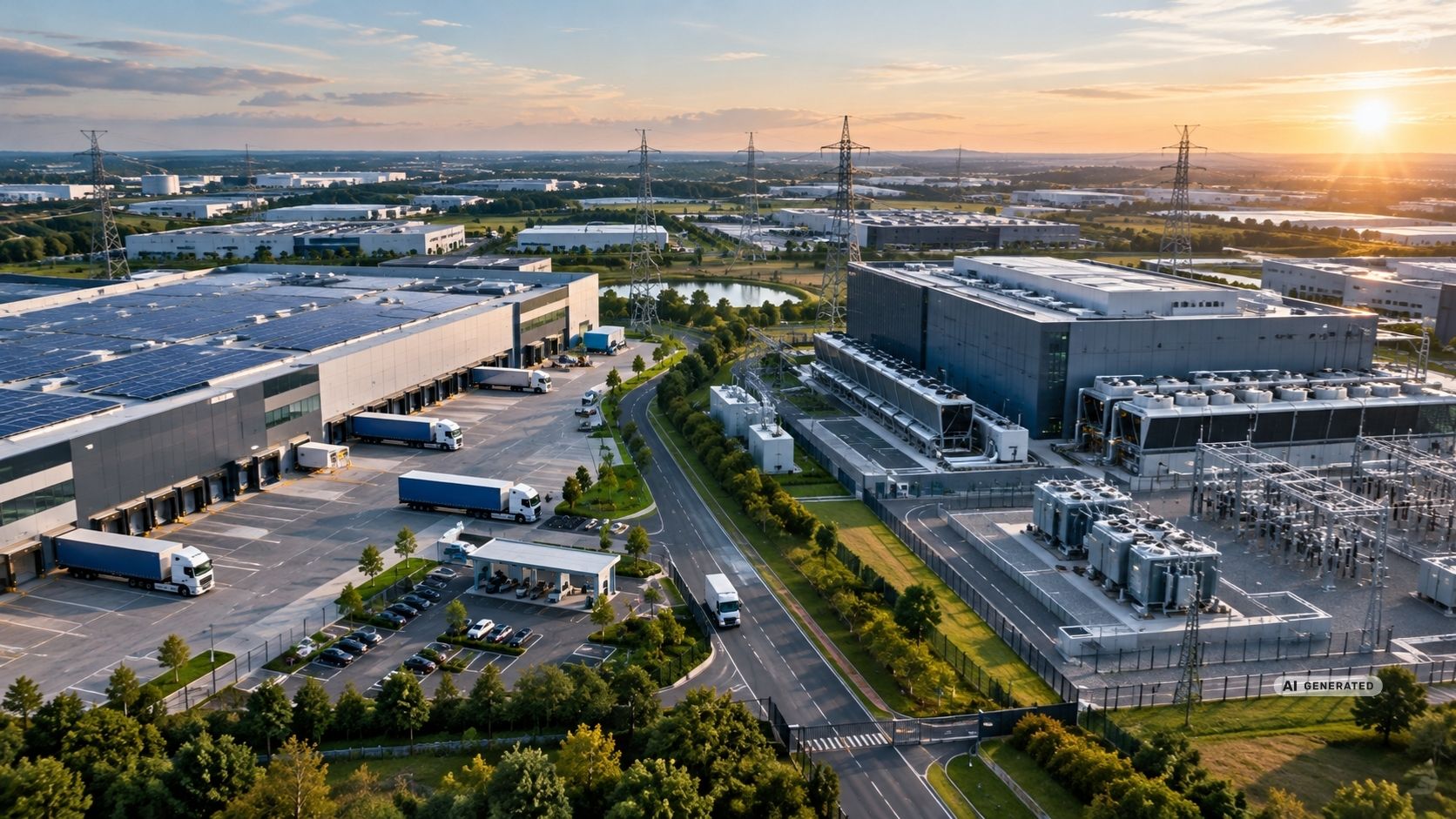
Across Europe, logistics operators are competing for more than land and transport access. They increasingly need something much harder to secure: grid capacity. Data centres are intensifying that competition — and changing how logistics locations are evaluated....
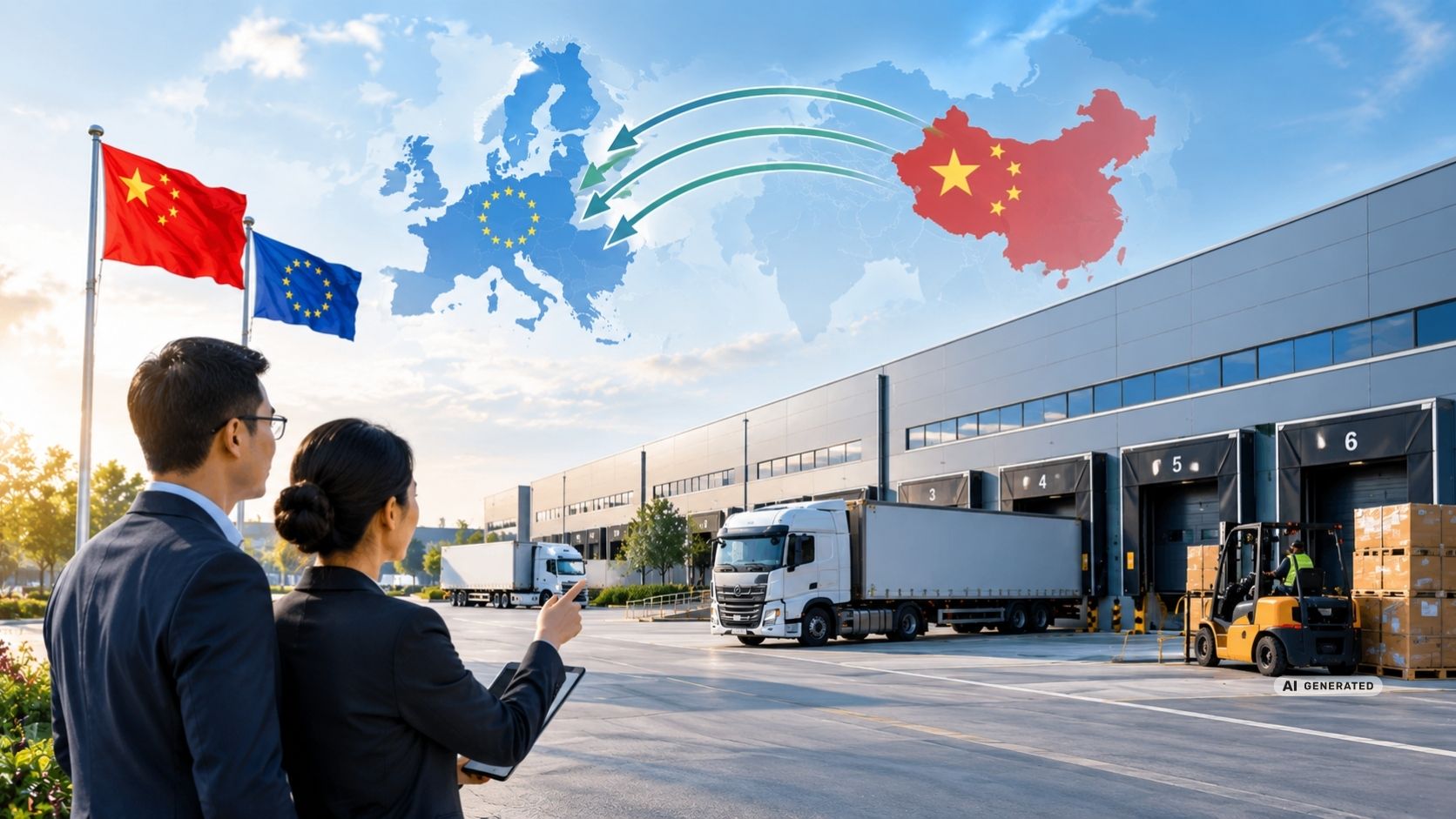
Chinese companies discover Europe's logistics real estate
Chinese companies are becoming an increasingly visible user group in Europe's logistics real estate market. What does this mean for warehouse space, 3PL structures and the requirements for European logistics locations?...
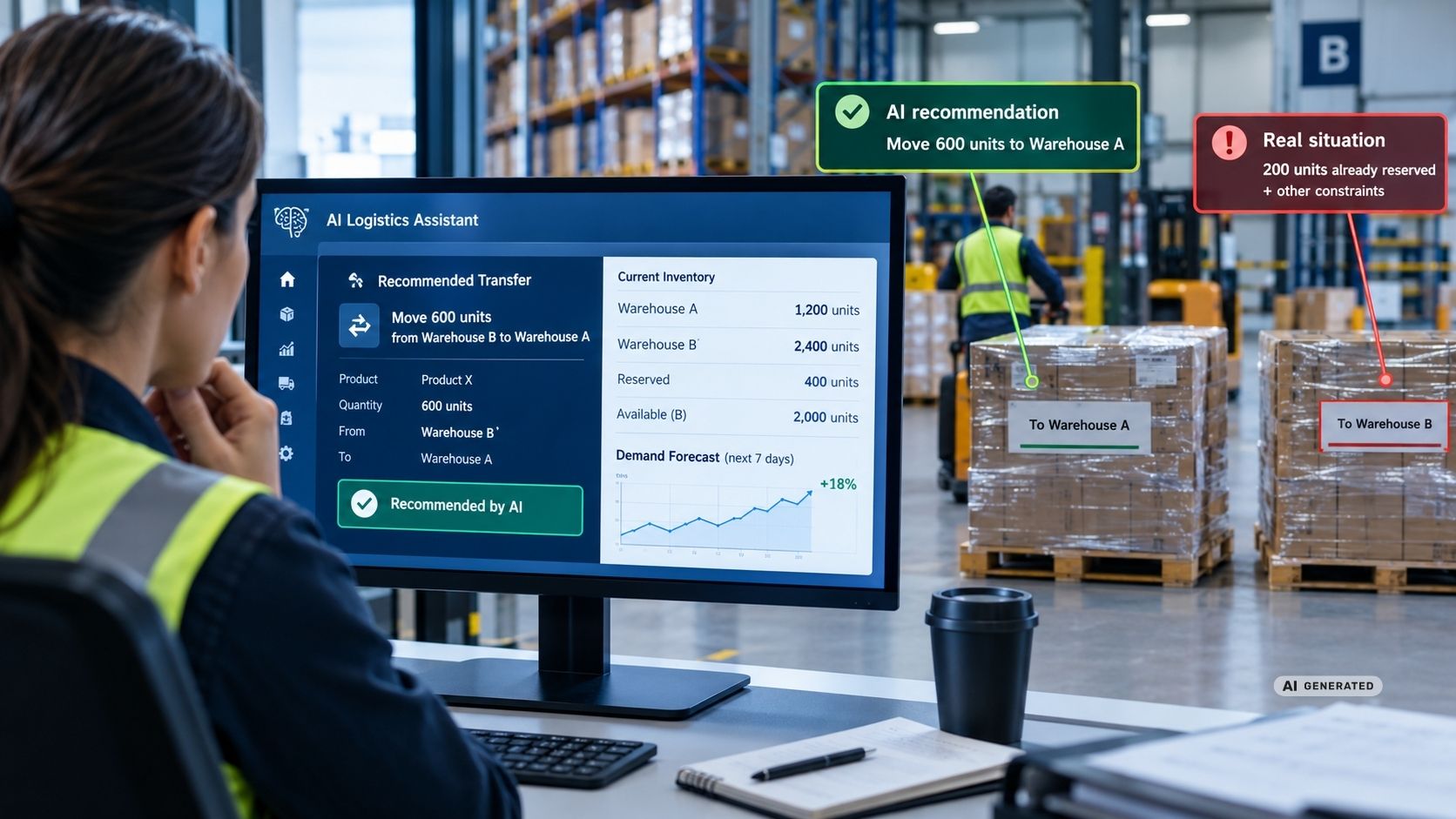
AI Hallucinations in Logistics: When AI Plans the Wrong Delivery
AI can analyze enormous amounts of logistics data — but it can also produce a convincing answer that is simply wrong. The critical question is not whether AI makes mistakes, but what happens when a wrong recommendation becomes an operational decision....
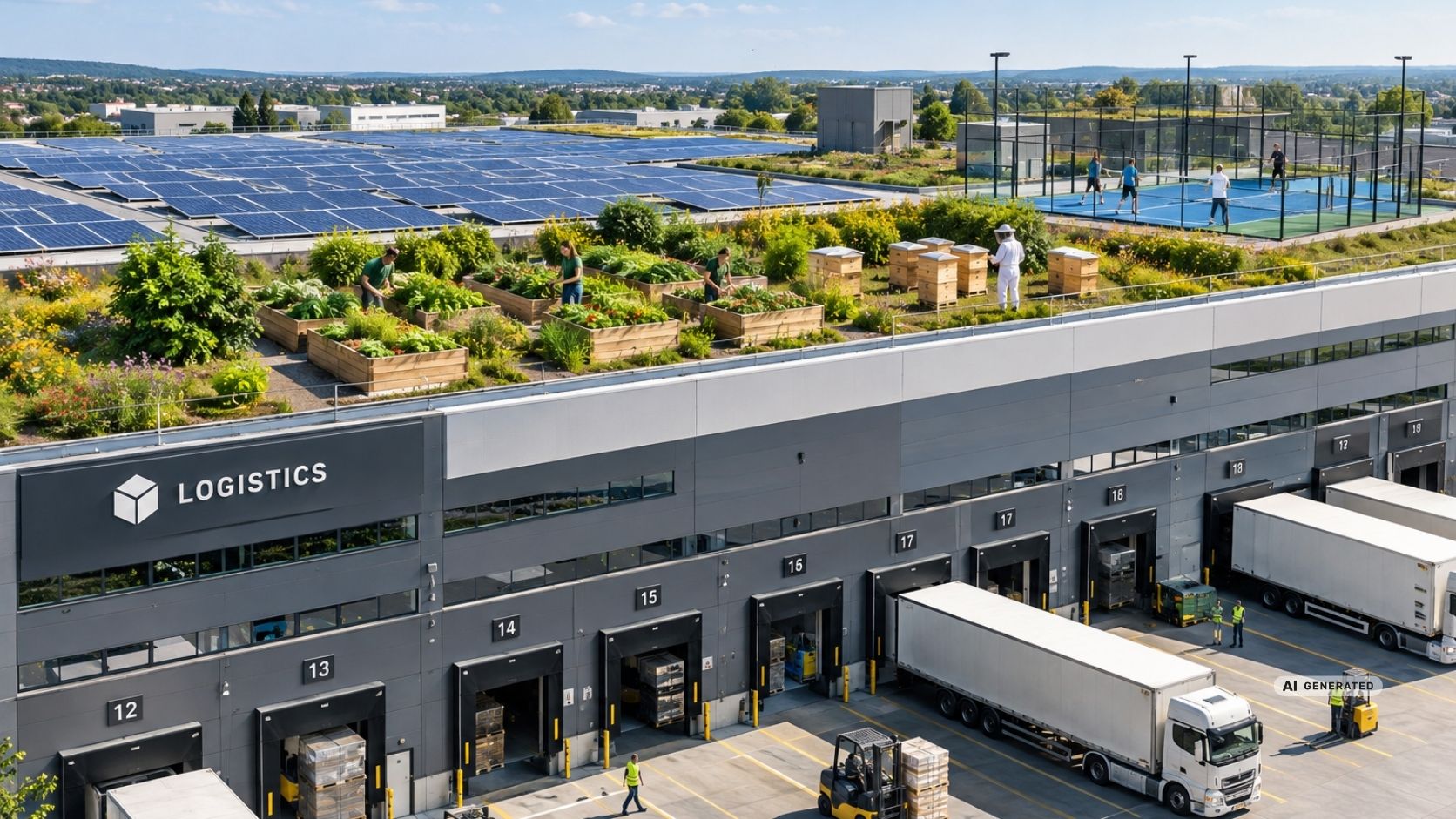
The Green Revolution on the Hall Roof: From Concrete Block to Ecological Power Plant?
Logistics roofs can do more than PV: greening, bees, urban farming and even sports areas turn unused roof space into multifunctional rooms....