



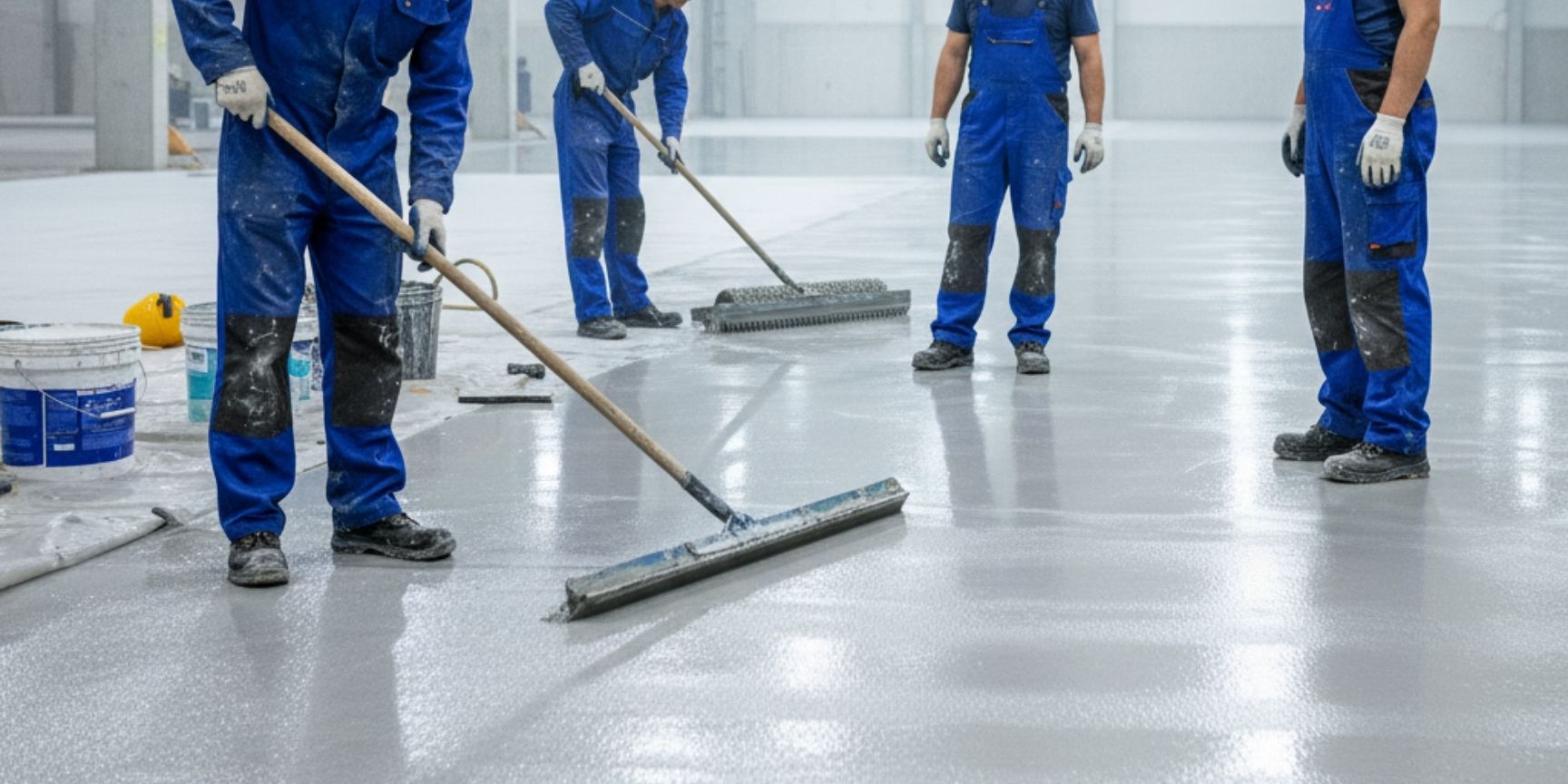
The invisible hero of logistics: Why the hall floor determines success or failure
Table of Contents
- More than just concrete: What types of floors are there and what are their advantages and disadvantages?
- The crucial question of load-bearing capacity: What does your floor have to withstand?
- Maintenance, renovation, cost-effectiveness: When is a repair worthwhile?
- The green foundation: Sustainability in the hall floor
- Innovations that bring the floor to life
- Logistics hotspots: Where the soils have to work hardest
- Global perspectives: Is there "one" standard for hall flooring?
- Conclusion: Soil as a strategic investment
Imagine a state-of-the-art logistics hall: autonomous vehicles glide through the aisles, robotic arms pick goods with precision, and thousands of packages are loaded per hour. An impressive picture of efficiency. But what is all this technology moving to? What is the basis for each individual process step? It is the hall floor – probably the most underestimated and at the same time most critical component of any logistics property.
A faulty or unsuitable floor can dramatically reduce efficiency, create safety risks and cause immense costs. But what makes a good hall floor? What are the differences and what do planners and operators really have to pay attention to? This post takes a deep dive and highlights everything you need to know about the foundation of your logistical success.
More than just concrete: What types of floors are there and what are their advantages and disadvantages?
Choosing the right floor is not a blanket decision. It depends on the type of use, the load and the budget. The most common variants can be categorized as follows:
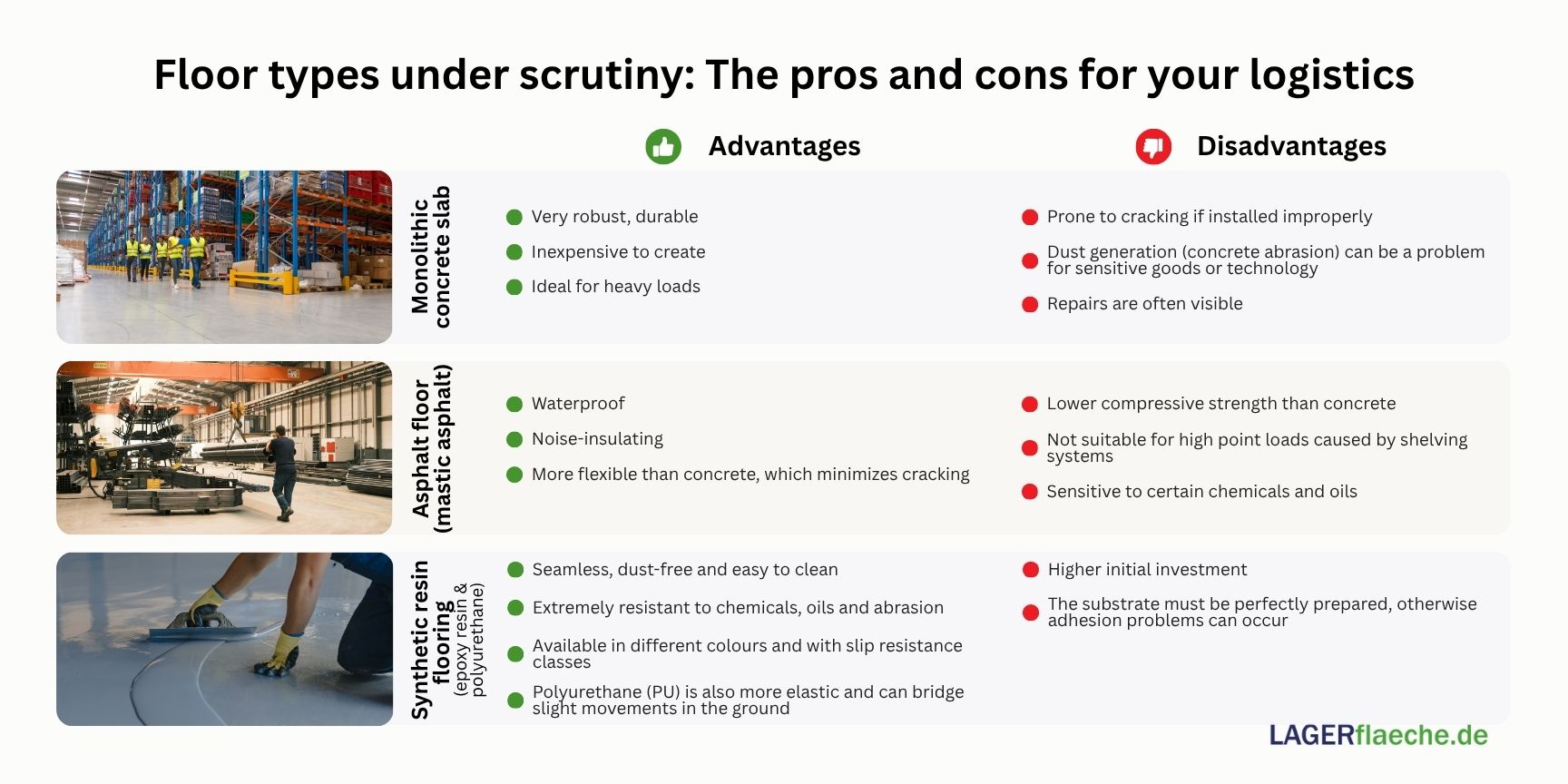
Monolithic concrete slab
This is the classic. The soil is created in one pour and the surface is smoothed and compacted by machine.
- Advantages: Very robust, durable and comparatively inexpensive to create. Ideal for heavy loads.
- Cons: Prone to cracking if installed improperly. Dust generation (concrete abrasion) can be a problem for sensitive goods or technology. Repairs are often visible.
Asphalt floor (mastic asphalt)
Often found in older buildings or for special requirements.
- Advantages: Waterproof, noise-insulating and more flexible than concrete, which minimizes cracking.
- Disadvantages: Lower compressive strength than concrete, not suitable for high point loads caused by shelving systems. Sensitive to certain chemicals and oils.
Synthetic resin flooring (epoxy resin & polyurethane)
These are coatings that are applied to an existing substrate (usually concrete).
- Advantages: Seamless, dust-free, extremely resistant to chemicals, oils and abrasion. Easy to clean and available in different colours and with slip resistance classes. Polyurethane (PU) is also more elastic and can bridge slight movements in the ground.
- Cons: Higher initial investment. The substrate must be perfectly prepared, otherwise adhesion problems can occur.
Have you ever wondered how many kilometers a forklift travels per year and the immense strain that puts on the ground? The choice of the right surface determines whether this load passes without a trace or leads to expensive damage.
The crucial question of load-bearing capacity: What does your floor have to withstand?
The load-bearing capacity is the most critical technical property of a hall floor. It determines which loads the soil can safely absorb and dissipate into the ground without being damaged. A distinction is made between:
- Surface loads: Evenly distributed loads, e.g. due to stored pallets (kN/m2).
- Point loads: Concentrated loads emanating from the supports of the racking systems.
- Dynamic loads: The load caused by moving industrial trucks such as forklifts. The total weight of the truck plus its load is concentrated on the small contact patches of the wheels and generates enormous forces when braking or accelerating.
In Germany, DIN 18202 "Tolerances in building construction" is an essential standard that defines the flatness of the floor. Why is flatness so important? Even the smallest unevenness can lead to dangerous fluctuations in high-rack forklifts at high lifting heights. According to a study by TÜV Rheinland, defective floors are one of the most common causes of accidents with industrial trucks. The floor slab itself is often dimensioned according to Eurocode 2 (DIN EN 1992-1-1) for reinforced concrete structures.
Maintenance, renovation, cost-effectiveness: When is a repair worthwhile?
No floor lasts forever. Cracks, spalling or extended joints are the most common types of damage. The question is: Repair or completely renew?
- Care: Daily cleaning with suitable machines is essential. It removes not only dirt, but also abrasive dust, which attacks the surface like sandpaper and accelerates wear.
- Repair: Smaller cracks can be pressed with special casting resin to prevent further tearing. Spalled areas are chiseled out and filled with fast-curing repair mortar.
- Renovation: In the case of large-scale damage or if the requirements change (e.g. the use of heavier forklifts), a complete renovation is often necessary. Here, the old floor can be sanded down and a new synthetic resin layer applied.
Cost-effectiveness analysis: A repair of joint damage can cost between 50 and 150 euros per meter. Sounds like a lot, but it's nothing compared to the costs incurred by damaged forklift tires, accidents or reduced driving speed. Proactive maintenance is almost always cheaper than repairing consequential damage.
The green foundation: Sustainability in the hall floor
Sustainability is more than just a buzzword. In the case of industrial floors, this means:
- Materials: Use of cement-reduced concretes, recycled aggregates or water-based and solvent-free synthetic resins (low VOC emissions).
- Longevity: The most sustainable floor is the one that lasts the longest. High-quality installation and good maintenance significantly extend the life cycle.
- Bright surfaces: A light, reflective floor can reduce the required illuminance in the hall by up to 30% and thus save energy costs (source: Fraunhofer Institute for Building Physics).
Innovations that bring the floor to life
The hall floor is evolving from a passive surface to an active, intelligent system. What are the most exciting innovations?
- Smart floors: Sensors integrated into the floor can detect the weight and position of goods or vehicles in real time. This enables seamless tracking and automated inventory.
- Energy-absorbing floors: Special coatings can reduce the rolling resistance of industrial trucks, which can reduce the energy consumption of the vehicle fleet.
- Self-healing concrete: Still under research, but promising: concrete to which bacteria are mixed that produce limestone when they come into contact with water and thus close small cracks independently.
Logistics hotspots: Where the soils have to work hardest
The global flow of goods is concentrated in a few, highly specialized locations. The demands on the soils there are extreme.
- Germany: As a transit country in the heart of Europe, the most important hubs are located around the major conurbations and transport hubs: Hamburg (port), Duisburg (largest inland port in the world), Frankfurt am Main (airport) and the Ruhr area.
- Europe: The so-called "Blue Banana" region, which stretches from Manchester to Milan, is the logistical backbone. The ports of Rotterdam (Netherlands) and Antwerp (Belgium) are by far the largest and most important gateways to the world. More than 700 million tonnes of freight are handled here every year (source: Eurostat), which places the highest demands on the ground infrastructure of the connected distribution centres.
- Worldwide: The global champions are the mega-ports in Asia. Shanghai, Singapore and Ningbo-Zhoushan in China dominate the global ranking. In the U.S., the ports of Los Angeles/Long Beach are the primary gateway for trade with Asia. In these regions, the construction boom for logistics properties continues unabated, and the floors must be designed for maximum efficiency and handling speeds.
Global perspectives: Is there "one" standard for hall flooring?
No, the differences are significant and often culturally or historically.
- Germany vs. UK: In Germany, the aforementioned DIN 18202 is the benchmark for flatness. In the United Kingdom, on the other hand, the TR34 standard of the Concrete Society dominates. This classifies floors in detail according to their intended use (e.g. for narrow-aisle forklifts), which enables very application-specific planning.
- USA: The standards of the American Concrete Institute (ACI), especially the "F-Number System" (FF for flatness, FL for straightness), are widely used here. The focus is often more on fast and cost-effective construction, which sometimes leads to different floor designs than in Germany, where durability is often a priority.
- China: In China's huge new logistics parks, Western standards are often adopted to meet the requirements of international corporations. However, the immense speed of construction sometimes leads to compromises in quality assurance, which increases the importance of soil surveys on site.
These differences arise from deviating standards, available materials, climatic conditions and the prevailing construction and logistics culture. A global company must take these local conditions into account when renting or building a hall.
Conclusion: Soil as a strategic investment
The hall floor is much more than just a gray surface. It is the foundation that determines the speed, safety and efficiency of your entire logistics operations. An initial higher investment in a high-quality floor tailored to specific needs pays off many times over in terms of lower operating costs, less damage to vehicles and goods, and higher employee satisfaction. Those who save here lay the foundation for future problems.
Have you ever looked at the floors in your logistics halls from this strategic point of view? It could be worth it.
Latest Blog Posts
Stay up to date with the newest trends, insights, and tips in warehouse and logistics. Our latest articles help you navigate the industry with confidence.
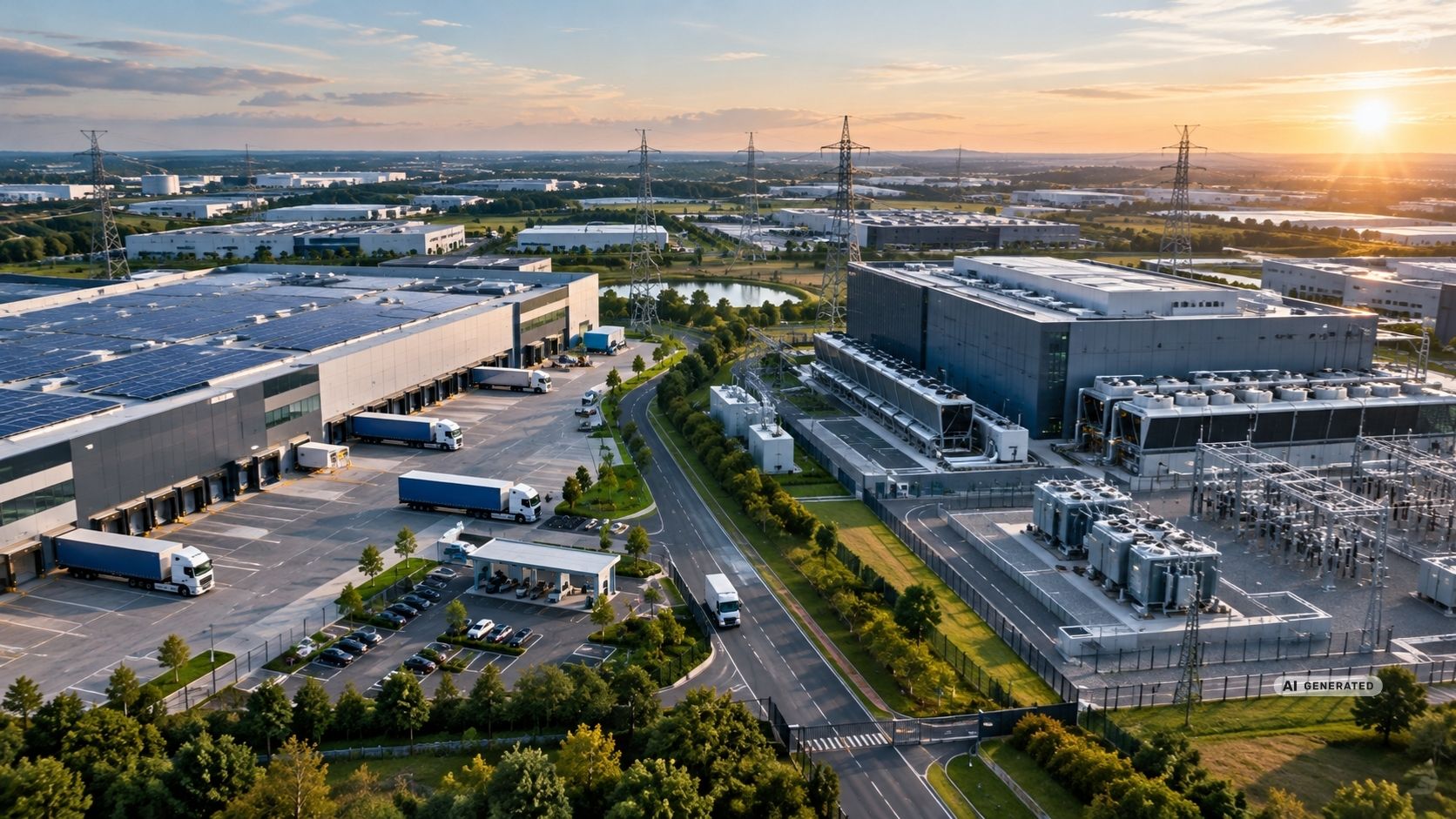
Data Centres vs. Logistics Facilities: The Race for Power and Land
Across Europe, logistics operators are competing for more than land and transport access. They increasingly need something much harder to secure: grid capacity. Data centres are intensifying that competition — and changing how logistics locations are evaluated....

Chinese companies discover Europe's logistics real estate
Chinese companies are becoming an increasingly visible user group in Europe's logistics real estate market. What does this mean for warehouse space, 3PL structures and the requirements for European logistics locations?...
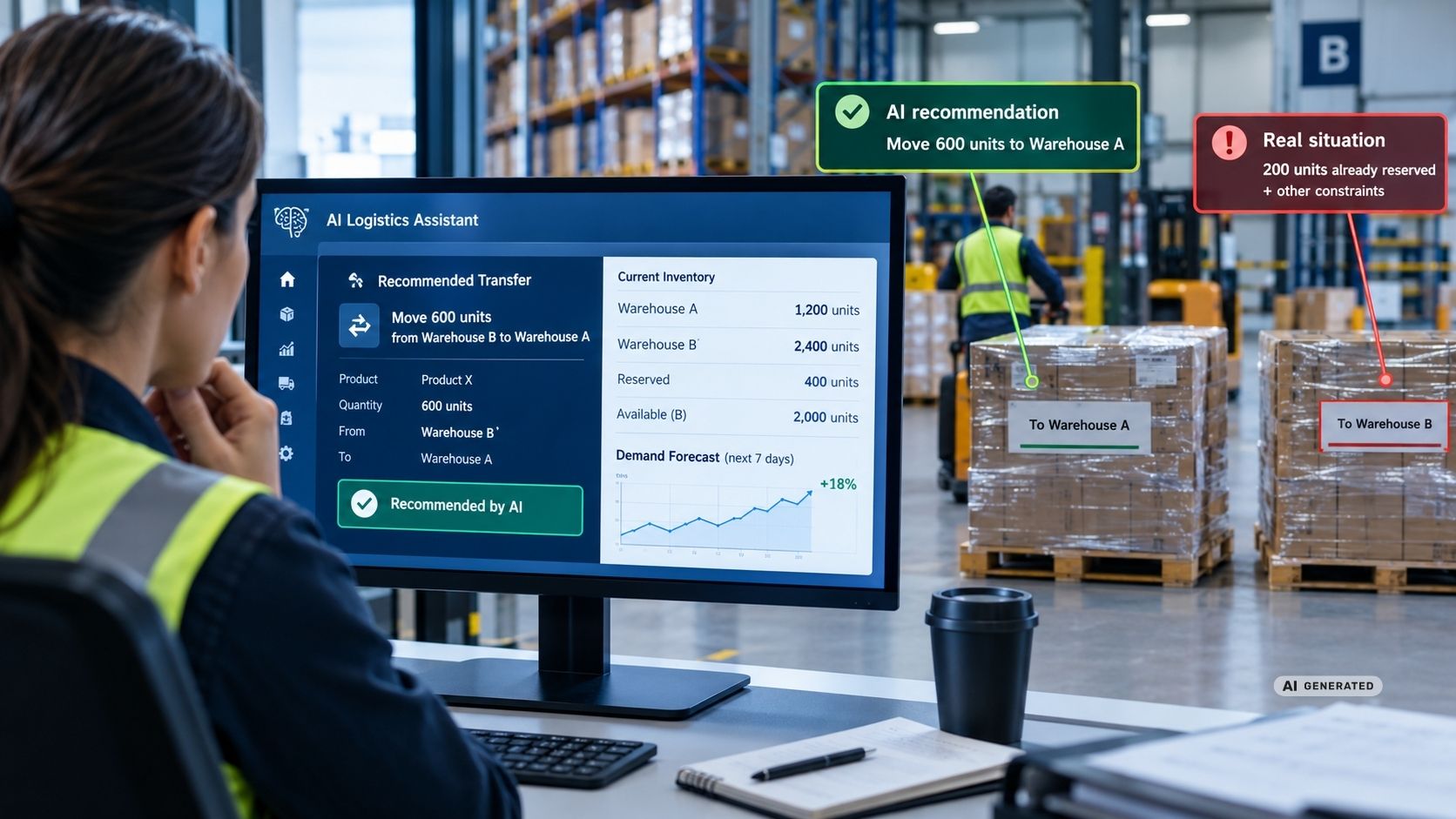
AI Hallucinations in Logistics: When AI Plans the Wrong Delivery
AI can analyze enormous amounts of logistics data — but it can also produce a convincing answer that is simply wrong. The critical question is not whether AI makes mistakes, but what happens when a wrong recommendation becomes an operational decision....
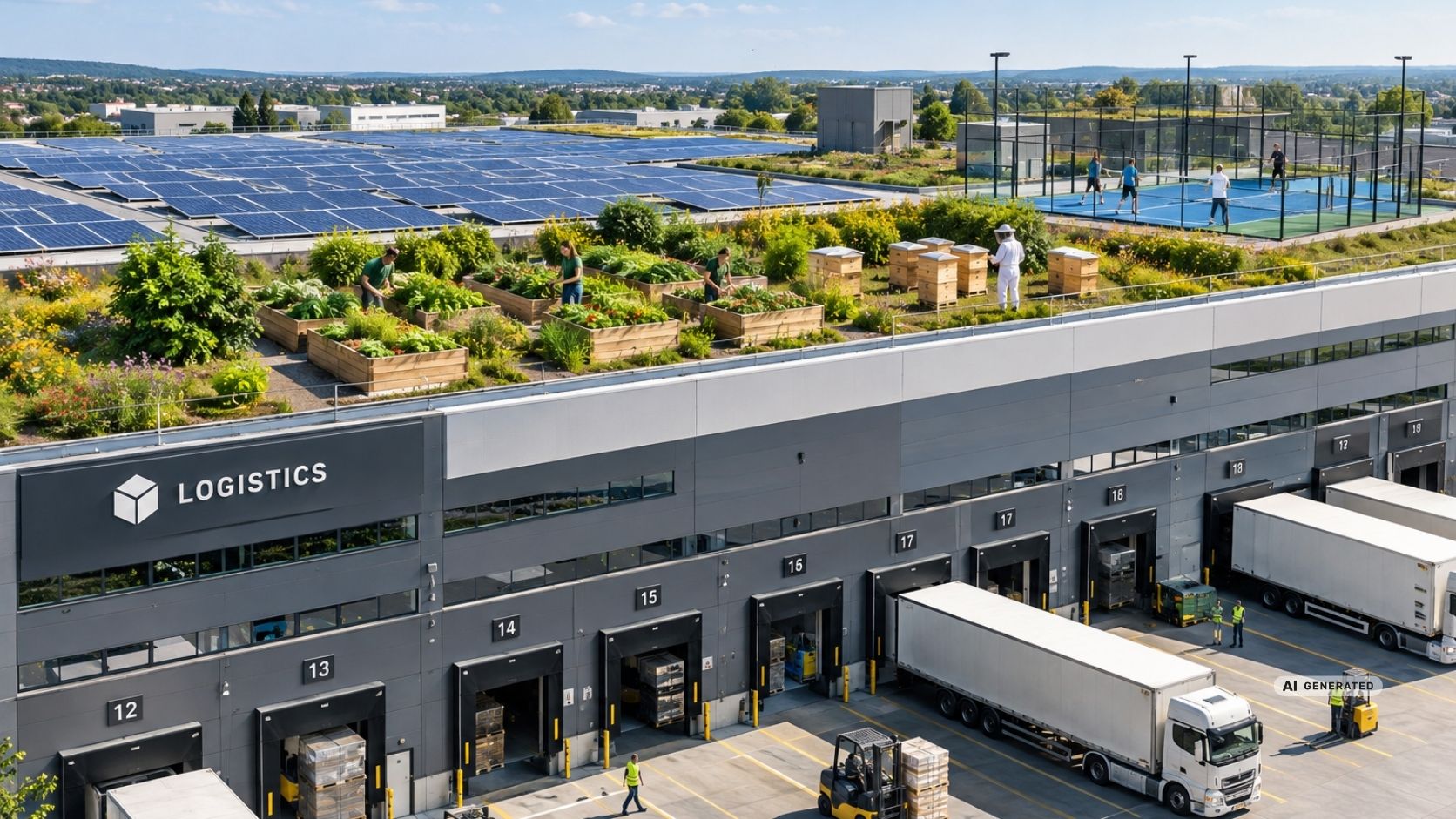
The Green Revolution on the Hall Roof: From Concrete Block to Ecological Power Plant?
Logistics roofs can do more than PV: greening, bees, urban farming and even sports areas turn unused roof space into multifunctional rooms....