



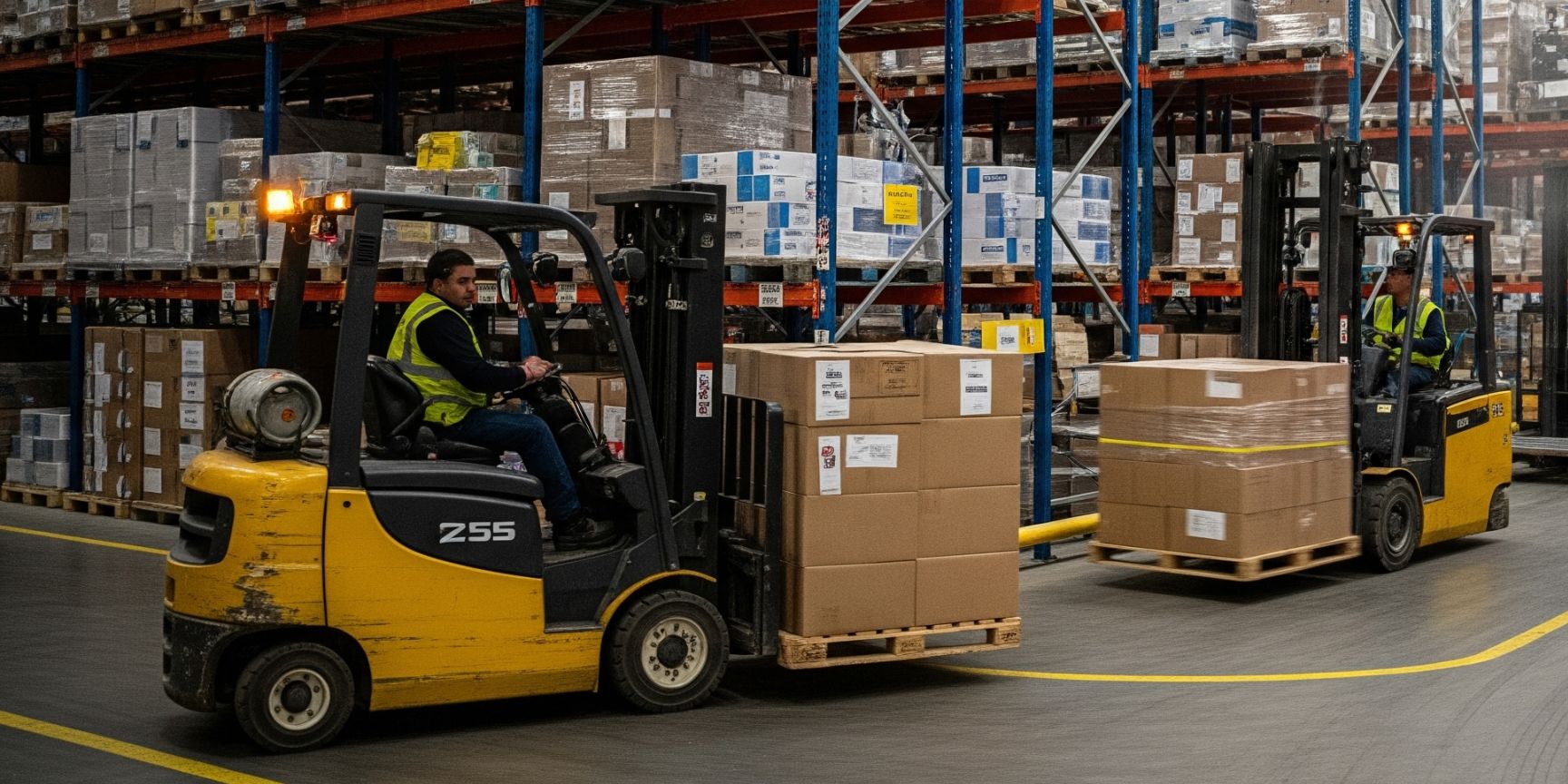
Industrial Trucks: The Backbone of Modern Logistics – An In-Depth Analysis
Table of Contents
- From handcart to high-tech equipment: The evolution of industrial trucks
- The variety of industrial trucks: an overview of the most important types
- The perfect match: Which industrial truck for which warehouse?
- Industry-specific requirements: More than just lifting and driving
- The future is autonomous: revolution in the warehouse
- International differences: Not every forklift fits everywhere
- Conclusion: More than just a means of transport
The world of logistics is constantly changing. Goods are produced, stored, picked and shipped around the clock. But what makes this tireless flow of goods possible? A crucial, but often overlooked, everyday hero is the industrial truck. From simple pallet trucks to fully autonomous high-rack trucks, these vehicles are the indispensable backbone of every warehouse and distribution center. But what types are there exactly? Which vehicle is suitable for which task and which industry? And where is the journey going in the future?
This comprehensive blog text dives deep into the world of industrial trucks. We shed light on the different types, their specific areas of application and the crucial role they play in logistics. We take a look back at its history, analyse current facts and figures and dare to look ahead to the exciting future of intralogistics. A must for professionals, but also for anyone who wants to understand the complex and fascinating world of logistics.
From handcart to high-tech equipment: The evolution of industrial trucks
Have you ever wondered how goods were moved before the invention of the forklift? The history of industrial trucks is a fascinating journey from pure muscle power to technological sophistication. For a long time, sack trucks and simple levers were the only tools. The real revolution began in the USA at the beginning of the 20th century. The Clark Equipment Company is considered one of the pioneers that developed the "Tructractor" in 1917, a forerunner of today's forklift truck for the internal transport of sand and castings. The need to move heavy loads more efficiently and with fewer personnel was the primary driver of this development.
The basic consideration behind this was to optimize workflows, reduce heavy physical labor and accelerate material handling – principles that still apply today. Milestones such as the introduction of the first stacker truck by Fenwick in the 1920s or the development of the first electric forklift truck by STILL in 1946 mark decisive steps in this evolution.
The variety of industrial trucks: an overview of the most important types
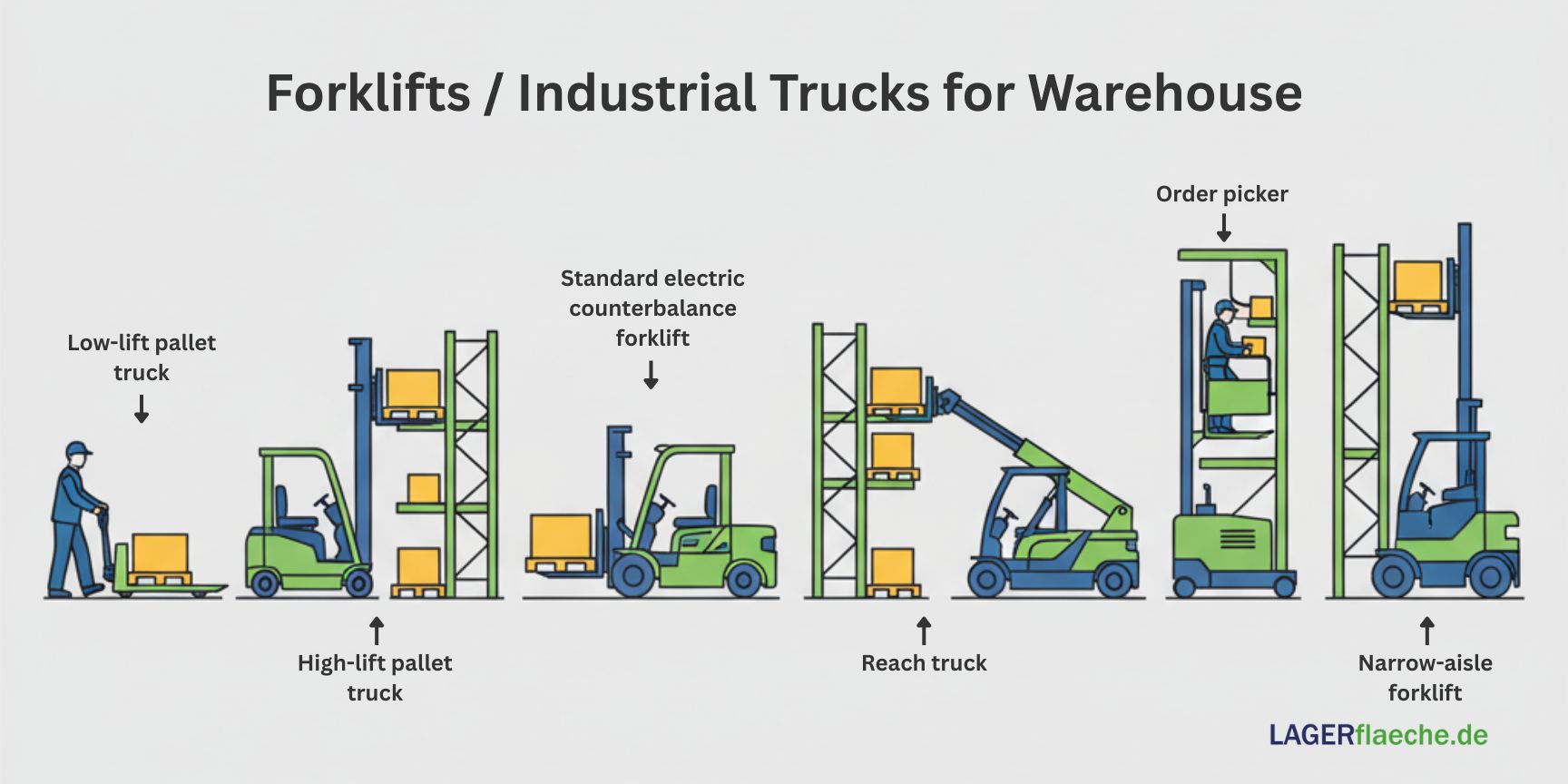
The world of industrial trucks is far more diverse than the well-known forklift truck. Depending on the requirements, storage environment and goods to be transported, a wide variety of equipment is used. In accordance with VDI guideline 3586, industrial trucks are systematically classified. Here is a practical overview:
- Low and high lift trucks: These machines are the workhorses for horizontal transport over short distances and for loading and unloading trucks. While pallet trucks ("ants") only lift loads close to the ground, pallet trucks can also lift pallets into racks up to medium heights. They are often pedestrian-driven, but there are also variants with a driver's cab.
- Counterbalance forklift (front loader): The classic. Thanks to a heavy counterweight in the rear, these forklifts can take up high loads freely in front of the front wheels. They are available with electric, diesel or gas drive, which makes them extremely versatile for indoor and outdoor use.
- Reach trucks: These specialists are designed for high-bay warehouses. Your lift mast can be pushed forward to pick up a pallet and then pulled back again. This makes them extremely manoeuvrable and allows them to work in narrow aisles with a high lifting height at the same time.
- Order pickers: As the name suggests, these vehicles are optimized for the compilation of goods orders (order picking). The operator can move his platform to the level of the shelf goods in order to remove items directly.
- Narrow-aisle trucks (man-up/man-down): These machines are the first choice for very high racks in extremely narrow aisles. They are often rail-guided or controlled by induction to ensure maximum safety and efficiency.
- Special vehicles: These include four-way forklifts for long goods, sideloaders, reach stackers for ports and terminals, and rough-terrain forklifts for uneven terrain.
The perfect match: Which industrial truck for which warehouse?
Choosing the right material handling equipment is critical to the efficiency of a warehouse. Incorrectly selected vehicles lead to loss of time, safety risks and unnecessary costs. But how do you find the optimal device?
- Block storage: Here, pallets are stacked directly next to each other and on top of each other. Classic counterbalance forklifts are often the most economical solution here.
- Pallet rack storage: The most common storage system. Depending on the aisle width and shelf height, counterbalance forklifts (wide aisles), reach trucks (narrower aisles) or, in the case of very high racks, narrow-aisle forklifts are used here. The aisle width, i.e. the space that a forklift needs for storage and retrieval, is a decisive key figure here.
- High-bay warehouse: From a height of about 10 meters, one speaks of high racks. This is where reach and narrow-aisle forklifts are in their element. Automated storage and retrieval machines (SRMs) are often the next level of efficiency here.
- Picking warehouse: In areas with many small orders and high picking frequency, manoeuvrable order pickers are indispensable to minimise travel times for employees.
Industry-specific requirements: More than just lifting and driving
Every logistics industry has its own specific requirements for industrial trucks. A standard forklift is often not enough here.
- Food & pharmaceutical industry: Hygiene is the top priority here. Industrial trucks must be easy to clean, and stainless steel components are often used. In cold storage operations, electronics, hydraulics and batteries must be designed for low temperatures. According to standards such as DIN EN 1672-2, materials must be food-safe.
- Chemical industry & hazardous areas (ATEX): The strictest safety regulations apply here. Industrial trucks must be explosion-proof (ATEX-certified according to EU Directive 2014/34/EU). This means that any ignition sources, such as sparks from electrical components or hot surfaces, are avoided by design.
- Automotive industry: Reliability is everything in the synchronized production of automotive manufacturers. Tugger trains (tractors with several trailers) are often used here to deliver parts "just-in-time" to the production lines. These processes are increasingly being automated with automated guided vehicles (AGVs).
- Retail & e-commerce: The booming online trade places immense demands on warehouse logistics. The rapid processing of countless small orders requires a large fleet of flexible and efficient vehicles, especially order pickers and pallet trucks. The global forklift market was valued at USD 79.22 billion in 2024 and is expected to grow to USD 180.47 billion by 2032, highlighting the increasing demand (source: Fortune Business Insights).
The future is autonomous: revolution in the warehouse
Perhaps the biggest upheaval in the history of industrial trucks is yet to come: automation. Automated guided vehicles (AGVs) and autonomous mobile robots (AMRs) are no longer dreams of the future, but are already a reality in many modern warehouses. What developments can be expected here?
- Autonomous forklifts and pallet trucks: These vehicles navigate independently through the warehouse using lasers, vision cameras or magnetic tapes, transport pallets and can even load and unload shelves. The autonomous forklift market is expected to grow from USD 2.86 billion in 2024 to USD 5.14 billion in 2029 (source: Mordor Intelligence).
- Swarm intelligence: Modern fleet management systems control entire fleets of autonomous and manned vehicles. They optimize routes in real time, avoid traffic jams and ensure maximum utilization. In this process, the human being becomes the "conductor" of the system rather than the driver.
- Artificial intelligence (AI): AI-based systems will be able to make even smarter decisions in the future. They learn from experience, identify obstacles and people even more reliably, and proactively optimize the entire material flow.
- Sustainability: In addition to automation, sustainability is a key driver. Electric drives, especially with modern lithium-ion technology, are already widely used today. In the future, fuel cell technology (hydrogen) will also play a more important role in further reducing CO2 emissions.
International differences: Not every forklift fits everywhere
Although the basic vehicle types are similar around the world, there are significant differences in regulations and usage, especially when compared between Europe (and Germany) and the US.
- Safety regulations: In Germany and the EU, the safety requirements are regulated in great detail by the employers' liability insurance associations (DGUV Regulation 68) and European standards (e.g. FEM 4.004 for the annual safety inspection). In the USA, the Occupational Safety and Health Administration (OSHA) provides the framework with standard 29 CFR 1910.178. While the goals (protection of employees) are identical, the technical requirements and documentation obligations may differ in detail.
- Driver training: The training to become a forklift driver is highly regulated in Germany (DGUV principle 308-001). A forklift licence obtained abroad is not automatically recognised; additional training or a new examination is often required to meet German standards.
- Market preferences: While Europe has a high share of electric trucks due to stricter emissions regulations and a focus on indoor use, IC trucks play an even greater role in certain segments and regions in the United States.
Thanks to its strong industry and central location in Europe, Germany is one of the leading logistics nations, which is also reflected in the World Bank's Logistics Performance Index, where Germany regularly occupies top positions. This is also driving demand for state-of-the-art and efficient industrial trucks in Germany.
Conclusion: More than just a means of transport
Industrial trucks are much more than simple means of transport. They are highly specialized tools that form the heart of modern intralogistics. Their right selection, efficient use and openness to future technologies such as automation are decisive success factors for every company in production and trade. The development does not stand still: Vehicles are becoming more intelligent, safer and more sustainable. Those who recognize and use the potential of these technological helpers will secure a decisive competitive advantage in the globalized world of goods.
Latest Blog Posts
Stay up to date with the newest trends, insights, and tips in warehouse and logistics. Our latest articles help you navigate the industry with confidence.
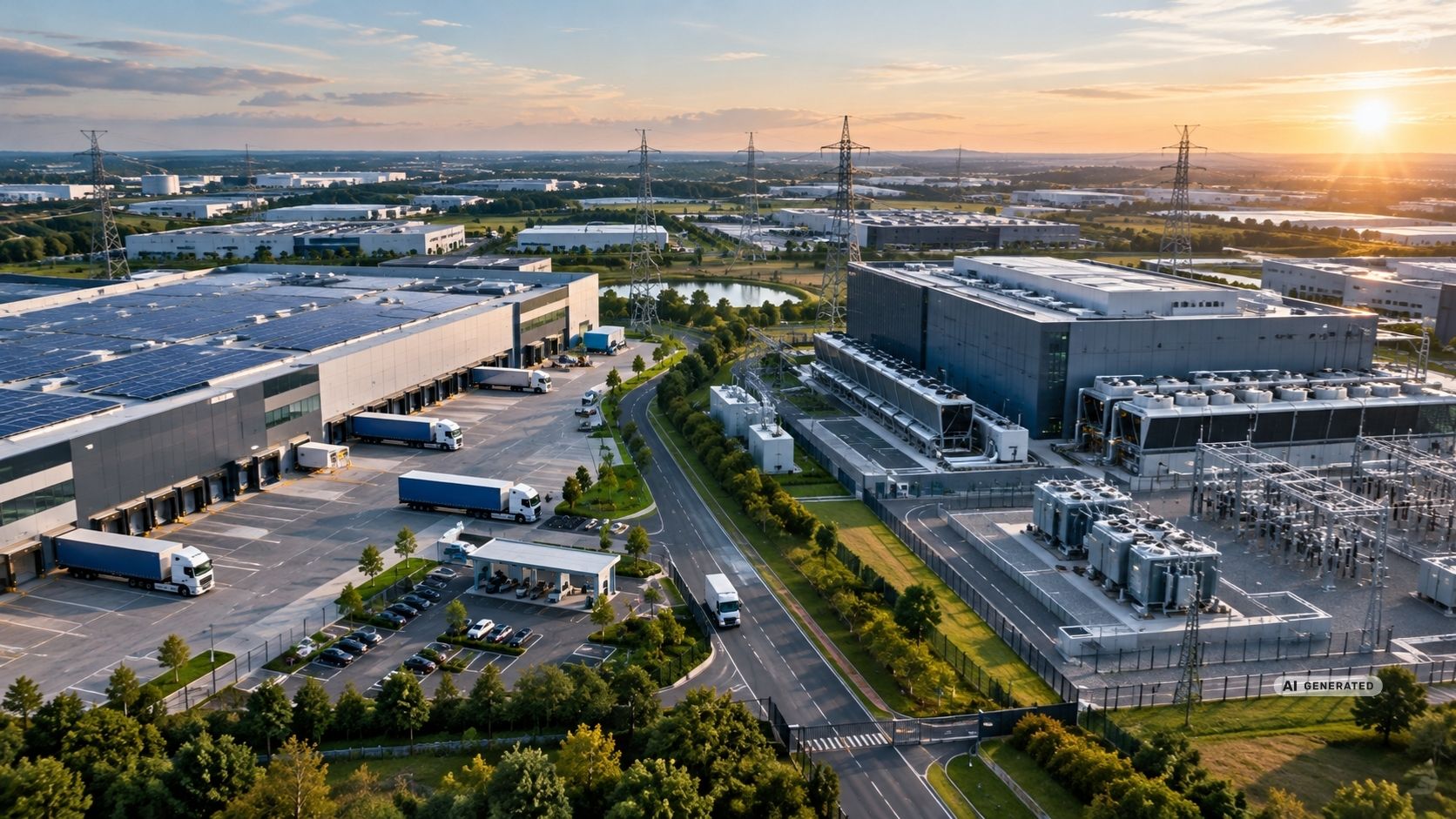
Data Centres vs. Logistics Facilities: The Race for Power and Land
Across Europe, logistics operators are competing for more than land and transport access. They increasingly need something much harder to secure: grid capacity. Data centres are intensifying that competition — and changing how logistics locations are evaluated....
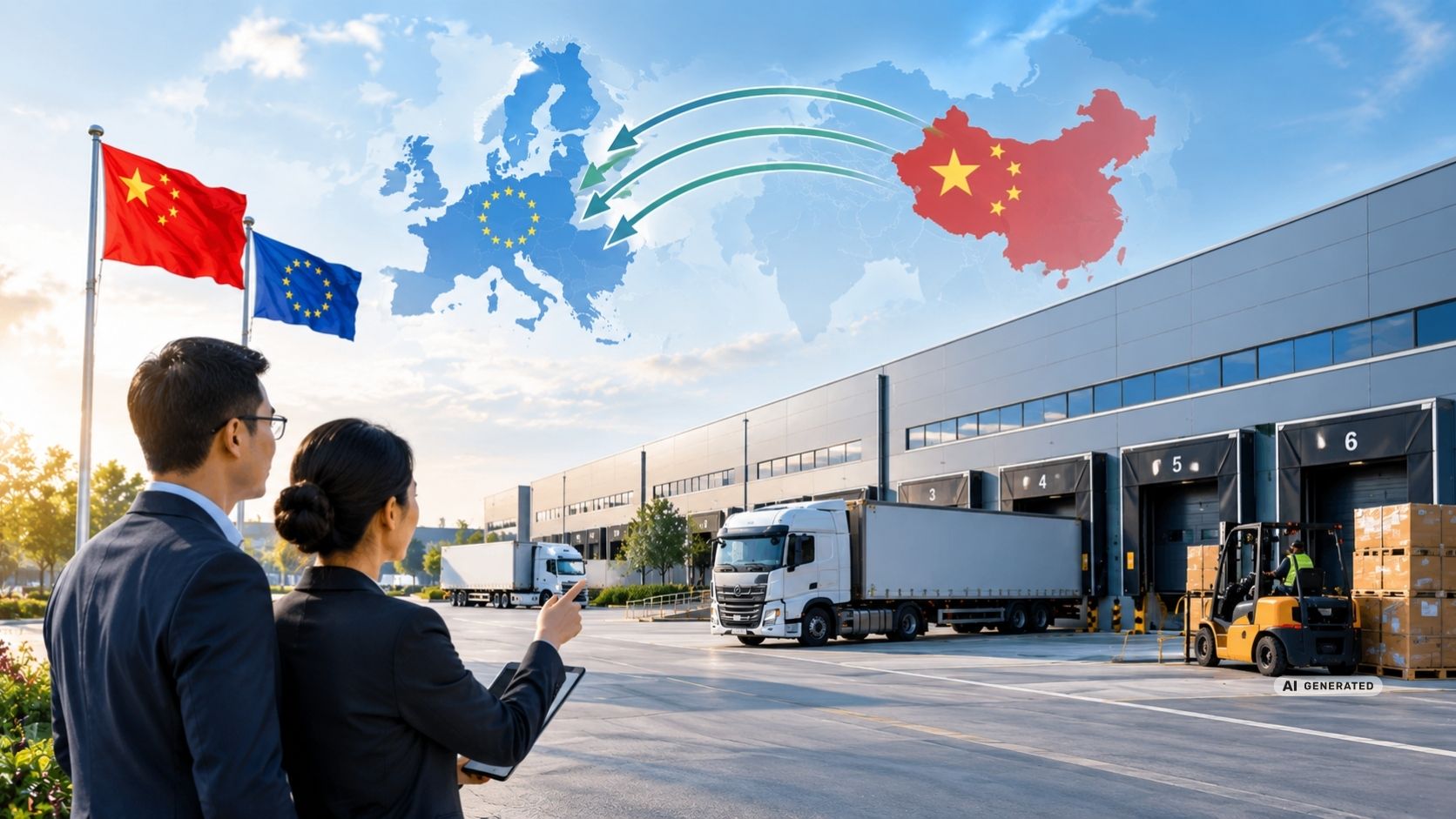
Chinese companies discover Europe's logistics real estate
Chinese companies are becoming an increasingly visible user group in Europe's logistics real estate market. What does this mean for warehouse space, 3PL structures and the requirements for European logistics locations?...
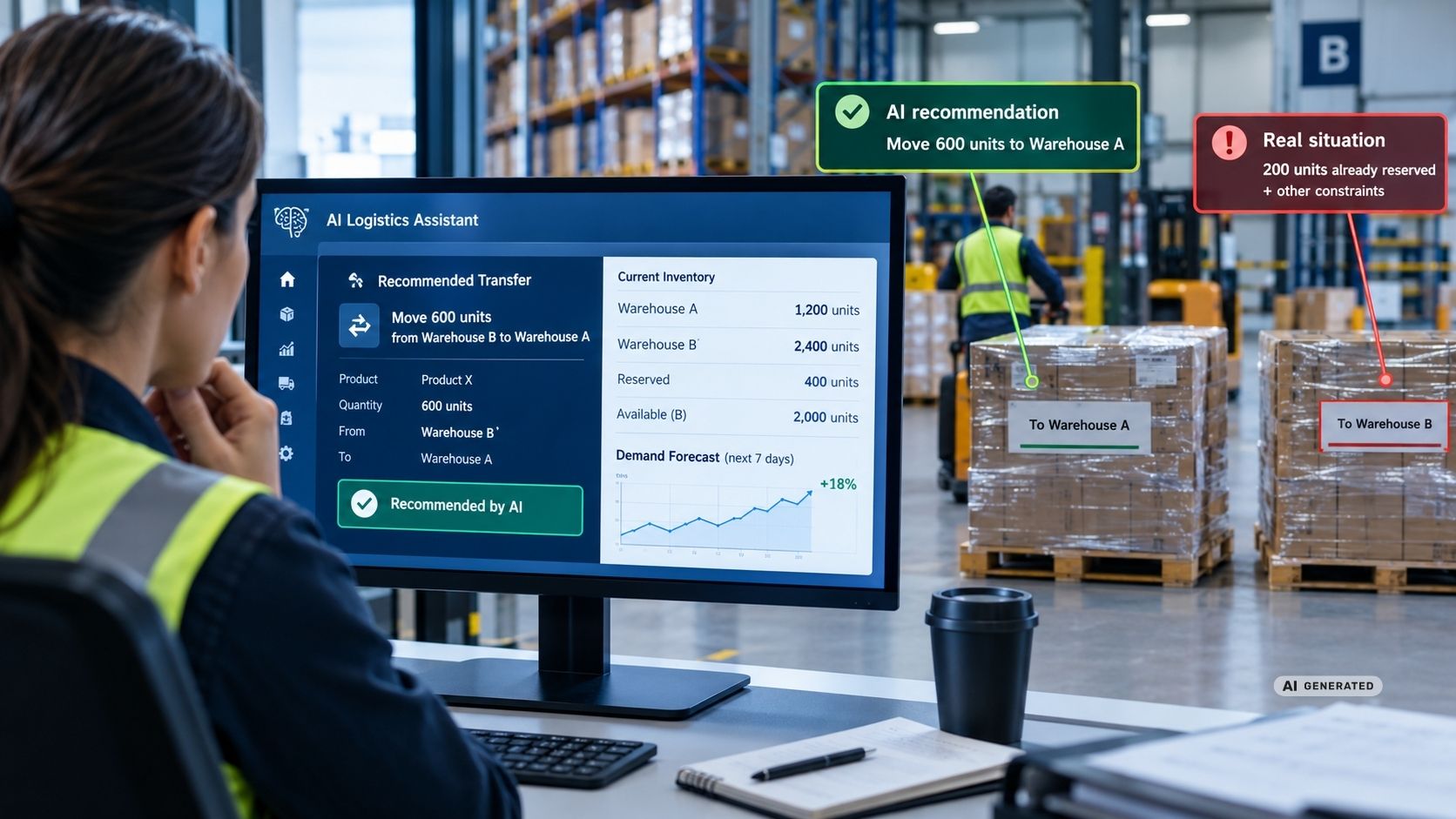
AI Hallucinations in Logistics: When AI Plans the Wrong Delivery
AI can analyze enormous amounts of logistics data — but it can also produce a convincing answer that is simply wrong. The critical question is not whether AI makes mistakes, but what happens when a wrong recommendation becomes an operational decision....
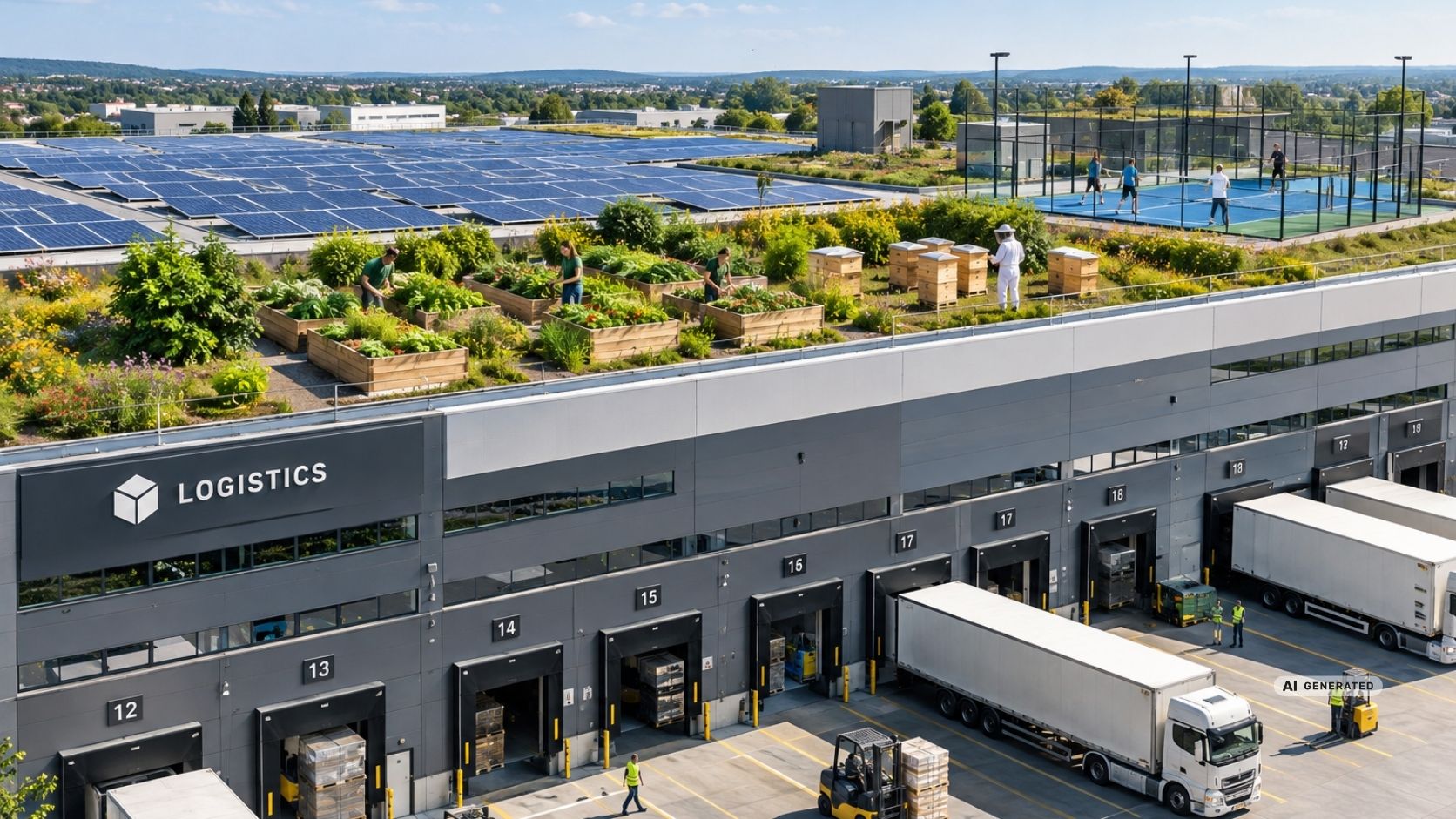
The Green Revolution on the Hall Roof: From Concrete Block to Ecological Power Plant?
Logistics roofs can do more than PV: greening, bees, urban farming and even sports areas turn unused roof space into multifunctional rooms....