


The New Gold of Logistics - How Life Science Will Transform the Global Supply Chain by 2026
Table of Contents
- The Status Quo 2026: A Market of Superlatives
- Evolution of Warehouse Logistics: Quality Assurance instead of Square Meters
- Contract Logistics: From Service Provider to Strategic Partner
- Global Comparison: Germany vs. the World Powers of Logistics
- Technology and Regulation: The GDP Labyrinth
- Practical Example: The "Last Minute" Cell Therapy (CAR-T)
- Strategic Recommendations for Action for Companies
- Conclusion: Specialization as a Survival Strategy
The global logistics market has traditionally been characterized by volatility. But while automotive and traditional retail are often subject to cyclical fluctuations, the life science and healthcare sector (LSH) has established itself as a crisis-resistant growth engine and the "white knight" of the industry. We are in the middle of an evolution towards highly sensitive, patient-centric supply chains that go far beyond just moving boxes.
In this deep dive, we answer the central questions that determine success or failure in this segment today:
- Why is this sector growing faster than the rest of the logistics world?
- How does Cell & Gene Therapy change the requirements for speed and temperature control?
- Why is Germany losing ground as a logistics location compared to hubs in Ireland, Singapore or the USA?
- What regulatory hurdles (GDP) separate the wheat from the chaff?
- Are the high margins worth the risk of extreme liability?
The Status Quo 2026: A Market of Superlatives
In 2026, life science logistics is no longer a niche business, but a market of superlatives. Experts estimate the global market volume for health logistics at approx. $112.01 billion. Other forecasts assume that global pharmaceutical logistics will even exceed the USD 130 billion mark. With a projected annual growth rate (CAGR) of around 8% until 2035 (or 7-9% p.a. until 2030), this sector clearly sets itself apart from the general logistics market.
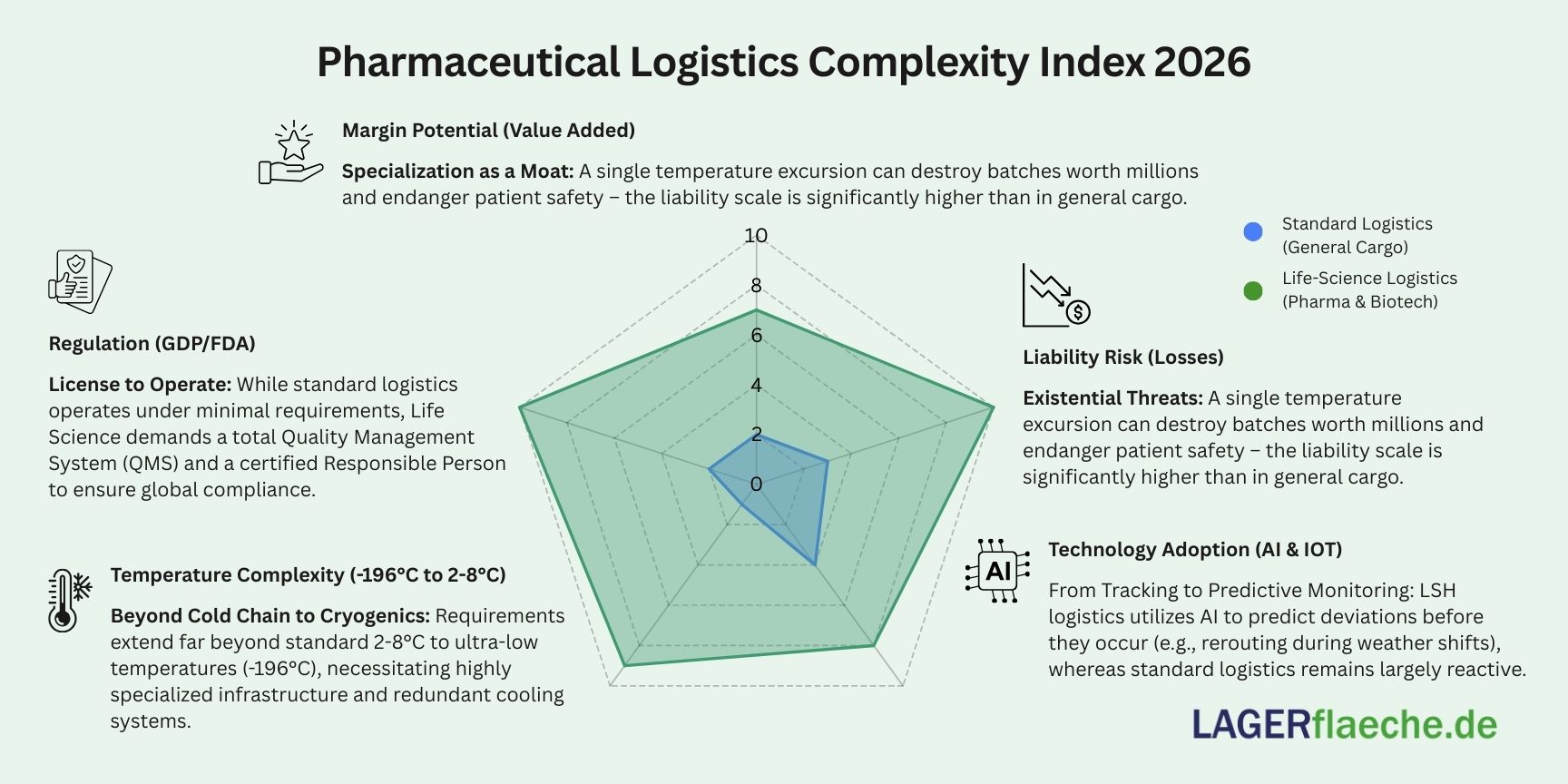
The driver behind this boom is the biopharmaceutical revolution. While standard drugs (generics) used to be shipped in huge quantities, today personalized medicine and biologics dominate the market. These high-priced products do not forgive mistakes; a temperature increase of a few degrees can destroy a value of goods worth millions of euros.
Evolution of Warehouse Logistics: Quality Assurance instead of Square Meters
For traditional warehouse holders, entering life science is a quantum leap. It is no longer primarily about space, but about validation and quality assurance.
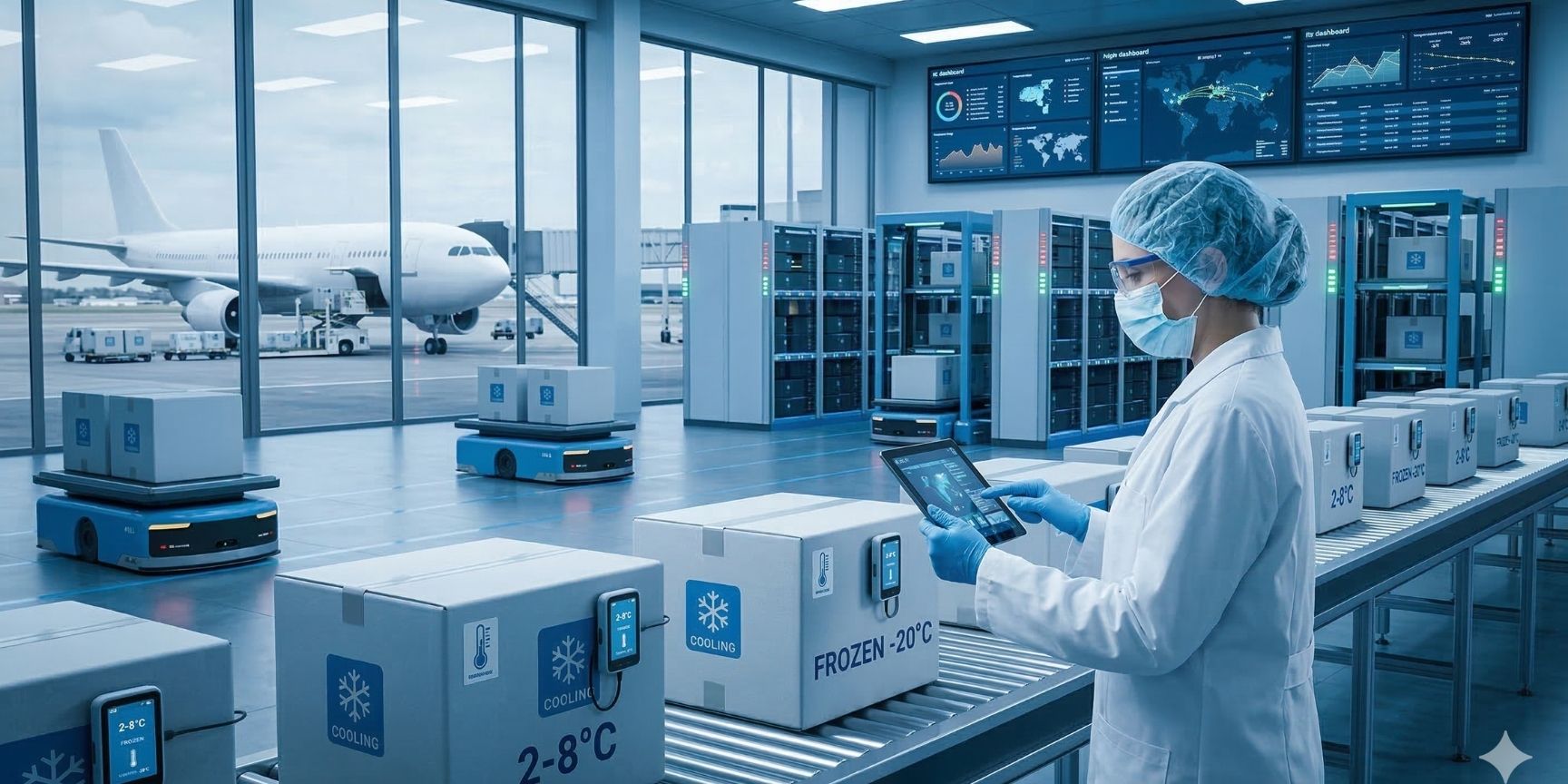
Temperature zones and monitoring
The requirements for storage have become massively stricter:
- Controlled Ambient: 15°C to 25°C (standard pharma).
- Frigo / Refrigerated: 2°C to 8°C (vaccines, biologics).
- Frozen: -20°C to -80°C (e.g. mRNA products).
- Cryo: Below -150°C to -190°C (liquid nitrogen) for novel cell and gene therapies.
According to the IATA CEIV Pharma Report, around 20% of pharmaceutical losses are due to temperature deviations during transport or storage. A warehouse keeper without a seamless, digital real-time monitoring system that delivers tamper-proof data logs will no longer be competitive in 2026.
Contract Logistics: From Service Provider to Strategic Partner
Today, contract logistics companies take on tasks that have a deep impact on the value creation of pharmaceutical companies. So-called Value Added Services (VAS) have become the standard:
- Late-stage customization: Repackaging and labeling for specific country markets only shortly before shipping.
- Kit Assembling: Assembling surgical instruments or dialysis sets.
- Returns management: Professional handling of expired batches under the strictest destruction guidelines.
Customer loyalty in the LSH sector is long-term (often 5 to 10 years), as a change of logistics partner is extremely expensive and risky for the manufacturer due to the necessary re-validation of processes.
Global Comparison: Germany vs. the World Powers of Logistics
Where are the logistics flows going? A look at the global benchmarks shows a shift in the balance of power.
Germany: The bureaucratic giant under pressure
Germany remains a heavyweight with sales growth of 9.1% (2024) in biopharmaceuticals and a market share of approx. 35% of the overall pharmaceutical market. But the location suffers from:
- Long approval procedures for new warehouses.
- High energy costs, which make the operation of deep-freeze warehouses more expensive.
- Infrastructure congestion on railways and motorways.
- Sluggish digitization of government processes (customs, permits).
Ireland: The European powerhouse
Ireland has become the world's third-largest pharmaceutical exporter. Over 60% of Ireland's exports are in the biotech and pharmaceutical sectors. Due to clustering in regions such as Dublin and Cork, giants such as Pfizer and Novartis sit right next to specialized logistics companies. The infrastructure here is consistently optimized for "cold chain".
U.S. and Asia: Innovation and Scaling
The U.S. will hold the largest market share (approx. 39.6%) in 2026 and will rely heavily on AI-powered predictive analytics. Asia-Pacific is the growth champion with a market share of around 27.4%. China is investing heavily in the "Digital Silk Road", while India is considered the "pharmacy of the world" for generic drugs.
Regional strengths at a glance
| Region | Focus | Strength | Weakness |
| Germany | Production & Export | High quality / GDP loyalty | Costs & Bureaucracy |
| USA | Research & High-Tech | AI & Speed | High labor costs |
| Singapore | Global Transit | Perfect infrastructure | Limited space |
| India | Generics | Cost leadership | Cold Chain Integrity |
Technology and Regulation: The GDP Labyrinth
GDP certification (Good Distribution Practice) is the indispensable entry ticket for freight forwarders and logistics companies. It ensures that the quality of medicines is maintained throughout the supply chain.
Digital surveillance
Countries such as Switzerland and Singapore rely on end-to-end IoT monitoring. Each container sends real-time data on temperature, humidity, light incidence and vibrations to a "digital twin" in the cloud.
The liability risk
While a lost container of consumer goods is annoying, an incorrectly tempered batch of insulin can be life-threatening. Claims for damages in the seven-figure range are not uncommon in the LSH sector. This requires investment in specialized thermal trailers and highly trained personnel with a basic understanding of pharmaceuticals.
Practical Example: The "Last Minute" Cell Therapy (CAR-T)
Let's imagine a biotech company developing a personalized cancer therapy.
- Extraction: Cells are removed from a patient in Berlin (or New York).
- Cryogenic transport: The cells must be transported for reprocessing within 48 hours at temperatures below -150°C. The container must not be opened; Customs clearance often has to be done directly on the tarmac.
- Return transport: The "armed" cells fly back to the patient.
- Utility value for logistics companies: In this "closed loop", payment is not based on weight, but on availability and safety. A specialized service provider generates contribution margins that are 10 times higher than standard transport.
Strategic Recommendations for Action for Companies
How do you transform your company into a life science specialist?
- Auditing: Perform a gap analysis of your existing space. What is missing for GDP compliance?
- Personnel: Invest in a qualified Responsible Person (RP) (wholesale representative according to § 52a AMG).
- Technology: Implement a validated, cloud-based monitoring system.
- Diversification: Don't just focus on Germany, but use clusters in Ireland or Switzerland for global exports.
Conclusion: Specialization as a Survival Strategy
In 2026, life science logistics will no longer be a pure cost factor – it will be the extended arm of medical quality assurance. While the volume business in the consumer goods sector is being commoditized and suffering from price pressure, the LSH sector offers a refuge for quality suppliers. Those willing to invest in validation, specialized cold chains and data integrity will benefit from stable growth rates.
Latest Blog Posts
Stay up to date with the newest trends, insights, and tips in warehouse and logistics. Our latest articles help you navigate the industry with confidence.

Data Centres vs. Logistics Facilities: The Race for Power and Land
Across Europe, logistics operators are competing for more than land and transport access. They increasingly need something much harder to secure: grid capacity. Data centres are intensifying that competition — and changing how logistics locations are evaluated....
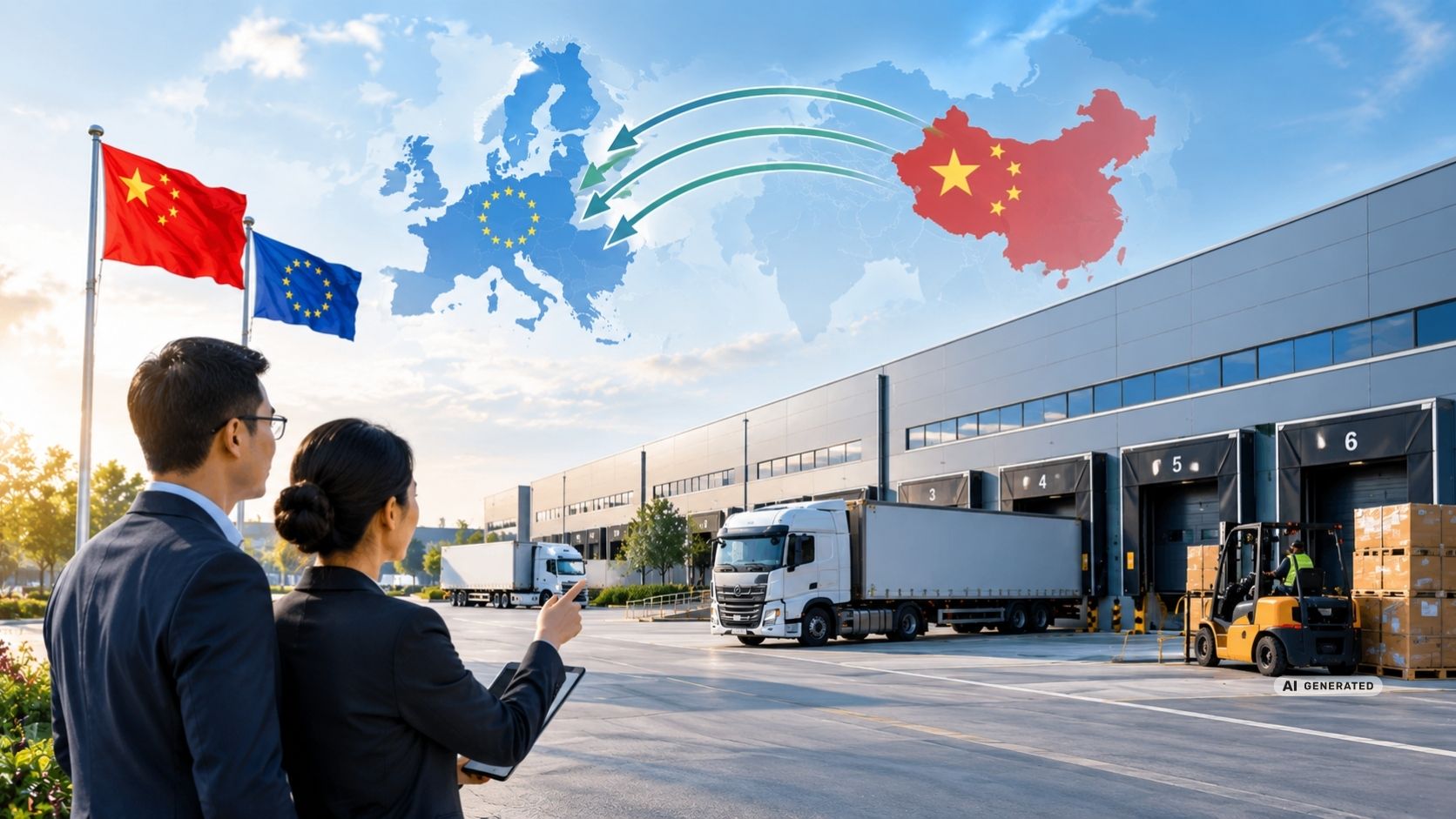
Chinese companies discover Europe's logistics real estate
Chinese companies are becoming an increasingly visible user group in Europe's logistics real estate market. What does this mean for warehouse space, 3PL structures and the requirements for European logistics locations?...
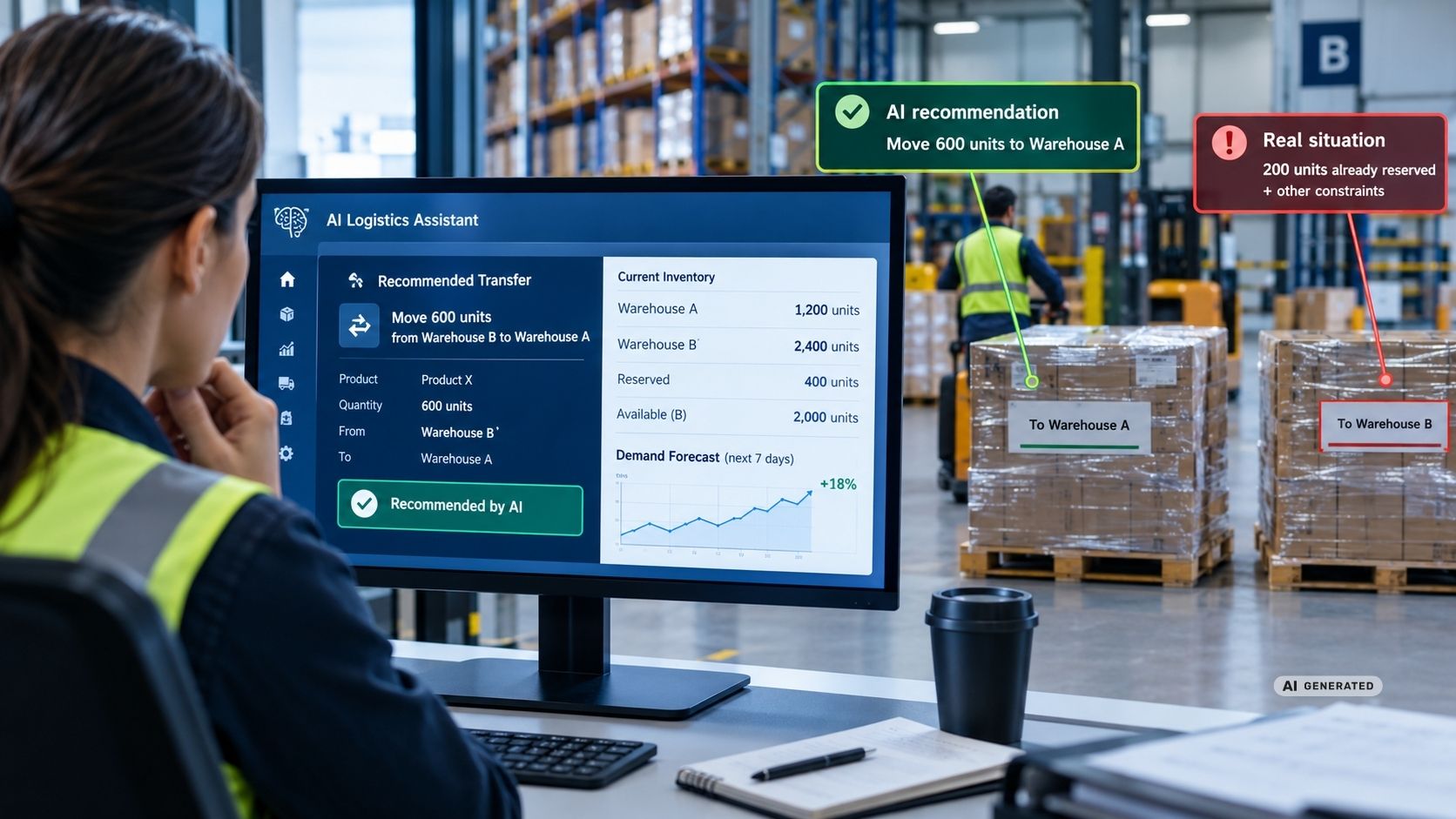
AI Hallucinations in Logistics: When AI Plans the Wrong Delivery
AI can analyze enormous amounts of logistics data — but it can also produce a convincing answer that is simply wrong. The critical question is not whether AI makes mistakes, but what happens when a wrong recommendation becomes an operational decision....
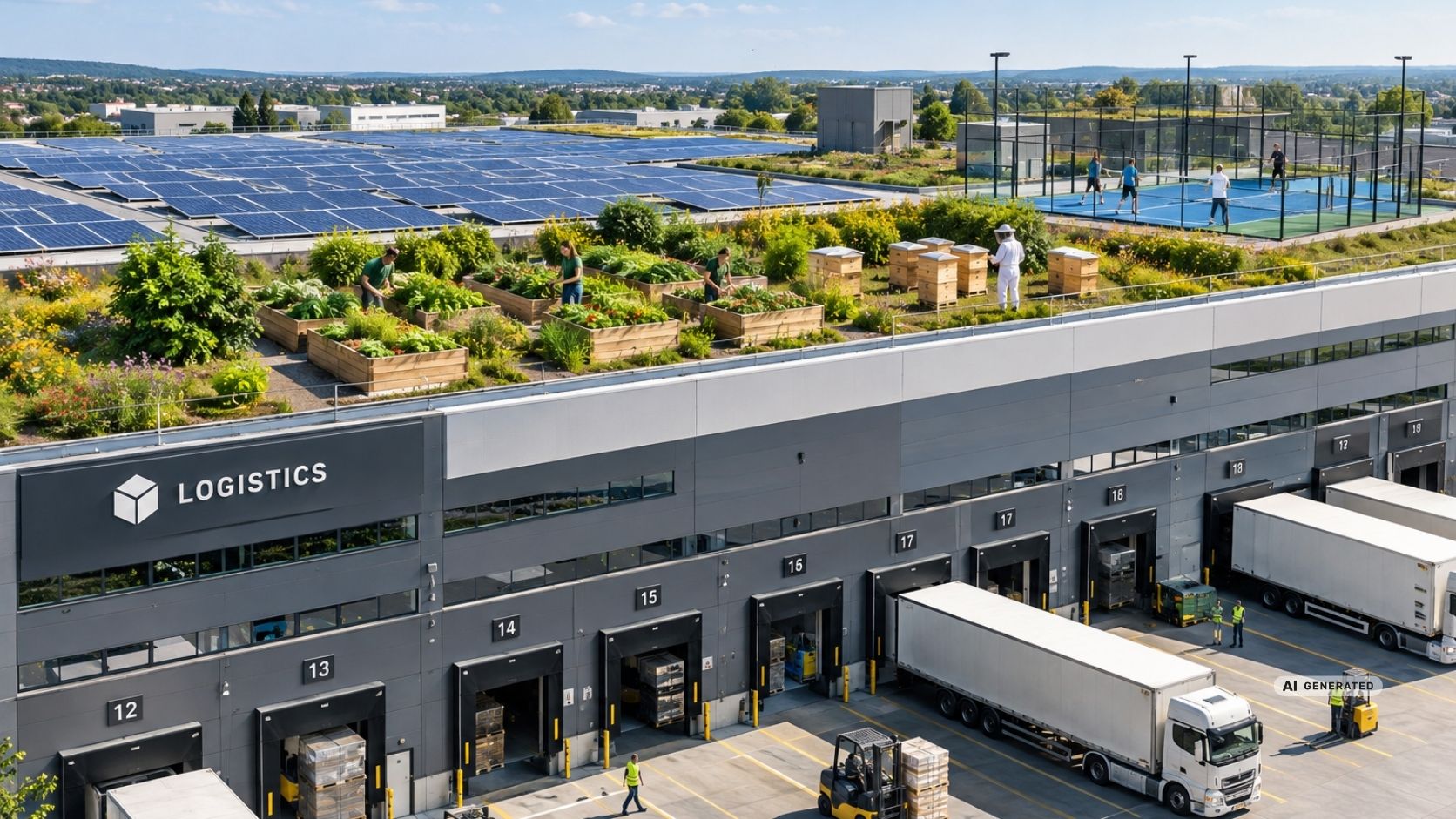
The Green Revolution on the Hall Roof: From Concrete Block to Ecological Power Plant?
Logistics roofs can do more than PV: greening, bees, urban farming and even sports areas turn unused roof space into multifunctional rooms....