


The "Grey Tsunami" in logistics: How owner-managed companies will master the generational change in 2026
Table of Contents
- The Starting Point: Figures, Data and the Harsh Reality of 2026
- Tradition vs. New Approaches: The Cultural Clash
- The Crucial Question: The Children or External Managers?
- Training Profile 4.0: What are the Qualifications for 2026?
- International Comparison: Why Germany Plays a Special Role
- Practical Example: The Case of "Spedition Müller" (fictitious company)
- Strategic Checklist for Owners and Successors
- Conclusion: Opportunity Instead of Crisis
The German logistics industry is facing its biggest upheaval since the invention of the container. It's not just digitalisation or decarbonisation that is keeping the sector breathless – it's the biological factor. According to current forecasts by the German Chamber of Industry and Commerce (DIHK) and KfW, around 600,000 small and medium-sized enterprises (SMEs) in Germany will be looking for a successor by 2028 (source: DIHK Successor Report 2025; Viaductus 2025). Logistics has been hit particularly hard: an industry that has traditionally been strongly characterised by owner-managed structures.
But how do you manage the balancing act between the preservation of painstakingly built traditions and the radical compulsion to adopt new, digital approaches? In this article, we shed light on the depth of the succession problem, compare Germany with global countries and provide practical answers to the most burning questions in the industry.
Central questions that this article answers:
- Family or external management: Who is the better successor for the logistics of tomorrow?
- Tradition vs. innovation: How much "old" must remain, how much "new" can come?
- Qualification 4.0: What is the ideal training path for future logistics managers?
- Global view: Why do German logistics companies fail more often than US or Danish companies?
The Starting Point: Figures, Data and the Harsh Reality of 2026
In 2026, the average age of owners in logistics has risen to a record high. According to KfW Research, 57% of all SME owners are already over 55 years old (source: KfW Succession Monitoring 2025). The window of opportunity for an orderly handover is closing.
| Key figure | Value (as of 2025/2026) | Source |
| Number of companies before handover (until 2028) | approx. 600,000 | DIHK / Viaductus |
| Proportion of intra-family successions (reality) | approx. 34% - 40% | Ifo Institute / ZEW |
| Biggest hurdle in the handover | Inflated purchase price expectations (36%) | DIHK |
| Second biggest hurdle | Lack of preparation / emotions (38%) | DIHK |
The logistics sector is also struggling with a specific challenge: margins are thin and the pressure to invest in alternative drives and AI systems is massive. Today, a successor no longer just takes over a fleet of trucks, but a complex IT ecosystem.
Tradition vs. New Approaches: The Cultural Clash
Owner-managed logistics companies often live from the "handshake principle". Trust, long-term customer relationships and a high level of identification of employees with the "boss" are the backbone. But it is precisely these strengths that often become a problem during generational change.
The problem of "implicit competence"
Often, all the knowledge about routes, special conditions and crisis management is in the head of the senior owner. If systematic documentation (knowledge management) is missing, the house of cards collapses during the handover.
Opportunities through new approaches
The successor (whether child or external) usually comes with a digital DNA.
- AI-supported dispatching: Instead of "gut feeling", algorithms decide on the best route, which can reduce fuel costs by up to 15% (BVL Trends 2025/26).
- Transparency: Platforms are replacing non-transparent email chains.
- ESG compliance: Younger generations are implementing sustainability not as a burden, but as a competitive advantage over large shippers.
The Crucial Question: The Children or External Managers?
The decision between an internal family solution and an external MBI (Management Buy-In) or MBO (Management Buy-Out) is highly emotional.
Succession through one's own children (Internal)
- Advantages: Continuity of values, high loyalty of the workforce, tax advantages for inheritance (gift tax).
- Problems: Lack of qualifications or – even more often – lack of interest from the "Next Gen". According to the Ifo Institute, 42% of family businesses cannot find a successor in their own relatives.
External succession
- Advantages: According to a study by the ZEW (Centre for European Economic Research), external successors are more likely to carry out radical process innovations and increase the return on sales significantly faster than successors within the family (source: ZEW Generational Change in SMEs).
- Problems: "Culture shock" in the workforce. If the new manager only looks at KPIs and ignores the decades-old corporate culture, there is a risk of a wave of emigration of skilled workers.
Training Profile 4.0: What are the Qualifications for 2026?
Running a modern logistics company today requires a completely different skillset than it did 20 years ago. A pure training as a forwarding agent is no longer sufficient.
The ideal training mix for successors:
- Academic basis: Degree in logistics, supply chain management or business informatics (approx. 71% of successors now have a university degree).
- IT & data literacy: Understanding of cloud architectures, cybersecurity (according to TIMOCOM the top trend in 2026) and interface management (API).
- Change management: The ability to take the "old guard" of drivers and dispatchers with you on the journey of transformation.
- Resilience management: In times of geopolitical tensions, the ability to redirect supply chains in the short term is essential for survival.
International Comparison: Why Germany Plays a Special Role
Generational change is handled differently around the world. Germany, with its "Mittelstand", faces different hurdles than the USA or China.
| Country | Succession culture | Special features |
| Germany | Continuity-oriented | Focus on preservation over generations; Bank-based financing; strong emotional bond. |
| USA | Exit-oriented | Higher dynamics; Companies are often sold after 10-15 years (private equity); Capital market-oriented. |
| Italy | Family-centered | Similar to Germany, many family businesses, but often smaller structures and less focus on global scaling. |
| China | "First generation" handover | Many founders of the post-Mao era are now retiring at the same time; often radical breaks towards tech giants. |
| Denmark | Digital pioneers | Global leader in digitalization (1st place in the 2025 Family Business Country Index). |
Legacy vs. Innovation: How the World Handles Logistics Succession
| Germany | USA | China | Denmark | Italy | |
| Succession Culture & Mindset |
|
|
|
|
|
| Level of Digitalization & Innovation (Logistics 4.0) |
|
|
|
|
|
| Financing & Structure |
|
|
|
|
|
| Bureaucratic Hurdles & Regulation |
|
|
|
|
|
| Strategic Planning Horizons |
|
|
|
|
|
Why is Germany lagging behind?
Germany ranks only 17th out of 21 in the country index for family businesses of the Foundation for Family Businesses (source: Foundation for Family Businesses 2025). The main reasons are the high tax burden, excessive bureaucracy and high energy costs. While in the USA a "failure" of the succession is often solved by a quick sale to financial investors, this is often still considered taboo in German logistics niches.
Practical Example: The Case of "Spedition Müller" (fictitious company)
The situation: A medium-sized logistics company with 50 trucks, specializing in refrigerated transport. The owner (67) wants to hand over to his son (32). The problem: The father keeps everything by phone and Excel. The son wants to introduce a fully automated transport management system (TMS) and real-time tracking. The long-standing dispatchers refuse to use the system.
The solution (best practice):
- Duo phase: Father and son ran the company together for two years.
- Pilot project: Digitization was not tested for the entire fleet, but only for five vehicles.
- External advisory board: A former logistics manager of a large corporation was brought in as a neutral mentor to moderate emotional conflicts between father and son.
- Result: Within three years, the vacancy rate fell by 12%, and the succession was successfully completed without key employees resigning.
Strategic Succession Checklist
Conclusion: Opportunity Instead of Crisis
The generational change in 2026 is not a necessary evil, but the greatest opportunity for modernization. The "new" owners have the opportunity to break up encrusted structures and make logistics fit for the requirements of Supply Chain 4.0. While tradition is the foundation (trust, reliability), the new technology is the roof that protects the company from the rain of competition.
The path to success leads through early planning, an honest assessment of one's own digital maturity and the courage to also seek external help (consultants, mentors).
Latest Blog Posts
Stay up to date with the newest trends, insights, and tips in warehouse and logistics. Our latest articles help you navigate the industry with confidence.
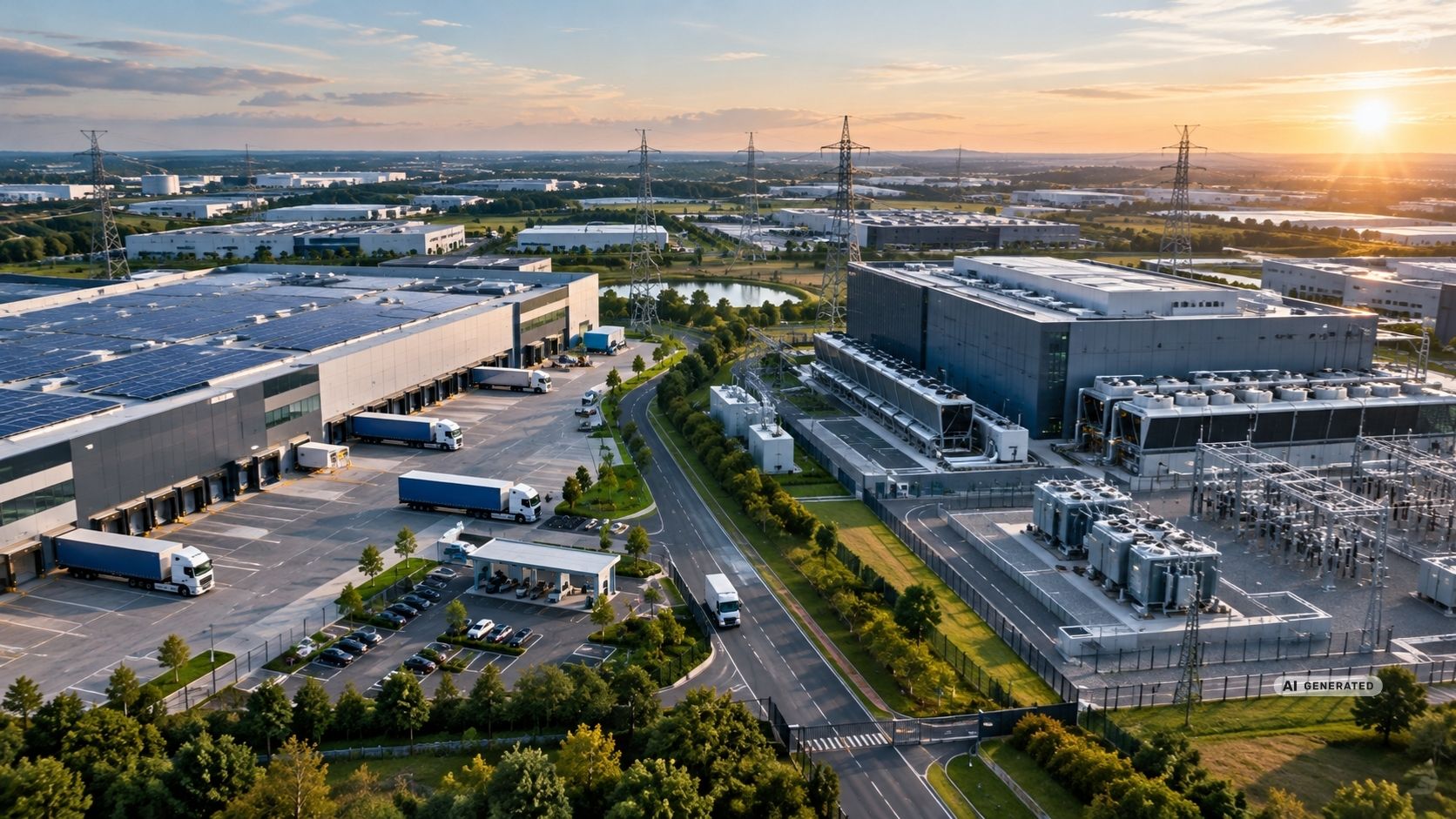
Data Centres vs. Logistics Facilities: The Race for Power and Land
Across Europe, logistics operators are competing for more than land and transport access. They increasingly need something much harder to secure: grid capacity. Data centres are intensifying that competition — and changing how logistics locations are evaluated....
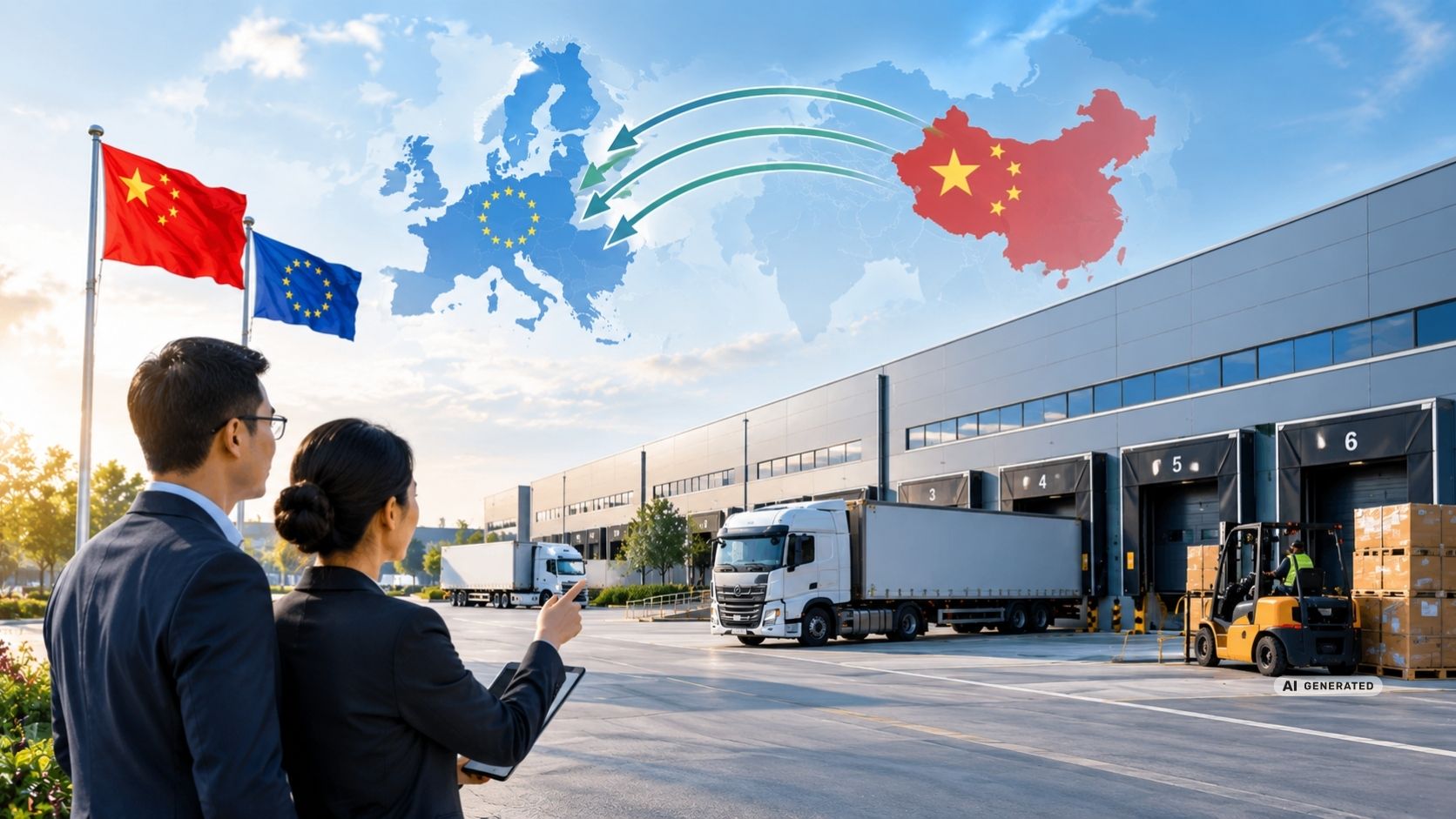
Chinese companies discover Europe's logistics real estate
Chinese companies are becoming an increasingly visible user group in Europe's logistics real estate market. What does this mean for warehouse space, 3PL structures and the requirements for European logistics locations?...
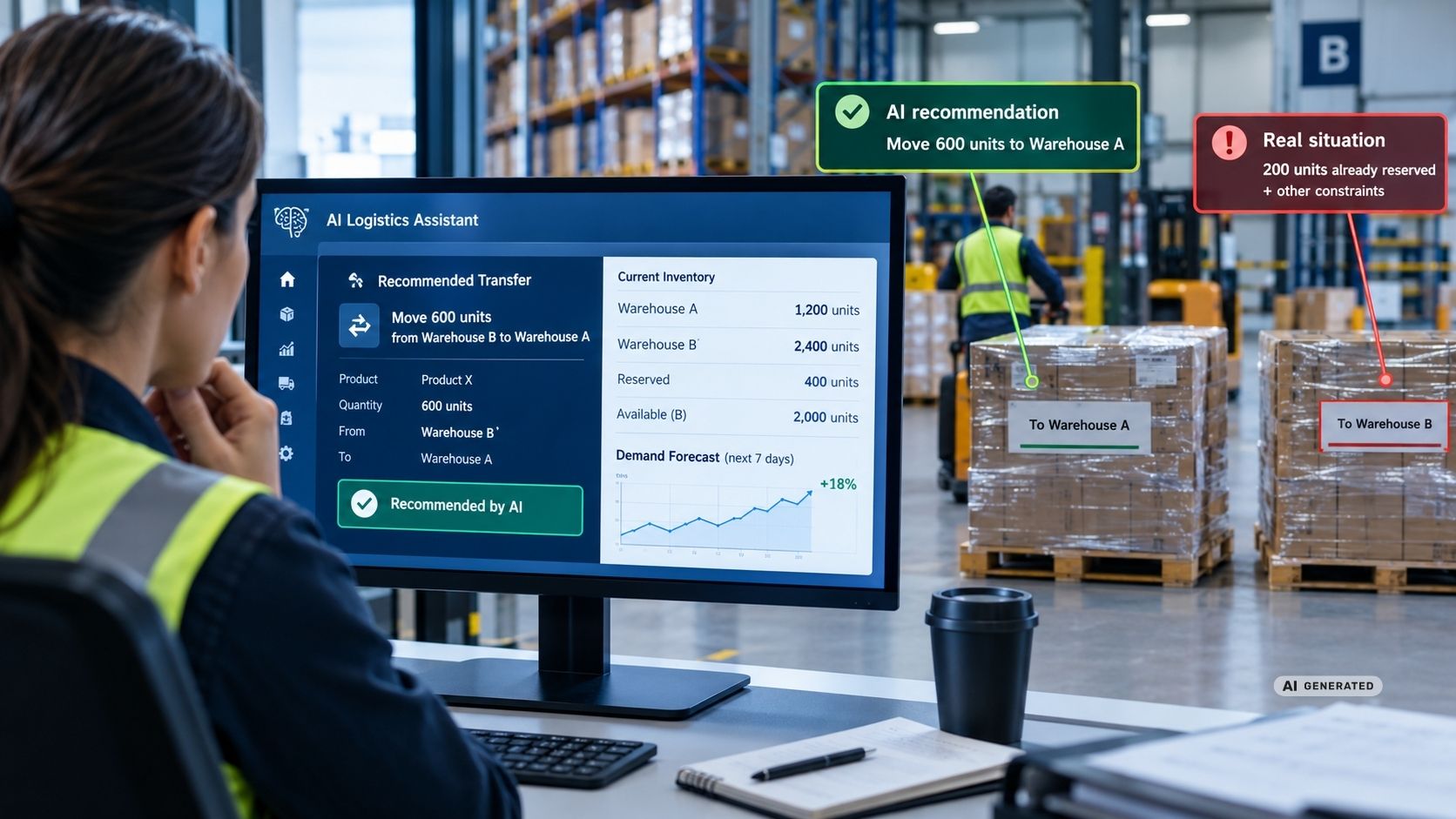
AI Hallucinations in Logistics: When AI Plans the Wrong Delivery
AI can analyze enormous amounts of logistics data — but it can also produce a convincing answer that is simply wrong. The critical question is not whether AI makes mistakes, but what happens when a wrong recommendation becomes an operational decision....
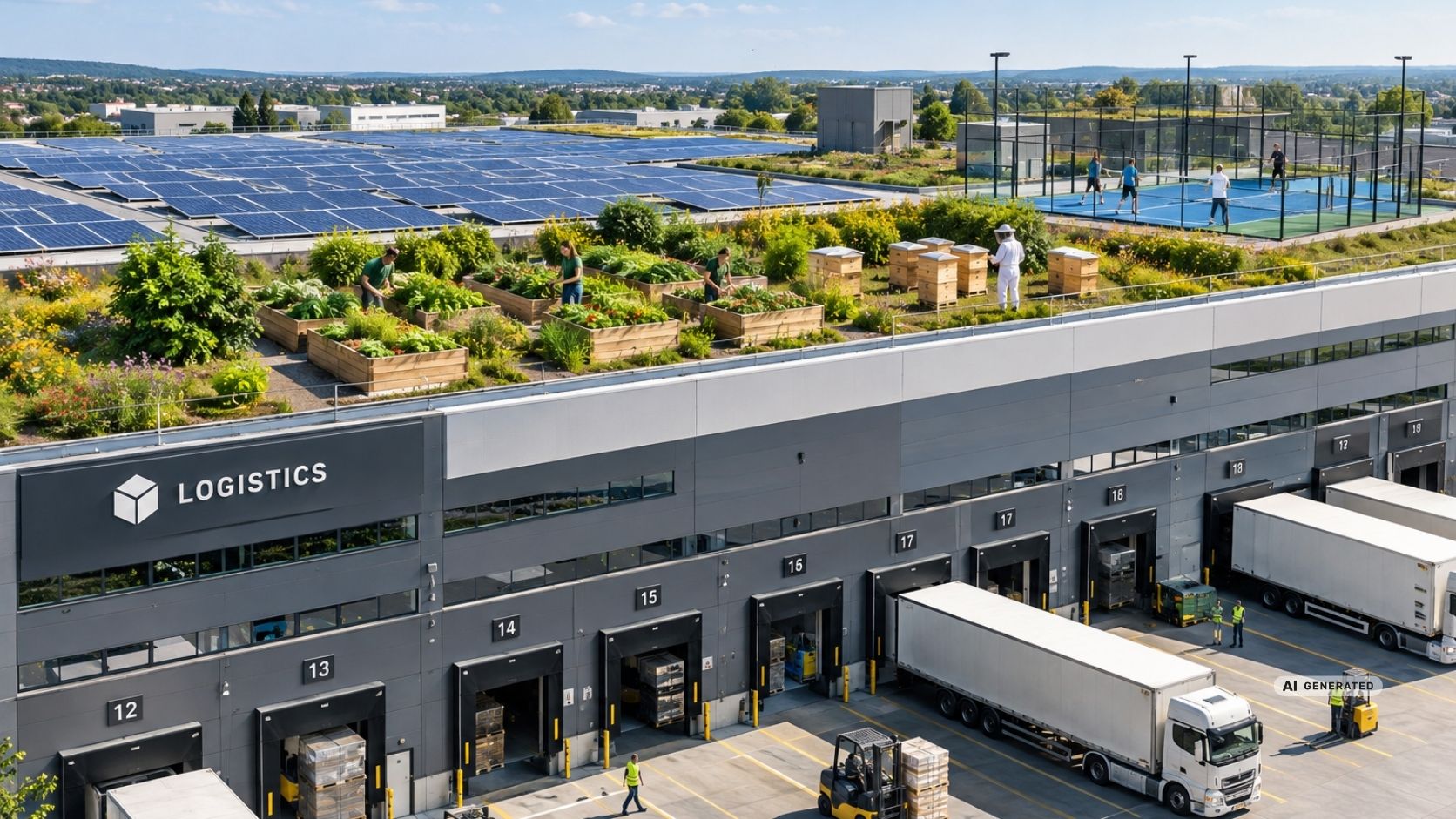
The Green Revolution on the Hall Roof: From Concrete Block to Ecological Power Plant?
Logistics roofs can do more than PV: greening, bees, urban farming and even sports areas turn unused roof space into multifunctional rooms....