



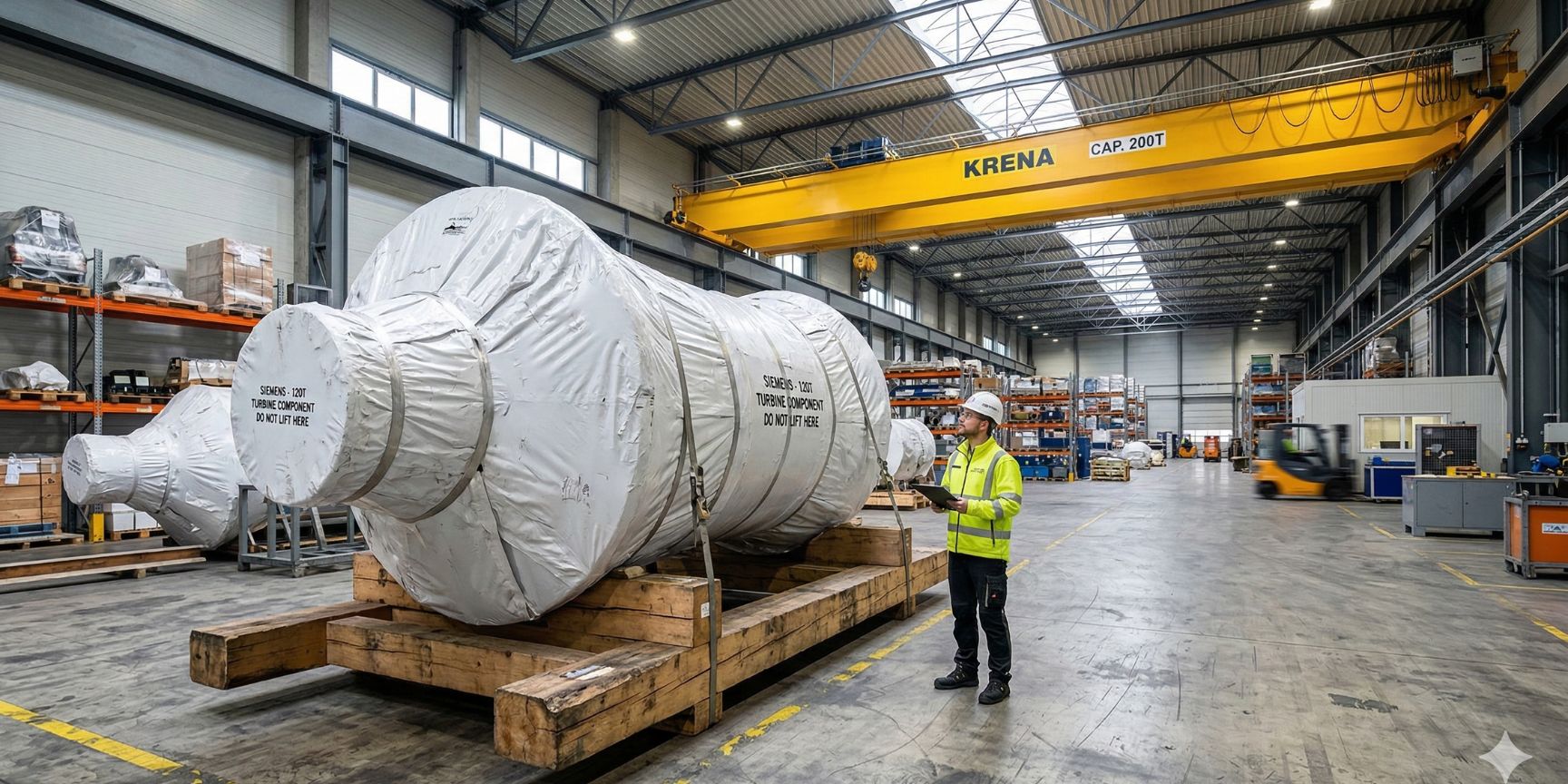
Giants in the Warehouse: The Fine Art of Heavy-lift Logistics
Table of Contents
- What is Actually Considered "Heavy Cargo"?
- The Crucial Question: Is Storage Financially Worthwhile?
- Technical Requirements: When the Soil becomes a Risk
- Are there parts that fill an entire hall?
- Are Contract Logistics Companies Specializing in this?
- Heavy Lift vs. Conventional Storage: The Differences at a Glance
- International Comparison: Germany vs. Worldwide
- Case Study from Practice: "The Stranded Transformer"
- Conclusion & Outlook
Imagine having to park a blue whale. Not in the water, but in a hall. It weighs 150 tons, is sensitive to humidity and must under no circumstances touch the ground that gives way under it. Welcome to the world of heavy cargo storage.
While 90% of the logistics world revolves around Euro pallets and handy cardboard boxes, the supreme discipline begins where the forklift capitulates: Heavy Lift & Project Cargo. But how do you store components that are as heavy as a single-family home? Is it financially worthwhile at all, and what physical laws do warehouses have to override for it?
This article dives deep into the niche, analyzes cost structures and reveals why Germany stores differently than the USA or China.
What is Actually Considered "Heavy Cargo"?
Before we talk about storage, we need to define. In contrast to standard parcel shipping, there is no rigid DIN standard that defines "heavy cargo" from an exact number of kilos, but in the practice of the logistics industry (and according to VDI guidelines) it is spoken of when:
- The weight exceeds 25 to 30 tons (limit of many standard indoor cranes).
- The dimensions exceed the standard truck profiles (overwidth > 3 meters, overheight).
- Handling is no longer possible with industrial trucks (forklifts), but only with gantry cranes or hydraulic skids.
The Crucial Question: Is Storage Financially Worthwhile?
"Why don't we just store the turbine in the yard?" – Logistics managers often hear this question. The financial consideration is complex.
Internal storage (capex trap)
For manufacturing companies (e.g. mechanical engineering), the construction of their own heavy-lift hall is often uneconomical.
- Investment costs: A hall with a floor load capacity of 50 t/m² and a 100-tonne overhead crane costs many times more than a standard logistics hall to build.
- Utilization: If you only have to temporarily store two turbines per year for 3 months, expensive converted space is empty.
External Storage (Opex Advantage)
Outsourcing to specialized service providers is almost always worthwhile when it comes to temporary project logistics.
- Variable costs: You usually pay according to the area used (m²) and tonnage (handling fee), not for the entire hall.
- Insurance: The warehouse keeper is liable (limited according to HGB/ADSp, but extendable), which removes the risk from the company's own balance sheet.
Conclusion: Financially, self-storage is only worthwhile if there is a continuous run. For project business, external storage (outsourcing) is usually 20–30% cheaper than tying up capital in the company's own infrastructure, despite the high one-off costs for transport.
Technical Requirements: When the Soil becomes a Risk
A standard logistics center has a floor load capacity of approx. 5 tons per square meter (50 kN/m²). For heavy cargo, this is as stable as sandwich paper.
The three pillars of the heavy goods hall:
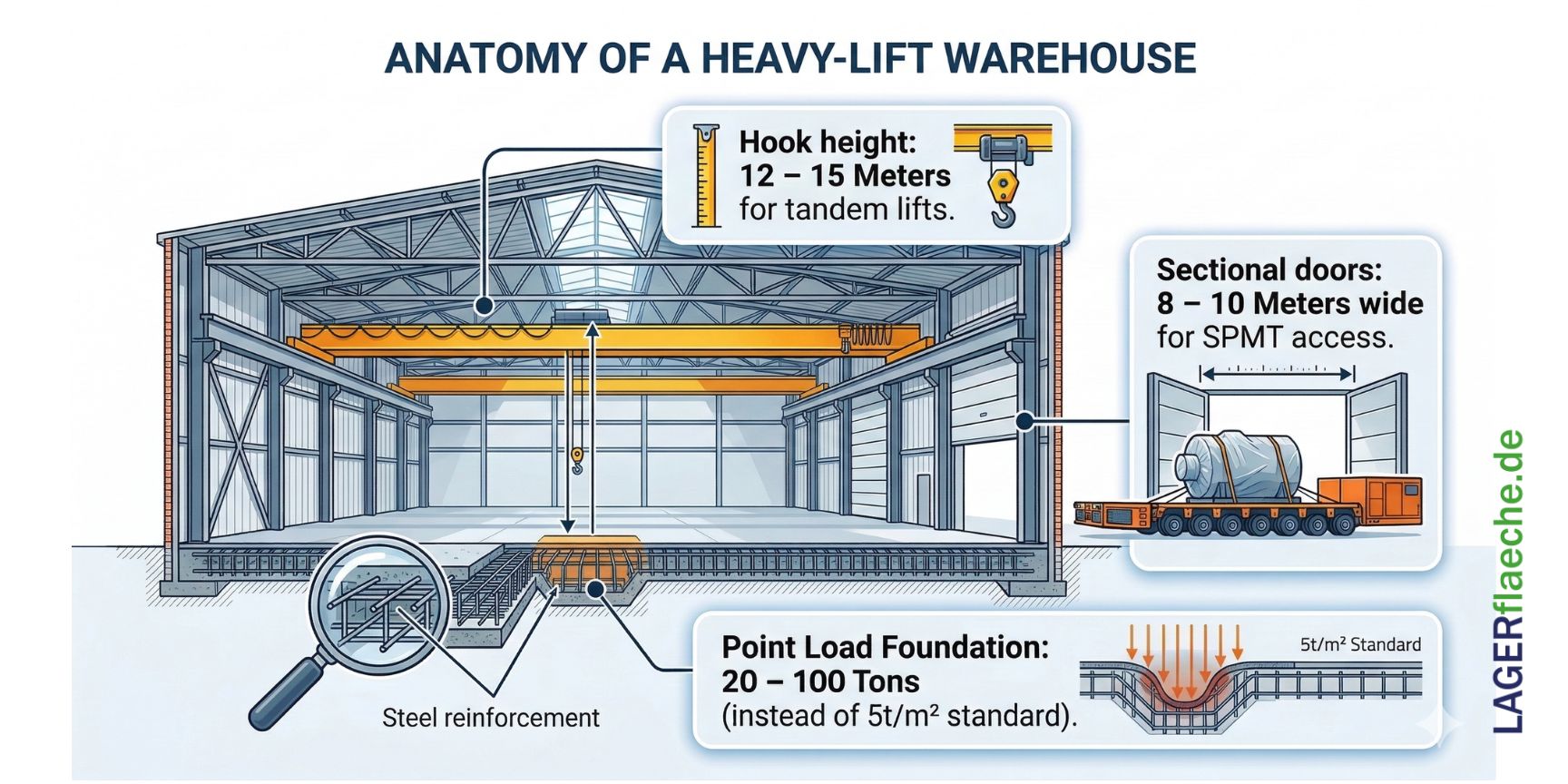
- Point load vs. surface load: The total weight is often secondary. The decisive factor is the point load. If a 200-ton transformer stands on four small steel feet, it simply punches its way through normal concrete floor. Heavy-lift halls require special foundations with steel reinforcement that can accommodate point loads of 20 to 100 tons.
- Crane infrastructure: Ceiling heights of less than 10 meters are useless. Hook heights of 12–15 meters and overhead cranes are required, which can move loads of up to 500 tons in tandem operation (two cranes lift together).
- Door dimensions: A standard roller shutter is 4 meters wide. Heavy-lift halls require sectional doors 8 to 10 meters wide so that a self-propelled vehicle (SPMT) can drive in with its load.
Expert note: So-called "heavy-duty plates" or steel plates are often laid out in halls to artificially distribute the load over a larger area if the floor does not provide the point load.
Are there parts that fill an entire hall?
Yes, there are. Here, the boundaries between storage and assembly area are blurred.
A classic example is rotor blades for offshore wind turbines.
- Length: Modern leaves are over 100 meters long.
- Storage: These are not stacked, but stored in special racks (frames). A single set (3 sheets) can block a complete hall section of 3,000 m², as they have to be stored diagonally to fit through the gates at all.
In aviation (fuselage segments) or in the construction of power plant boilers, the warehouse is also often converted into a "final assembly hall". Here, the customer does not rent storage space, but room volume and time.
Are Contract Logistics Companies Specializing in this?
Absolutely. While the big players (DHL, Kuehne+Nagel, DB Schenker) often have their own departments for "industrial projects", there are highly specialized medium-sized companies that can only do that.
The difference: A normal contract logistics company optimizes for speed (pallet handling). A heavy-lift logistics company optimized for safety and engineering.
- Engineering department: These service providers have their own structural engineers in-house who calculate how the part can be lifted (anchor points) and where it can be placed before storage.
- Value Added Services: They offer not only storage, but also seaworthy packaging, preservation (VCI method against rust) and assembly work.
Heavy Lift vs. Conventional Storage: The Differences at a Glance
| Feature | Conventional Storage (Pallets) | Heavy Cargo Storage (Project Cargo) |
| Unit | Palette / Package | Single Item / General Cargo |
| Handling | Forklift, Pallet Truck | Indoor crane, Reach stacker, Air cushion |
| Soil | 5–7 t/m² | 10–50 t/m² (or special foundations) |
| Envelope | High frequency (daily in/out) | Low frequency (weeks to months) |
| Cost model | Standard price per Palette | Project price + Handling surcharge |
International Comparison: Germany vs. Worldwide
Physics are the same everywhere, but regulations and space dictate storage.
Germany / Europe
In Germany, heavy-lift logistics is extremely regulated (VDI 2700 Load Securing).
- Problem: shortage of space. Heavy cargo storage facilities are often old (former industrial wastelands in the Ruhr area) or extremely expensive new buildings near the port (Hamburg, Bremen, Duisburg).
- Advantage: Extremely high safety standards and technical know-how.
USA
Here the motto is: „Space is not an issue“.
- Difference: In the USA, heavy cargo is stored much more often in outdoor storage, as the climate in many industrialized countries (e.g. Texas) allows this and space is cheap.
- Transport: The challenge here is not in storage, but in transport to the warehouse. Due to dilapidated bridge infrastructure and different state laws, heavy cargo storage facilities must be strategically located close to waterways or rails in order to avoid road transport.
Asia / China
- Scaling: China is building warehouse complexes on a scale that would be unthinkable in Europe. There, it is common for warehouses to be directly connected to heavy-duty quay walls.
- Pragmatism: While statics are calculated for weeks in Germany, work in Asia is often more pragmatic (but riskier). The storage density is often higher there.
Naher Osten (VAE)
- Climate factor: The main problem here is not the weight, but the heat. Heavy-lift warehouses often need to be air-conditioned or take extreme precautions against sand and salt corrosion (near the coast).
Case Study from Practice: "The Stranded Transformer"
Scenario:
A German transformer manufacturer produces a 350-ton transformer for a power plant in South Africa. Due to delays on the construction site in Africa, the transformer cannot be shipped. It must be temporarily stored in Germany for 6 months.
The challenge:
There is no room for the work. The transformer is filled with oil (water hazard class!).
The solution (heavy lift logistics company):
- Transport: Shipment by heavy-duty inland waterway vessel from the plant to the logistics company in the port of Duisburg (avoids road permits).
- Handling: Unloading by means of a "crawler crane", as the indoor crane can only handle 100t.
- Storage: The transformer is parked on a surface that is water-tight (Water Resources Act). A special oil drip pan is constructed underneath.
- Conservation: Ports are filled with nitrogen to prevent corrosion inside. Sensors monitor humidity and tilt angles in real time and send data to the customer.
Use & Benefits:
The manufacturer pays storage fees, but avoids contractual penalties for late delivery (by delivering "Ex Works") and does not block its own production hall.
Conclusion & Outlook
Heavy lift storage is a niche for experts. If you save here, you end up paying twice – through damage to the load or the property. The trend is clearly towards "heavy lift hubs": logistics centers on waterways that combine assembly, packaging and storage to minimize the monstrous transport costs.
Latest Blog Posts
Stay up to date with the newest trends, insights, and tips in warehouse and logistics. Our latest articles help you navigate the industry with confidence.
Data Centres vs. Logistics Facilities: The Race for Power and Land
Across Europe, logistics operators are competing for more than land and transport access. They increasingly need something much harder to secure: grid capacity. Data centres are intensifying that competition — and changing how logistics locations are evaluated....
Chinese companies discover Europe's logistics real estate
Chinese companies are becoming an increasingly visible user group in Europe's logistics real estate market. What does this mean for warehouse space, 3PL structures and the requirements for European logistics locations?...
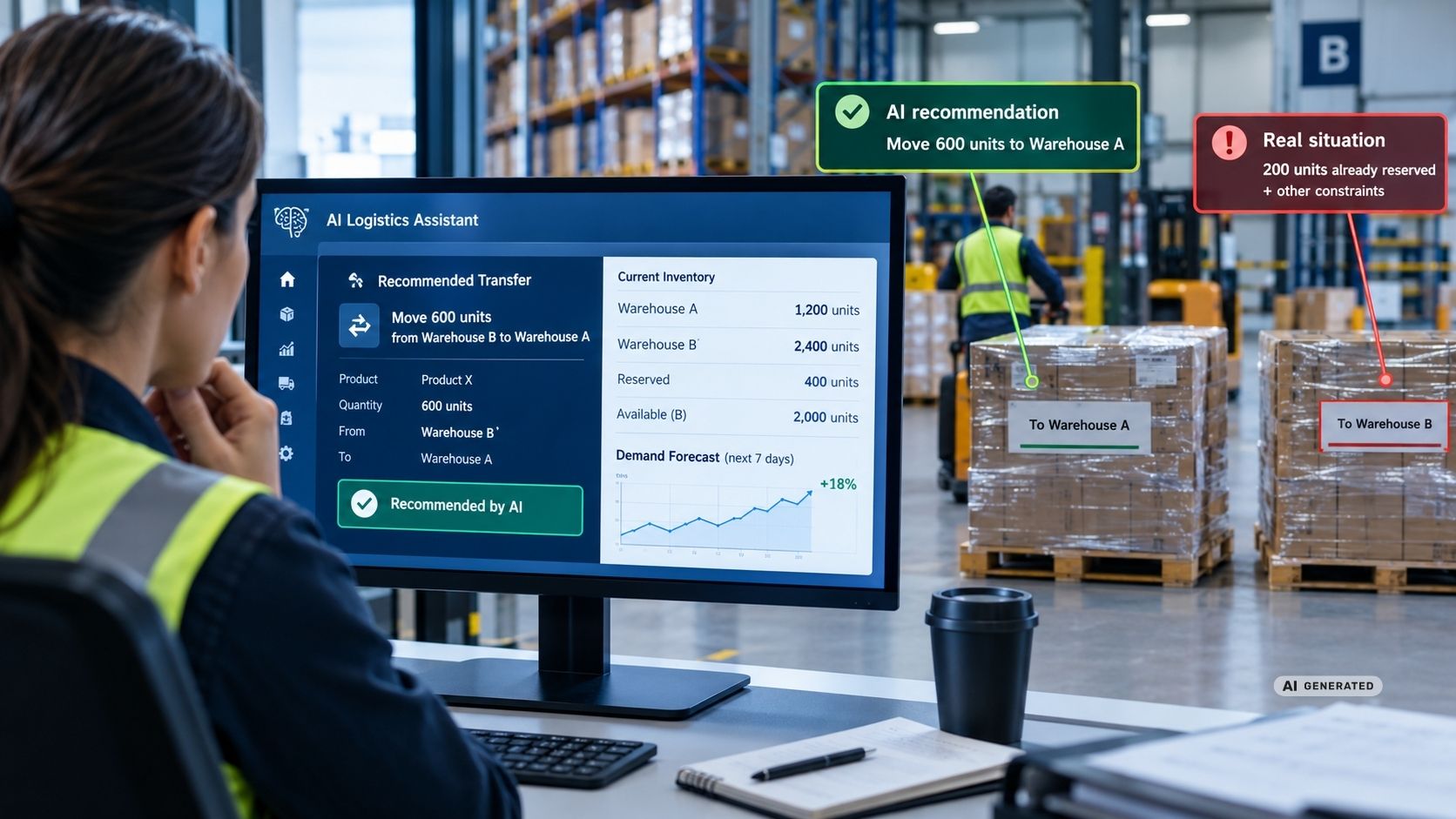
AI Hallucinations in Logistics: When AI Plans the Wrong Delivery
AI can analyze enormous amounts of logistics data — but it can also produce a convincing answer that is simply wrong. The critical question is not whether AI makes mistakes, but what happens when a wrong recommendation becomes an operational decision....
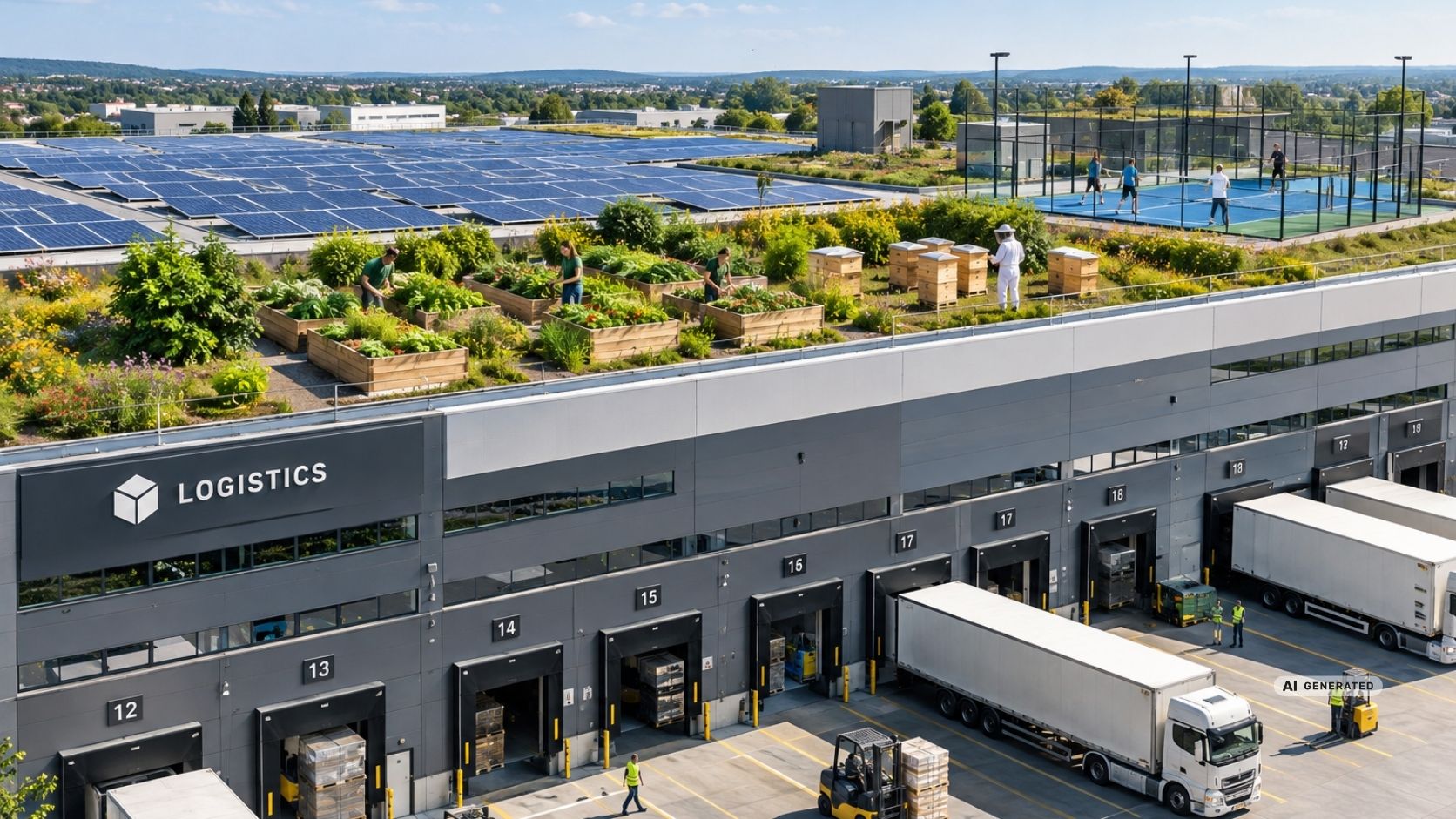
The Green Revolution on the Hall Roof: From Concrete Block to Ecological Power Plant?
Logistics roofs can do more than PV: greening, bees, urban farming and even sports areas turn unused roof space into multifunctional rooms....