


Germany between PISA low and AI revolution: Quo vadis, logistics location?
Table of Contents
- The PISA Dilemma: Why have we been Treading Water for Years?
- Financing: Is Enough Money being Invested in Pupils and Trainees?
- The Orphaned Classroom: Teacher Shortage and Record Downtime
- Digitization and AI: Are we being left behind or are we taking off?
- Vicious Circle of Shortage of Skilled Workers: Are the Requirements Falling out of Desperation?
- Work-Life-Balance: Germany vs. Rest of the World
- Germany as a Logistics Location under Pressure: What does that mean in Concrete Terms?
- Problems for Contract Logistics: Pressure on Margins meets a lack of Skills
- Practical Example: Case Study "Müller Logistics GmbH" (fictitious)
- Thinking Outside the Box: International Differences
- Conclusion: Education is the most Important Raw Material in Logistics
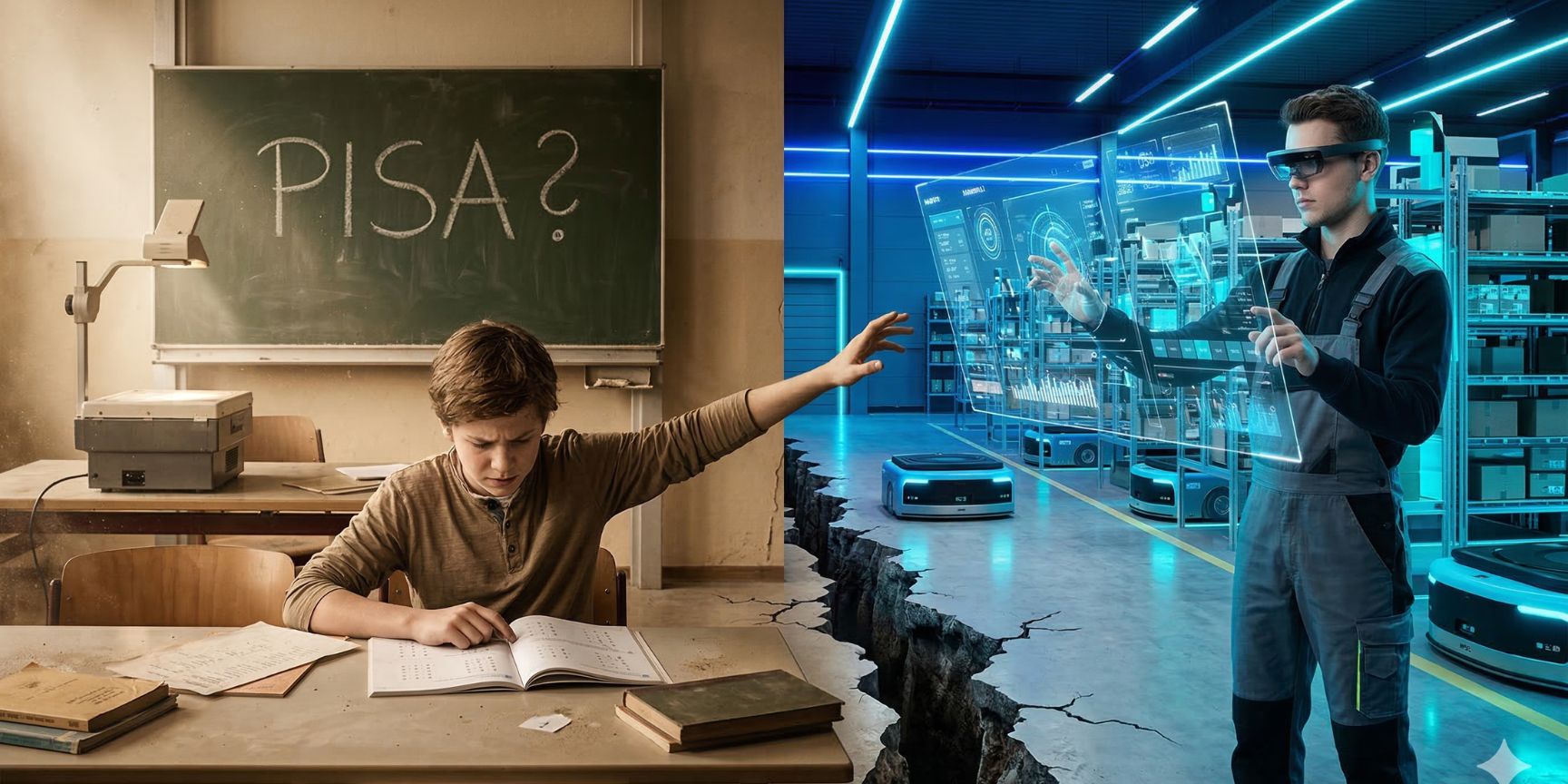
Germany, once the "land of poets and thinkers", is at a crossroads. While the global economy is advancing at the speed of light due to artificial intelligence (AI) and digital disruption, the German education system seems to be in crawling gear. For years, the PISA results have been stagnating or pointing downwards. But what does this mean in concrete terms for the economy? Is it enough to simply pump more money into the system?
These questions are particularly existential for specialized industries such as contract logistics and Germany as a general logistics location. If trainees fail at basic arithmetic tasks, but are supposed to operate complex merchandise management systems, a dangerous gap arises. In this article, we take a radically honest look at the German education system, compare it internationally and ask: Are we being left behind?
The PISA Dilemma: Why have we been Treading Water for Years?
The results of the 2022 PISA study (published at the end of 2023) were a shock, although not an unexpected one. German students achieved the worst results in mathematics, reading and science since the beginning of the survey.
The bare numbers
According to the OECD, German 15-year-olds are now significantly below the OECD average in mathematics. Around 30% of pupils do not even reach the minimum standards. This is not just a statistical side note, but an economic alarm signal.
Why doesn't anything change? The criticism of the system is loud: it is considered outdated, rigid and unjust.
- Federalism: 16 different education systems prevent uniform standards and rapid reforms.
- Methodology: Often "bulimia learning" (memorization for the exam, then forgetting) is still promoted instead of problem-solving skills.
Question to the reader: Have you noticed in your company that the basic knowledge (arithmetic, text comprehension) of applicants has decreased in the last five years?
Financing: Is Enough Money being Invested in Pupils and Trainees?
An argument often heard is: "We just have to invest more." But is that true?
According to the Federal Statistical Office (Destatis), Germany spends roughly 176 billion euros (as of 2022/23) annually on education, research and science. The expenditure per pupil is around 9,000 to 10,000 euros per year (depending on the federal state and type of school).
The international comparison is limping
In an OECD comparison, Germany is only in the middle of the field in terms of expenditure in terms of gross domestic product (GDP) (approx. 4.5% of GDP, while frontrunners invest over 6%).
The problem is not only the sum, but the distribution:
- Renovation backlog: A lot of money flows into the pure preservation of dilapidated buildings instead of modern learning materials.
- Bureaucracy: Funds from the "Digital Pact for Schools" were not used for years because the application procedures were too complicated.
The Orphaned Classroom: Teacher Shortage and Record Downtime
Money is one thing, heads are another. The German education system is heading for a personnel catastrophe with its eyes wide open, which will make the cancellation of classes the rule from a state of emergency.
The demographic trap
The shortage of teachers is not a temporary phenomenon, but a structural collapse. Many teachers of the "baby boomer" generation are retiring, while too few young educators are moving up.
- The forecast: According to the Standing Conference of the Ministers of Education and Cultural Affairs (KMK), there will be a mathematical shortage of about 24,000 teachers by 2035. However, education associations such as the VBE consider these figures to be glossed over and assume a gap of up to 80,000 missing teachers by 2030 if all-day entitlements and inclusion are taken seriously.
Cancellation of classes as a brake on education
For pupils, this means: constant free hours, lessons outside the subject (the sports teacher teaches maths) or the merging of classes. In some federal states, statistically, every tenth to twentieth hour is cancelled without replacement. But the number of unreported cases is higher, as "silent work" or mere supervision are often statistically considered "taught" even though no material is taught.
The double burden on the economy and logistics: This shortage hits the business location hard in two ways:
- Loss of quality among graduates: Where there is no teacher, no material is taught. The gaps in mathematics and German are often directly attributable to months of class cancellations in critical years. Continuous learning – essential for logical processes – is unlearned.
- Stress on current employees (parents): When the school calls in the morning that the first three hours are cancelled, working parents get stressed. In logistics, where shift schedules are precisely timed, this leads to absenteeism or unfocused employees who have to extinguish organizational fires at home. The education system thus loses its function as a reliable partner of the economy.
Digitization and AI: Are we being left behind or are we taking off?
While the ban on smartphones is still being discussed in German classrooms, other countries are integrating AI tutorials into regular lessons.
The speed of change
The world of work is changing exponentially. In logistics, warehouse management systems (WMS), pick-by-voice or autonomous industrial trucks are standard. AI optimizes routes and inventories. However, the education system reacts linearly. Curricula are often only fundamentally revised every 5 to 10 years. By the time a topic like "prompt engineering" (the operation of AI) is included in the curriculum, the technology may already be two generations ahead.
Risk to location: If school leavers are not "digital natives" in the sense of technical understanding (and not just TikTok consumption), companies will have to put massive resources into retraining. Germany is threatened with losing touch with nations such as Estonia or South Korea.
Vicious Circle of Shortage of Skilled Workers: Are the Requirements Falling out of Desperation?
This is one of the most sensitive points of the current debate. Out of necessity to be able to fill training places at all, many companies and vocational schools are effectively lowering the hurdles.
The phenomenon of "grade inflation"
Despite poorer PISA results, the Abitur grades are improving on average. A contradiction? Critics say: The requirements are lowered to keep the pass rates high.
The impact on the labor market
This is fatal for the economy.
- Shortage of trainees: According to the DIHK, almost 50% of companies were unable to fill their training places in 2023.
- Loss of quality: In order not to send anyone home, applicants are hired who would have been rejected earlier. Companies report that in the first year of their apprenticeship they first have to retrain basic arithmetic and German before the actual technical training can begin.
Work-Life-Balance: Germany vs. Rest of the World
"Young people don't want to work anymore" – a sentence that is often heard. But the data show a differentiated picture.
Germany: The leisure world champions?
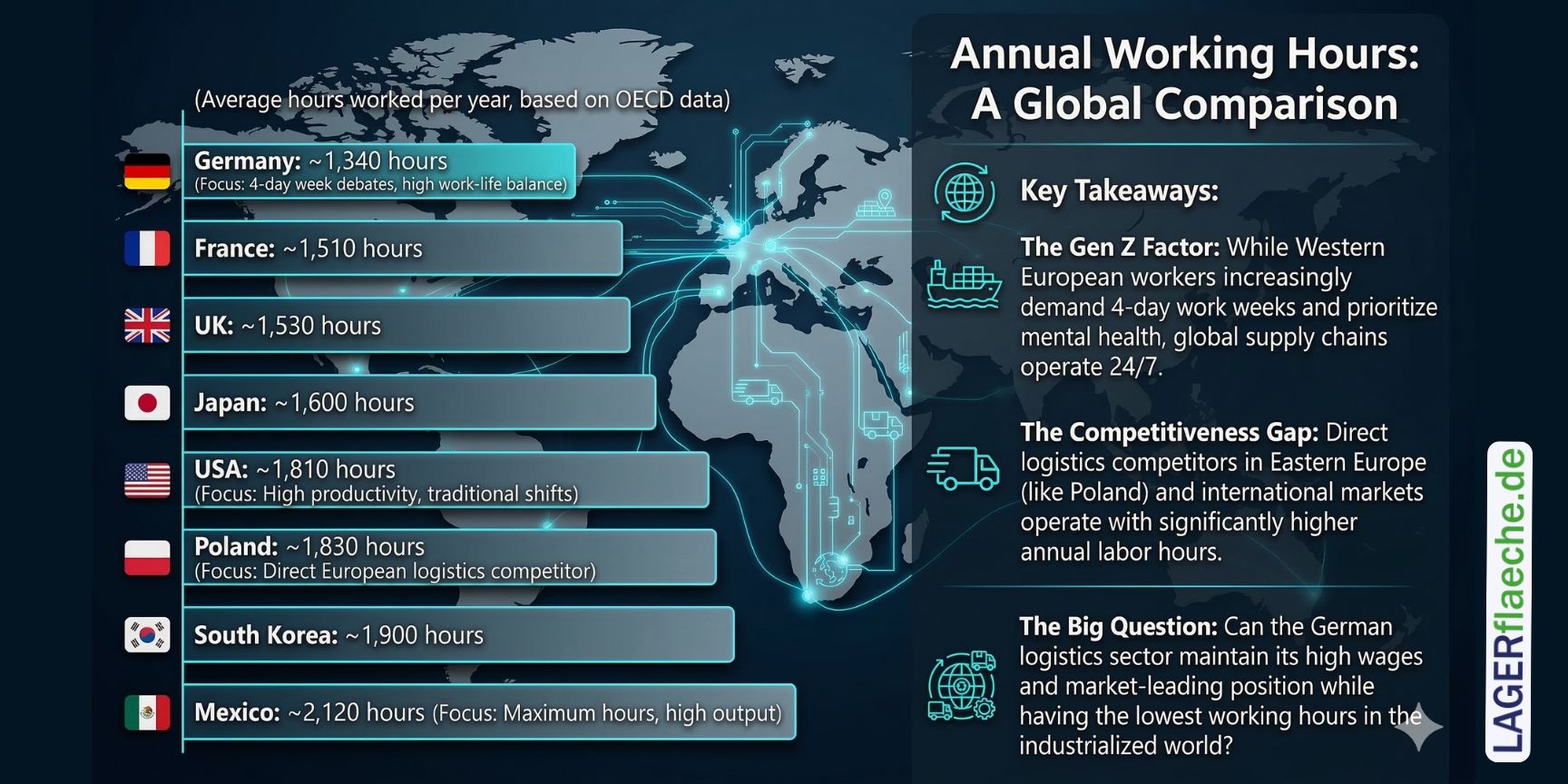
In fact, the average annual working time in Germany is one of the lowest in the world at around 1,340 hours (OECD data). The demand for a 4-day week with full wage compensation is particularly loud in this country.
The generational conflict: Gen Z prioritizes "mental health" and "purpose." In other countries (e.g. USA, Asia, but also Eastern Europe), the "hunger" for economic advancement is often even more pronounced, which is reflected in a higher willingness to perform.
Danger to competitiveness: If logistics teams in Poland or the Czech Republic are willing to work flexibly in 24/7 mode, while in Germany strict working time regulations and the desire for a "work-life balance" dominate, business shifts. Logistics follows the path of least resistance.
Germany as a Logistics Location under Pressure: What does that mean in Concrete Terms?
Germany is (still) the world champion in logistics. The central location in Europe and the high quality of the infrastructure were guarantors of this. But education is infrastructure in the mind.
Logistics is high-tech
The image of the "box pusher" is wrong. Today, a warehouse clerk must:
- Operating scanners and interpreting error codes.
- Understand dangerous goods regulations (read complex texts).
- Perform volume calculations for loading areas (mathematics).
- Speak English with international drivers.
If the education system does not provide these skills, the location loses its quality advantage. Why should a company pay high German wages if the productivity and competence of its employees is not significantly higher than in cheaper neighboring countries?
Problems for Contract Logistics: Pressure on Margins meets a lack of Skills
Contract logistics (taking over complex logistics services) is suffering in particular.
- High error costs: In contract logistics, margins are extremely thin (often 2-4% EBIT). A single incorrectly picked order, caused by a lack of reading comprehension, eats up the profit of hundreds of correct orders.
- Automation as a constraint: Since there is a lack of staff or is not qualified enough, contract logistics companies are investing massively in full automation. However, this makes the location more capital-intensive and inflexible.
- There is a lack of young managers: There is a shortage not only of warehouse workers, but also of dispatchers and team leaders who understand complex relationships.
Practical Example: Case Study "Müller Logistics GmbH" (fictitious)
The situation:
Müller Logistics GmbH in North Rhine-Westphalia is looking for an apprentice to become a warehouse logistics specialist.
The candidate:
Lukas (17), secondary school diploma. Sympathetic, digitally savvy on the smartphone.
The problem:
In the first week, Lukas is to calculate a pallet space optimization. He fails at the rule of three. When the WMS issues an error message in English ("Inventory discrepancy detected"), he simply clicks away the message because he does not understand it.
The episode:
An inventory error runs through the system, a truck is loaded incorrectly, the customer threatens with a contractual penalty.
The company's solution:
The Müller company is now introducing mandatory, paid tutoring in math and English during working hours. This costs the company about 5,000 euros extra per year – costs that international competitors do not have.
Thinking Outside the Box: International Differences
How do other countries do it better?
Estonia: The digital pioneer
In Estonia, programming is already normal in primary school. The entire school administration is digital.
- Advantage: School leavers have no fear of contact with new IT systems in logistics.
Singapore: Achievement elite
Singapore regularly occupies top positions in PISA. The system is extremely performance-oriented.
- Advantage: High level of competence in STEM subjects.
- Disadvantage: Enormous psychological pressure, hardly any creativity.
Poland: The direct competitor
Poland has invested massively in education over the past 20 years and has significantly increased PISA scores.
- Logistics factor: The work ethic is high, many young Poles speak good English and are willing to work harder than the Western European average for economic success. Poland is massively expanding its position as a logistics hub – not only because of wages, but increasingly because of the availability of skilled workers.
Finland: Individual support
For a long time the role model. Here, less testing is done, but more individual support. However, Finland is also slipping in the rankings, which shows that smartphone use and the ability to concentrate are also paying tribute there.
Conclusion: Education is the most Important Raw Material in Logistics
Is the German education system still relevant? The honest answer must be: No, not in its current form. It is too slow for digital reality and too inefficient to secure basic skills for everyone.
For Germany as a logistics location, this is a silent but enormous threat. We can't fantasize about AI-driven supply chains if the people who are supposed to operate them fail at the basics.
What has to happen?
- Reduction of bureaucracy: Funds must flow immediately into digital equipment.
- Practical relevance: Schools and logistics companies must form cooperations. "Logistics" must be brought into schools as an exciting tech field.
- Honesty: We must not lower requirements just to embellish statistics. Qualification is the only protection against global competition.
Logistics in Germany will only survive if it is "smarter" than the competition. We don't need memorizations for this, but problem solvers.
References:
- OECD (2023): PISA 2022 Results (Volume I & II).
- Federal Statistical Office (Destatis): Budget for education, research and science 2022/23.
- DIHK Training Survey 2023.
- Bundesverband Güterkraftverkehr, Logistik und Entsorgung (BGL) e.V.: Reports on the shortage of skilled workers.
- World Bank data: Hours worked per year in international comparison.
Latest Blog Posts
Stay up to date with the newest trends, insights, and tips in warehouse and logistics. Our latest articles help you navigate the industry with confidence.
Data Centres vs. Logistics Facilities: The Race for Power and Land
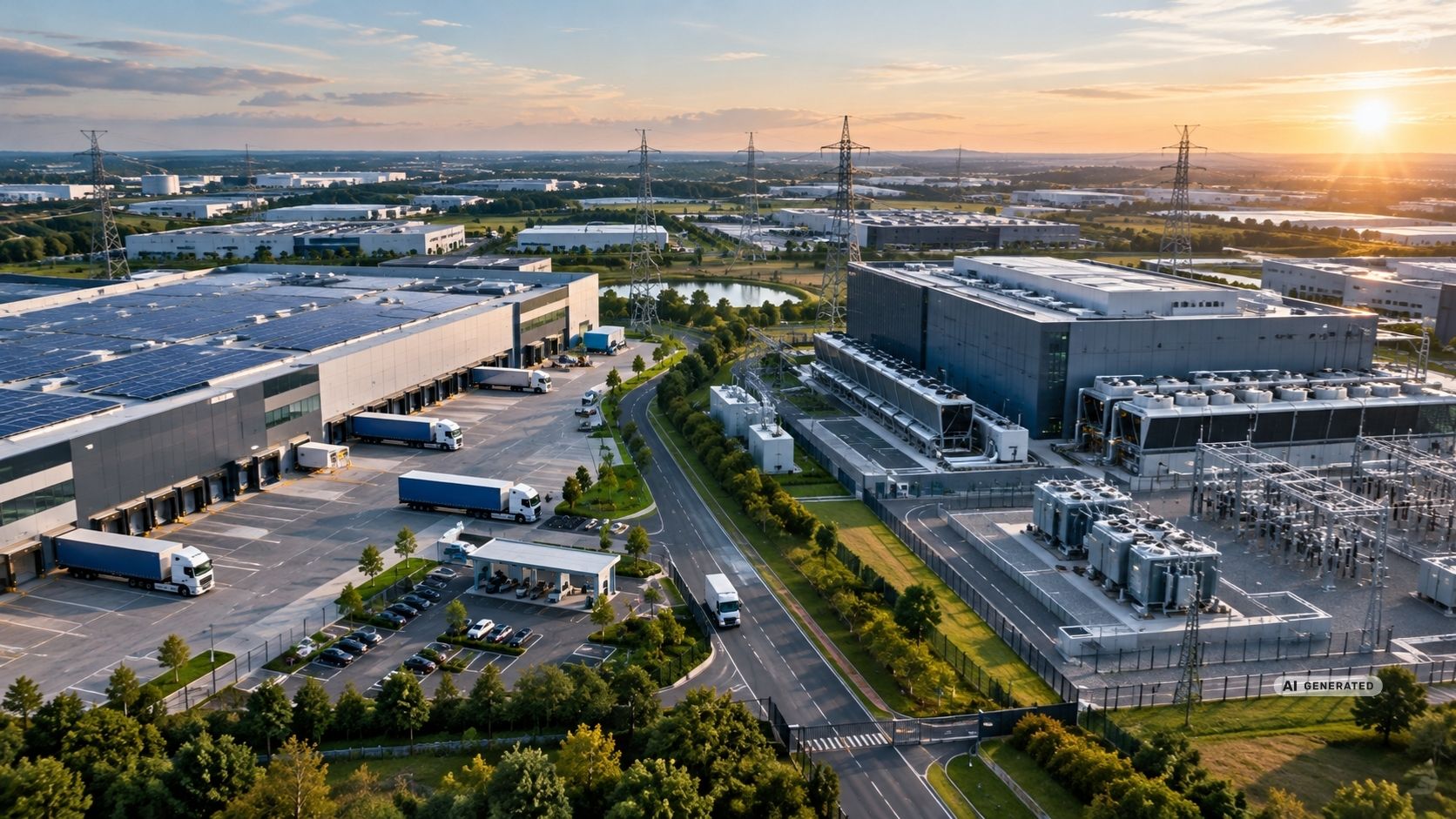
Across Europe, logistics operators are competing for more than land and transport access. They increasingly need something much harder to secure: grid capacity. Data centres are intensifying that competition — and changing how logistics locations are evaluated....
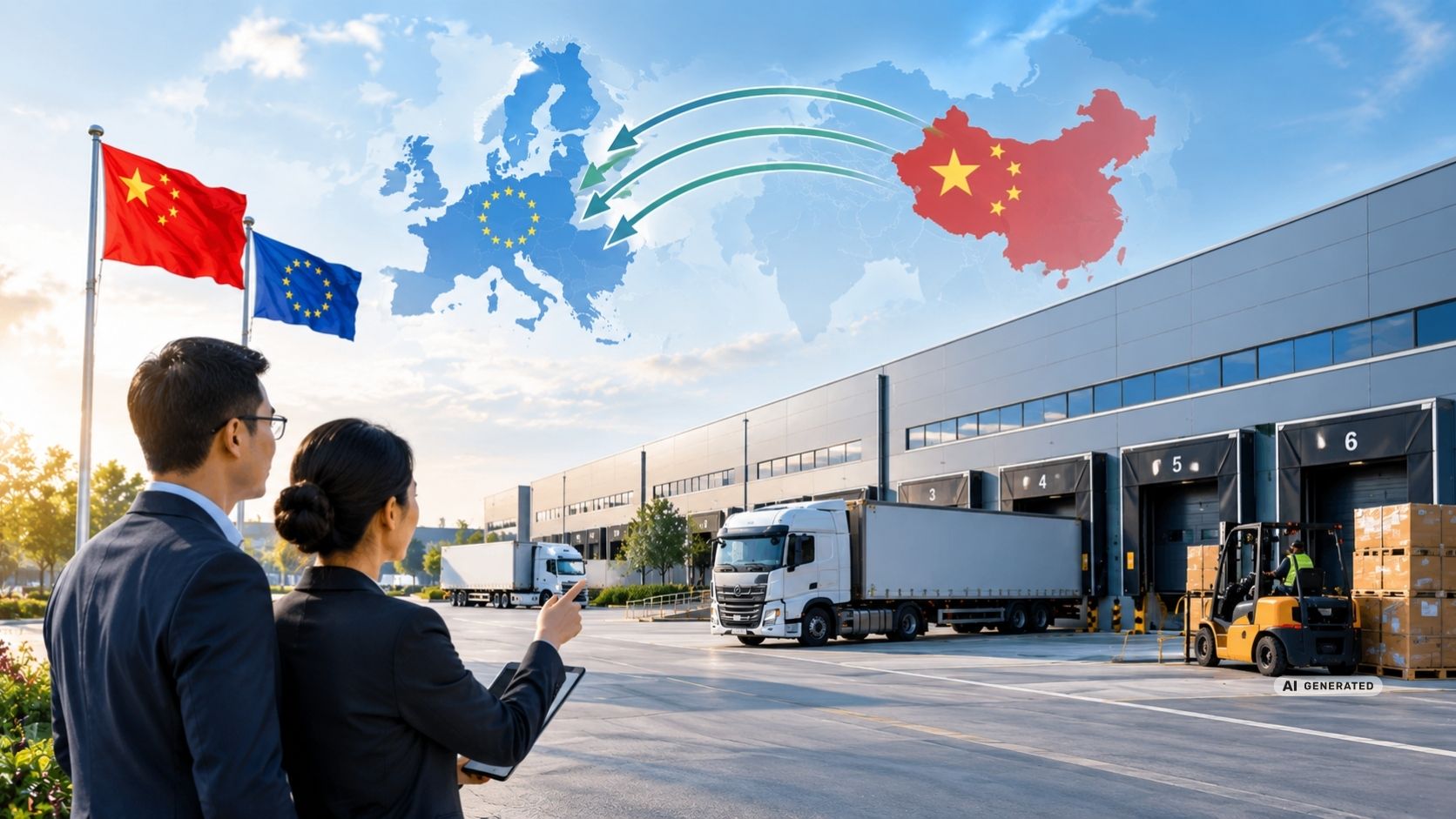
Chinese companies discover Europe's logistics real estate
Chinese companies are becoming an increasingly visible user group in Europe's logistics real estate market. What does this mean for warehouse space, 3PL structures and the requirements for European logistics locations?...
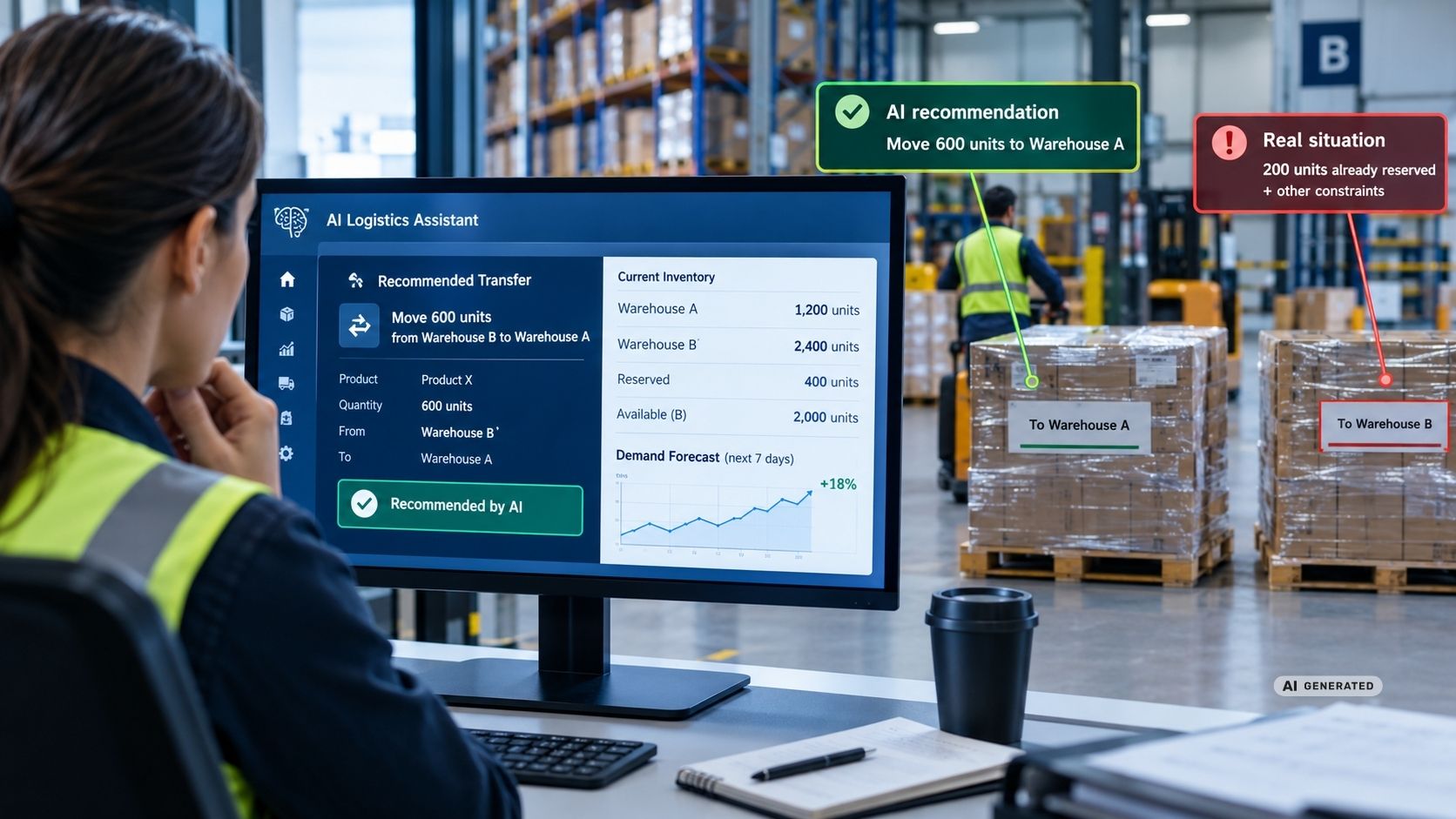
AI Hallucinations in Logistics: When AI Plans the Wrong Delivery
AI can analyze enormous amounts of logistics data — but it can also produce a convincing answer that is simply wrong. The critical question is not whether AI makes mistakes, but what happens when a wrong recommendation becomes an operational decision....
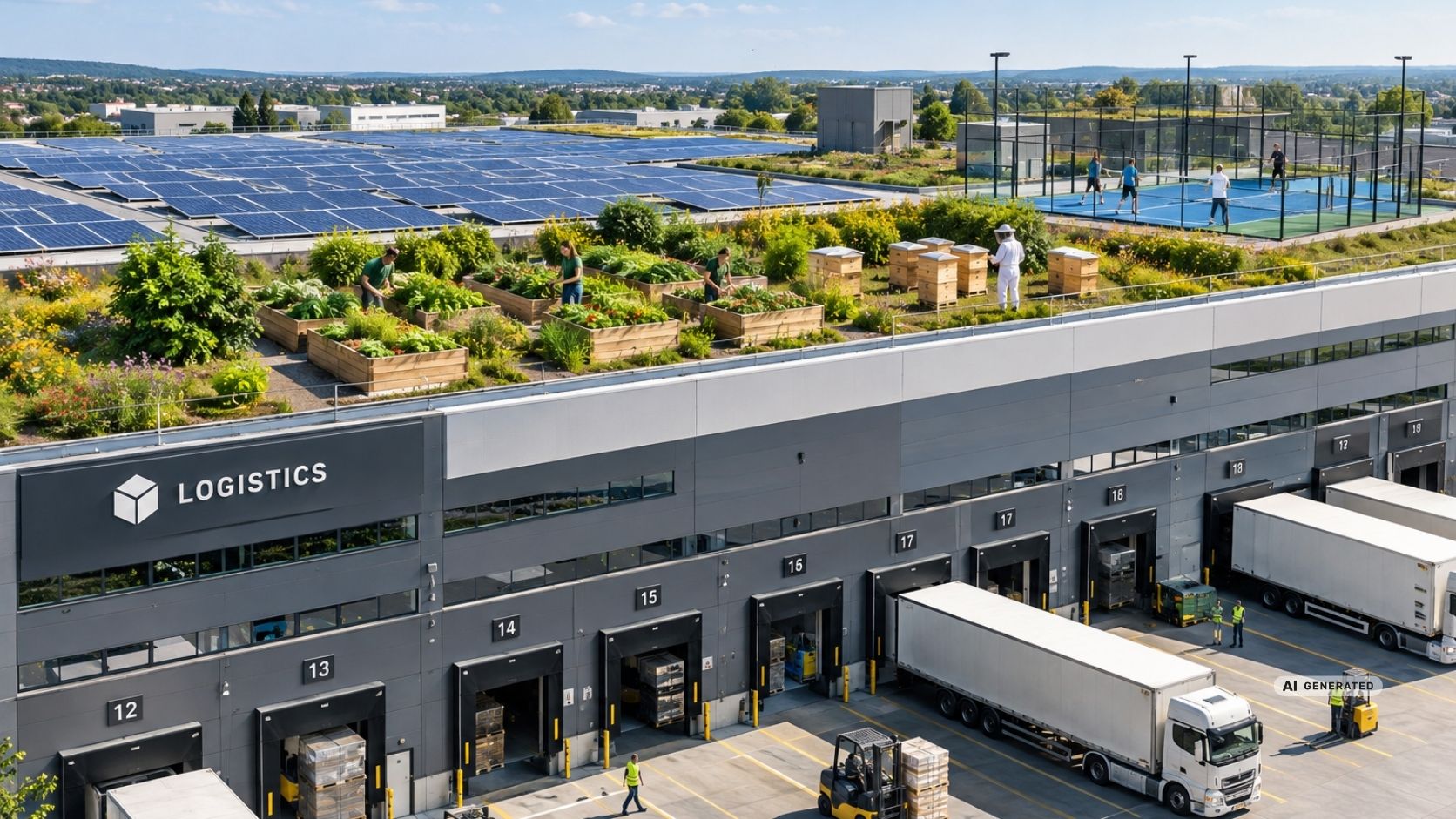
The Green Revolution on the Hall Roof: From Concrete Block to Ecological Power Plant?
Logistics roofs can do more than PV: greening, bees, urban farming and even sports areas turn unused roof space into multifunctional rooms....