


Fire protection in the warehouse: The fine line between logistics efficiency and total loss
Table of Contents
- The economic dimension: Why fire protection is essential for survival in warehouses
- Where are the dangers lurking? The biggest security risks and sources of fire
- The Labyrinth of Regulations: Germany vs. Europe and Worldwide
- Classic and modern ways of firefighting
- Innovations: Fire Protection 4.0 – AI and Oxygen Reduction
- The special case of server racks: The valuable and dangerous heart
- Excursus: Working in "artificial mountains" – Is oxygen reduction harmful to health?
- Case studies: The difference between "damage" and "catastrophe"
- Conclusion and checklist: The way to a safe warehouse
In modern logistics, every second counts. Just-in-time, same-day delivery and fully automated processes determine the pace. But what happens if the chain suddenly breaks? A fire in the warehouse is much more than just property damage. It means supply failures, loss of reputation and, in the worst case, insolvency.
Is your warehouse really safe, or are you just relying on luck?
This article dives deep into the subject matter – from the hidden dangers in server racks to the complex regulations and innovations such as oxygen reduction, which makes fires physically impossible.
The economic dimension: Why fire protection is essential for survival in warehouses
Why do companies invest millions in fire protection? The answer lies in the bare numbers. According to the Allianz Global Corporate & Specialty (AGCS) Risk Barometer , fires and explosions are regularly among the most expensive causes of insured losses worldwide. A single major fire in a distribution center costs an average of over 5 million euros – not including indirect costs due to business interruptions.
In warehouse logistics, immense values are concentrated in a confined space. From a physical point of view, a high-bay warehouse is often a gigantic, perfectly built "chimney": the vertical structures, the open alleys and the thermals allow fire to spread at breakneck speed (flashover).
Alarming fact: About 70% of companies that suffer a major fire and do not have sufficient emergency plans or business interruption insurance file for bankruptcy within three years of the event (source: VdS Schadenverhütung).
Securing the goods is therefore not only a question of compliance, but of economic survival. The challenge today is to implement fire protection measures that do not hinder the flow of goods, but integrate seamlessly into automated processes (e.g. shuttle systems).
Where are the dangers lurking? The biggest security risks and sources of fire
To prevent fires, you have to know where they start. It is a misconception that "stored goods" burn by themselves. The ignition sources are usually of a technical or human nature.
The top risk factors in the camp:
- Electrics and technical defects: At over 30%, this is the most common cause of fire in industry. Outdated cabling, overloaded distributors or defective chargers for industrial trucks are ticking time bombs.
- Lithium-ion batteries: A rapidly growing risk. Whether in the stored products (e-bikes, tools) or in the company's own forklifts. A so-called "thermal runaway" (the thermal runaway of a cell) is extremely hot, releases toxic gases and is almost impossible to extinguish by conventional means.
- Packaging material: Cardboard, shrink film and pallets (wood/plastic) offer an extremely high fire load and ignition.
- Contractors and hot work: Welding, cutting or roof work during ongoing operations often lead to smoldering fires due to flying sparks, which only break out openly hours later – often at night.
- IT infrastructure & server racks: An often underestimated risk (see Chapter 6).
What are the ways to reduce these risks?
- Thermography checks: Regular inspection of control cabinets using thermal imaging cameras to identify hotspots before a cable stews.
- Charge management: Establishment of separate, fire-resistant charging compartments for Li-ion batteries (e.g. F90 walls) with their own monitoring.
- Housekeeping: Consistent removal of packaging waste from traffic routes and aisles.
- Permit certificate procedure: Strict control of hot work by external companies (welding permit).
The Labyrinth of Regulations: Germany vs. Europe and Worldwide
In Germany, fire protection is extremely regulated, which creates planning security, but also creates high structural hurdles. In an international comparison, there are clear differences in philosophy.
The German regulations (normative & structural)
- Model Building Code (MBO) & State Building Codes: The Legal Foundation.
- Industrial Building Directive (IndBauRL): The heart of warehouses. It regulates fire compartment sizes depending on the fire resistance period of the components and the extinguishing equipment.
- Example: A warehouse without a sprinkler system may often have a maximum fire compartment area of 1,800 m². With sprinklers, sections of 10,000 m² or more are possible.
- TRGS 510: Crucial for the storage of hazardous substances.
- VdS guidelines (e.g. VdS CEA 4001): Although under private law (insurance industry), it is often the "gold standard" and contractual basis for insurance cover.
International comparison: USA and Europe
Why does a warehouse in the USA look different than in Germany?
- USA (NFPA Codes): The National Fire Protection Association (NFPA) dominates the world. NFPA 13 (Standard for the Installation of Sprinkler Systems) is authoritative.
- Difference: US codes are often "performance-based". There is a strong focus on highly efficient sprinklers (ESFR – Early Suppression, Fast Response) to enable open large-capacity warehouses, while Germany traditionally relies more on structural separation (fire walls).
- France: The strict rules of the ICPE (Installations Classées pour la Protection de l'Environnement) apply here. Warehouses are often divided into smaller cells ("cellules") to physically fragment risk.
- Eastern Europe (e.g. Poland): Since many logistics centers there are new buildings, there are often state-of-the-art facilities according to FM-Global standards (US industrial insurers). International investors often demand these standards, which go beyond local regulations to ensure global insurance coverage.
Classic and modern ways of firefighting
How do we actively protect the warehouse? The choice of means depends on the stored goods and the type of storage (block storage vs. high rack).
Detection (The "olfactory organ" of the camp)
- Point detectors: Often ineffective in high halls, as the smoke cools down before it reaches the ceiling ("heat cushion effect").
- Aspirating smoke detection systems (RAS): The standard for high racks. They actively suck in air at various points and analyze it using lasers. They detect fires in the earliest smoldering phase.
- Linear heat detectors: Sensor cables that are laid in the shelf levels and react to a rise in temperature.
Extinguishing technology (The "fire brigade" in the house)
- Sprinkler systems (wet systems): The proven classic. Disadvantage: Water damage to the goods and possible business interruption due to clean-up work.
- Spray water extinguishing systems: dispense water through all nozzles at the same time (for areas with extremely rapid fire propagation).
- Gas extinguishing systems: Rather for small parts warehouses, hazardous goods warehouses or electronics areas.
- Foam admixture: Used to cut off the oxygen supply of plastics (high fire load) or flammable liquids more effectively than pure water.
Innovations: Fire Protection 4.0 – AI and Oxygen Reduction
Technology doesn't stand still. What are the innovations before and during a fire?
Prevention (Before the Fire)
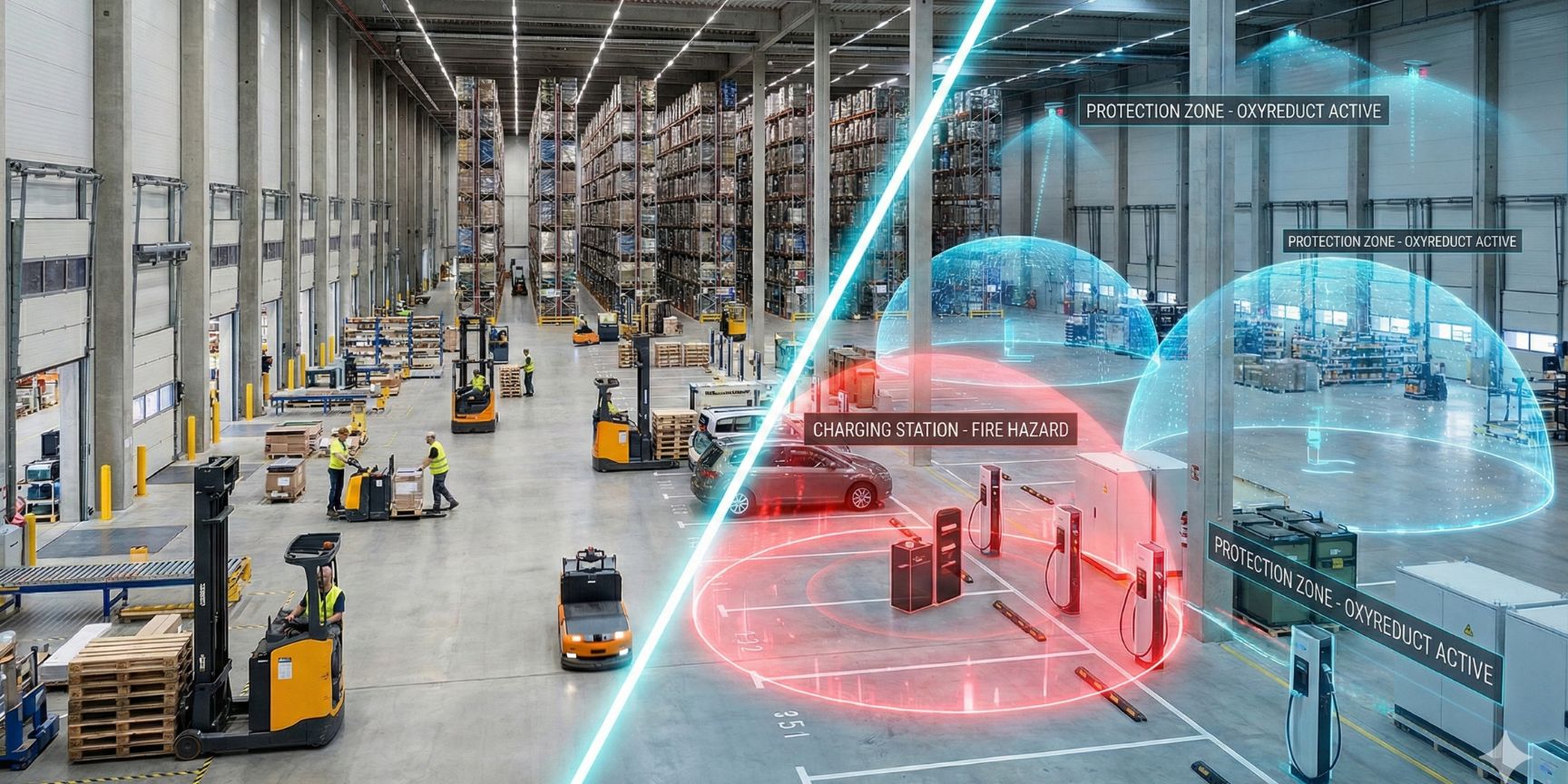
- Oxygen reduction (OxyReduct): The principle of active fire prevention. The oxygen content is permanently reduced by the supply of nitrogen (see case study C and excursus health below). A fire cannot occur in the first place.
- AI-supported video analysis: Intelligent camera systems ("Visual Fire Detection") that use algorithms to visually detect smoke patterns or flames – often faster than smoke detectors, especially in high halls or outdoor areas. They reliably distinguish between steam (forklifts, breathing air) and smoke.
Intervention (in case of fire)
- Darkroom drones: Drones that fly autonomously into the smoke-filled hall in the event of a fire, locate the source of the fire using thermal imaging and send real-time data to the fire brigade before they enter the building.
- Firefighting robots: Automatic storage and retrieval machines (SRMs) with integrated extinguishing function that grip and isolate the burning container.
The special case of server racks: The valuable and dangerous heart
In modern warehouses, IT controls everything (warehouse management systems, material flow computers). A failure of the servers means standstill. At the same time, server racks are a massive fire risk due to the high power density and heat generation.
The problem: Water is the enemy of hardware. A sprinkler system would extinguish the fire, but destroy data and hardware.
The solution: object deletion in the rack. Instead of flooding the entire server room, mini extinguishing systems are installed directly in the 19-inch cabinet .
- Technology: Suction systems detect smoke particles directly in the cabinet (earliest detection).
- Extinguishing agents: Use of residue-free extinguishing gases such as Novec 1230 or nitrogen. These gases extract heat from the fire or displace oxygen, but are not electrically conductive.
- Advantage: The servers simply continue to run during the deletion. There is no shutdown.
Excursus: Working in "artificial mountains" – Is oxygen reduction harmful to health?
Since we are going to talk about oxygen reduction in the case study, the question often arises: "Can my employees work there at all?"
The answer is: Yes, but under defined conditions.
The principle uses a physical comparison: a reduced oxygen content corresponds to the reduced oxygen partial pressure at high altitudes. You simulate a mountain climate in the camp, so to speak.
- 20.9 % : Normal ambient air (sea level).
- 17.0 % : Corresponds to approx. 1,850 metres in altitude (e.g. St. Moritz). Here, a healthy person hardly feels a difference.
- 15.0 % : Corresponds to approx. 2,700 metres in altitude (e.g. Zugspitze). Here, fire becomes impossible for most materials, but work is still possible.
- Below 13.0 % : Corresponds to >3,800 meters of altitude. Usually only enter with respiratory protection.
The legal situation: In Germany, DGUV Information 205-006 regulates access. For areas with 15-17% oxygen, respiratory protection equipment is usually not necessary. However, an occupational health check-up (G 31) is recommended to protect people with pre-existing cardiovascular conditions. For healthy employees, work feels like a brisk walk in the Alps – a little more strenuous, but safe.
Case studies: The difference between "damage" and "catastrophe"
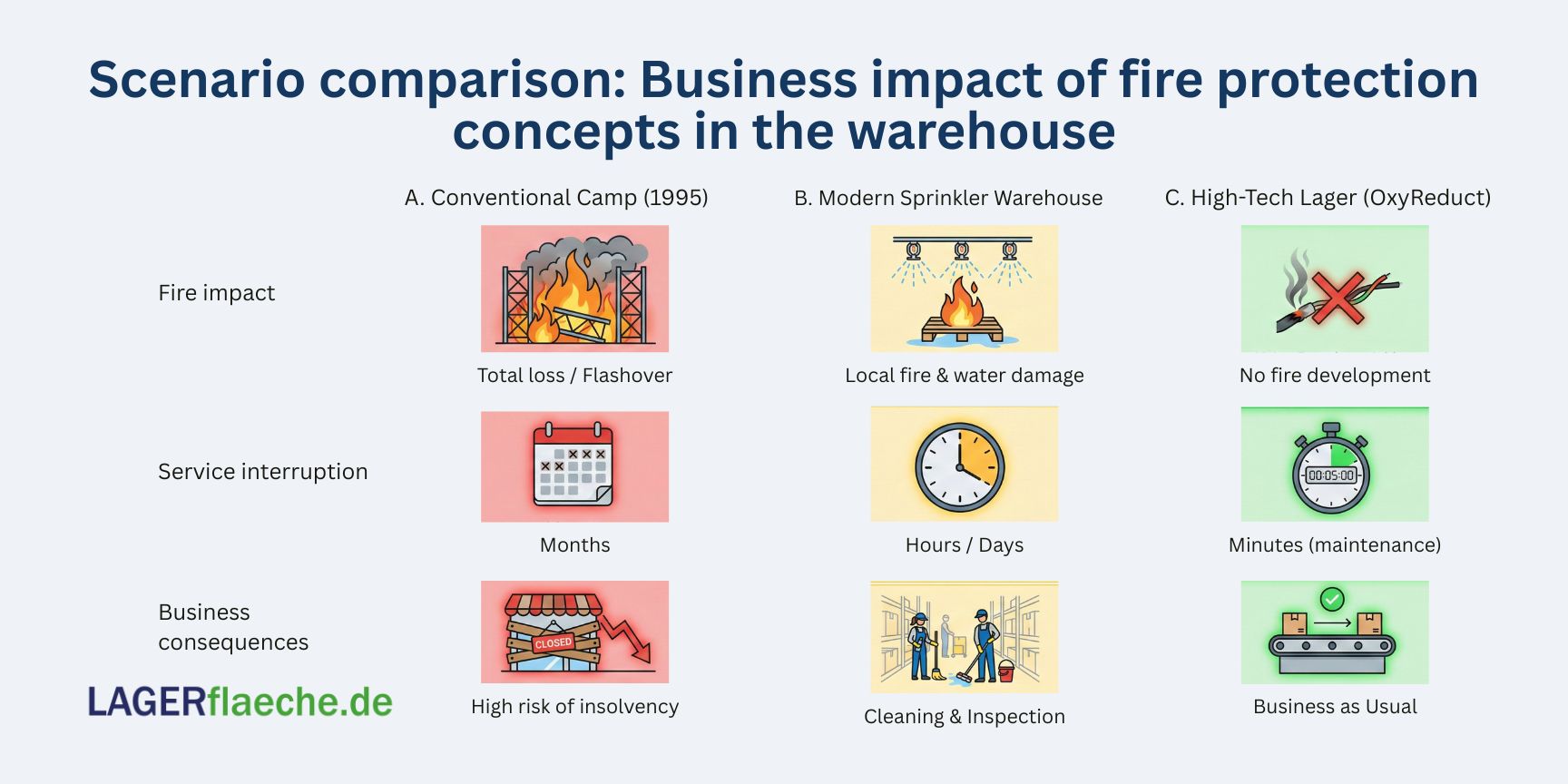
Let's compare three realistic scenarios to illustrate the practical benefits of the different concepts.
Initial situation: A cable fire in the drive of a storage and retrieval machine or a technical defect at a charging station. Flying sparks meet cardboard.
Scenario A: The conventional warehouse (built in 1995)
- Protection: fire alarm system (ceiling detector), fire extinguisher. No sprinklers.
- Procedure: The smoke rises, cools down and reaches the detectors late. The fire spreads to pallets. When the fire brigade arrives, the area is on fire.
- Result: total loss. Reconstruction takes 12 months. Customers are migrating. Insolvency risk high.
Scenario B: The modern logistics center (standard sprinkler)
- Protection: Aspirating smoke detector (RAS) and shelf sprinkler according to VdS.
- Procedure: The RAS detects the smallest pyrolysis particles. The alarm goes to the security service. When flames arise, the glass barrel of the sprinkler bursts directly above the source of the fire. The fire is extinguished or contained locally.
- Result: partial damage. The device is defective, 10-20 pallets are wet due to extinguishing water. The company is at a standstill for 1 day for cleaning and testing.
Scenario C: The high-tech warehouse (oxygen reduction / OxyReduct)
- Protection: Permanent reduction of the oxygen content to 14.5% by volume through nitrogen supply.
- Procedure: An electric spark is created, the cable stews. But the decisive factor is missing: oxygen. Since the ignition limit is not reached, no open flame can develop. The fire "suffocates" in the bud.
- Result: No fire damage. Only the defective component has to be replaced. No soot, no water, no fire brigade operation. Warehouse operations continue undisturbed in the neighboring alleys.
Comparison table:
| Criterion | Scenario A (Conventional) | Scenario B (Sprinkler) | Scenario C (oxygen reduction) |
| Strategy | Reactive | Reactive (Delete) | Preventive (prevention) |
| Damage to goods | Total loss | Water damage possible | None |
| Shutdown | Months | Hours/Days | Minutes (maintenance) |
| Investment | Low | Medium | High (+ operating costs) |
Conclusion and checklist: The way to a safe warehouse
Fire protection is not a static condition, but a dynamic process. The regulations (IndBauRL) provide the framework, but real safety comes from individual risk analysis.
What should warehouse operators do now?
- Update risk assessment: Have you stored new technologies such as e-bikes or Li-ion batteries that overwhelm your old fire protection concept?
- Check maintenance: When were sprinkler pumps and smoke aspiration systems last tested under load?
- Train employees: Do your forklift drivers know what to do in the event of a battery fire (driving to the scene of an accident vs. fleeing)?
- Check innovation: For new buildings, calculate whether oxygen reduction is cheaper in the long term than building huge sprinkler tanks and possible water damage.
Security costs money – but no security costs existence.
Latest Blog Posts
Stay up to date with the newest trends, insights, and tips in warehouse and logistics. Our latest articles help you navigate the industry with confidence.
Data Centres vs. Logistics Facilities: The Race for Power and Land
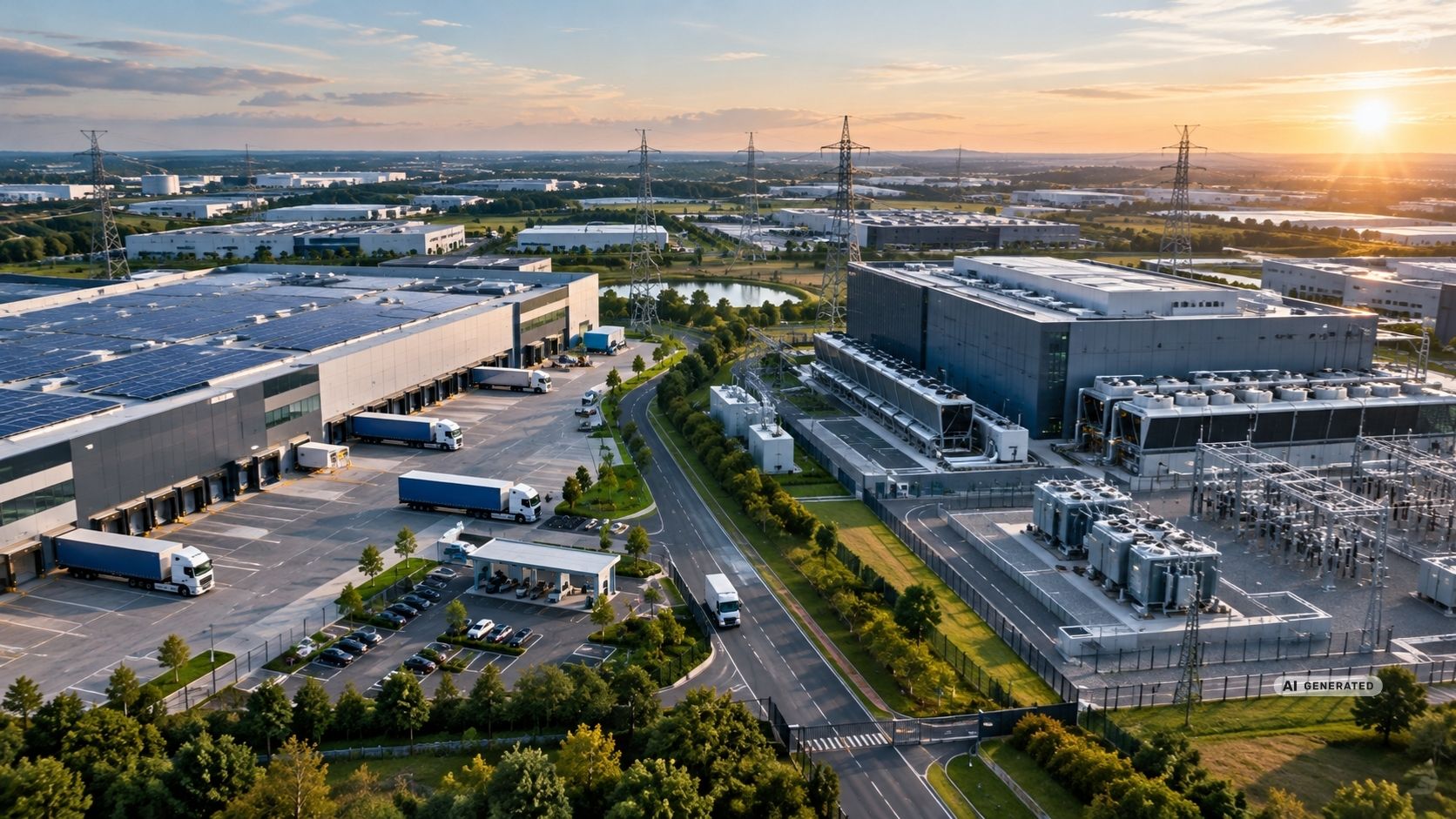
Across Europe, logistics operators are competing for more than land and transport access. They increasingly need something much harder to secure: grid capacity. Data centres are intensifying that competition — and changing how logistics locations are evaluated....
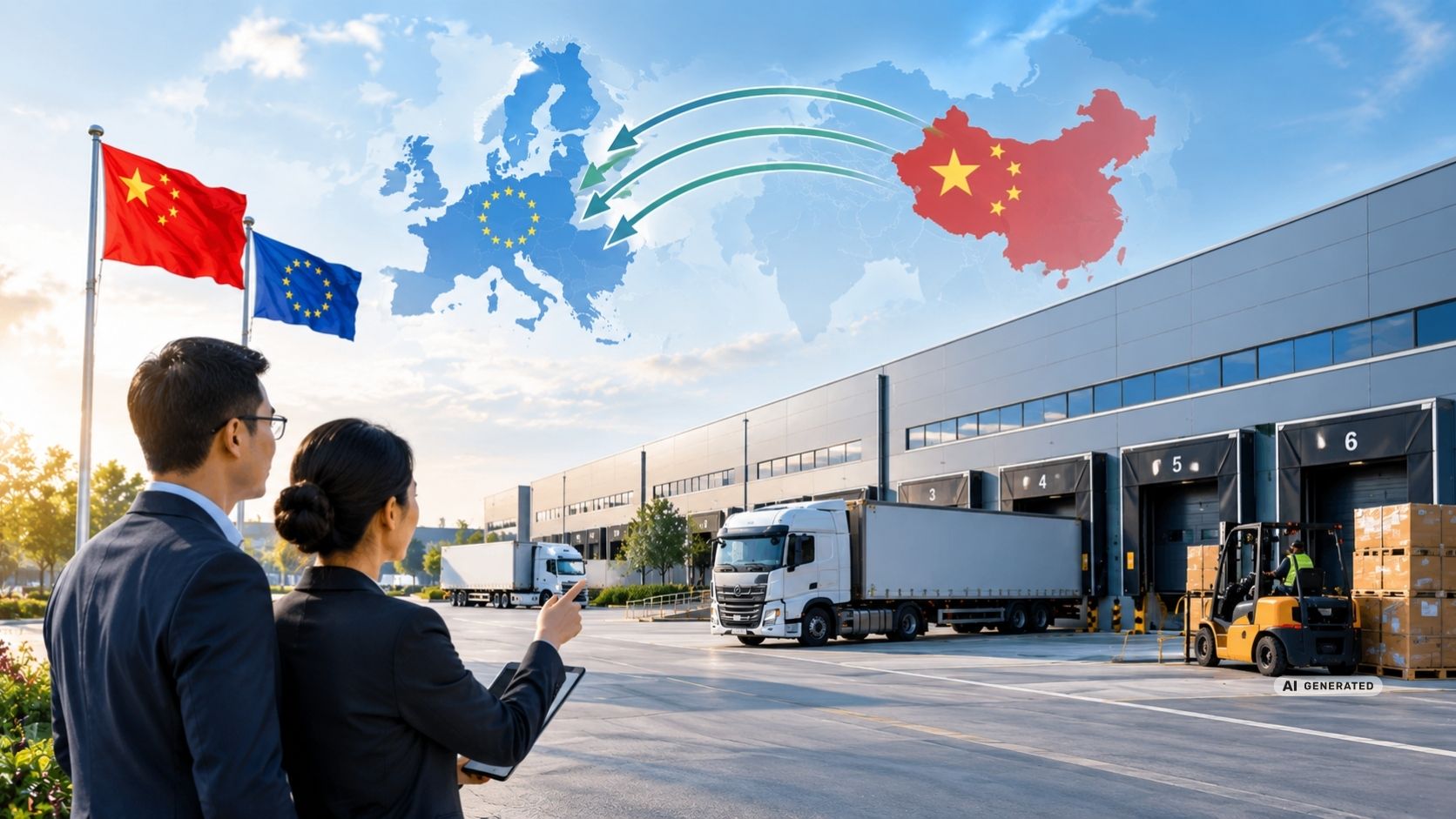
Chinese companies discover Europe's logistics real estate
Chinese companies are becoming an increasingly visible user group in Europe's logistics real estate market. What does this mean for warehouse space, 3PL structures and the requirements for European logistics locations?...
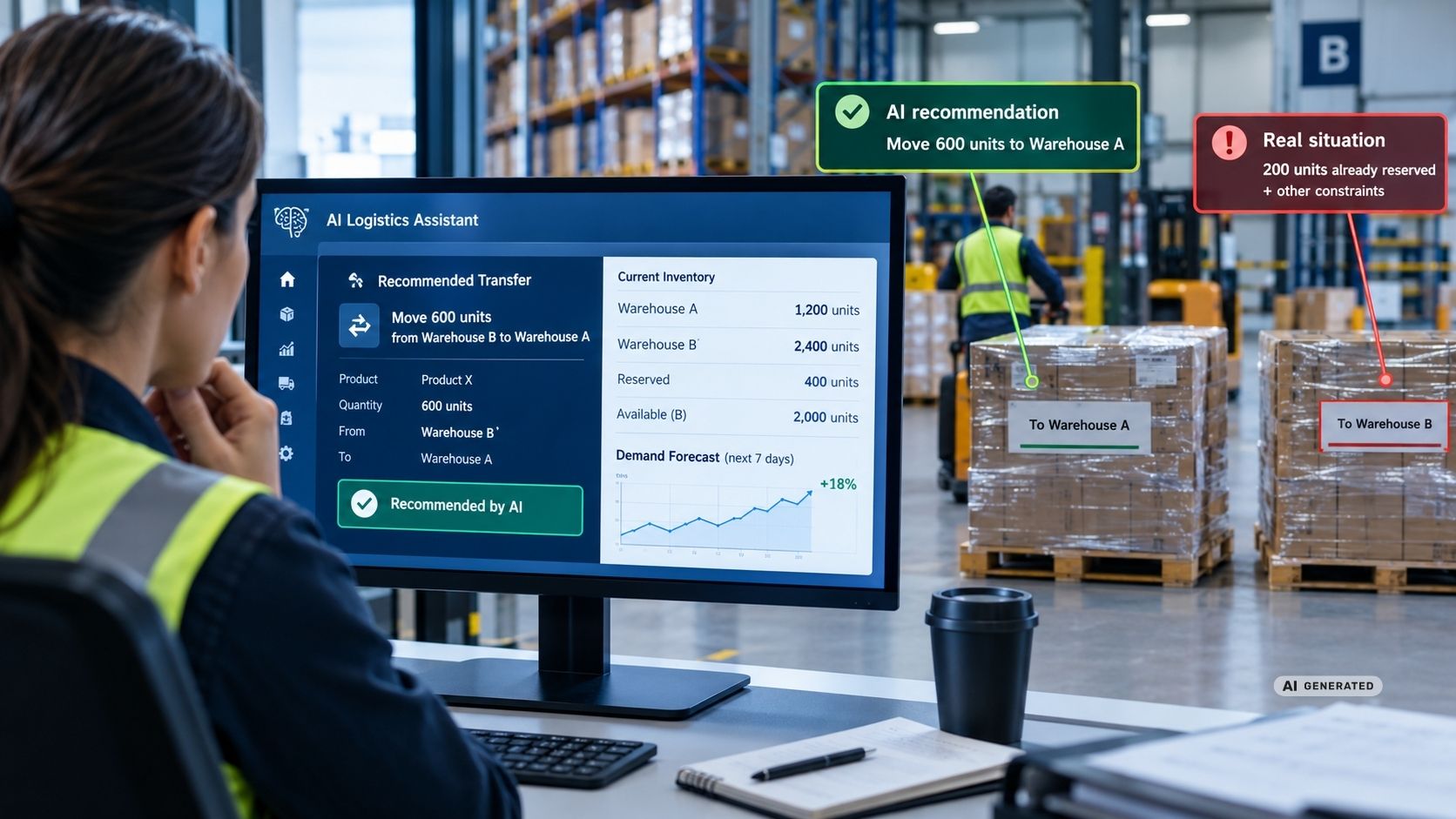
AI Hallucinations in Logistics: When AI Plans the Wrong Delivery
AI can analyze enormous amounts of logistics data — but it can also produce a convincing answer that is simply wrong. The critical question is not whether AI makes mistakes, but what happens when a wrong recommendation becomes an operational decision....
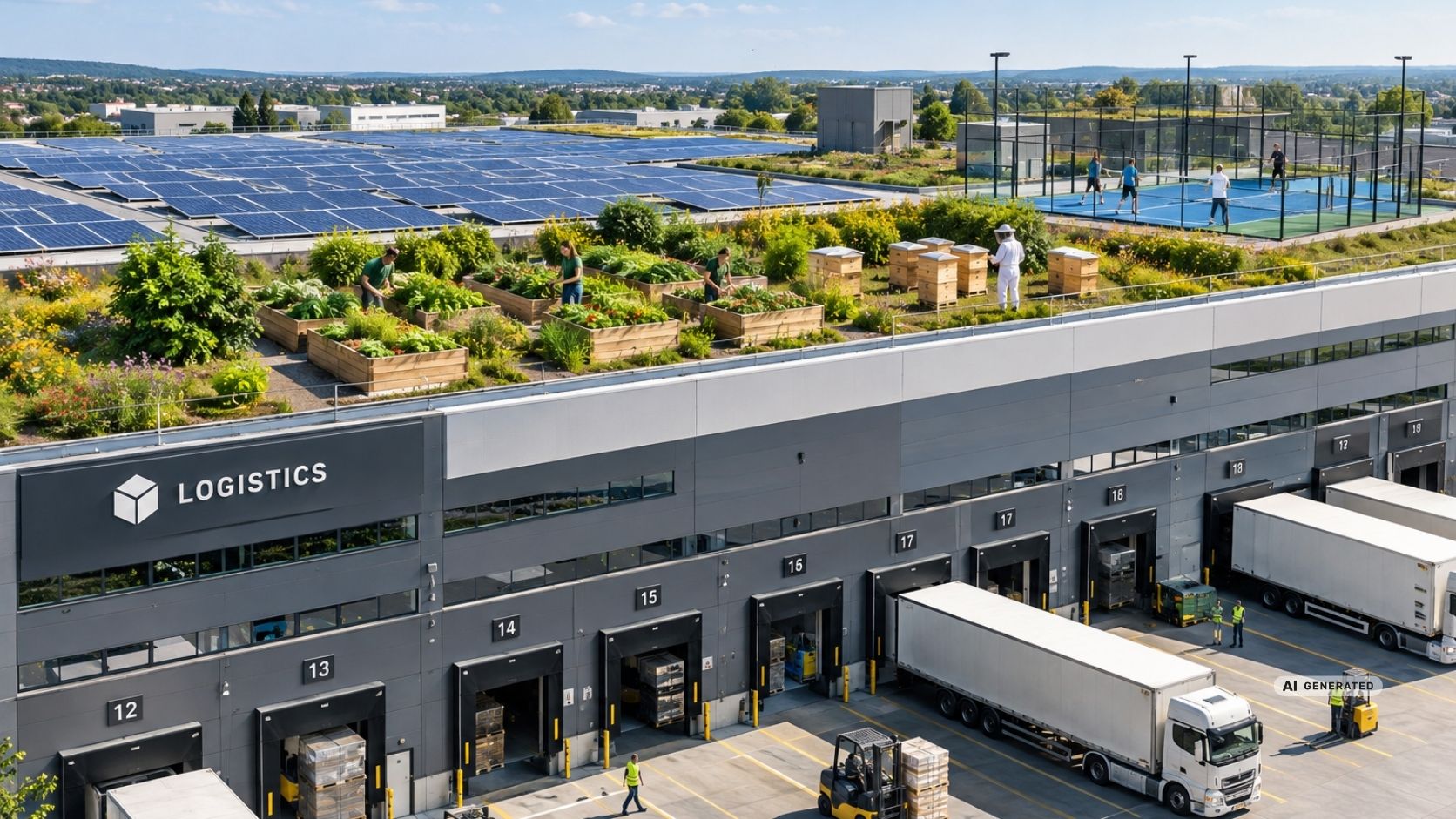
The Green Revolution on the Hall Roof: From Concrete Block to Ecological Power Plant?
Logistics roofs can do more than PV: greening, bees, urban farming and even sports areas turn unused roof space into multifunctional rooms....