


The Customs Revolution: Why the EU Customs Data Hub Is Changing the Logistics World Forever
Table of Contents
- From the barrier mentality to the digital strategy: The evolution of customs
- The "Game Changer": What is the EU Customs Data Hub?
- "Trust and Check": More than just AEO
- What do logistics companies and freight forwarders have to consider now?
- International comparison: Germany vs. world
- Innovations: AI, blockchain and the digital product passport
- Practical Case Study: "Logistik GmbH Müller & Co." in 2030
- Conclusion & Outlook: Action instead of waiting
Is your company ready for the abolition of the classic customs declaration?
It sounds like science fiction, but it is the concrete plan of the European Commission: by 2038, the traditional customs declaration as we know it is to be history. It will be replaced by data-driven real-time monitoring – the EU Customs Data Hub. For freight forwarders, contract logistics companies and supply chain managers, this means not only an IT change, but a complete paradigm shift in the way goods movements are thought and managed.
In this article, we analyze the development from the paper-based past to the data-driven future, shed light on the differences between Germany and the world, and use a concrete case study to show what to expect.
From the barrier mentality to the digital strategy: The evolution of customs
To understand the future, we need to look back briefly. In the past, customs were one thing above all: a source of fiscal revenue and a physical barrier.
The era of paper and ATLAS
Until the early 2000s, customs clearance in Europe was characterised by stacks of paper forms (single administrative documents). Germany was a pioneer here with the introduction of ATLAS (Automated Tariff and Local Customs Clearance System). What started as an innovation is now a robust but rigid standard.
- Fact: German customs clears over 267 million items in the movement of goods every year (source: General Customs Directorate, annual report).
- Problem: The current systems (such as ATLAS in DE or DELTA in FR) are national. Communication between the 27 EU systems is often cumbersome and error-prone.
The Status Quo: Complexity through Geopolitics
Today, customs are no longer just a source of revenue, but a security tool. Sanctions lists, dual-use goods, the Supply Chain Due Diligence Act (LkSG) and the CO2 Border Adjustment Mechanism (CBAM) have increased complexity exponentially. Customs has become the "gatekeeper" for non-financial risks.
The "Game Changer": What is the EU Customs Data Hub?
The EU customs reform, proposed in May 2023, is the most comprehensive since the creation of the Customs Union in 1968. The heart of the project is the EU Customs Data Hub.
Away from the transaction, towards the data stream
Until now, customs was based on the "customs declaration" per shipment. The Data Hub changes this radically:
- Central database: Instead of using 27 national IT systems, all data flows into a central European data pool.
- Data before goods: Companies deliver data about their supply chains to the hub long before the goods reach the border.
- AI-powered risk analysis: Artificial intelligence analyzes these data streams in real time to identify risks (fraud, security flaws).
Important timeline for logisticians:
- 2028: Launch for e-commerce (mandatory).
- 2032: Voluntary use for all other economic operators.
- 2038: Mandatory use for all importers/exporters. (Source: European Commission, Customs Union reform proposal)
"Trust and Check": More than just AEO
Many logistics companies are familiar with the AEO (Authorized Economic Operator). But the reform introduces a new category: the "trust and check" merchant.
What's the difference?
An AEO enjoys a leap of faith, but still has to submit applications. A trust and check trader gives customs authorities full access to their real business data (ERP systems).
- The advantage: You can release goods for free circulation without active customs involvement per shipment. The goods simply flow, customs checks the data in the background.
- The expectation: maximum transparency. If you want this status, you have to be able to map your supply chain digitally without gaps.
What do logistics companies and freight forwarders have to consider now?
The role of the freight forwarder is changing from a "form filler" to a "data manager".
For the carrier:
The classic customs agency, which earns its money purely by creating MRNs (Movement Reference Numbers), will have a hard time.
- New service: consulting on data quality. If the customer's data is bad, the Data Hub blocks the goods.
- Liability: Who is liable if the AI finds an anomaly in the data hub? The contractual structure between shipper and freight forwarder must be readjusted.
For the contract logistics company and customs warehouse operator:
The bonded warehouse is gaining strategic importance.
- Buffer zone: In times of volatile markets and trade wars, the bonded warehouse serves not only as a tax deferral, but also as a "safety valve" so that goods are not yet definitively nationalized.
- E-commerce: With the abolition of the 150-euro exemption limit (another part of the reform), millions of small consignments will have to be cleared through customs. Contract logistics companies must have IT systems that can process mass data (high volume, low value).
International comparison: Germany vs. world
Why is customs clearance different in Rotterdam than in Hamburg or Shanghai?
Germany: Thoroughness before speed?
Germany is considered the "gold standard" in technical implementation (ATLAS), but is often perceived as bureaucratic. The interpretation of the tariff codes is very strict.
- Advantage: High legal certainty.
- Disadvantage: Slow processes in case of ambiguity.
Netherlands: The gateway to Europe
The Netherlands has traditionally pursued a more trade-friendly approach ("trade facilitation"). Customs authorities often work more closely with companies to find pragmatic solutions. This often makes Rotterdam the preferred entry point for Asian imports.
United Kingdom: The warning example
Since Brexit and the introduction of the GVMS (Goods Vehicle Movement Service), we have seen what happens when systems do not harmonize.
- Lesson: A relapse of digital Union systems into national borders leads to massive friction losses and cost increases (estimated +15% administrative effort per shipment in UK-EU traffic).
China & USA: Geopolitical weapons
- USA: Customs (CBP) uses extremely advanced data mining tools to detect forced labor in the supply chain (Uyghur Forced Labor Prevention Act). The reversal of the burden of proof there is brutal: the importer must prove that he is clean.
- China: Here, customs are often an instrument of industrial policy. The processes are highly digitized (single window), but data sovereignty lies absolutely with the state.
Innovations: AI, blockchain and the digital product passport
The future of customs does not lie in better forms, but in better data.
Artificial Intelligence (AI)
AI is already being used today to automatically evaluate X-ray images of containers. In the future, AI in the data hub will detect anomalies in the trade data (e.g. "Why is this high-quality steel suddenly declared so cheaply?" -> suspicion of circumvention of anti-dumping duties).
Blockchain
Blockchain is ideal for proof of origin (important for free trade agreements). An immutable data set that extends from the mine to the bonded warehouse.
Example: The battery passport From 2027, industrial batteries in the EU must have a digital passport. Customs will no longer physically check the battery, but will scan the digital twin to verify the CO2 footprint and raw material origin.
Practical Case Study: "Logistik GmbH Müller & Co." in 2030
To make the theory tangible, let's consider a scenario.
Initial situation:Logistik GmbH Müller & Co. imports car parts from Asia for a German manufacturer.
Old process (2024): Container arrives. Müller & Co. receives PDF invoices. A clerk types data in ATLAS. Waiting for inspection. Goods are released. Faulty HS codes are only noticed during a tax audit 3 years later -> High additional payment.
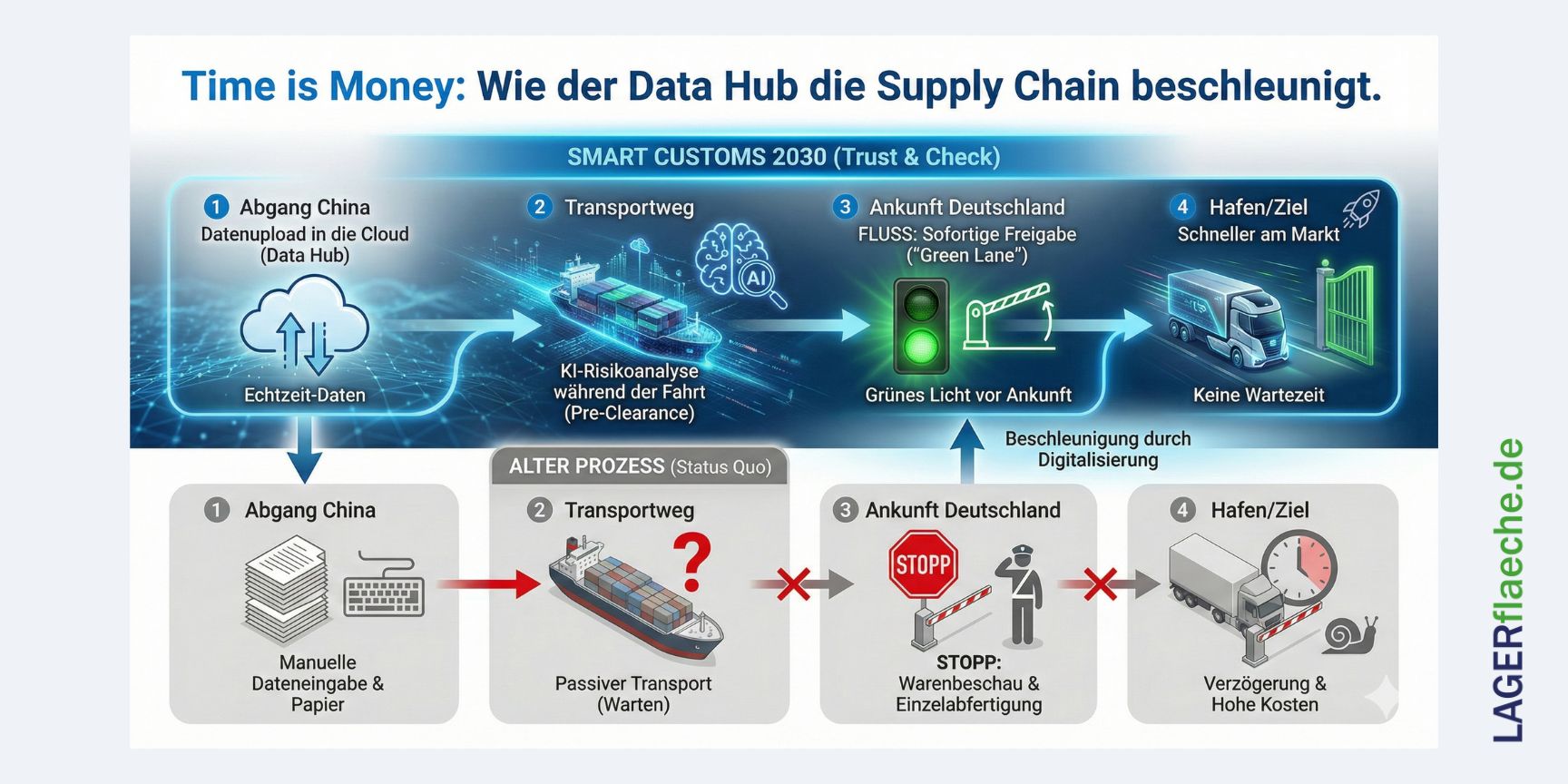
New process with EU Customs Data Hub (2030):
- Pre-phase: The Asian supplier feeds the data (product type, value, ingredients for CBAM) directly into the data hub when it is shipped.
- Transport: While the goods are at sea, the AI of customs checks the data against risk indicators.
- Arrival: Da Müller & Co. has the "Trust and Check" status and the AI gives the "green light", the goods are automatically released into free circulation when unloaded in the port. No waiting.
- Payment: The customs debt is calculated and collected in aggregate form at the end of the month.
The utility: reduction of throughput time by 3 days, reduction of administrative costs by approx. 25%. But: Müller & Co. had to invest massively in IT interfaces.
Conclusion & Outlook: Action instead of waiting
Customs clearance is evolving from an administrative hurdle to a data-driven ecosystem.
What the future holds:
- Complete transparency: Customs will know everything. The days of "gray areas" are over.
- E-commerce focus: The flood of parcels is forcing customs to automate.
- Environmental tariffs: Customs are becoming climate protectors (enforcement of CBAM and deforestation regulations).
What you should do now:
- Auditing data: How clean is your master data? Are customs tariff numbers and origin calculations correct?
- Check your IT strategy: Is your ERP system ready for API interfaces to the future data hub?
- Build knowledge: Train your staff not only in customs law, but also in data management.
The customs of the future will not wait. Those who prepare now will benefit from the Data Hub. Those who wait will be overwhelmed by bureaucracy.
Sources and further data:
- European Commission (2023): Customs reform proposals and EU Customs Data Hub.
- General Customs Directorate Germany: Annual statistics on clearance (ATLAS).
- World Bank LPI (Logistics Performance Index): Comparisons of customs efficiency worldwide.
- Destatis: Foreign trade data Germany.
Latest Blog Posts
Stay up to date with the newest trends, insights, and tips in warehouse and logistics. Our latest articles help you navigate the industry with confidence.
Data Centres vs. Logistics Facilities: The Race for Power and Land
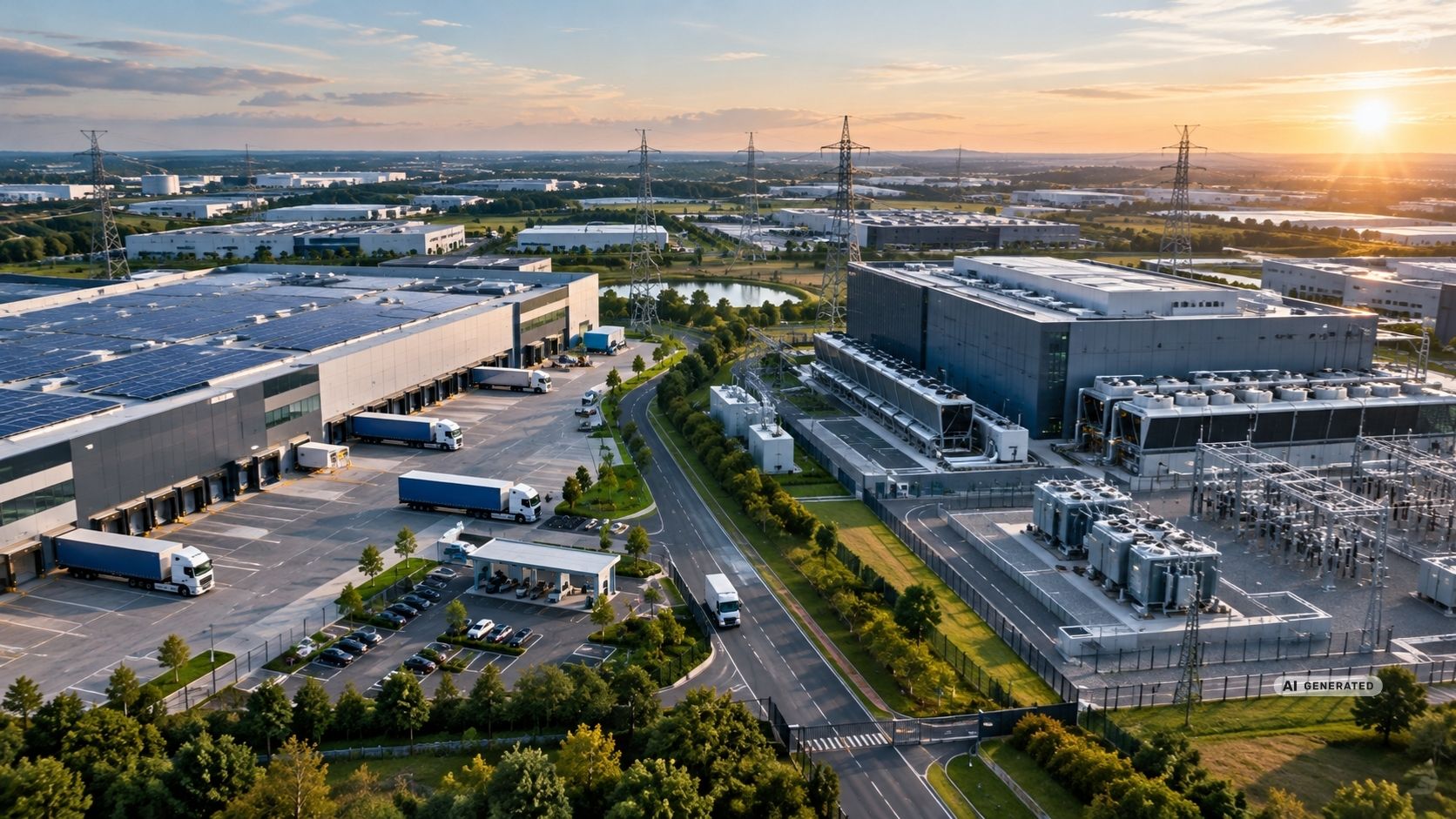
Across Europe, logistics operators are competing for more than land and transport access. They increasingly need something much harder to secure: grid capacity. Data centres are intensifying that competition — and changing how logistics locations are evaluated....
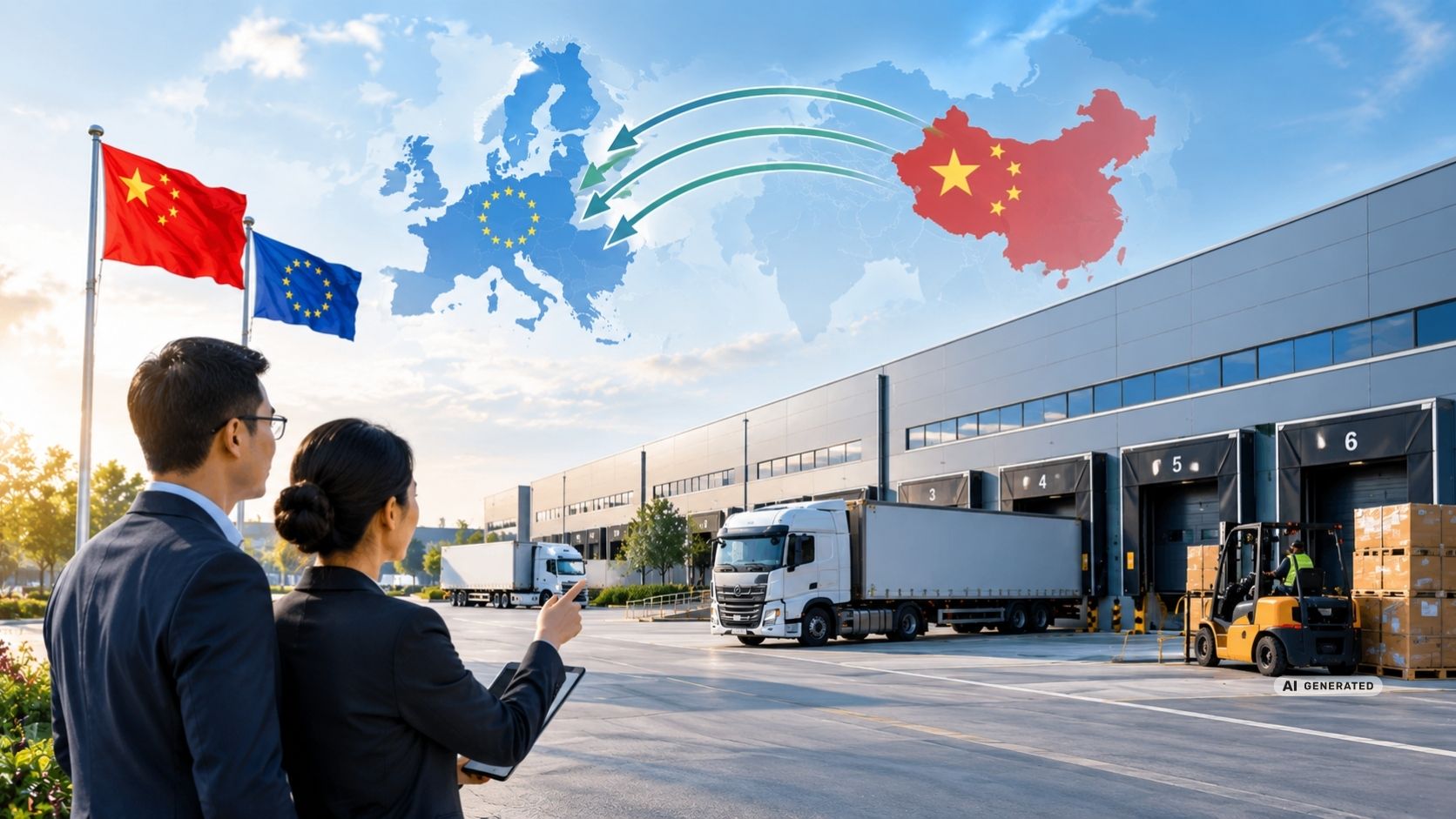
Chinese companies discover Europe's logistics real estate
Chinese companies are becoming an increasingly visible user group in Europe's logistics real estate market. What does this mean for warehouse space, 3PL structures and the requirements for European logistics locations?...
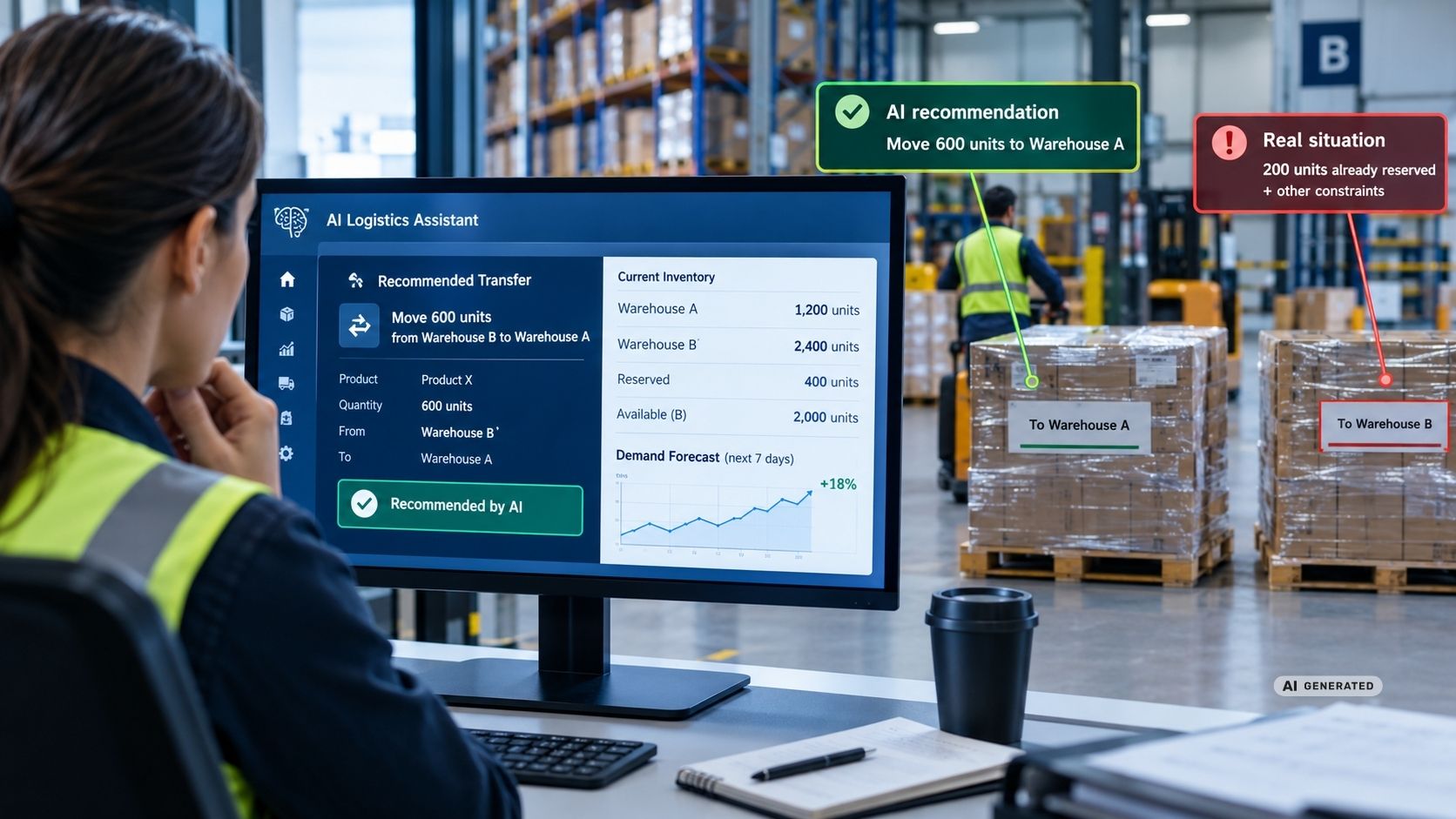
AI Hallucinations in Logistics: When AI Plans the Wrong Delivery
AI can analyze enormous amounts of logistics data — but it can also produce a convincing answer that is simply wrong. The critical question is not whether AI makes mistakes, but what happens when a wrong recommendation becomes an operational decision....
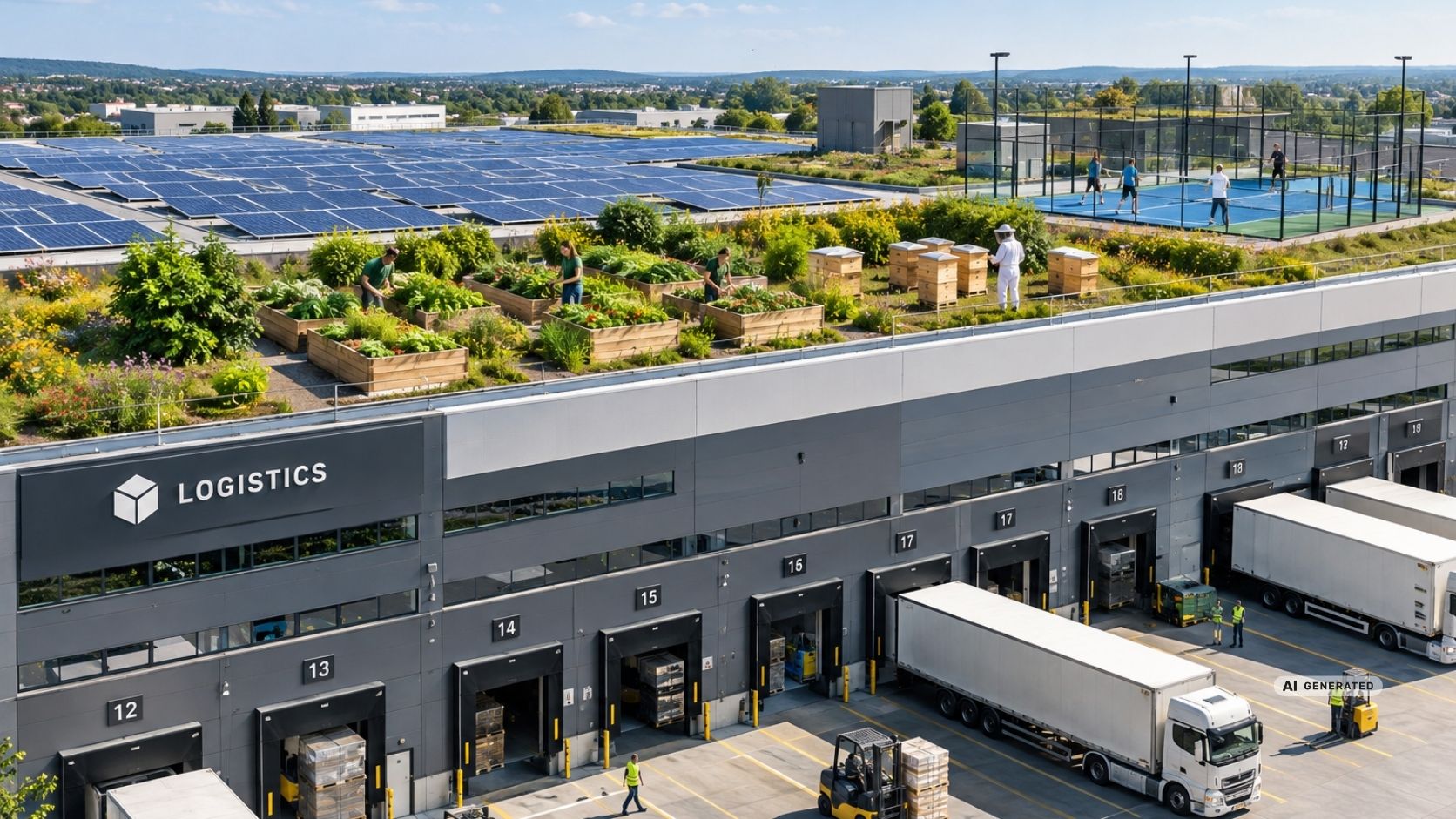
The Green Revolution on the Hall Roof: From Concrete Block to Ecological Power Plant?
Logistics roofs can do more than PV: greening, bees, urban farming and even sports areas turn unused roof space into multifunctional rooms....