



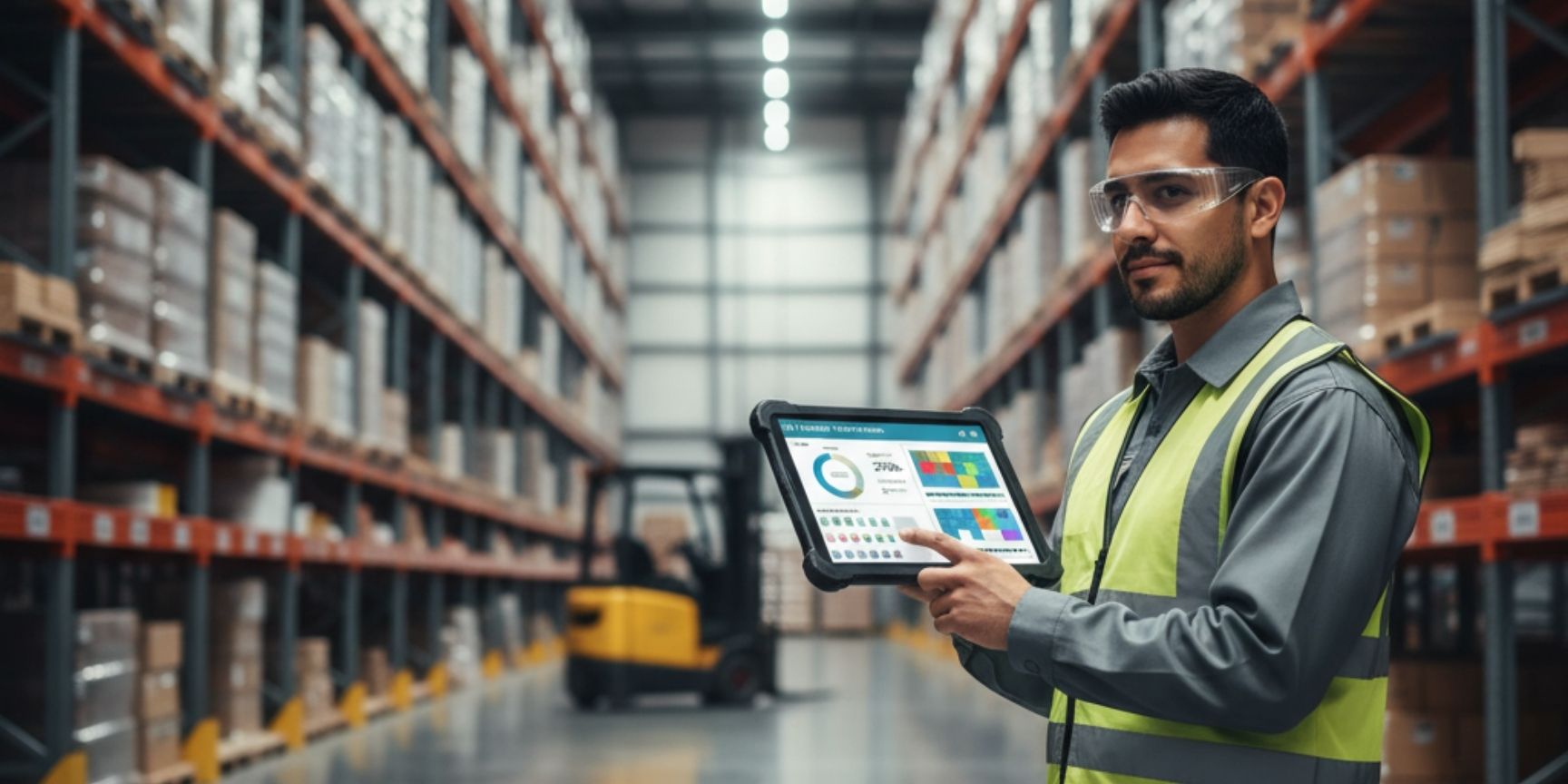
Cloud Revolution in the Warehouse: Why there is no way around SaaS Platforms in Logistics
Table of Contents
- What is a SaaS Platform anyway? Renting instead of Owning
- The Nerve Center of the Supply Chain: SaaS for Transport, Warehousing and Production
- Warehouse Focus: How a SaaS WMS Transforms your Warehouse into an Efficiency Machine
- The Strengths at a Glance: Why SaaS is Worthwhile for your Warehouse
- The Other Side of the Coin: Disadvantages and Risks of SaaS
- How much does the Cloud Cost? A Look at Typical SaaS Pricing Models
- For Whom is a SaaS Platform the Right Choice?
- Looking Beyond Borders: SaaS Adoption in a Global Comparison
- Making the Right Decision: Your Journey to the Cloud
- Conclusion: Acting instead of Reacting – the Future of Logistics is SaaS
In a world where supply chains are the backbone of the global economy, efficiency, agility and transparency are no longer optional extras – they are essential for survival. Companies in transport, warehousing and production are under constant pressure to act faster, more flexibly and more cost-effectively. But how can this monumental task be accomplished without investing in massive, rigid IT infrastructures? The answer is already hovering over us: in the cloud. Software-as-a-Service (SaaS) has evolved from an IT buzzword to a fundamental game-changer that is revolutionizing warehouse logistics in particular. Dive into the world of SaaS platforms with us and discover why the future of your warehouse lies in the cloud – and what you need to pay attention to.
What is a SaaS Platform anyway? Renting instead of Owning
Imagine no longer having to invest in expensive software licenses, powerful servers, and an entire team of IT experts for maintenance. Instead, you rent a turnkey software solution that you and your team can access anytime, from anywhere via the internet. This is exactly the principle of Software-as-a-Service.
The provider of the SaaS platform takes care of everything that goes on in the background: the servers, security, updates and maintenance. As a customer, you pay a predictable, usually monthly or annual fee and can concentrate fully on your core business. This model transforms high initial capital expenditure (capex) into manageable operating costs (opex) and democratizes access to high-end technology.
The Nerve Center of the Supply Chain: SaaS for Transport, Warehousing and Production
SaaS solutions span the entire logistics chain. In transport , they enable dynamic route planning, real-time tracking of shipments and efficient fleet management via transport management systems (TMS). In production , they help with the planning of resources (ERP systems) and the control of manufacturing processes.
However, SaaS platforms unleash their true superpower in the warehouse, the heart of every supply chain. Here, where countless processes – from goods receipt and storage to picking and packaging to shipping – have to mesh perfectly, intelligent control is essential.
Warehouse Focus: How a SaaS WMS Transforms your Warehouse into an Efficiency Machine
A cloud-based warehouse management system (WMS) is more than just a digital inventory list. It is the command center of your warehouse. But what can such a system do in concrete terms?
- Real-time inventory accuracy: Forget about manual counts and inaccurate Excel lists. A SaaS WMS shows you exactly what is where in the warehouse on the item. This drastically reduces stock-outs and overcapacity.
- Optimized processes: The system guides your employees on the fastest route to the right shelf space (chaotic or fixed warehousing), optimizes picking strategies (e.g. multi-order picking) and automates the creation of shipping labels.
- Paperless working: Work instructions are sent directly to mobile devices such as handheld scanners or tablets. This reduces errors, speeds up processes and protects the environment.
- Data analysis and reporting: What is your pick rate per hour? What are your fast or slow moving products? Detailed dashboards provide you with the facts you need to make informed business decisions.
The global market for public cloud services is growing inexorably. According to a forecast by Gartner, spending is expected to rise to over $675 billion in 2024, with SaaS accounting for the largest share. This figure impressively proves that the cloud is not a trend, but the new standard.
The Strengths at a Glance: Why SaaS is Worthwhile for your Warehouse
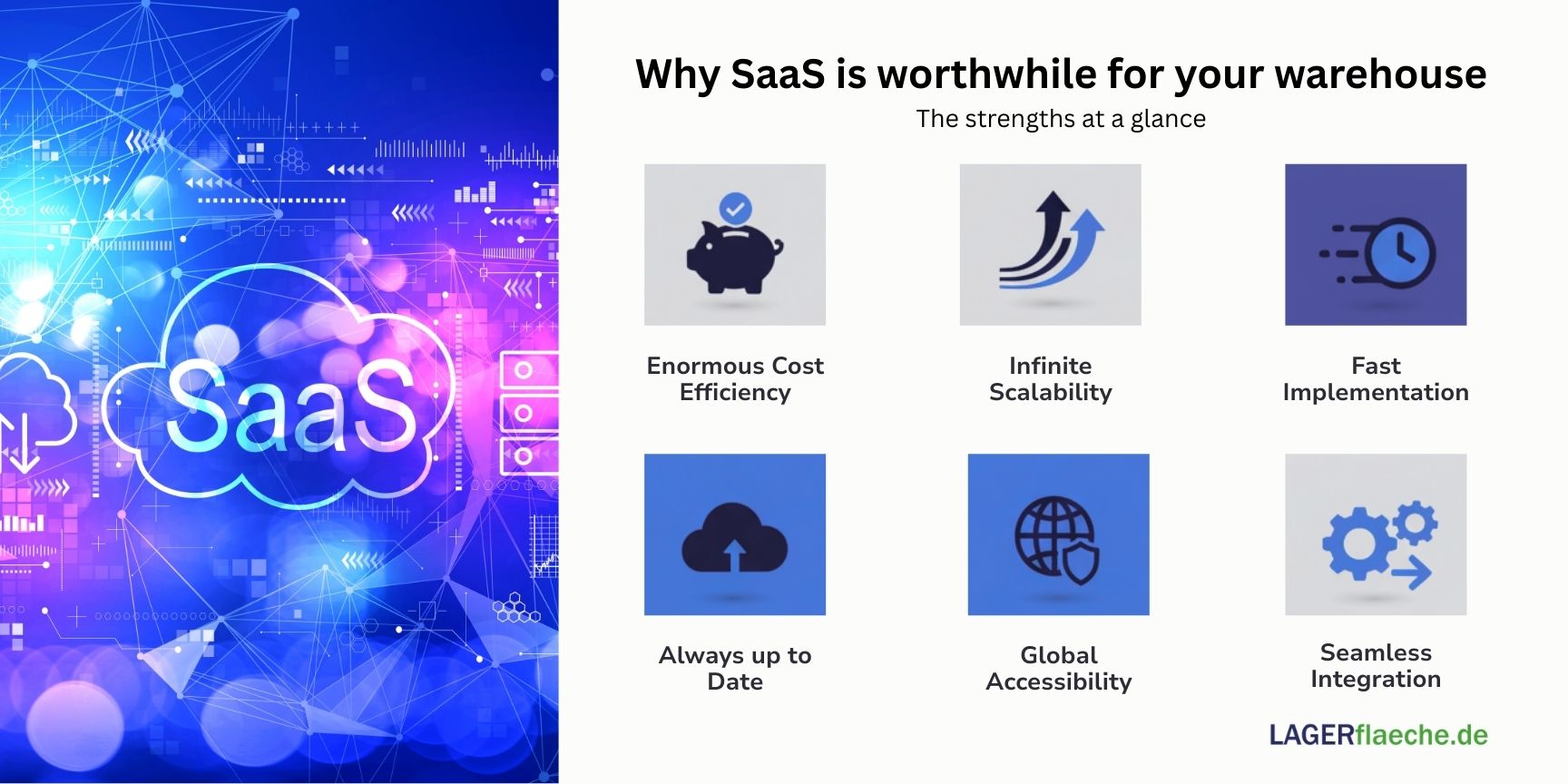
The benefits of switching to a SaaS platform are compelling and measurable:
- Tremendous cost-effectiveness: No high initial investment, no cost of server maintenance, or personnel for software updates.
- Infinite scalability: Is your business growing? Your SaaS solution grows with you. New users, functions or even entire warehouse locations can be booked flexibly – ideal for seasonal fluctuations.
- Rapid implementation: While traditional on-premise systems often take many months to adopt, SaaS solutions are often up and running in a matter of weeks.
- Always up to date: You automatically benefit from the latest technological developments and security patches that the provider installs at no additional cost.
- Global accessibility: Access your data from anywhere with an internet connection. This enables cross-site control and promotes mobile work.
- Seamless integration: Modern SaaS platforms can be easily connected to other systems such as your ERP, online shop or transport service providers via interfaces (APIs).
The Other Side of the Coin: Disadvantages and Risks of SaaS
Despite all the euphoria for cloud technology, a sober look at the potential disadvantages is essential. A decision in favor of SaaS is always a weighing of opportunities and risks.
- Vendor lock-in: You become highly dependent. Switching providers can be complex and costly, as processes and data are deeply embedded in the system. If the vendor fails or changes their business strategy, it can have a direct impact on your operations.
- Less control and customizability: Because the software is standardized to serve many customers, customization is often limited. You have no control over the server infrastructure and have to subordinate yourself to the provider's update cycles, whether it suits you or not.
- Data security and data protection: Although providers invest massively in security, they leave your sensitive company data in the hands of others. GDPR compliance, especially for providers with server locations outside the EU, requires careful consideration.
- Internet dependency: No internet connection, no software. An outage of your internet provider can cripple the entire warehouse operation unless the SaaS solution offers robust offline capabilities.
- Integration problems: Although all of them advertise easy integration options, the connection to older, self-developed "legacy systems" can be time-consuming and error-prone in practice.
How much does the Cloud Cost? A Look at Typical SaaS Pricing Models
One of the most common questions concerns costs. While exact prices always depend on the provider and the range of functions, some common models have established themselves in logistics:
- Price per user/month (Per-User Pricing): This is the classic model. You pay a monthly fee for each employee who actively uses the system. Example: 5 users at €70/month. This model is transparent, but can quickly become expensive for many employees.
- Tiered pricing: Providers put together packages (e.g. "Basic", "Professional", "Enterprise") that include a different range of functions and a certain number of users or transactions. Example: A "Professional" plan for €750/month includes 10 users and advanced analytics features.
- Usage-Based Pricing: Here, costs are based on actual usage, such as the number of packages shipped, items managed (SKUs), or storage space used. This model is very fair and scales directly with your business volume.
- Hybrid models: Many providers combine the above approaches, e.g. a basic fee plus a fee per user and additional costs for premium modules.
Important: In addition to the pure license costs, there are often one-time implementation and training fees . Depending on the complexity of the connection to your ERP system, these can amount to between a few thousand and over 20,000 euros.
For Whom is a SaaS Platform the Right Choice?
The short answer: for almost everyone. However, the following benefit in particular:
- Small and medium-sized enterprises (SMBs): You get access to a technology that was previously reserved for large corporations with huge IT budgets.
- E-commerce companies and start-ups: The rapid scalability is perfect for fast-growing online retailers who need to react flexibly to order peaks.
- Logistics Service Providers (3PL): They can set up and manage their own multi-tenant warehouse environment for each of their customers.
- Companies with multiple locations: A central cloud platform ensures uniform processes and full transparency across all warehouses.
Looking Beyond Borders: SaaS Adoption in a Global Comparison
The way SaaS platforms are used in logistics varies significantly around the world. Cultural, economic and regulatory framework conditions play a decisive role in this.
Germany: As an industrial nation with a strong focus on mechanical engineering and the automotive industry, Germany is characterized by complex IT landscapes that have grown over the years (often based on SAP). Concerns about data security and data protection are particularly pronounced here, which is underpinned by the strict General Data Protection Regulation (GDPR). German companies therefore often prefer providers who host their servers in Germany or at least in the EU. However, the acceptance of cloud solutions is growing steadily. According to Bitkom Research's Cloud Monitor 2023, 84% of German companies are already using cloud computing, but dependence on US providers is increasingly viewed critically. The focus is on reliability, security and deep integration into existing processes.
USA: The US market is the undisputed pioneer in cloud adoption. A higher willingness to take risks, a strong culture of innovation and the presence of the big tech giants (Amazon Web Services, Microsoft Azure, Google Cloud) have led to rapid and widespread adoption. U.S. companies are relying heavily on data-driven optimization and are more open to the use of artificial intelligence (AI) and predictive analytics in their logistics platforms.
Scandinavia: Countries such as Sweden, Denmark and Finland are extremely digitally savvy. Here, the focus is on user experience, mobile applications and increasingly on the aspect of sustainability. SaaS solutions often have to prove how they contribute to reducing the CO2 footprint, e.g. through optimized route planning.
Asia (esp. China): Driven by a gigantic and rapidly growing e-commerce market, logistics in China is extremely dynamic. The SaaS solutions developed here are often designed "mobile-first" and designed for huge transaction volumes and high speed. Integration with social platforms and marketplaces such as WeChat or Alibaba is often a decisive criterion.
Why these differences?
- Legislation: The GDPR in Europe imposes different data protection requirements than the CLOUD Act in the USA.
- Industrial structure: Germany's focus on Industry 4.0 requires different integration solutions than the e-commerce-driven market in China.
- Digital infrastructure: The availability of fast Internet is a basic prerequisite that is not equally common worldwide.
Making the Right Decision: Your Journey to the Cloud
Choosing the right SaaS platform is a strategic decision. Before you commit, put potential providers through their paces:
- Functionality: Does the software map your core processes? Are there any special modules for your industry?
- Data security: Where are the servers located? Is the platform GDPR compliant? Are there any corresponding certifications (z.B. ISO 27001)?
- Support: Do you get fast and competent support, ideally in your local language?
- Future viability: Is the provider continuously investing in the further development of its platform?
Conclusion: Acting instead of Reacting – the Future of Logistics is SaaS
SaaS platforms are no longer a distant dream of the future, but the proven instrument for modern and resilient logistics. They offer an unbeatable combination of cost efficiency, scalability and innovation. At the same time, they require careful consideration of the risks associated with dependency, control, and data security.
The decision for or against SaaS is a strategic decision. If you do your homework, choose the right partner and actively manage the potential disadvantages, you are not only investing in software, but also ensuring the future viability of your entire company in an increasingly complex global economy.
Latest Blog Posts
Stay up to date with the newest trends, insights, and tips in warehouse and logistics. Our latest articles help you navigate the industry with confidence.

Data Centres vs. Logistics Facilities: The Race for Power and Land
Across Europe, logistics operators are competing for more than land and transport access. They increasingly need something much harder to secure: grid capacity. Data centres are intensifying that competition — and changing how logistics locations are evaluated....
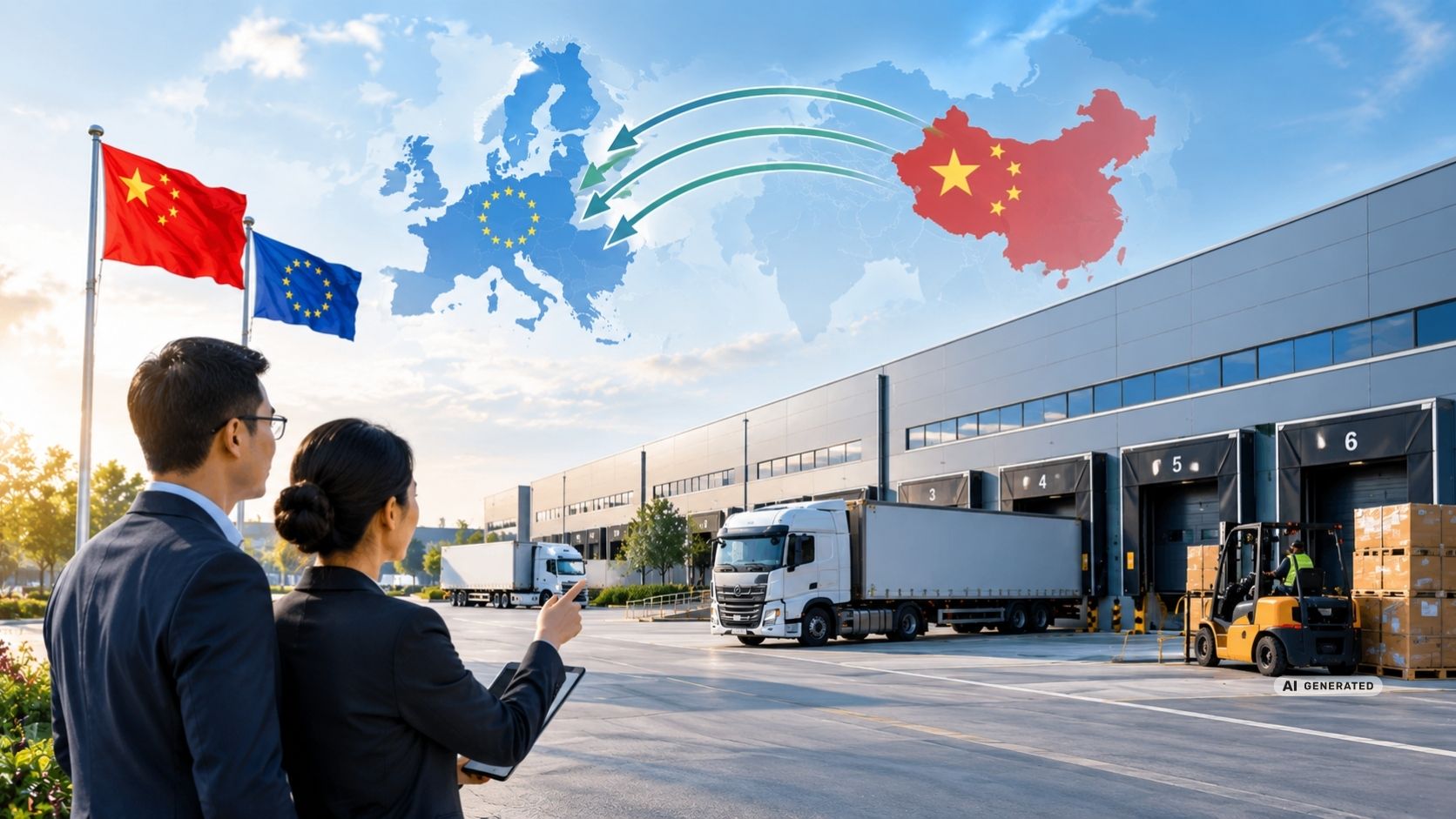
Chinese companies discover Europe's logistics real estate
Chinese companies are becoming an increasingly visible user group in Europe's logistics real estate market. What does this mean for warehouse space, 3PL structures and the requirements for European logistics locations?...
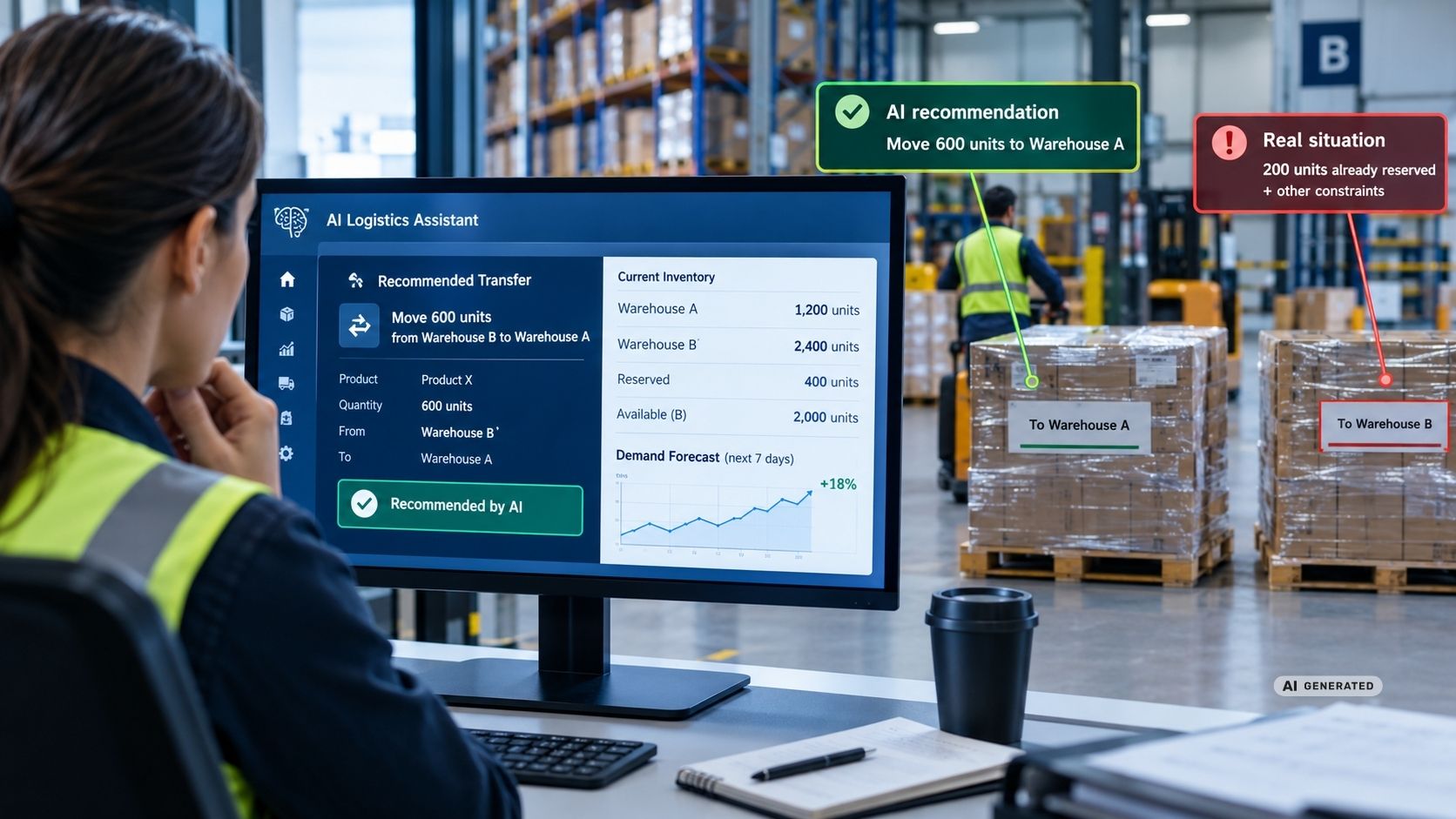
AI Hallucinations in Logistics: When AI Plans the Wrong Delivery
AI can analyze enormous amounts of logistics data — but it can also produce a convincing answer that is simply wrong. The critical question is not whether AI makes mistakes, but what happens when a wrong recommendation becomes an operational decision....
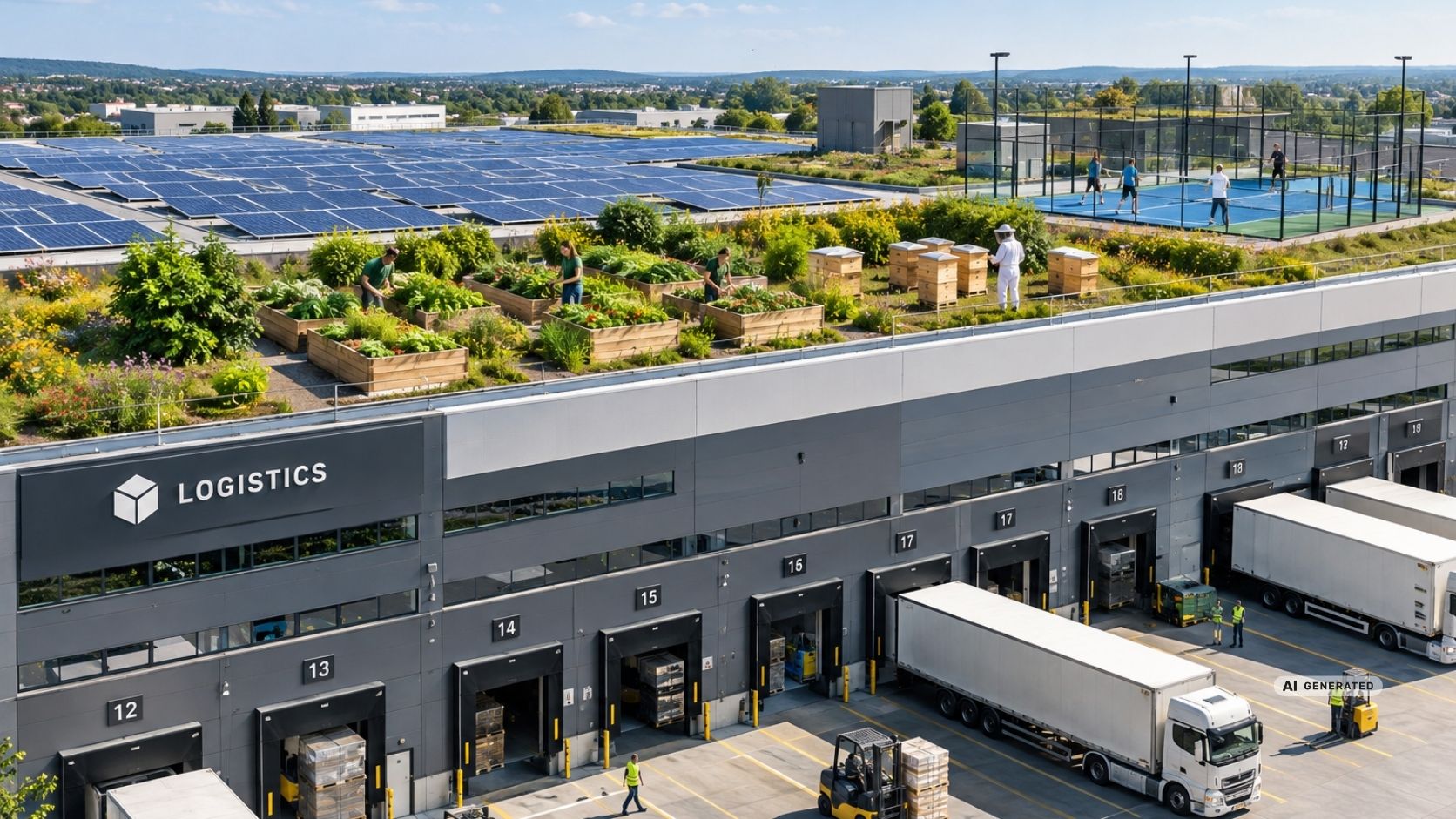
The Green Revolution on the Hall Roof: From Concrete Block to Ecological Power Plant?
Logistics roofs can do more than PV: greening, bees, urban farming and even sports areas turn unused roof space into multifunctional rooms....