



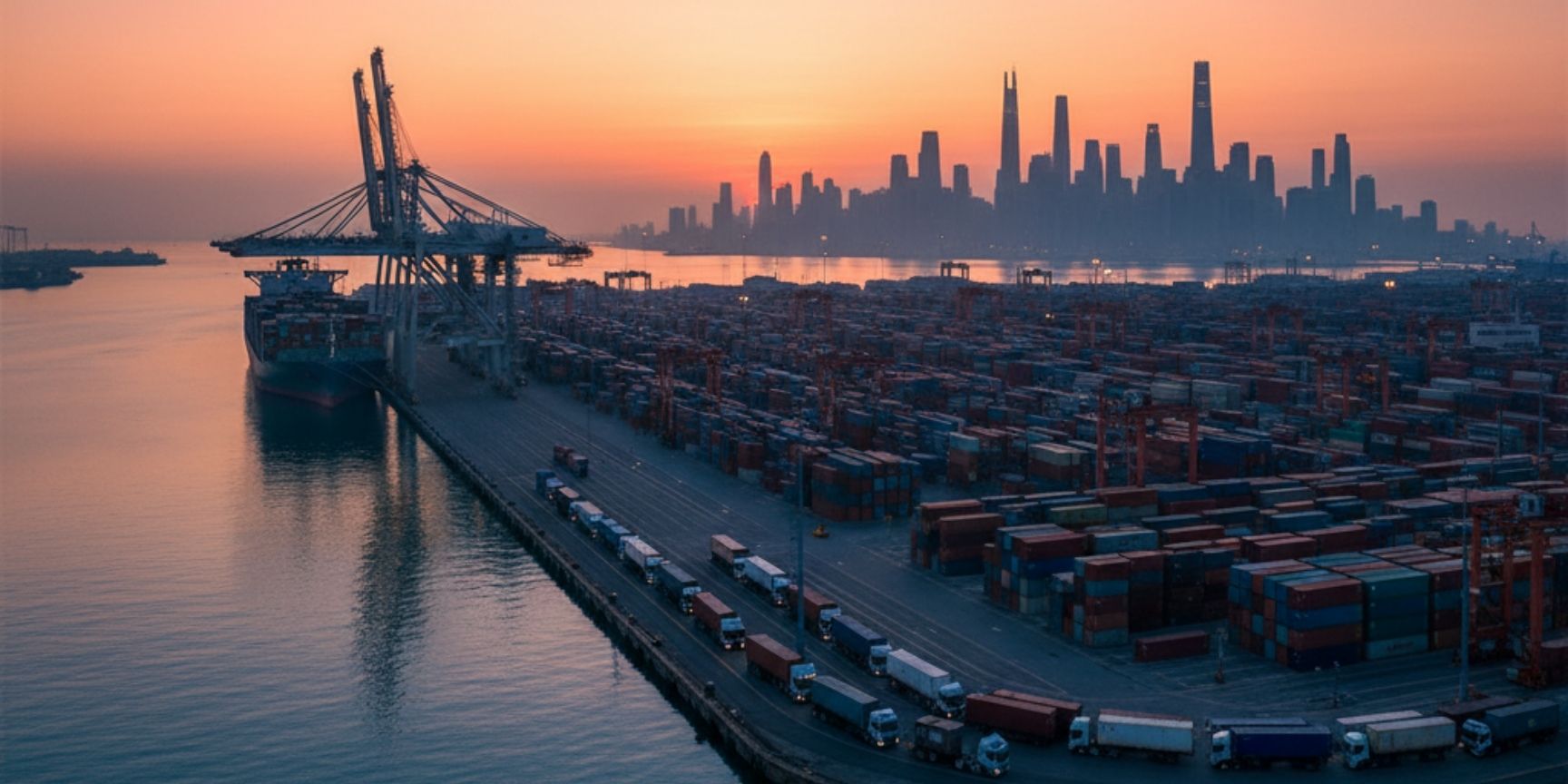
Blue Banana: Focus on Europe's Pulsating Logistics Heart
Table of Contents
- Have you ever heard of a "blue fruit" that determines the economic fate of Europe?
- The Blue Banana: Definition of a European Megaregion
- Where does the curious name "Blue Banana" come from?
- Facts, figures, data: The economic weight of the blue banana
- Europe's Logistics Nervous System: Contract and Warehouse Logistics
- The Rhine-Alpine Corridor: Europe's most important transport artery
- The "German banana": Is there a national counterpart?
- Conclusion: Why the blue banana is relevant for every logistics company
Have you ever heard of a "blue fruit" that determines the economic fate of Europe?
What sounds like the beginning of a fairy tale is in fact one of the most fascinating realities of European economic geography: the blue banana. This term does not describe a tropical fruit, but one of the most densely populated and economically strongest regions in the world. But what exactly is behind this name? Why is this region the undisputed powerhouse of the continent, especially for the logistics industry? And is there perhaps even a "blue banana" within Germany? In this in-depth technical article, we shed light on a concept that is crucial for every logistics professional – from freight forwarders to investors in logistics real estate.
The Blue Banana: Definition of a European Megaregion
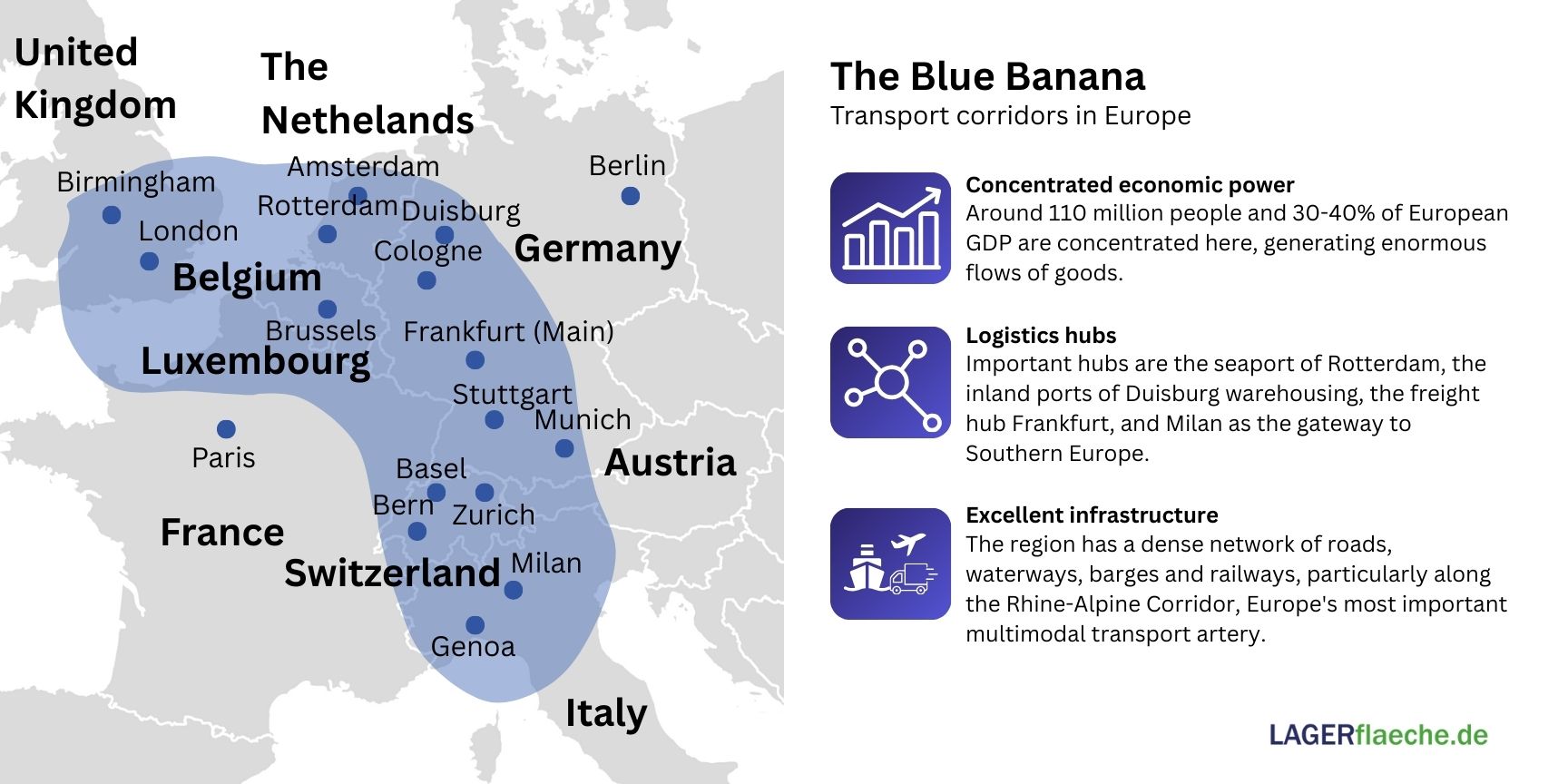
The Blue Banana is a ribbon-shaped corridor of urban and industrial densification that stretches over a length of around 1,300 kilometres from the Irish Sea through south-east England, the Benelux countries, western Germany and Switzerland to northern Italy. In this curved, banana-like shape, Europe's most important metropolitan regions, industrial centres and financial centres are lined up like pearls on a chain.
Although the exact boundaries may vary, the core of this megaregion includes metropolises such as London, the Randstad (Amsterdam, Rotterdam, The Hague), Brussels, Antwerp, the Rhine-Ruhr area (Düsseldorf, Cologne, Dortmund), the Rhine-Main region (Frankfurt), the Rhine-Neckar region (Mannheim, Ludwigshafen), Stuttgart, the Zurich metropolitan region, and the northern Italian economic centers of Milan and Turin.
Where does the curious name "Blue Banana" come from?
The term was coined in 1989 by a group of French geographers led by Roger Brunet. In a study analysing the European spatial structure, he noticed this highly developed corridor, which formed the economic backbone of the continent. The shape on the map was reminiscent of a banana. The colour "blue" was added shortly afterwards and is often interpreted in two ways: on the one hand, as a reference to the colour of the flag of the then European Community (today's EU), and on the other hand, as a symbol of the industrial imprint of the region by the "blue-collar workers". Brunet's model was originally intended to criticize France's peripheral position outside this dynamic center, but quickly became a household name in economic geography.
Facts, figures, data: The economic weight of the blue banana
The true importance of the region only becomes tangible through numbers. Although it is not an official administrative unit, the data of the associated NUTS 2 regions (a statistical breakdown of the EU) can be summarised.
- Population: According to estimates, around 110 million people live in the Blue Banana. This represents about 25 % of the population of the EU27, concentrated in a fraction of the total area.
- Economic power (GDP): The region generates a disproportionately high share of European gross domestic product. It is estimated that between 30% and 40% of the total GDP of the eurozone is generated here. The concentration of globally active companies, financial service providers and highly productive industry is unique in the world.
This enormous density of people, capital and production makes the blue banana the centre of gravity for the flow of goods – and thus the epicentre of European logistics.
Europe's Logistics Nervous System: Contract and Warehouse Logistics
The high concentration of producers and consumers in a confined space creates an immense demand for logistics services. What are the priorities and what does this mean for the industry?
- Contract logistics: The blue banana is by far the largest and most competitive market for contract logistics in Europe. Companies from the automotive, chemical, mechanical engineering and fast-moving consumer goods (FMCG) sectors have their production facilities here and require complex, integrated supply chain solutions. According to Fraunhofer SCS, the German contract logistics market alone has a volume of over 90 billion euros, a large part of which is accounted for by the locations within the Blue Banana.
- Warehouse logistics and logistics real estate: The demand for modern warehouse and distribution space remains high. The Rhine-Alpine Corridor, the logistical backbone of the Blue Banana, connects the seaports of Rotterdam and Antwerp with the industrial heart of Germany and the economic engine of northern Italy. Along this axis, the density of logistics real estate is enormous. According to real estate consultant BNP Paribas Real Estate, Germany's top logistics markets (of which Frankfurt, the Ruhr region and Cologne are central hubs of the banana) recorded take-up of around 2.7 million m² in the first half of 2025 alone. The high demand is driving up the prices for land and rents and making logistics real estate a sought-after asset class in this core region.
The Rhine-Alpine Corridor: Europe's most important transport artery
A central component of the Blue Banana is the TEN-T Rhine-Alpine Corridor, one of the nine main transport axes of the Trans-European Transport Network. It is the busiest freight route in Europe.
Quelle: corridor-rhine-alpine.eu, Annual Report 2024
In 2024, cross-border rail freight traffic on the corridor recorded a decrease of 5.9% due to construction activity and a weaker economic climate, but at the same time the punctuality of trains increased. This underlines the ongoing investment and the immense importance of this axis.
The combination of efficient waterways (Rhine), a dense motorway network and one of the busiest freight railway lines makes this corridor the epitome of multimodal logistics and the lifeblood of industry in the Blue Banana.
The "German banana": Is there a national counterpart?
The question of whether there is a purely German "Blue Banana" is exciting and can be answered in a differentiated way. Although there is no official term of the same name in German spatial planning, the German part of the Blue Banana de facto forms the undisputed logistical and economic backbone of the Federal Republic.
This "German banana" stretches along the Rhine rail from the Rhine-Ruhr metropolitan region via Rhine-Main and Rhine-Neckar to the Swiss border and then fans out towards the strong economic areas of Stuttgart and Munich. This axis is characterized by:
- Highest population and industrial density: The federal states of North Rhine-Westphalia, Hesse, Rhineland-Palatinate and Baden-Württemberg are home to a large part of the German population and industry.
- Top logistics regions: According to analyses by logistics real estate consultants and the Fraunhofer Institute, the most attractive logistics locations in Germany are located precisely in this corridor.
- Infrastructural bundling: The most important motorways (A3, A5, A61), the central Rhine waterway and the main rail freight routes run parallel here.
So you can argue that the Rhine rail is the German blue banana – it is the main national corridor that is also the heart of its European counterpart.
Conclusion: Why the blue banana is relevant for every logistics company
The Blue Banana is much more than just an academic model. It is the physical reality that sets the pace of the European economy and logistics. For specialists and executives in the industry, understanding this megaregion is of strategic importance for several reasons:
- Location decisions: The proximity to the production centers and sales markets of the blue banana remains a decisive factor for the placement of distribution centers and warehouses.
- Understanding traffic flows: Anyone who analyzes the flow of goods in Europe will inevitably recognize the dominance of the north-south axes within this corridor.
- Recognizing market potential: The high economic power and consumer density offer enormous potential for logistics service providers, from contract logistics to value-added services and last-mile delivery.
- Future challenges: At the same time, the challenges are bundled here: traffic congestion, shortage of space, high real estate prices and increasing environmental regulations require innovative and sustainable logistics concepts.
The blue banana is and remains the beating heart of Europe. It is a space of opportunities, but also of complex challenges. Understanding them means mastering the basics of European logistics and being able to plan strategically for the future.
Latest Blog Posts
Stay up to date with the newest trends, insights, and tips in warehouse and logistics. Our latest articles help you navigate the industry with confidence.
Data Centres vs. Logistics Facilities: The Race for Power and Land
Across Europe, logistics operators are competing for more than land and transport access. They increasingly need something much harder to secure: grid capacity. Data centres are intensifying that competition — and changing how logistics locations are evaluated....
Chinese companies discover Europe's logistics real estate
Chinese companies are becoming an increasingly visible user group in Europe's logistics real estate market. What does this mean for warehouse space, 3PL structures and the requirements for European logistics locations?...
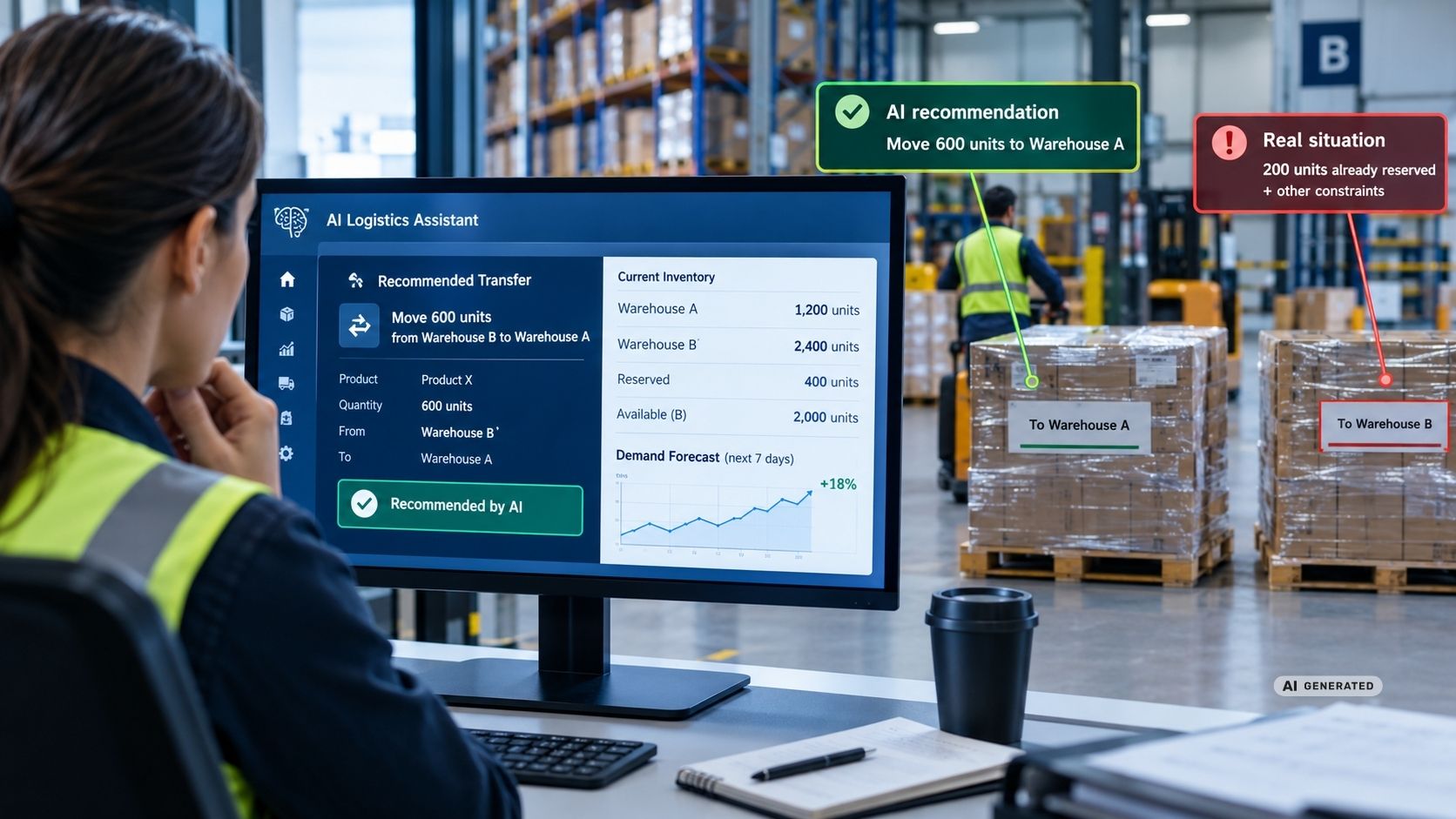
AI Hallucinations in Logistics: When AI Plans the Wrong Delivery
AI can analyze enormous amounts of logistics data — but it can also produce a convincing answer that is simply wrong. The critical question is not whether AI makes mistakes, but what happens when a wrong recommendation becomes an operational decision....
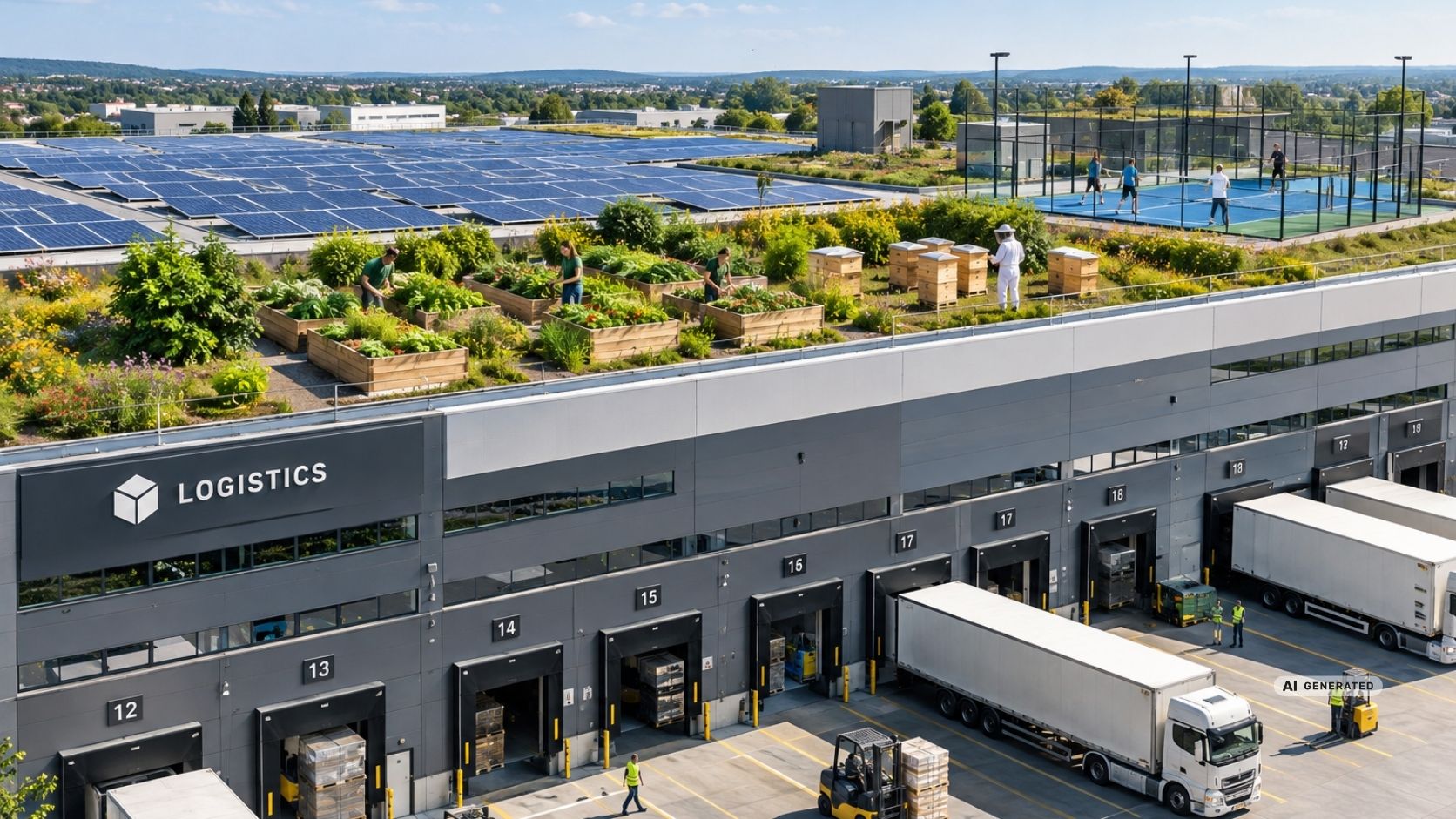
The Green Revolution on the Hall Roof: From Concrete Block to Ecological Power Plant?
Logistics roofs can do more than PV: greening, bees, urban farming and even sports areas turn unused roof space into multifunctional rooms....