



The Beating Heart of the Supply Chain: Why Freight Transport Centers are the true Champions of Logistics
Table of Contents
- What exactly is a Freight Transport Center (GVZ)?
- The Core Tasks: What happens within a GVZ?
- The Invaluable Advantage: Why are GVZ so Important?
- The Champions League: The most Important GVZ Locations in Germany
- European Hubs: The most Important Logistics Hubs in Europe
- Global Giants: The Largest Logistics Centers in the World
- The Future of Freight Villages: Digital, Automated and Green
- Conclusion: More than just Hubs – Freight Forwarders are the Enablers of the Modern Global Economy
Have you ever wondered how it is possible for a smartphone made in Asia to arrive at the German store on time or for fresh food from southern Europe to reliably fill our supermarket shelves? Behind this seemingly effortless global movement of goods is a sophisticated system whose most important hubs often operate in secret: the freight transport centers, or GVZ for short. They are the invisible giants that quietly and efficiently keep the arteries of our modern economy running. But what exactly makes them so indispensable?
In this article, we dive deep into the world of freight villages. We explain what is behind the abbreviation, why they are of crucial importance for future-proof logistics and which locations in Germany, Europe and around the world set the pace.
What exactly is a Freight Transport Center (GVZ)?
A freight transport center is much more than just a large warehouse or a transshipment point. The official definition of the German GVZ Society (DGG) describes a GVZ as a logistics location where various traffic and transport companies, logistics service providers and service facilities are spatially bundled. The decisive feature, however, is the high-performance interconnection of at least two modes of transport. This is referred to as combined or intermodal transport.
Imagine it like a main station for goods: Goods arrive efficiently and environmentally friendly by train or ship over long distances and are distributed to the end customer on trucks for the "last mile" in the freight village – or vice versa.
A GVZ is therefore an intelligent interface that combines the following elements:
- Terminals for combined transport (CT terminals): This is where the actual handling of containers, swap bodies and semi-trailers takes place between rail, road and, if necessary, waterways.
- Logistics and industrial settlements: Companies from freight forwarding, warehousing and distribution settle directly in the freight village in order to benefit from the short distances.
- Service and infrastructure facilities: These include customs offices, petrol stations, workshops, but also hotels and catering facilities for staff.
The Core Tasks: What happens within a GVZ?
The work in a freight village is highly complex and goes far beyond simple reloading. Here, flows of goods are not only bundled, but also intelligently controlled and refined.
- Consolidation & deconsolidation: Several small shipments from different shippers are combined into a single large load for the main leg (e.g. by rail) (consolidation). At the destination, the opposite happens: the large shipment is again divided into small individual shipments for fine distribution (deconsolidation).
- Value Added Services: Many freight forwarders offer much more than just transport and storage. This includes packaging (assembling product sets), labeling, quality controls, packaging or even minor assembly work.
- Customs clearance: Due to the presence of customs offices, imported goods can be cleared directly on site, which significantly speeds up the process.
- Information management: Modern freight forwarders are also data hubs. Digital platforms control the flow of goods and information between all actors involved and ensure maximum transparency in the supply chain.
The Invaluable Advantage: Why are GVZ so Important?
The existence and efficient operation of freight transport centers bring immense economic and ecological advantages. But what are they in concrete terms?
- Economic efficiency: Transport costs can be significantly reduced by bundling transports. The main run on the cheaper and more high-capacity rail or waterway relieves the more expensive road. The short distances within the GVZ minimize shunting and waiting times.
- Environmental sustainability: This is one of the most important aspects for the future. The shift of freight traffic from road to rail massively reduces CO₂ emissions. A single freight train can transport the cargo of up to 52 trucks and, according to the Pro-Rail Alliance, saves around 80% of CO₂ emissions compared to pure road transport. GVZs are therefore a central lever for achieving climate targets in the transport sector.
- Relief of the infrastructure: Every truck that is replaced by a train means less congestion on the motorways and in the conurbations. Freight transport centers are planned specifically at locations that are convenient to transport but far from the city in order to keep heavy goods traffic out of the city centers.
- Location advantage and jobs: A high-performance freight village is a magnet for companies to settle here and creates thousands of qualified jobs in logistics, IT and administration. It strengthens the competitiveness of an entire region.
The Champions League: The most Important GVZ Locations in Germany
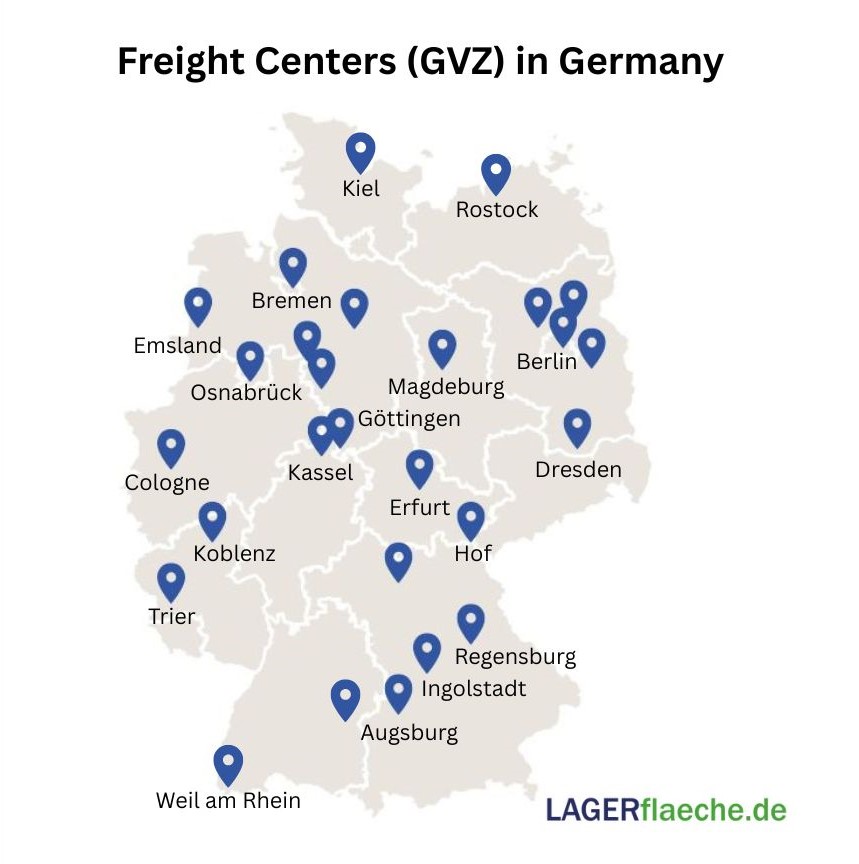
Germany, as a transit country in the heart of Europe, has one of the densest and most efficient GVZ networks in the world. Once a year, the DVV Media Group publishes an official ranking of the best European freight transport centers, in which German locations traditionally dominate.
Current ranking of the top freight villages in Germany (based on the 2023 ranking):
- GVZ Bremen: At the top for years. The reason: the perfect trimodal connection (rail, road, water) due to the proximity to Bremen's ports. It is a prime example of the symbiosis of port and hinterland logistics and a huge employer in the region.
- GVZ Nürnberg: The undisputed champion in the south of Germany. Its strategic location as a hub for traffic to Southern and Eastern Europe makes it indispensable. It scores with an enormous handling capacity and a large number of local logistics service providers.
- GVZ Hamburg: Closely linked to Europe's third-largest port, this GVZ is one of the most important interfaces for global import and export. The direct connection to the terminals of the Port of Hamburg is its greatest trump card.
Source: DVV Media Group / "VerkehrsRundschau", GVZ Ranking Europe 2023.
European Hubs: The most Important Logistics Hubs in Europe
There are also crucial hubs beyond Germany that control the European flow of goods.
- Verona, Quadrante Europa (Italy): Considered the leading freight village in Southern Europe. It is the main hub for transalpine freight traffic on the Brenner axis, connecting Italy with Germany and the rest of Central Europe.
- Port of Valencia (Spain): An excellent example of a port-based freight village. As the leading container port in the Mediterranean, it is the gateway for goods from Asia and Africa to Southern Europe.
- Port of Rotterdam (Netherlands): Although primarily a port, the huge area functions as a gigantic freight village. As Europe's largest port, it is the most important interface for intercontinental maritime traffic and its onward distribution by rail, road and inland waterway throughout Europe.
Global Giants: The Largest Logistics Centers in the World
On a global level, the boundaries between port, industrial zone and freight village are blurred. The largest hubs are often directly linked to the world's largest container ports.
- Ningbo-Zhoushan & Shanghai (China): The Chinese mega-ports are the undisputed world champions in cargo handling. The adjacent logistics parks and free trade zones are of unimaginable size and process a significant part of world trade.
- Singapore: Due to its strategic location on the Strait of Malacca, the Port of Singapore is the second largest container port in the world and a central transshipment hub where goods are transferred from large ocean liners to smaller vessels for regional distribution.
- Jebel Ali (Dubai, UAE): This port, with its huge attached Free Trade Zone (JAFZA), is the main logistics hub for the entire Middle East, Africa and India. It is a prime example of a perfectly planned logistics metropolis.
Source for port data: World Shipping Council, Top 50 World Container Ports.
The Future of Freight Villages: Digital, Automated and Green
The world of logistics never stands still. GVZ are developing rapidly, driven by three megatrends. What will the GVZ of tomorrow look like?
- Digitalization: The Internet of Things (IoT), 5G and artificial intelligence (AI) will further increase efficiency. "Digital twins" of the GVZ enable simulations and optimizations in real time. Autonomous trucks and cranes will no longer be dreams of the future.
- Automation: Automated high-bay warehouses, automated guided vehicles (AGVs) and robots for picking speed up processes and reduce error rates. Humans are increasingly becoming the supervisors and strategists of automated processes.
- Sustainability: The pressure to decarbonize is growing. Future GVZs will generate their own green energy through photovoltaics, provide charging infrastructure for e-trucks and develop terminals for hydrogen-powered trains and trucks.
Conclusion: More than just Hubs – Freight Forwarders are the Enablers of the Modern Global Economy
Freight transport centers are the backbone of functioning, efficient and increasingly sustainable logistics. They are the answer to the challenges of a globalized world with increasing flows of goods and growing environmental awareness.
By intelligently bundling transport, reducing costs, relieving the burden on the environment and serving as economic engines for entire regions, they prove their systemic relevance. For logistics professionals, they are not only a workplace, but also a fascinating field of constant optimization and innovation. The next time you receive a package, you know: there's a good chance it's started its journey through the beating heart of logistics – a freight hub.
Latest Blog Posts
Stay up to date with the newest trends, insights, and tips in warehouse and logistics. Our latest articles help you navigate the industry with confidence.
Data Centres vs. Logistics Facilities: The Race for Power and Land
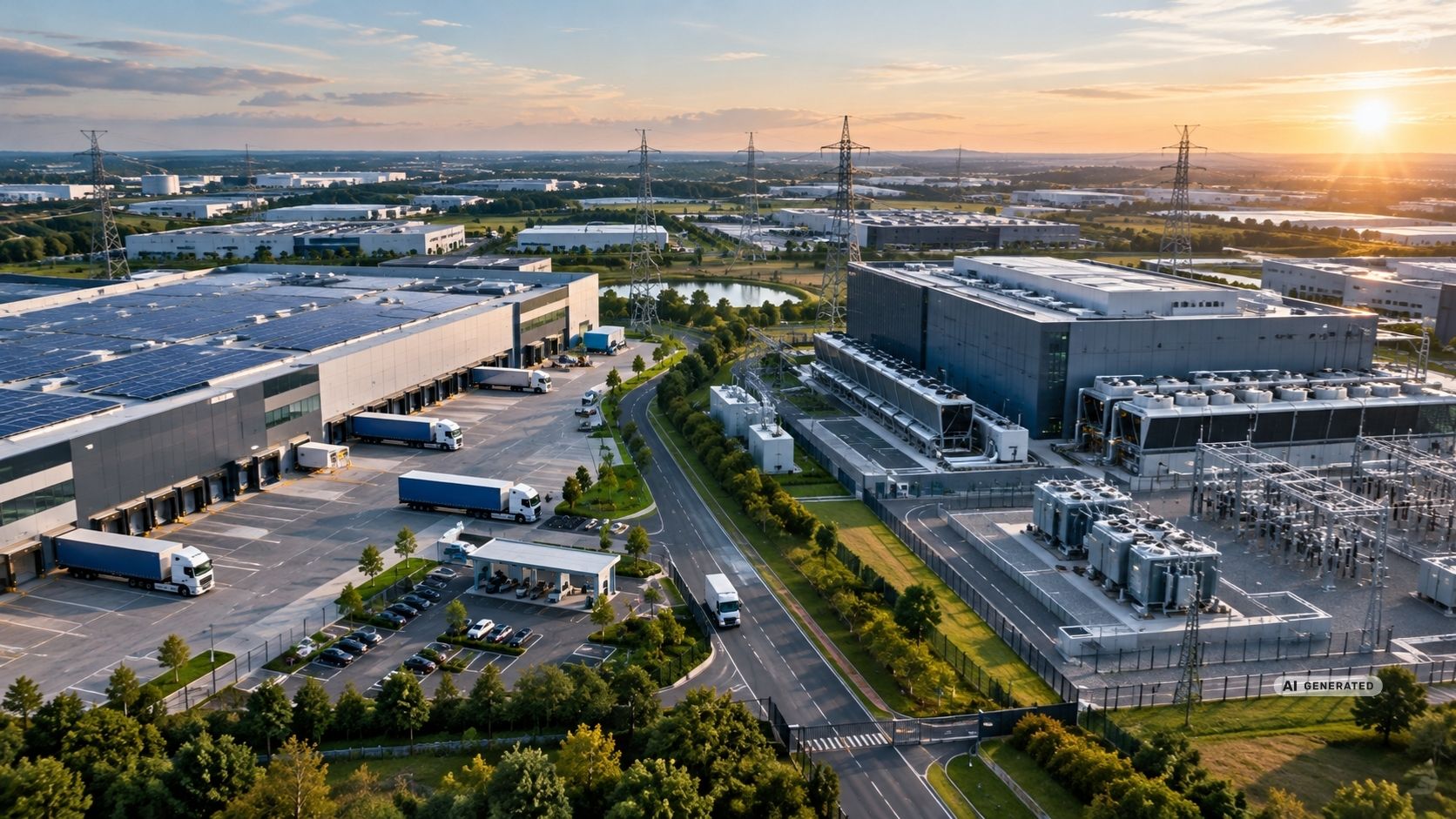
Across Europe, logistics operators are competing for more than land and transport access. They increasingly need something much harder to secure: grid capacity. Data centres are intensifying that competition — and changing how logistics locations are evaluated....
Chinese companies discover Europe's logistics real estate
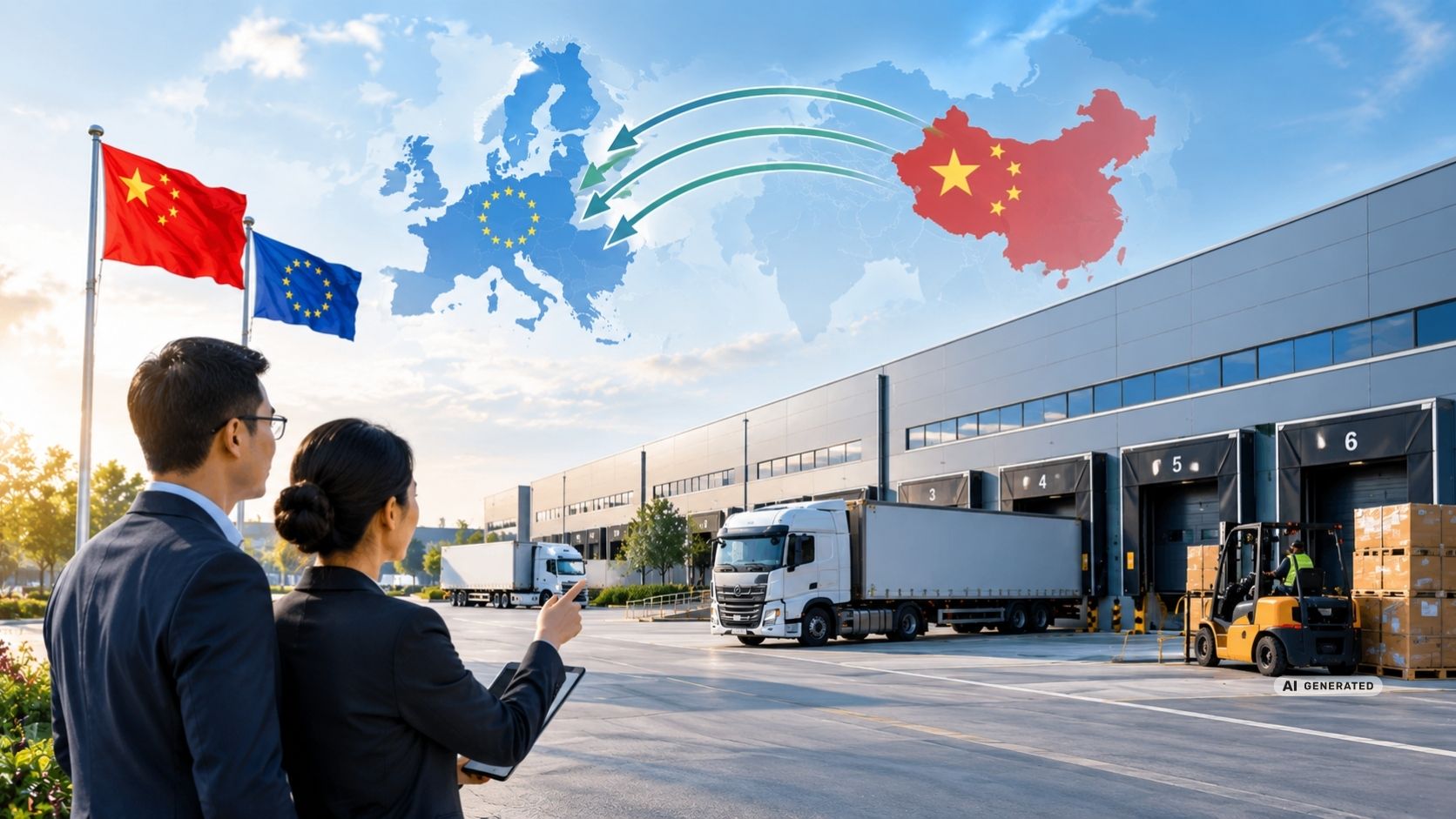
Chinese companies are becoming an increasingly visible user group in Europe's logistics real estate market. What does this mean for warehouse space, 3PL structures and the requirements for European logistics locations?...
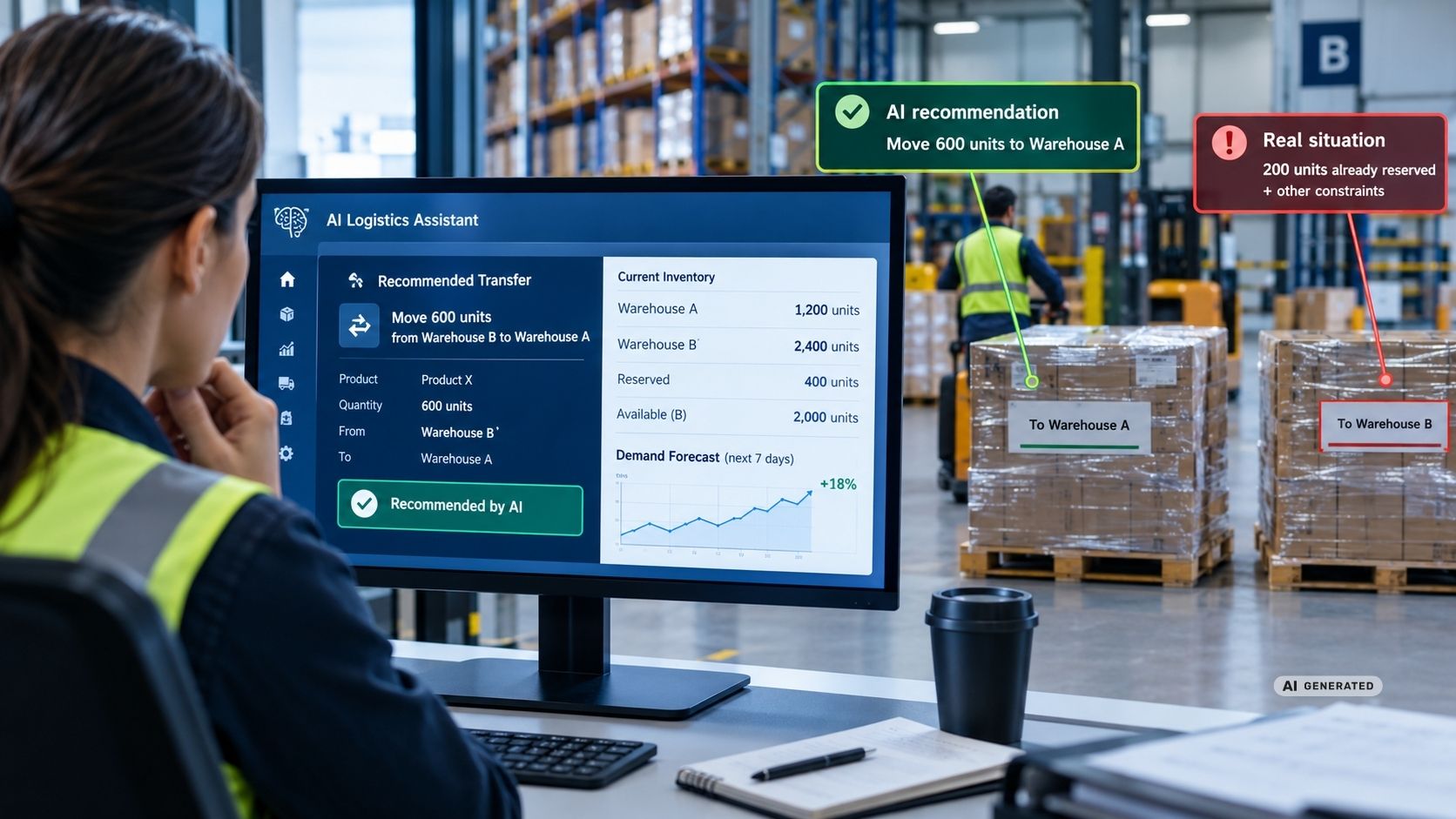
AI Hallucinations in Logistics: When AI Plans the Wrong Delivery
AI can analyze enormous amounts of logistics data — but it can also produce a convincing answer that is simply wrong. The critical question is not whether AI makes mistakes, but what happens when a wrong recommendation becomes an operational decision....
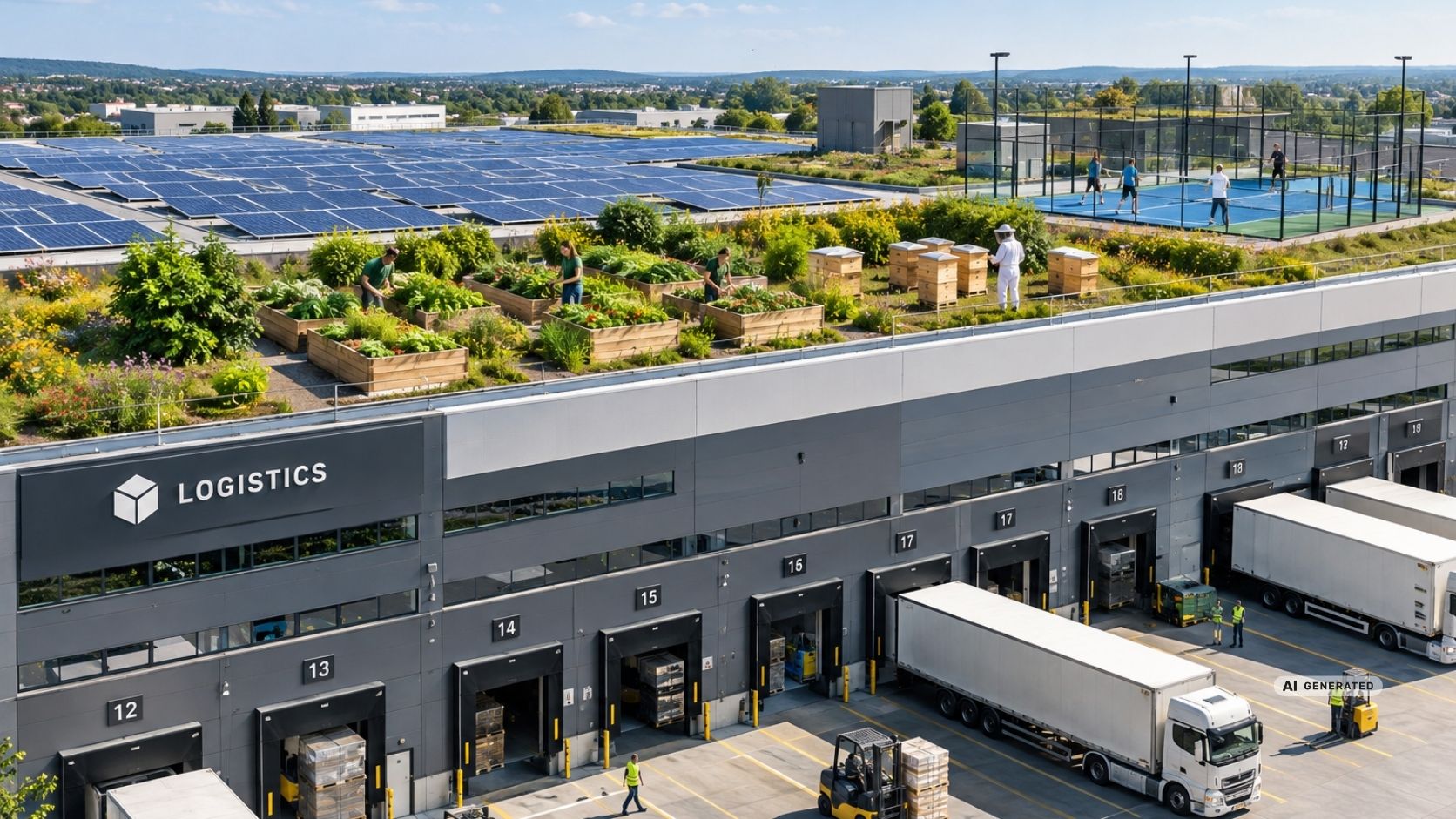
The Green Revolution on the Hall Roof: From Concrete Block to Ecological Power Plant?
Logistics roofs can do more than PV: greening, bees, urban farming and even sports areas turn unused roof space into multifunctional rooms....