


The Beating Heart of the Supply Chain: Why DUSS Terminals are Indispensable
Table of Contents
- What exactly is a DUSS Terminal? A Definition
- The Core Function: More than just "Stacking Containers"
- DUSS Terminal vs. Freight Transport Center: The Decisive Difference
- Germany's Logistics Backbone: The most Important DUSS Locations
- Case Study from Practice: A Container in the DUSS Terminal Munich-Riem
- The European and Global View: Who Dominates Beyond Borders?
- National Differences: Why not all Intermodal is the Same
- The Future of Transshipment Terminals: Digitalisation, Automation and Sustainability
- Conclusion: DUSS Terminals as an Anchor of Stability in a Volatile World
Our modern economy is an economy in motion. Millions of tons of goods are transported through Germany and Europe every day. But have you ever wondered how it is possible for goods from Hamburg to be in Munich the next morning without completely clogging up the motorways? The answer often lies not only on the road, but on the rails. At the interface of these two worlds is an often overlooked but critical infrastructure: the transshipment terminal.
In Germany, one name is inextricably linked with this task: DUSS – die Deutsche Umschlaggesellschaft Schiene-Straße mbH.
But what makes these terminals so fundamentally important for our logistics world? Why is the shift from road to rail more than just a political buzzword, and what role does the DUSS play in it? In this article, we dive deep into the world of combined transport (CT), clarify the difference to a freight transport centre (GVZ) and take a look beyond the German borders.
What exactly is a DUSS Terminal? A Definition
The abbreviation DUSS stands for Deutsche Umschlaggesellschaft Schiene-Straße mbH. As the name accurately describes, this is a company that specializes in the interface between truck and freight train.
DUSS is a subsidiary of Deutsche Bahn, or more precisely, a company with strong rail ties: 75% of the shares are held by DB InfraGO AG, 12.5% by Deutsche Bahn AG itself and the remaining 12.5% by Kombiverkehr GmbH & Co. KG (a leading operator in CT). (Source: DUSS/DB)
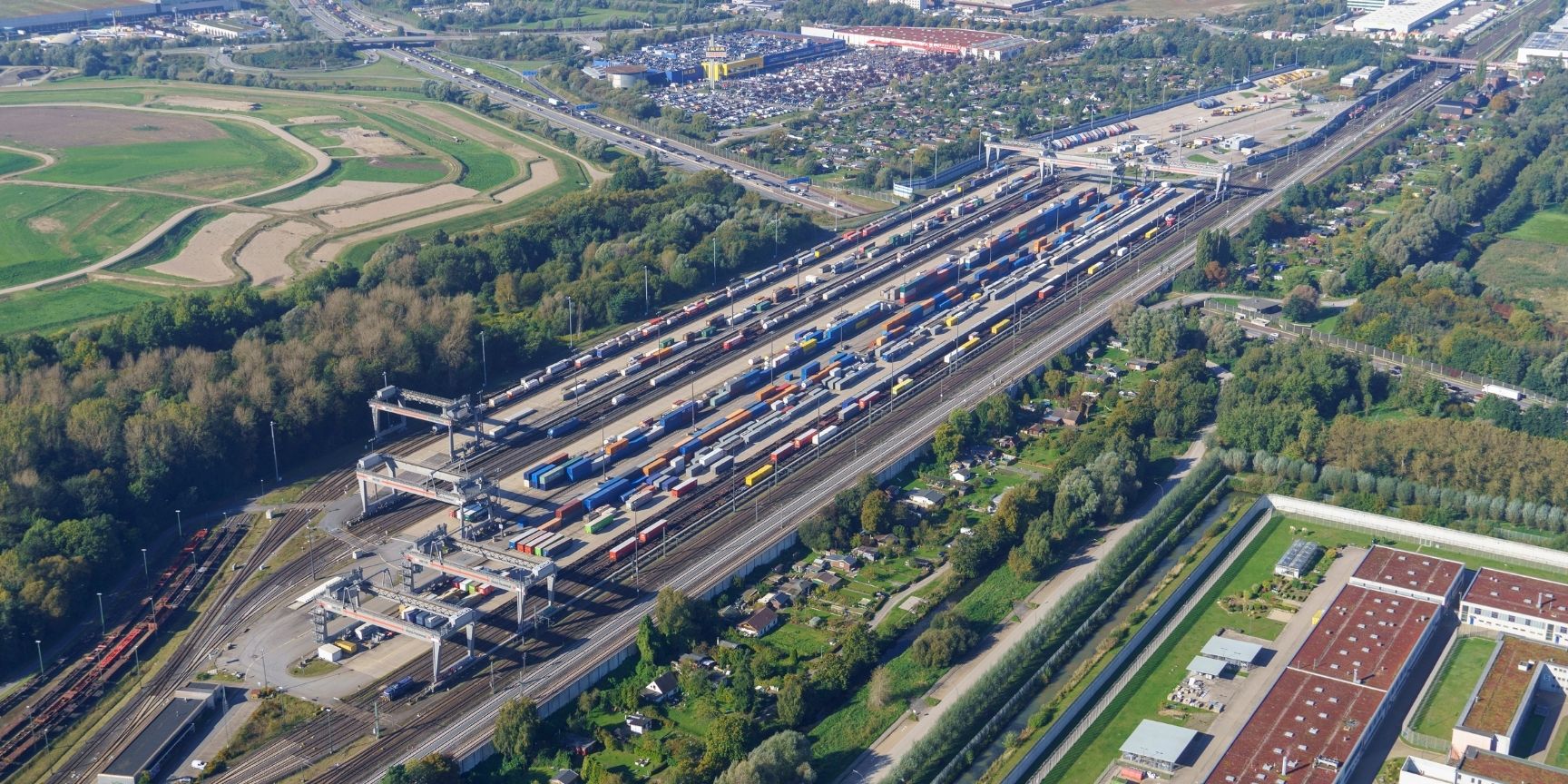
A DUSS terminal is therefore no ordinary freight station. It is a highly specialised, technical facility whose sole purpose is the handling of loading units (such as containers, swap bodies and craneable semi-trailers) between road (truck) and rail (freight train) as a mode of transport. DUSS is the operator of these plants. It plans, builds and manages these critical hubs in the German logistics network.
The Core Function: More than just "Stacking Containers"
Think of a DUSS terminal as a precise clockwork. It is the physical link that makes combined transport possible in the first place. The process is trimmed for maximum efficiency:
- Arrival (road): A truck arrives at the terminal's "gate". The data of the loading unit is recorded digitally (check-in).
- Positioning: The truck drives into an assigned lane directly under the massive gantry cranes (also called container gantry cranes).
- Handling: The crane operator (or an automated system) captures the load unit (e.g. a 40-foot container or a complete semi-trailer) with the "spreader" (gripping device). The crane lifts the unit, moves over the tracks and lowers it precisely onto the waiting freight wagon.
- Departure (rail): Once the train is fully loaded – often with lengths of up to 740 metres – it leaves the terminal for its destination terminal, which can be hundreds of kilometres away.
Of course, this process also takes place in the opposite direction (import/arrival). According to its own information (as of 2024), DUSS operates 24 of these transhipment terminals in Germany as well as a facility for the "Rolling Road" (RoLa), where entire trucks drive onto special wagons. These terminals are equipped with dozens of gantry cranes and mobile reach stackers to handle thousands of transhipments per day. (Source: RAILMARKET.com / DUSS)
The significance is obvious: a single freight train can bundle the load of over 50 trucks . This not only saves massive CO₂ (up to 80-90% compared to pure road transport), but also relieves the chronically congested highways and reduces the shortage of drivers.
DUSS Terminal vs. Freight Transport Center: The Decisive Difference
This question often causes confusion, but it is essential for understanding the logistics structure. Are a DUSS terminal and a freight village the same?
The short answer is no.
- A DUSS terminal (or more generally a CT terminal) is the operational handling facility – the "tool" (crane + tracks) for changing from truck to train. It is a specialized service provider for pure handling.
- A freight village (GVZ) is a concept or location. It is a large area (a logistics park) that bundles various logistics functions and companies. A freight village houses warehouses, freight forwarding branches, customs services, truck services and – ideally – a CT terminal.
So the relationship is often symbiotic: the DUSS terminal is the heart of a freight village.
Practical examples illustrate this:
- The DUSS terminal Leipzig-Wahren is located in the GVZ Leipzig (source: DUSS).
- The DUSS terminal Erfurt-Vieselbach was built as a supplement to the Erfurt freight village (source: DUSS).
- A new transshipment station is currently being built in the Augsburg freight village, which is also to be operated by DUSS (source: IHK Schwaben).
A freight village without a CT terminal is possible (then only focuses on road/warehouse), but a modern, successful freight village is almost always "trimodal" (road, rail, water if necessary). The DUSS terminal is the enabler for the rail connection of the entire logistics park.
Germany's Logistics Backbone: The most Important DUSS Locations
With 24 locations, DUSS forms a close-knit network. However, some terminals stand out due to their capacity and strategic location. Capacity is often measured in TEU (Twenty-foot Equivalent Unit) – the standard size of a 20-foot container – per year.
Here are some of the giants in the DUSS network (data based on maximum handling capacity):
- DUSS terminal Hamburg-Billwerder: With a capacity of around 370,000 TEU (up to 800,000 TEU in the terminal's overall system), this is one of the most important interfaces for the Port of Hamburg. It is the gateway through which maritime freight from overseas is distributed by rail to the German and European hinterland.
- DUSS terminal Cologne Eifeltor: Similar size (approx. 360,000 TEU), Cologne Eifeltor is the central hub for western Germany and connections to the Benelux countries (Rotterdam/Antwerp) as well as to France and southern Germany.
- DUSS terminal Munich-Riem: Also with approx. With a capacity of 360,000 TEU , this is the most important hub in southern Germany. From here, trains run over the Brenner Pass to Italy (one of the most important CT corridors in Europe).
- MegaHub Lehrte (near Hanover): Although a joint venture (including Kombiverkehr), this is a terminal of superlatives with a capacity of approx. 267,000 TEU and a state-of-the-art, fast sorting system for loading units. It acts as a central "hub-and-spoke" system for the whole of northern Germany.
- DUSS terminal Kornwestheim (Stuttgart): With approx. With a capacity of 175,000 TEU , it is the backbone for the extremely strong economic region of Stuttgart (automotive industry, mechanical engineering).
(Data source: Wikipedia / DB Netz AG, based on terminal infrastructure data)
These locations are not chosen at random. They are located at the intersection of major transport axes (north-south, east-west) and near conurbations or large seaports (hinterland traffic).
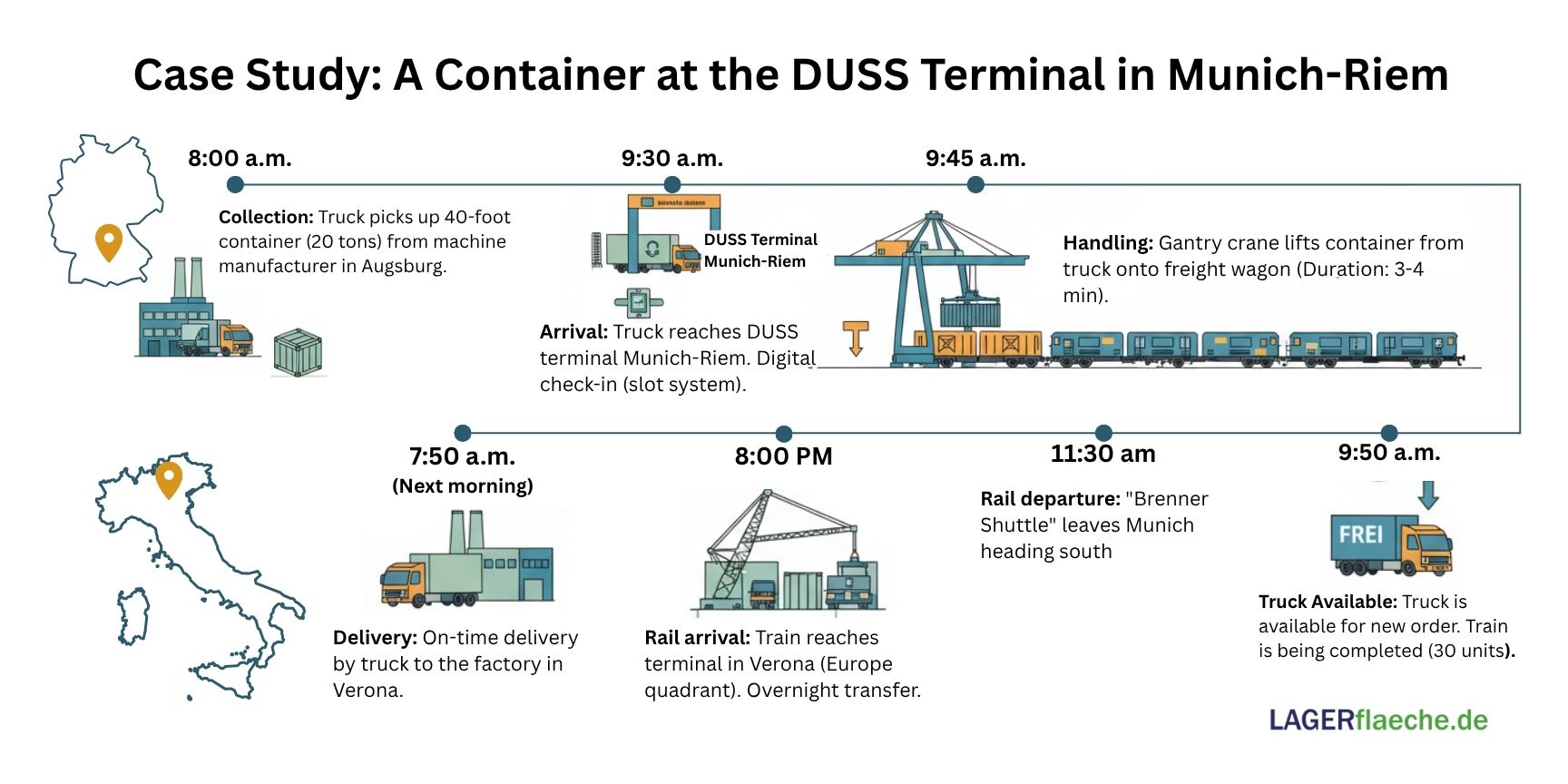
Case Study from Practice: A Container in the DUSS Terminal Munich-Riem
To make the utility tangible, let's follow a fictitious container:
- 08:00 a.m.: A truck picks up a 40-foot container with parts for a plant in Verona, Italy, from a machine manufacturer in Augsburg.
- 09:30 a.m.: The truck reaches the DUSS terminal Munich-Riem. The driver registers digitally (slot booking system).
- 09:45 a.m.: The truck is navigated to crane runway 3. A gantry crane lifts the container (weight: 20 tonnes) from the chassis of the truck within 3-4 minutes.
- 09:50 a.m.: The crane places the container on a freight wagon of the "Brenner shuttle train" that has already been provided. The truck is free and can accept a new order (e.g. take an import container from the terminal).
- 11:30 a.m.: The freight train is completed with 30 more loading units and leaves Munich-Riem in a southerly direction.
- 8:00 p.m.: The train arrives at the terminal in Verona (Quadrante Europa). There, the container is transferred to an Italian truck overnight.
- Next morning, 07:00 a.m.: The container is delivered punctually to the plant in Verona.
The utility value: The truck driver did not have to drive the 400 km himself via the notoriously congested A8, the Brenner Pass and the Italian A22. This saves travel time, tolls, diesel and reduces the risk of congestion. The DUSS terminal has acted as an efficient "mode changer".
The European and Global View: Who Dominates Beyond Borders?
The DUSS is primarily a German player. However, the concept of the CT terminal is global. So what about abroad?
Europe:
There are a large number of operators in Europe, often also with connections to the national railway companies.
- Italy: The Mercitalia Group (subsidiary of Ferrovie dello Stato Italiane) operates key terminals, particularly in the north. The Quadrante Europa in Verona is considered one of the most efficient and largest inland terminals in Europe and is the destination/starting point for many trains from Germany.
- France: Here, for example, Naviland Cargo (SNCF Group) or Novatrans as major terminal operators.
- Luxembourg: The terminal in Bettembourg-Dudelange, operated by CFL multimodal, is considered one of the most modern in Europe and is a central hub between southern (France/Spain) and northern Europe (Scandinavia/Germany).
- Ports: The largest European terminals are of course the seaport terminals in Rotterdam and Antwerp, which handle gigantic quantities for onward transport by rail and inland waterway.
Worldwide:
Globally, the largest terminals are the seaports in Asia (e.g. Shanghai, Singapore). However, there are two outstanding examples of pure rail-road handling in the interior:
- China: In the course of the "New Silk Road" (Belt and Road Initiative), China has built huge inland terminals. Xi'an has developed into one of the largest inland ports in the world, from which dozens of trains to Europe (including Duisburg) depart every week.
- USA: The US has a massive network of inland ports, often operated by the major private railway companies (such as BNSF or Union Pacific). A hub like the Kansas City SmartPort is a central hub for commerce in the heart of the United States.
National Differences: Why not all Intermodal is the Same
The greatest strength of this specialist portal is its attention to detail. Why can't you just copy the German DUSS system to the USA or China? The differences are structural, geographical, and political.
The massive difference: USA vs. Germany
Compared to Europe, intermodal transport in the USA is fundamentally different and more efficient in many respects.
- Prioritization: In the USA, the rail network is largely owned by the private freight railroads (Class I Railroads). Freight transport has priority. Passenger trains (Amtrak) are often only "guests" and have to wait. In Germany (and all of Europe) it is the other way around: The network belongs to DB InfraGO (or its counterparts) and passenger transport (ICE/IC) has absolute priority. Freight trains have to wait in "passing tracks", which reduces the reliability and speed of CT.
- Infrastructure (double-stacking): This is the most important technical difference. In the USA, there are hardly any low tunnels or bridges on the main corridors. Therefore, trains can run there "double-stack" – two containers stacked on top of each other. This virtually halves the cost per container. In Europe, this is impossible due to the historical infrastructure (tunnel profiles). (Source: Freightwaves / ResearchGate)
- Train length & weight: US trains are often several kilometres long and, thanks to higher axle loads (up to 32.5 tonnes), transport significantly more than European trains (max. 740 m in length, axle load often limited to 22.5 tonnes). (Source: U.S. and European Freight Railways: The Differences That Matter)
A US terminal is therefore designed for the handling of double-stack trains; a DUSS terminal is optimised to meet European standards (single-stack, craneable semi-trailers).
The State Factor: China vs. Germany
The difference with China is not primarily technical, but strategic and political.
- Germany/DUSS: The DUSS operates as a commercial company (albeit with state ties) in a liberalized market. Investments in new terminals (such as the new building in the Augsburg freight village) are often lengthy processes that have to weigh up profitability and regional needs.
- China (BRI): China's intermodal terminals (such as those in Xi'an or Chongqing) are an instrument of state geopolitics (Belt and Road Initiative, BRI). They were raised in a very short time with massive state funds to create a land connection to Europe. Profitability was often secondary in the beginning; the focus was on speed, volume and the creation of trade corridors. Many of these terminals are also highly automated.
The operator mix: France/Italy vs. Germany
While in Germany, DUSS, as a DB subsidiary, is a dominant, but not the only player (there are also private terminals), the structure is similar in other EU countries. In Italy, the Mercitalia Group (state railway) dominates, in France Naviland Cargo (SNCF). Competition and liberalisation are prescribed throughout the EU, but the historical links between national railways and terminal operations are still very visible in many countries, just like in Germany.
The Future of Transshipment Terminals: Digitalisation, Automation and Sustainability
A DUSS terminal is already a high-tech operation today, but development does not stand still. Three trends are defining the future:
- Digitalization: The truck traffic jam in front of the terminal is the biggest efficiency killer. Modern terminals rely on digital slot booking systems (time slot management). Freight forwarders must book a time slot for delivery/collection online. This smooths out peak loads and speeds up throughput. OCR gates (Optical Character Recognition) automatically capture container and truck numbers.
- Automation: The MegaHub Lehrte is a pioneer. There, the loading units are transferred from the trains to automated guided vehicles (AGVs) and taken from them to a central sorting facility before they are fed to the destination route (truck or other train). This drastically increases the turnover speed, but is extremely capital-intensive.
- Sustainability: CT is already the sustainable alternative. Future terminals will further decarbonize their operations. The gantry cranes run electrically (often with green electricity). Future concepts envisage the use of electric shunting locomotives in the terminal and e-trucks for the "last mile" to the customer.
Conclusion: DUSS Terminals as an Anchor of Stability in a Volatile World
The Deutsche Umschlaggesellschaft Schiene-Straße (DUSS) is much more than just a "container transshipment point". Its 24 terminals are the indispensable valves and pumps in the bloodstream of the German economy.
They are physical proof that ecology and economy are compatible by shifting millions of truck journeys from road to efficient rail. They are clearly different from GVZs, which they house as the operational centerpiece.
While Germany has infrastructural disadvantages in "double-stacking" compared to the rest of the world (especially with the USA), the DUSS terminals are highly optimized for European conditions. The future of these terminals lies in digital networking and automation in order to be able to cope with the growing volume of goods. Without these high-performance interfaces, the "transport turnaround" in freight transport would be nothing more than a political declaration of intent.
Latest Blog Posts
Stay up to date with the newest trends, insights, and tips in warehouse and logistics. Our latest articles help you navigate the industry with confidence.
Data Centres vs. Logistics Facilities: The Race for Power and Land
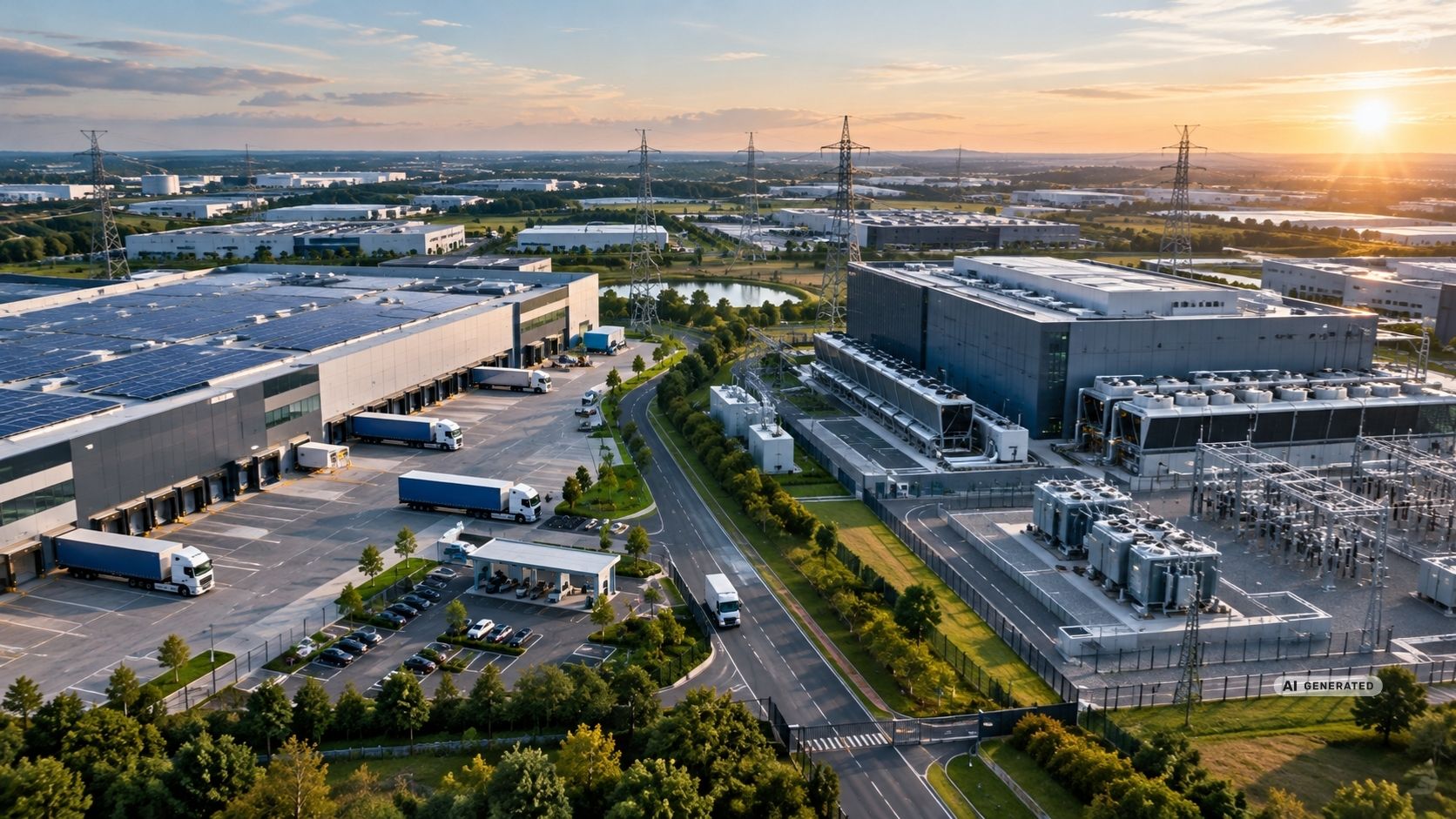
Across Europe, logistics operators are competing for more than land and transport access. They increasingly need something much harder to secure: grid capacity. Data centres are intensifying that competition — and changing how logistics locations are evaluated....
Chinese companies discover Europe's logistics real estate
Chinese companies are becoming an increasingly visible user group in Europe's logistics real estate market. What does this mean for warehouse space, 3PL structures and the requirements for European logistics locations?...
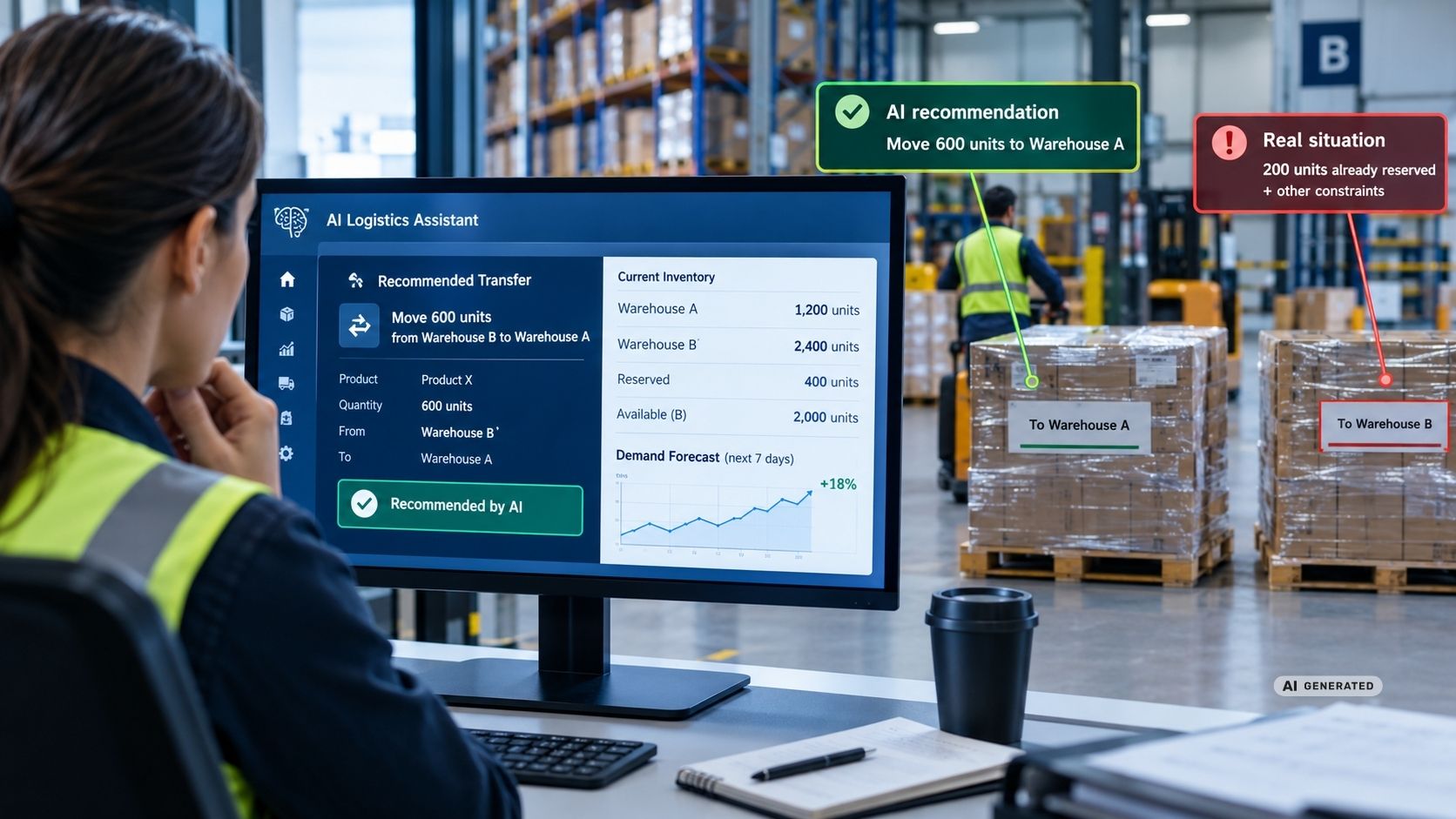
AI Hallucinations in Logistics: When AI Plans the Wrong Delivery
AI can analyze enormous amounts of logistics data — but it can also produce a convincing answer that is simply wrong. The critical question is not whether AI makes mistakes, but what happens when a wrong recommendation becomes an operational decision....
The Green Revolution on the Hall Roof: From Concrete Block to Ecological Power Plant?
Logistics roofs can do more than PV: greening, bees, urban farming and even sports areas turn unused roof space into multifunctional rooms....