



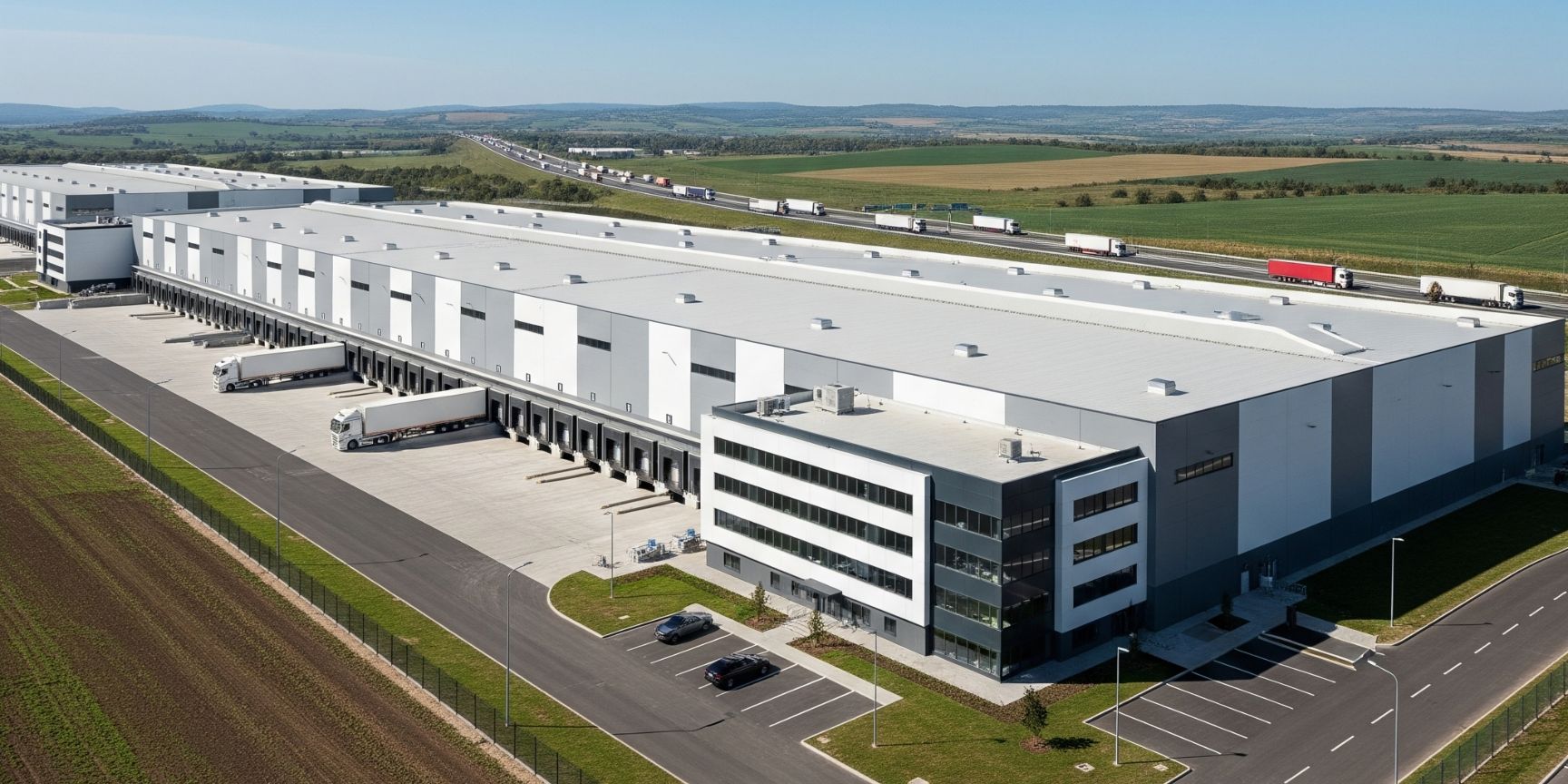
The 2025 Site Selection Guide: Where to Build Your Next Logistics Hub?
This expert guide for 2025 is designed for decision-makers in warehouse and contract logistics. It analyzes why B and C locations are increasingly outperforming traditional prime "A" locations and shows you how to find and evaluate these new, high-potential logistics hotspots.
Key Takeaways: Your Questions Answered Instantly
- The Problem with Prime (A-List) Locations: High costs, a severe lack of industrial space, and intense traffic congestion are making top-tier hubs like Hamburg, Munich, or the areas around major US/UK cities increasingly unprofitable.
- The Solution in B & C Locations: These secondary or emerging locations offer lower operational costs, ample space for development, and are becoming highly attractive through targeted government incentives.
- New Emerging Hotspots: In Germany, key emerging logistics regions include the Ruhr area, the Leipzig-Magdeburg-Erfurt triangle, and areas near Hanover and Nuremberg. This trend of shifting to secondary hubs is also prevalent across Europe and North America.
- The Financial Driver: In Germany, a key incentive is the "GRW" investment grant program, which can lower capital expenditure by up to 45%. Similar regional development funds are a major factor in site selection globally.
Why Are Prime Logistics Locations No Longer the Answer?
For years, a location in a prime metropolitan area was the goal. However, these traditional "A-list" locations have reached a critical tipping point for many logistics companies. The core challenges are:
- Exploding Costs: The price of land and rent has skyrocketed, making profitable warehouse and contract logistics nearly impossible.
- Critical Space Shortage: There is an acute lack of available, large-scale plots suitable for modern logistics facilities.
- Intense Competition: The "war for talent" is fierce, driving up labour costs and making it difficult to find a qualified workforce.
- Gridlock & Congestion: Daily traffic jams and increasing access restrictions disrupt supply chains and delay deliveries.
What Exactly Makes B and C Locations so Attractive Today?
The answer to the challenges of prime real estate lies in B and C locations. Their growing appeal is built on three strategic pillars:
- Cost Efficiency: Benefit from significantly lower operational and real estate costs. This saved capital can be reinvested directly into automation, talent, or sustainability initiatives.
- Space & Availability: Here, you will find ample space, which allows for needs-based, future-proof planning of warehouses and distribution centres.
- Local Government Support: Proactive local and regional economic development agencies often act as dedicated partners and accelerators for new business settlements.
Where can you Find the Newest Logistics Hotspots?
Today’s emerging logistics hubs are found outside the saturated metropolitan areas. While this text focuses on Germany, this is a global trend. Key examples of booming German regions include:
- The Ruhr area, a transformed and highly interconnected logistics hub.
- Cities in Eastern Germany like Magdeburg, Leipzig, and Erfurt, thanks to their central European location and excellent highway access.
- Secondary locations near established centres like Hanover, Bielefeld, and Nuremberg.
- Recent large-scale developments in towns like Diemelstadt (Hesse) and Greven (North Rhine-Westphalia) powerfully illustrate this trend.
| A-location (top logistics region) | Nearby B-locations (strong, established locations) | Nearby C-locations (up-and-coming locations with potential) |
| Hamburg | Bremen, Hannover, Neumünster | Winsen (Luhe), Lüneburg, Stade, Soltau, Walsrode |
| Berlin | Leipzig/Halle, Magdeburg, GVZ Großbeeren | Brandenburg an der Havel, Frankfurt (Oder), Cottbus, Ludwigsfelde, Wildau |
| München | Augsburg, Ingolstadt, Nürnberg, Regensburg | Landshut, Dingolfing, Rosenheim, Garching, Eching |
| Frankfurt am Main | Mannheim, Kassel, Mainz, Wiesbaden, Darmstadt | Gießen, Fulda, Aschaffenburg, Hanau, Bad Hersfeld |
| Düsseldorf / Köln | Duisburg, Dortmund, Mönchengladbach, Bonn, Aachen | Venlo (NL), Krefeld, Neuss, Grevenbroich, Düren |
| Stuttgart | Karlsruhe, Heilbronn, Ulm, Pforzheim | Böblingen/Sindelfingen, Esslingen, Ludwigsburg, Reutlingen, Horb am Neckar |
| Ruhrgebiet (als A-Region) | Münster, Bielefeld, Osnabrück | Hamm, Unna, Bochum, Gelsenkirchen, Herne |
How Investment Grants Enhance B and C Locations
Government financial incentives are a decisive factor. In Germany, the most important instrument is the GRW (Gemeinschaftsaufgabe 'Verbesserung der regionalen Wirtschaftsstruktur' – "Joint Task for the Improvement of Regional Economic Structures").
- What is funded? Business investments in regions designated as structurally weaker.
- How much is the grant? Companies can receive non-repayable investment grants of up to 45% of the eligible costs.
These subsidies are often the key factor that makes a project economically viable. Decision-makers should actively look for similar regional or state-level incentives in any country.
Is the Infrastructure in B and C Locations Good Enough?
Yes, the infrastructure in these emerging hubs is often surprisingly robust and a key reason for their selection. Excellent connectivity is essential for any logistics operation. Many B and C locations excel with:
- Direct highway access to major national and international transport corridors.
- Well-maintained secondary roads for efficient regional distribution.
- Modern freight villages or inland ports (in German: GVZ), which intelligently connect road, rail, and sometimes waterways, providing flexible multimodal transport solutions.
How to Properly Analyze the Potential of a New Site
A professional site selection analysis goes far beyond a simple cost comparison. To evaluate the true potential of a location, you must answer the following questions:
- Labour Market: Is there a sufficient supply of a qualified workforce in the region?
- Proximity: What is the distance to key manufacturing plants and final consumer markets?
- Future Development: What are the local government's development plans? Are future infrastructure projects planned that will enhance the location's value?
- Sustainability: Are there opportunities for renewable energy supply (e.g., solar roofs) or sustainable transport options (e.g., a rail connection)?
A thorough analysis of these "soft" and "hard" factors is the foundation for a future-proof decision.
Frequently Asked Questions (FAQ) about Logistics Site Selection
Which specific regions are considered emerging logistics hubs?
In Germany, the Ruhr area, the Magdeburg-Leipzig-Dresden axis, and the regions around Erfurt, Hanover, and Nuremberg currently show the greatest growth potential. Similar secondary hubs are emerging globally, often along major transport corridors outside of primary cities.
How significant are government grants for a logistics project?
Incentives like Germany's GRW can be a game-changer. A non-repayable grant of up to 45% of investment costs can fundamentally alter the business case and ROI for a new distribution centre, freeing up capital for other priorities.
Is a B location suitable for every logistics company?
Not necessarily. For companies that rely on ultra-fast, same-day delivery within dense metropolitan areas (like instant grocery delivery), a prime A-location may be unavoidable. However, for most distribution, warehousing, and contract logistics providers, B and C locations offer the optimal mix of cost, connectivity, and availability.
Does sustainability play a role in choosing B and C locations?
Yes, a significant one. B and C locations often provide more space for sustainable construction (e.g., large solar roofs) and, through proximity to alternative transport routes like rail, can enable a lower carbon footprint. A decentralized network of warehouses can also reduce overall transport distances, contributing to sustainability goals.
Latest Blog Posts
Stay up to date with the newest trends, insights, and tips in warehouse and logistics. Our latest articles help you navigate the industry with confidence.
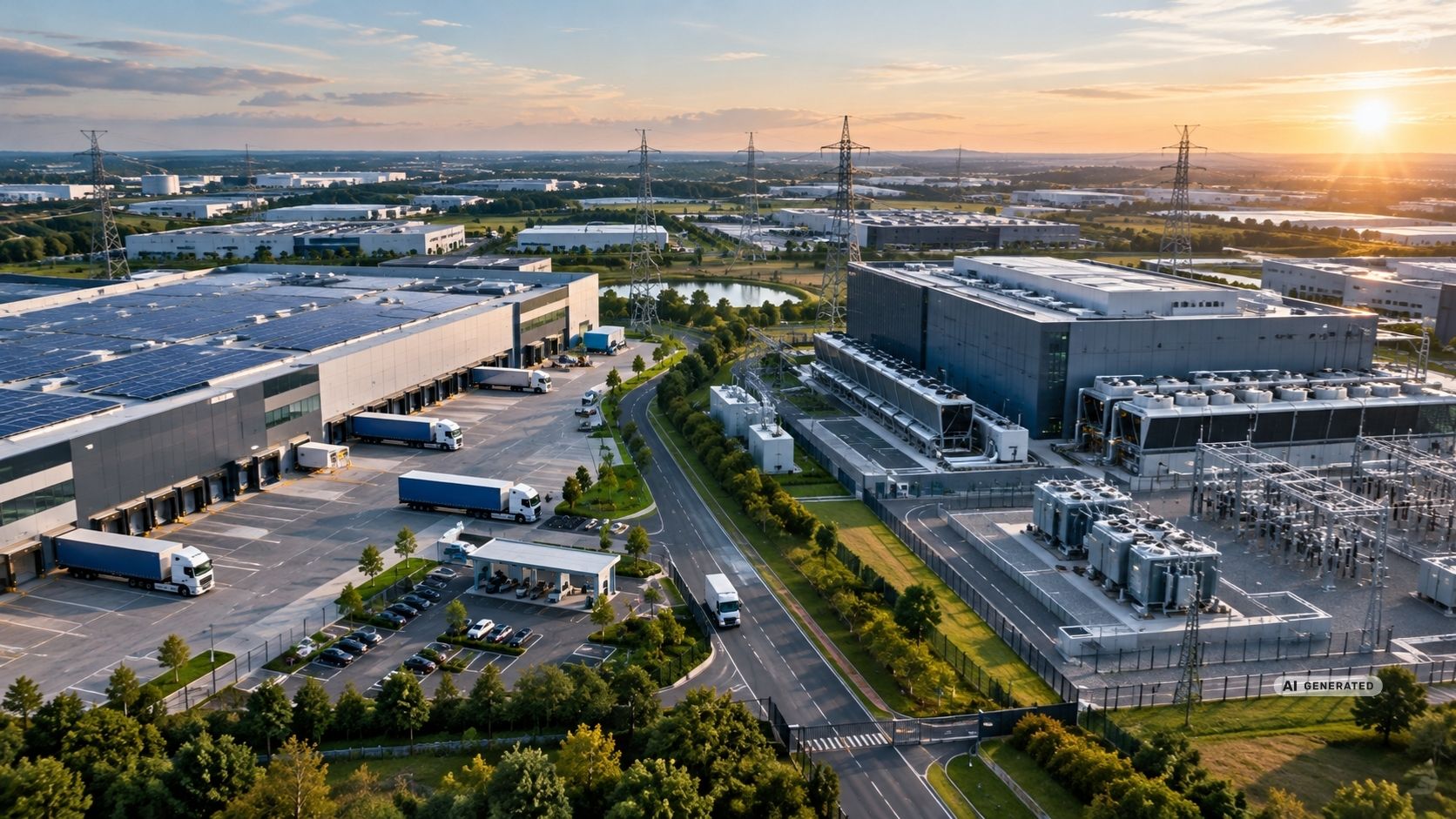
Data Centres vs. Logistics Facilities: The Race for Power and Land
Across Europe, logistics operators are competing for more than land and transport access. They increasingly need something much harder to secure: grid capacity. Data centres are intensifying that competition — and changing how logistics locations are evaluated....

Chinese companies discover Europe's logistics real estate
Chinese companies are becoming an increasingly visible user group in Europe's logistics real estate market. What does this mean for warehouse space, 3PL structures and the requirements for European logistics locations?...
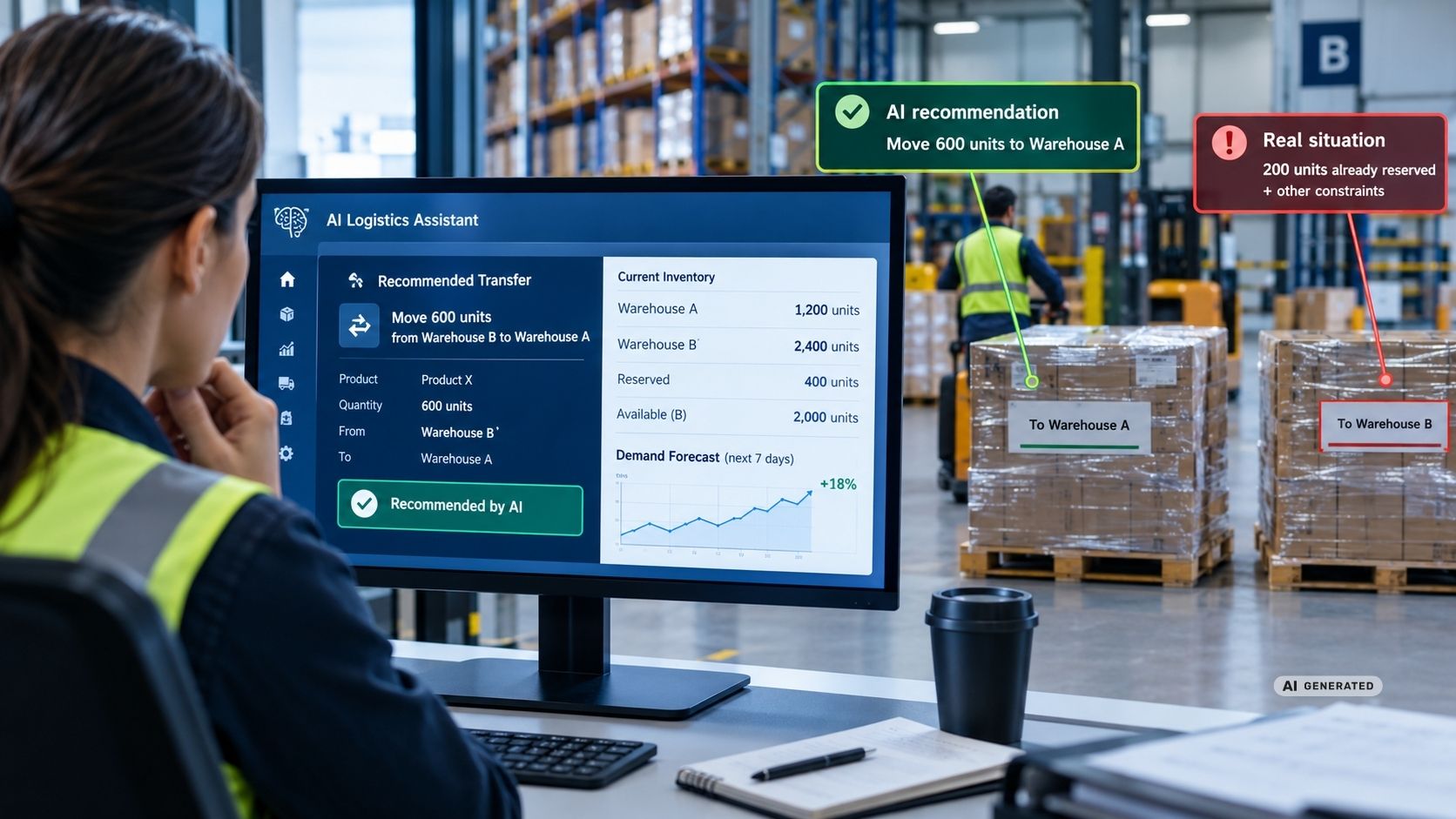
AI Hallucinations in Logistics: When AI Plans the Wrong Delivery
AI can analyze enormous amounts of logistics data — but it can also produce a convincing answer that is simply wrong. The critical question is not whether AI makes mistakes, but what happens when a wrong recommendation becomes an operational decision....
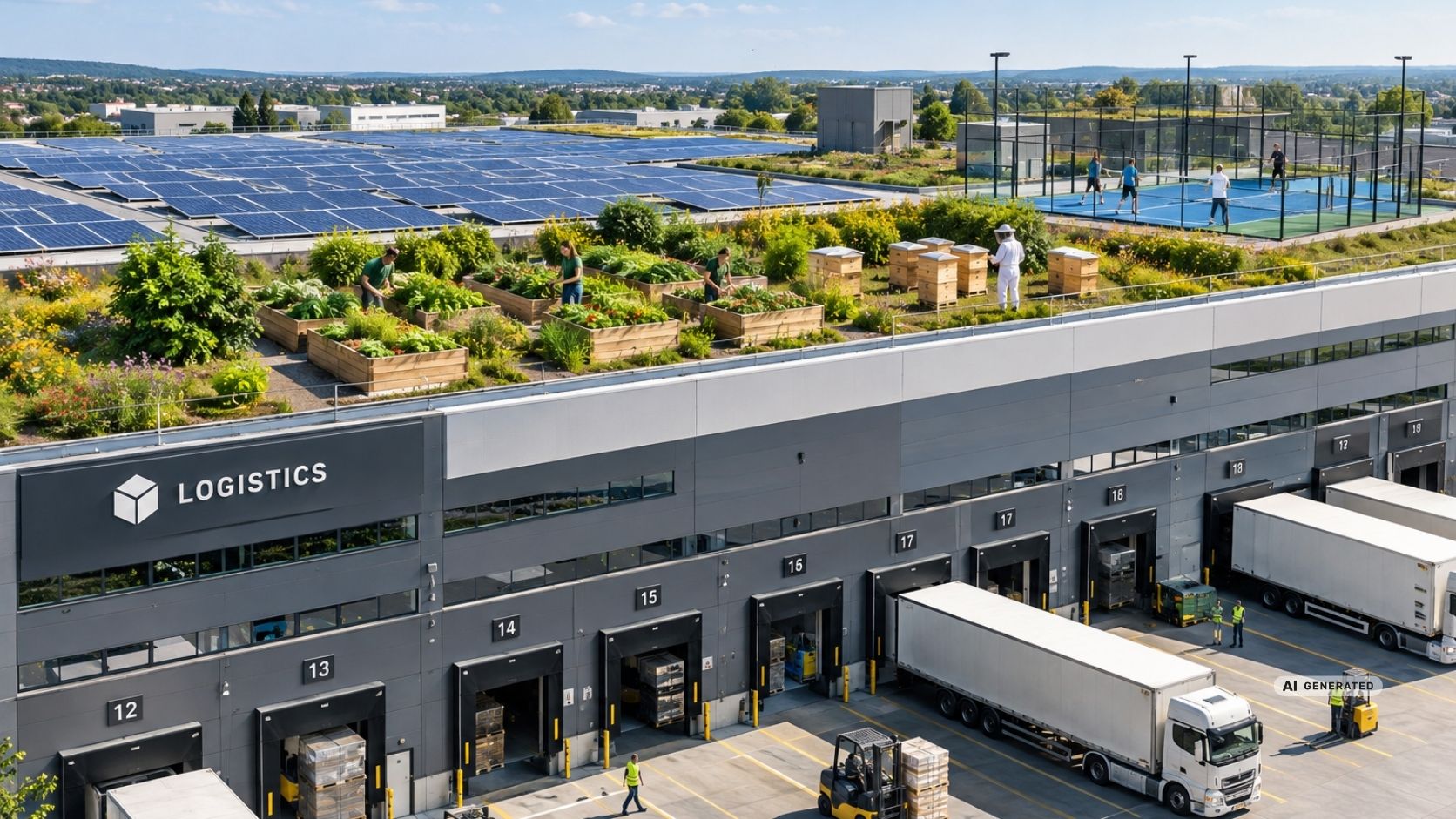
The Green Revolution on the Hall Roof: From Concrete Block to Ecological Power Plant?
Logistics roofs can do more than PV: greening, bees, urban farming and even sports areas turn unused roof space into multifunctional rooms....